
Soil Drainage Test for Cannabis Beds: Simple Perc Test
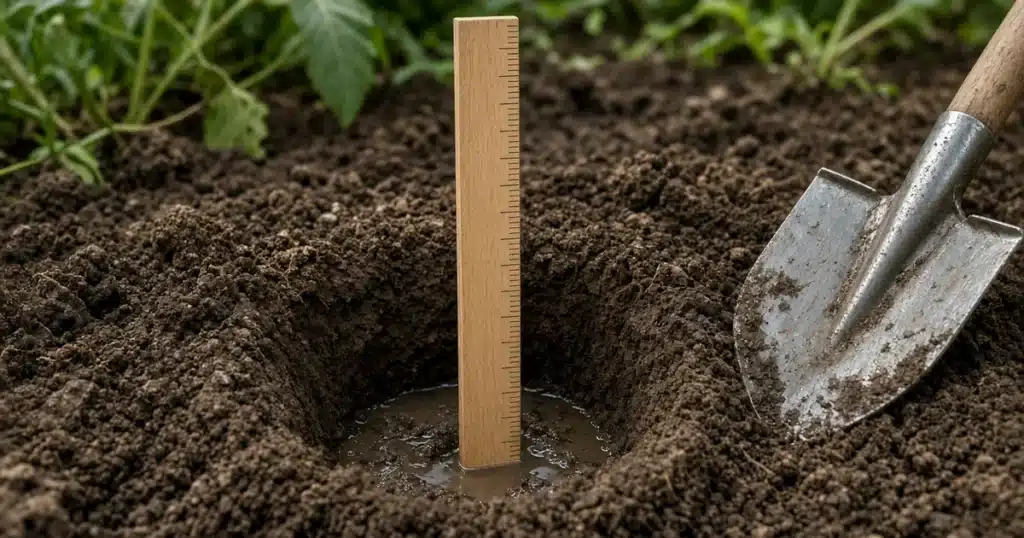
Cannabis roots need air as much as they need water, and soil that stays soggy for days takes that air away. Before you commit a new outdoor bed to a season of growing, it pays to know how quickly water actually moves through it. A percolation test, often called a perc test, answers that question with a shovel, a hose and a ruler. Iowa State University Extension calls it the best way to find out how well drained a soil is, even on a slope. Step by step, Kind Seed Co shows how to run the test, read the result and handle a spot that drains too slowly or too fast.
Why does drainage matter for cannabis roots?
Iowa State University Extension explains that the rate at which water moves down through soil depends on the size of the pores. Soil that drains poorly has smaller pores and holds water longer. Excess water displaces oxygen, and low oxygen in the soil harms root health.
For a cannabis grower, that shows up in familiar ways. Plants in a waterlogged bed often look droopy even though the soil is wet, grow slowly, and are more prone to root problems. A quick, simple test before planting helps you avoid choosing a spot that will fight you all season.
What makes a bed drain slowly?
Several factors work together, and knowing them helps you interpret the test.
- Texture. Iowa State University Extension notes that sand has the largest particles and clay the smallest. Sandy soils have more pore space and drain sharply, while clay soils have much less pore space and hold water longer.
- Compaction. Foot traffic, vehicles and construction squeeze soil pores. Illinois Extension points out that even repeated foot traffic, such as along a sidewalk, compacts soil.
- Overworking the soil. Both sources warn that tilling too often or when the soil is too wet breaks down soil aggregates and can form hardpans that water cannot pass through.
- Low spots and buried layers. Iowa State University Extension lists depressions, high water tables and underlying rock layers as common causes of slow drainage.
- Slope. Sloping sites tend to drain better, but Iowa State University Extension cautions not to assume so, because clay or a hardpan can still keep a slope wet.
If your bed is heavy clay, clay soil for cannabis explains how that texture behaves and how to work with it.
When should you run a drainage test?
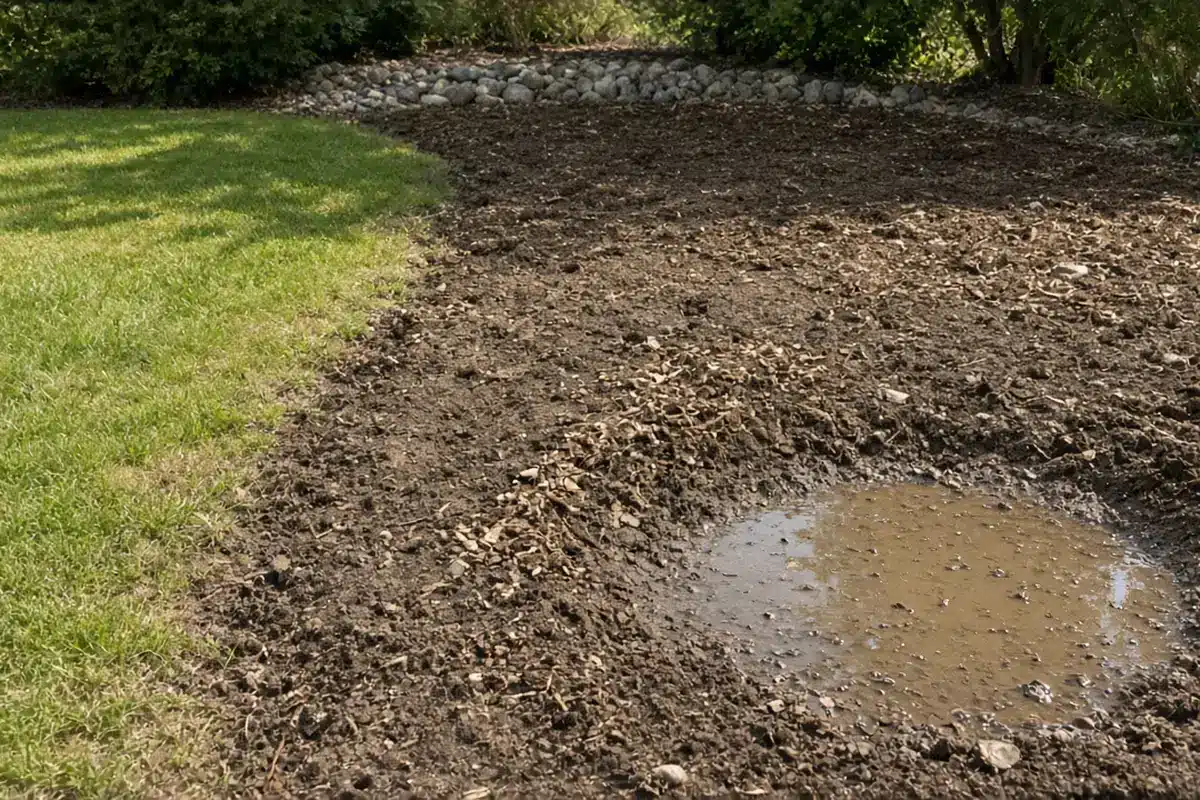
Timing affects accuracy. Both Iowa State University Extension and Illinois Extension warn against testing when the soil is overly wet, because it can give false results. Iowa State University Extension adds that digging in wet soil can glaze the sides of the hole, which slows water movement and makes drainage look worse than it is.
In practice, pick a day after the soil has had time to dry from the last rain, and plan the test well before planting. Fall or early spring gives you time to act on the result. Testing more than one spot is wise, because drainage can change across a single yard.
How do you do a soil drainage test?
The method below follows the steps described by Iowa State University Extension and Illinois Extension.
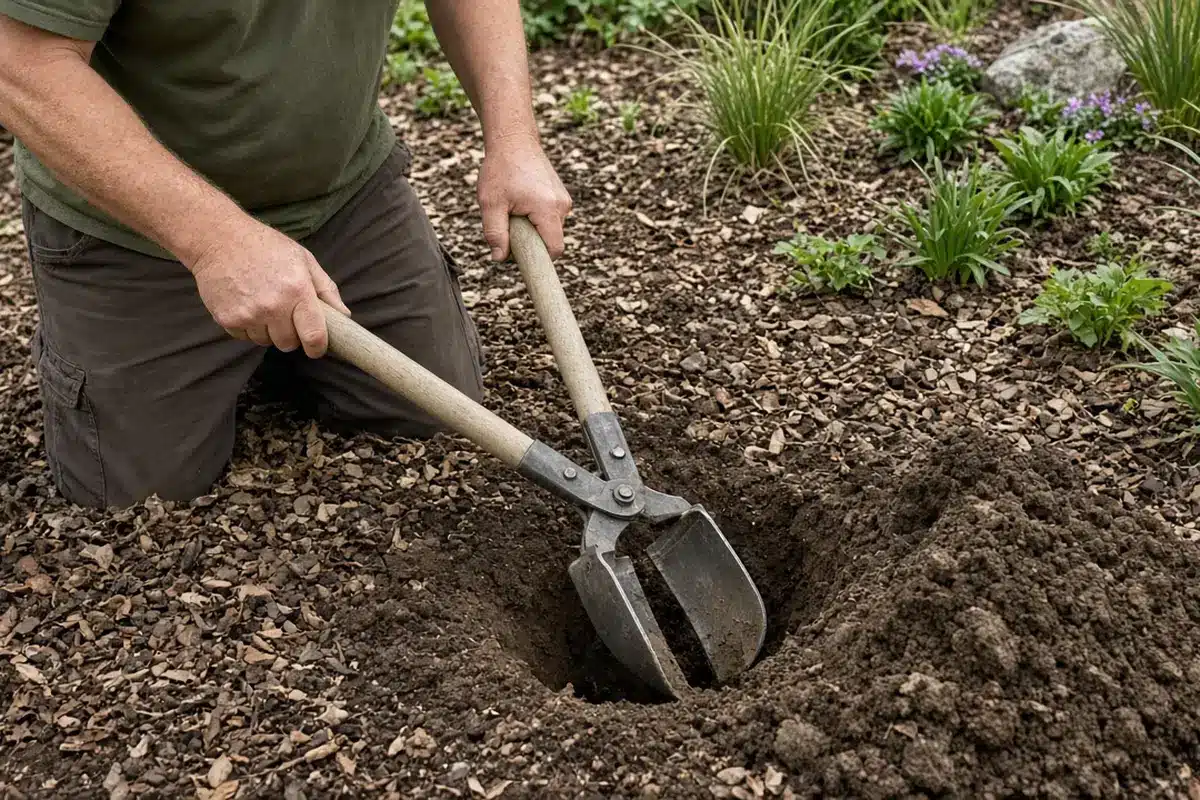
- Dig a hole. Use a shovel, hand auger or post-hole digger to make a hole at least 12 inches deep and 4 to 12 inches wide. Iowa State University Extension notes it can go to 18 inches if the root balls you plan to plant are taller than 12 inches. A planting hole works for this test.
- Fill it with water. Let the water drain away completely. This could take a short time or an entire day.
- Understand the first fill. This step saturates the surrounding soil, so the second fill reflects how the soil drains when it is already wet, which is the condition that matters after heavy rain or watering.
- Refill right away. As soon as the first water has drained, fill the hole again.
- Measure the starting depth. Stand a ruler in the hole and note the water depth.
- Wait 15 minutes. Then measure how far the water level has dropped, in inches.
- Calculate the hourly rate. Multiply the 15-minute drop by 4 to find how many inches drain in an hour.
- Write it down. Record the date, the location of the hole and the result so you can compare spots and seasons.
For example, if the water drops three quarters of an inch in 15 minutes, the soil drains about 3 inches per hour.
How do you read the results?
Iowa State University Extension gives a simple scale, and Illinois Extension uses the same thresholds.
- Less than 1 inch per hour. Poor drainage. This spot will stay wet after rain and needs work before it suits cannabis.
- 1 to 3 inches per hour. Desirable for most plants. This is the range to look for in a cannabis bed.
- More than 4 inches per hour. Very well drained. Iowa State University Extension notes these soils can be amended or used for plants that tolerate drier conditions.
A reading that falls between the desirable range and the very well drained range sits at the fast end. A bed like that usually just needs more attention to watering in hot spells.
One reading tells you about one spot at one time. If results vary a lot between holes, the yard has distinct zones, and that is useful to know when siting plants. Cold pockets, wet hollows and warm walls all shape a growing site too, so it helps to note them alongside your drainage results.
What can you do about a bed that drains slowly?
The fix depends on how slow the result is and what is causing it.
- Add organic matter, not sand. Iowa State University Extension advises adding organic matter, not sand, to improve poorly drained soil. It improves structure by helping soil particles bind into aggregates, which creates pore space for air and water.
- Work it in gently. Iowa State University Extension suggests spreading 2 to 4 inches over the surface and working it into the top 6 to 12 inches, while warning against over-tilling.
- Break up compaction. Both sources mention spading, tilling or aeration to break hardpans and impermeable layers, and stress staying off wet soil.
- Redirect water. Iowa State University Extension suggests regrading low spots and steering water from slopes or downspouts away from the root zone, without sending it to a neighbor’s yard.
- Raise the bed. Iowa State University Extension calls raised beds and berms a great way to create the right conditions, as long as the bed holds the whole root system. For a full-size cannabis plant, that means a generous depth and width.
- Choose a different spot. If one corner tests poorly and another tests well, moving the bed is often the simplest answer.
What if the soil drains too fast?
A very fast result has its own problems. Water and nutrients move past the roots quickly, and plants can wilt between waterings in hot weather. Iowa State University Extension notes that organic matter also helps sharply drained soils by improving their ability to hold water, air and nutrients. Mulching the surface and watering more often in smaller amounts are practical ways to keep the root zone evenly moist.
Troubleshooting a confusing result
If the numbers do not match what you see after rain, check these points.
- The test was run on wet soil. Glazed walls or an already saturated profile can make drainage look poor. Repeat the test after a dry spell.
- The first fill was skipped. Without it, dry soil soaks up water quickly and makes drainage look much better than it is.
- The hole hit a buried layer. Gravel, rock or old construction debris can give an odd result. Try a hole a few feet away.
- The result changed over the season. Compaction from foot traffic and a rising water table in spring can both slow drainage. Test again in the season you plan to plant.
- Drainage is fine but plants still struggle. Look beyond water. Run a soil test for pH and nutrients, with soil testing for cannabis as a starting point.
Sources
- Iowa State University Extension and Outreach, Yard and Garden. Testing and Improving Soil Drainage. https://yardandgarden.extension.iastate.edu/how-to/testing-and-improving-soil-drainage
- University of Illinois Extension, Good Growing. Improving Soil Drainage. https://extension.illinois.edu/blogs/good-growing/2022-05-13-improving-soil-drainage
FAQ
What is a good soil drainage rate for cannabis?
Iowa State University Extension says soils that drain 1 to 3 inches per hour are desirable for most plants, and that range suits cannabis beds well. Less than 1 inch per hour is poor drainage. More than 4 inches per hour is very well drained and will likely need extra watering attention during hot weather.
Why do I need to fill the hole twice?
The first fill saturates the soil around the hole. Without it, dry soil soaks up water quickly and the result looks much better than reality. Refilling right after the first water drains shows how the soil behaves when already wet, which is the condition roots face after heavy rain or a deep watering.
How deep should a drainage test hole be?
Dig at least 12 inches deep and 4 to 12 inches wide, as Iowa State University Extension and Illinois Extension describe. Iowa State University Extension notes that the hole can go to 18 inches when the root balls you plan to plant are taller than 12 inches. A planting hole can double as the test hole.
Should I add sand to clay to improve drainage?
No. Iowa State University Extension advises adding organic matter rather than sand to poorly drained soil. Organic matter helps soil particles form aggregates with pore space for air and water. Where drainage is very poor, a raised bed or a better-drained spot in the yard is often the faster solution for a cannabis grow.


