
Hoop Houses for Cannabis: Season Extension Basics
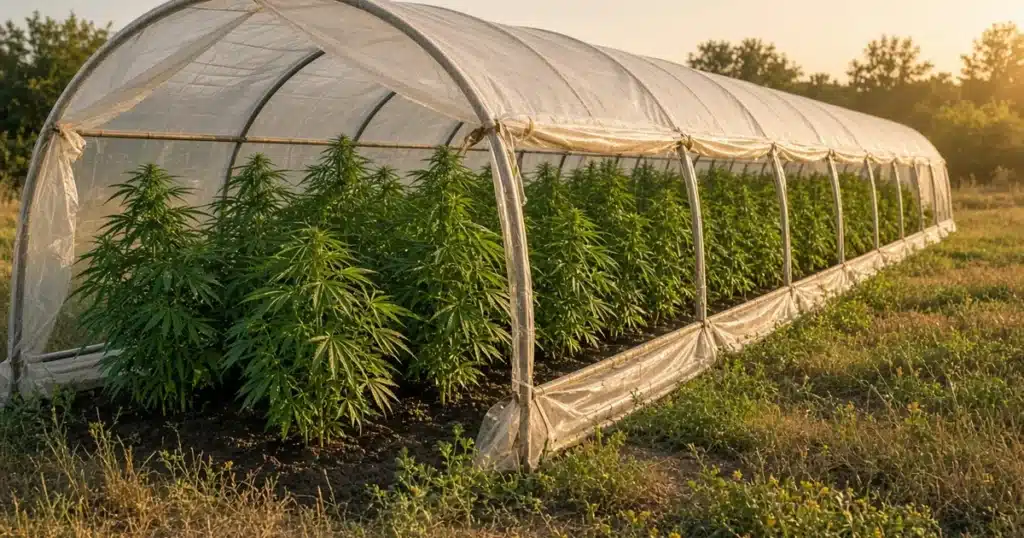
Quick answer: A hoop house, also called a high tunnel, is a walk in frame of arched hoops covered with one layer of greenhouse plastic. It uses sunlight for heat and roll up sides for cooling, with no permanent floor or built in heating. Penn State Extension reports that for vegetable crops, high tunnels can move the start of the season up to eight weeks earlier and stretch it up to six weeks past the first outdoor frost. For cannabis, that extra time can mean an earlier transplant in spring and a better protected finish in fall, provided you manage heat, wind and ventilation every day.
What Is a Hoop House?
Texas A&M AgriLife describes high tunnels in its publication High Tunnels for Crop Production in Texas as structures similar to greenhouses but without permanent floors or heating systems. They are usually arched supports covered with plastic, and crops grow in the ground or in raised beds beneath them.
The Penn State Extension guide to high tunnel production adds that tunnels usually wear one sheet of six mil greenhouse grade polyethylene, rather than the inflated double layer used on many greenhouses. Many have removable ends so a small tractor or tiller can get inside for bed preparation.
Most kits use galvanized steel hoops set into ground posts, with the plastic held in channels along the sides and ends. How much control you get varies widely. Some tunnels rely entirely on passive venting through roll up sides. Others add gable fans, thermostats and heaters. A home grower can start with the basics and add equipment later.
When comparing a hoop house with a full greenhouse or an indoor setup, our comparison of greenhouse vs indoor cannabis growing lays out the tradeoffs in cost and control.
How Much Season Does a Hoop House Add?
Season length is the main reason home growers build a tunnel. Outdoor cannabis needs a long, frost free window to grow big in summer and finish flowering in fall, and a garden with a short season can miss that window at one end or the other.
Penn State reports that well managed tunnels can extend production by as much as eight weeks before the field season and up to six weeks after the first outdoor frost. For spring vegetable crops, it suggests moving transplants into the tunnel a month to six weeks ahead of your earliest field planting date. Push earlier than that and the need for extra heat rises.
Texas A&M explains how this works. Tunnels use sunlight to warm the air and soil inside, and closing the sides and end panels at night holds that warmth to fend off frost. Our guide to frost damage on cannabis shows what a single cold night can do to an unprotected plant.
For cannabis, the fall end of the season often matters most. Many outdoor strains finish flowering in October, just as early frosts and cold rain arrive. A tunnel keeps rain off ripening buds and, with the sides closed, holds some warmth on clear nights.
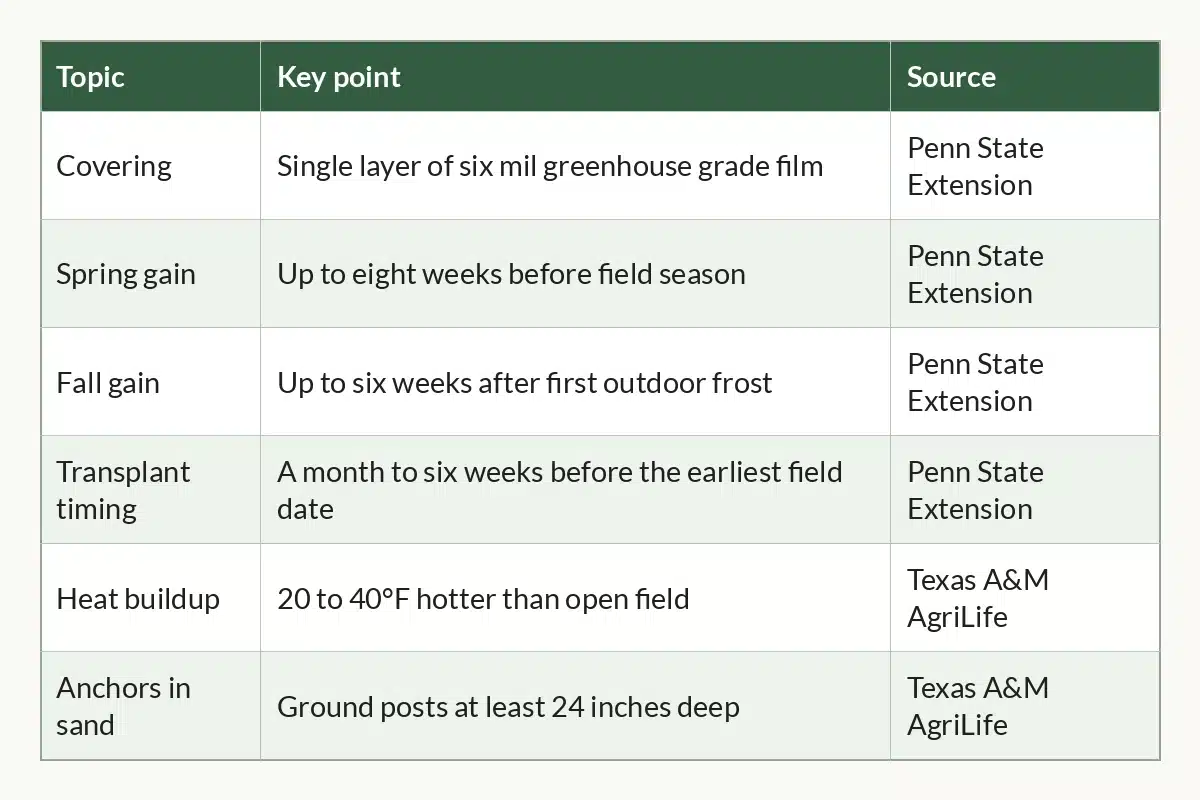
Hoop Houses at a Glance
| Topic | Key point | Source |
|---|---|---|
| Covering | Single layer of six mil greenhouse grade film | Penn State Extension |
| Spring gain | Up to eight weeks before field season | Penn State Extension |
| Fall gain | Up to six weeks after first outdoor frost | Penn State Extension |
| Transplant timing | A month to six weeks before the earliest field date | Penn State Extension |
| Heat buildup | 20 to 40°F hotter than open field | Texas A&M AgriLife |
| Anchors in sand | Ground posts at least 24 inches deep | Texas A&M AgriLife |
Quonset or Gothic: Which Shape Should You Choose?
Penn State describes two common stand alone shapes. Quonset tunnels have a rounded, half circle profile. Gothic tunnels have a peaked roof. The rounded type can collapse under heavy, wet snow, while peaked tunnels shed snow and have had no such problems in the same storms.
Texas A&M notes that Quonset tunnels are popular in Texas, while Gothic arches are common where crops need tall sides or where snow is a concern. Sidewalls run from 3 to 5 feet tall, and a 5 foot wall gives tall plants more room near the edges. A typical commercial size is about 26 feet wide, 96 feet long and 13 feet high at the center, though small homemade tunnels are far smaller.
Cannabis can get tall, so height is worth thinking about. A plant that reaches six feet or more in late summer needs headroom well beyond the sidewall line, and leaves pressed against hot plastic can scorch on a sunny day. Gothic frames with higher sidewalls make it easier to fit big outdoor plants along the edges without pressing leaves against the plastic.
How Can a Hoop House Stay Cool Enough?
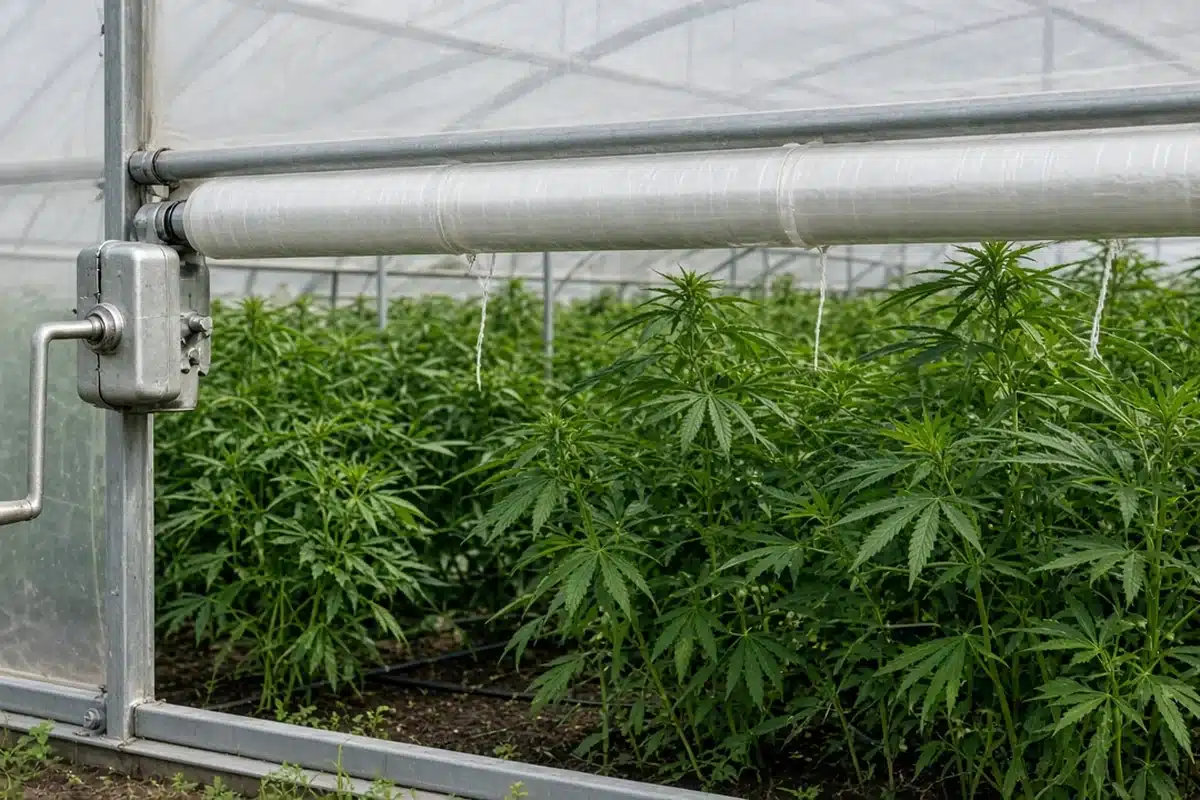
Ventilation is the daily job. Texas A&M reports that a closed tunnel can run 20 to 40°F warmer than outside, enough to stress a crop. Roll up the sides and open both end panels to let the hot air out. Expect to adjust them daily in changeable weather.
Penn State calls crop scheduling and ventilation the two keys to success. On a sunny spring morning a closed tunnel warms fast, so open the sides before the sun gets high and close them in late afternoon to trap warmth for the night.
A cheap thermometer with a memory function helps you learn how fast your tunnel heats on clear mornings. After a week of readings you will know roughly when the sides must go up. Wind makes this harder. Texas A&M advises closing the tunnel during high winds to prevent damage. Penn State cautions that manufacturers differ on whether sides should be up or down in a storm, so follow the instructions for your frame.
How Do You Anchor a Hoop House Against Wind?
A loose tunnel can lift like a kite. Texas A&M recommends ground posts at least 24 inches deep on sandy soils and says extra anchors are a better bet than too few. Natural windbreaks reduce stress on the frame and can lower building costs.
Penn State flags winds above 60 miles per hour as a concern for all tunnels and says the width of the structure and the number of purlins matter more than whether it faces into the prevailing wind.
Texas A&M also notes that in Texas, high tunnels generally count as temporary structures that may not need a building permit, but it advises checking with local zoning first. Rules differ by state and county, so ask before you build.
How to Grow Cannabis in a Hoop House
- Pick a sunny, well drained site. Test the soil and add compost where it is heavy.
- Choose the frame. Go with a Gothic frame if you get snow or want tall sidewalls.
- Anchor it firmly. Set posts deep and add extra anchors in windy areas.
- Install drip lines before planting. Texas A&M notes that tunnels keep rain out, so most growers water with drip irrigation.
- Transplant early. Aim for a month or more ahead of your outdoor date.
- Vent daily. Open sides in the morning and close them in the afternoon.
- Add row covers on cold nights. Penn State mentions floating covers used inside the tunnel for extra protection.
- Close up for fall. Keep sides down on cold nights as buds ripen.
Our article on row covers for cannabis explains the lightweight fabrics that pair well with a tunnel.
Troubleshooting Hoop House Problems
Plants wilt on sunny afternoons. The tunnel is overheating. Open sides and end panels earlier in the day.
Plastic tears in wind. Anchors or tension are weak. Tighten the film and add anchors before the next storm.
Frost nips leaves despite the cover. One sheet of plastic holds only a few degrees. Add row covers or a small vented heater on the coldest nights.
Water pools inside after rain. Runoff is flowing in. Texas A&M suggests raising the grade of heavy soil by 6 to 8 inches before you build.
Mold on late buds. Moist air is trapped inside. Vent on dry mornings even in fall.
Sources
- Penn State Extension, High Tunnel Production: https://extension.psu.edu/high-tunnel-production/
- Texas A&M AgriLife Extension, High Tunnels for Crop Production in Texas: https://mytexas.ag.tamu.edu/publications/high-tunnels-for-crop-production-in-texas/
FAQ
Is a hoop house the same as a greenhouse?
Not quite. A hoop house usually has one layer of plastic, no permanent floor and no built in heat.
How much earlier can I plant cannabis in a hoop house?
Penn State suggests a month to six weeks ahead of your first field date for spring crops.
Should I vent every day?
On sunny days, yes. With the sides closed, a tunnel heats up fast.
Will a hoop house survive snow?
Gothic, peaked frames shed snow better than rounded ones.
Do hoop houses need a permit?
It depends on where you live. Check with your local zoning office.


