
Greenhouse Sanitation Before Planting: A Checklist for Cannabis Growers
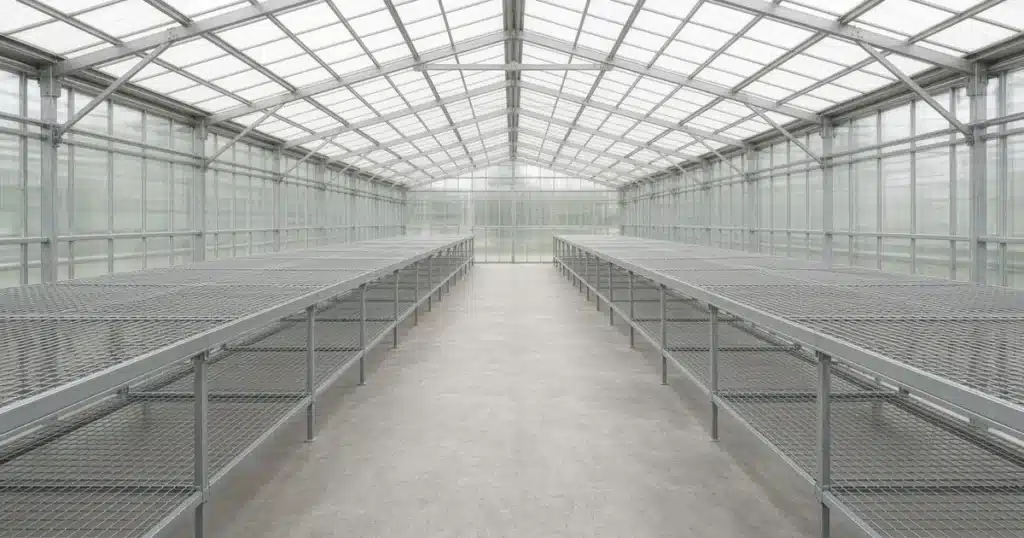
Quick answer: Clean the greenhouse between crops, while it is empty, so pests and disease organisms from the last season have nowhere to hide. UMass Extension recommends removing weeds, debris and soil first, then working downward from the roof. Kentucky Extension adds sweeping, scrubbing with soap and water, rinsing and repeating until surfaces are clean, then applying a labeled sanitizer and flushing irrigation lines. Wire benches are far easier to clean than wood. A thorough reset before planting cannabis leaves fewer pests and disease organisms to carry into the next crop.
Why Clean a Greenhouse Before Planting Cannabis?
A greenhouse that grew plants all season collects more than dust. Spilled potting mix, dropped leaves, weeds under benches and green slime on wet surfaces all give pests and disease a place to wait for the next crop.
UMass Extension guidance on cleaning and disinfecting the greenhouse says that microbes build up over a crop and algae thrive on damp surfaces, where they shelter fungus gnats and shore flies. UMass suggests cleaning as early as you can rather than waiting until the week before planting, since an early cleanup removes the places where pests spend the winter.
Kentucky Extension makes a related point about cost. Its guide to cleaning and sanitizing greenhouse surfaces says staying ahead with a clean growing space usually costs less and works better than reacting after a disease or pest shows up.
Cannabis is a long crop, so whatever slips in at planting has months to spread. Our green house growing basics explain how warm, humid air under cover favors both plants and their problems.
Greenhouse Sanitation at a Glance
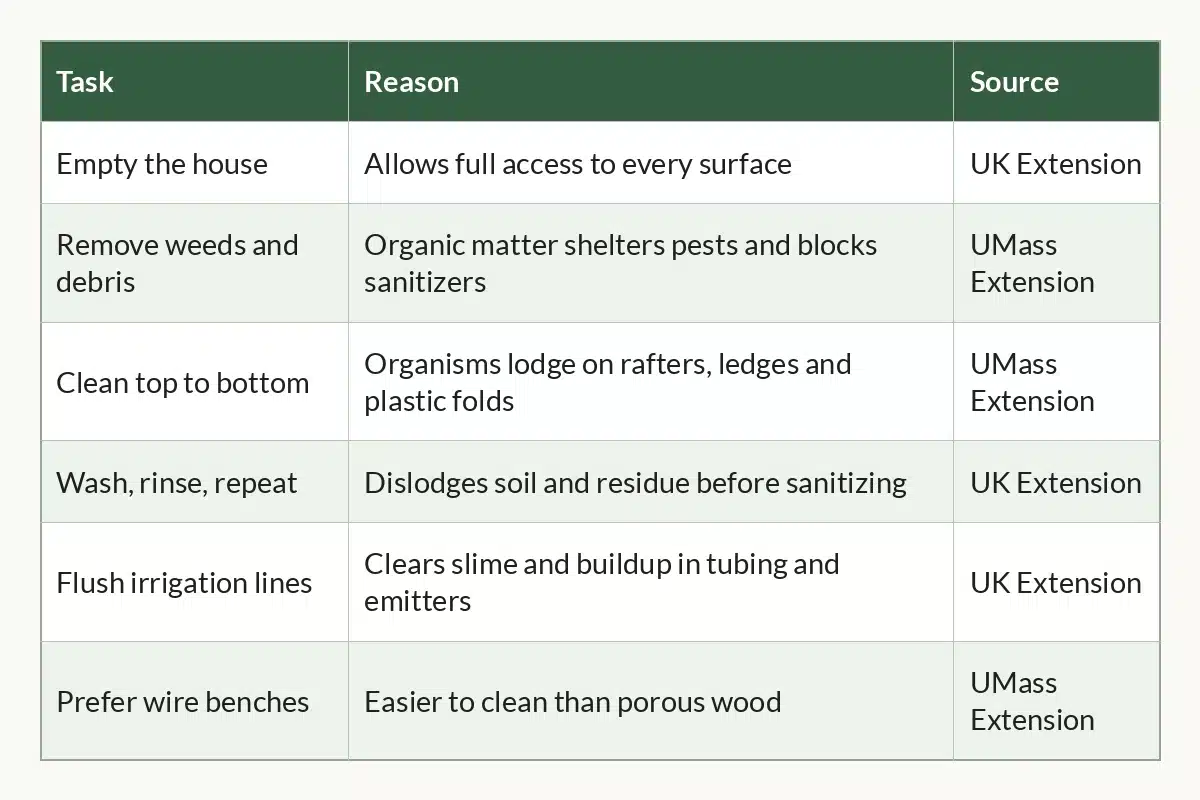
| Task | Reason | Source |
|---|---|---|
| Empty the house | Allows full access to every surface | UK Extension |
| Remove weeds and debris | Organic matter shelters pests and blocks sanitizers | UMass Extension |
| Clean top to bottom | Organisms lodge on rafters, ledges and plastic folds | UMass Extension |
| Wash, rinse, repeat | Dislodges soil and residue before sanitizing | UK Extension |
| Flush irrigation lines | Clears slime and buildup in tubing and emitters | UK Extension |
| Prefer wire benches | Easier to clean than porous wood | UMass Extension |
What Should You Clean First?
The first job is to take things out. An empty house lets you reach every corner, bench leg and seam. Kentucky Extension recommends emptying the greenhouse after each crop, or at least once a year, and removing weeds, weak or leftover plants and anything else that could carry problems forward. For a home cannabis grower, this involves pulling old root balls, spent pots and any mother plants you plan to keep elsewhere.
Next, remove the loose material. UMass describes cleaning as physically clearing weeds, debris and soil, and calls it the first step before any sanitizer goes on. Soil and plant residue weaken sanitizers, so skipping this step wastes both effort and product. Some growers use a shop vacuum on concrete and covered floors to lift fine debris.
How Do You Clean the Structure From Top to Bottom?
UMass recommends beginning at the top and working down. Sweep the walls, frame and any internal structures, then clean the floor last so falling dirt does not land on surfaces you already finished.
Disease organisms can lodge on rafters, window ledges, the tops of overhead pipes and folds in plastic film. Textured surfaces such as concrete and wood also hide them well, so spend a little extra time on those areas.
Kentucky Extension lays out a simple routine:
- Sweep floors and brush surfaces to remove dry plant debris and growing media.
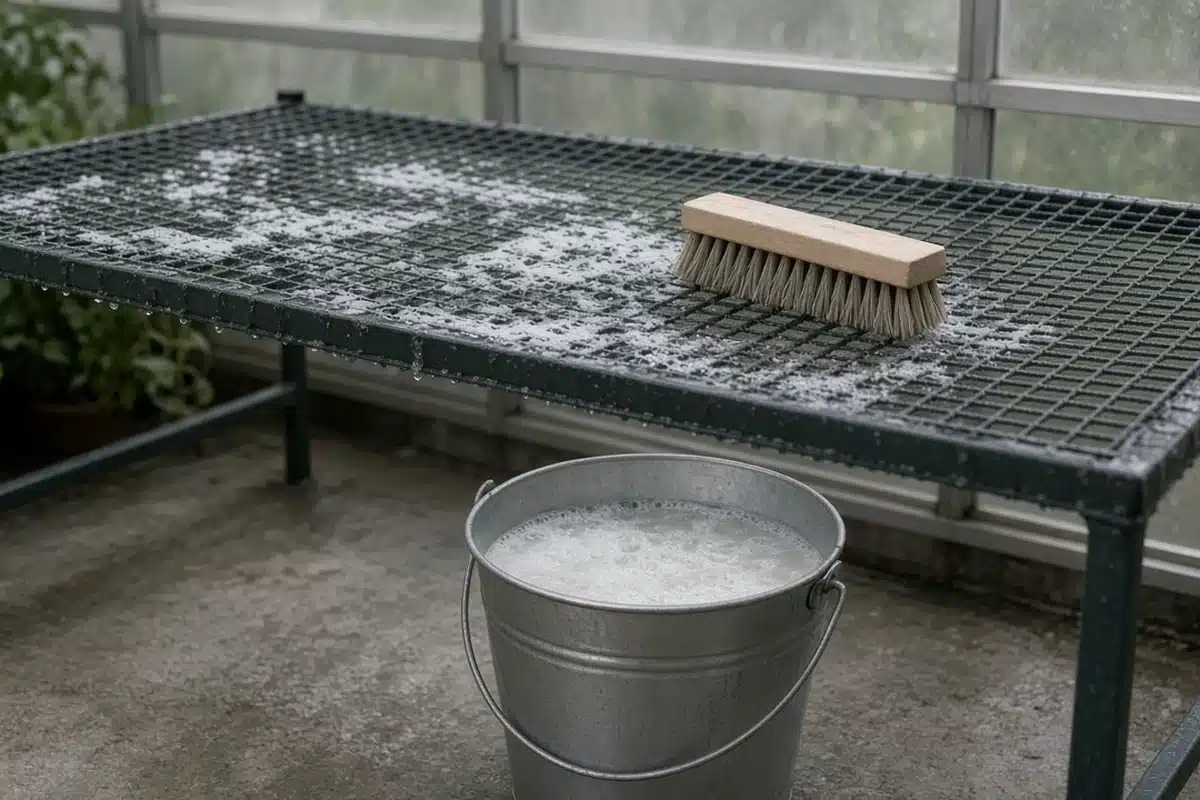
- Wash surfaces with a brush and a strong stream of water, then follow up with soap or detergent.
- Rinse away the detergent and loosened grime.
- Repeat until everything is clean before sanitizing.
UMass adds that soap residue must be rinsed off well, because leftover soap can weaken some sanitizers.
How Do You Clean Greenhouse Benches?
Benches hold pots for months and collect drips, spilled mix and roots. UMass suggests wire benches where possible, because they are easy to sanitize. Wood benches can harbor root rot organisms and insects, and algae grows on the wood surface, which draws fungus gnats and shore flies. Roots that grow out of a pot and into wet wood can pick up rot.
Kentucky Extension agrees that porous surfaces like wood are hard to sanitize, since many products do not soak in well. If you keep wood benches, scrub them hard and let them dry fully. For potting tables, UMass recommends a smooth, nonporous surface such as laminate rather than bare wood.
How Do You Control Algae on Floors and Walks?
Algae turn walks slippery and feed shore flies. UMass notes that algae also form a crust on potting mix that keeps water from soaking in and can clog drip lines and emitters.
Prevention starts with water. UMass advises letting the surface of the mix dry between waterings, avoiding heavy runoff and preventing puddles on floors and benches. The floor should be level and drain well before any weed mat goes down.
If your floor is bare dirt or gravel, UMass recommends laying weed mat and repairing any tears. It also warns against spreading stone over the mat, since the stone traps soil and moisture and creates a perfect home for weeds, insects and algae.
Should You Sanitize Pots and Tools Too?
Yes. UMass explains that organisms behind root rot can survive in root debris and soil stuck to pots and trays. If the last crop had disease, the fact sheet suggests not reusing those containers at all. Otherwise, wash reused pots thoroughly to remove soil before sanitizing. Our guide to cleaning and disinfecting pots for cannabis covers that process in detail.
Pruning tools need the same care, since they move between plants all season. Wash blades after each session and keep a spare pair soaking while you use the other.
Should You Clean Around the Greenhouse Too?
Pests often move in from just beyond the walls. A strip of weeds along the foundation can host insects that slip through vents and doors once the first plants arrive. Mow or pull weeds in a band around the structure, and keep compost piles and discarded plants well away from the entrance.
Check vents, door seals and any torn film while you are outside. Small gaps let insects in and heat out, so patching them now helps with both problems.
What About Irrigation Lines?
Drip lines and hoses build up slime inside over a season. UMass recommends cleaning irrigation systems at season’s end to remove dirt and that slimy film. Kentucky Extension advises flushing lines with a labeled sanitizer and soaking hose ends and nozzles, then rinsing well before use.
Clear lines also deliver even water to every pot, which starts to matter once young cannabis plants are in place.
Step by Step Greenhouse Cleanup for Cannabis
- Empty the greenhouse. Remove plants, pots, trays and old growing media.
- Pull weeds. Clear weeds inside and in a strip around the outside walls.
- Remove debris. Sweep or vacuum floors, benches and corners.
- Clean from the top down. Brush the frame, rafters, ledges and film folds.
- Wash and rinse. Scrub with soap and water, rinse well and repeat if needed.
- Sanitize. Apply a product labeled for greenhouse surfaces, following its directions exactly.
- Flush irrigation. Run a labeled cleaner through lines and soak nozzles.
- Fix the floor. Repair weed mat and fill low spots where water pools.
- Let it dry. Allow surfaces to dry before bringing new plants in.
Troubleshooting Greenhouse Sanitation
Fungus gnats return quickly. Algae or wet debris remains. Check under benches and fix puddles.
Sanitizer seems weak. Surfaces still had soil or soap on them. Clean and rinse again first.
Wood benches stay green. Algae has soaked in. Scrub harder, improve drying or switch to wire.
Drip emitters clog early. Slime remains in the lines. Flush again and clean filters.
Weeds push through the floor. The mat is torn or covered in soil. Patch it and clear the stone layer.
Keeping the Greenhouse Clean During the Crop
A big cleanup before planting pays off most when daily habits back it up. Pick up fallen leaves as you see them, keep the space under benches clear and avoid letting water stand on floors. UMass notes that sanitizers kill what they touch but leave little lasting protection, so routine tidiness counts just as much as that big reset.
Watch new plants closely for the first weeks. Our page about ways to protect marijuana plants from pests and bugs covers early signs to look for.
Sources
- UMass Extension, Cleaning and Disinfecting the Greenhouse: https://www.umass.edu/agriculture-food-environment/greenhouse-floriculture/fact-sheets/cleaning-disinfecting-greenhouse
- University of Kentucky Extension, Cleaning and Sanitizing Commercial Greenhouse Surfaces (PPFS-GH-07): https://plantpathology.mgcafe.uky.edu/files/ppfs-gh-07.pdf
FAQ
How frequently does a greenhouse need a full cleaning?
Kentucky Extension suggests after each crop, or at least once a year.
Does an empty greenhouse that looks tidy still need cleaning?
Yes. Organisms tuck themselves away on rafters, ledges and film folds where you cannot see them.
Is soap enough on its own?
Soap and water remove grime, but a labeled sanitizer is the step that kills organisms.
Are wood benches a problem?
Wood is porous and hard to sanitize, so wire benches are easier to keep clean.
Should stone go on top of weed mat?
UMass advises against it, since stone traps soil and moisture.


