
Heating a Greenhouse for Cannabis
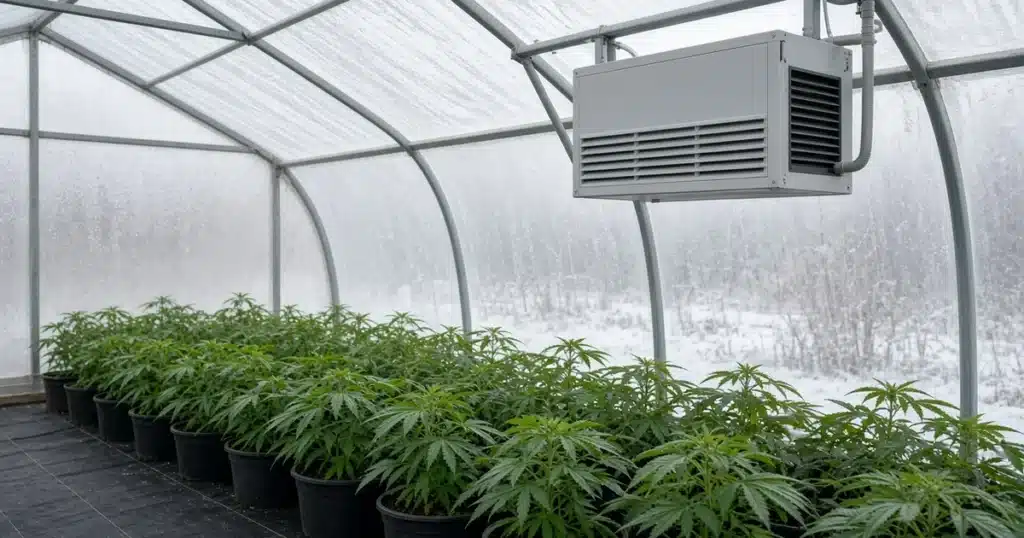
Quick answer: Most small greenhouses are heated with a fan driven unit heater burning natural gas, propane or fuel oil, or with electric heat on a properly rated circuit. Any fuel fired heater must vent its exhaust outdoors and draw enough outside air for clean combustion. University of Florida engineers warn that unvented or poorly vented units release gases that harm people and plants, and UMass Extension adds that tight houses need a fresh air inlet of at least one square inch for every 1,000 Btu per hour of heater input. For cannabis, steady night heat, good air circulation and a working CO alarm matter more than raw heater size.
Why Does a Cannabis Greenhouse Need Heat?
A greenhouse soaks up sunlight by day, but that warmth slips away fast after dark, especially under a single layer of plastic. On a clear winter night the inside air can drop close to the outdoor reading within hours. Cannabis slows its growth sharply in cold air, and a hard chill can damage leaves that sit close to the glazing.
Our greenhouse growing overview covers structure basics. Heat lets you start plants earlier in spring, hold mother plants through winter and finish a fall crop after the first frost. Our guide to frost damage on cannabis shows what cold does to leaves and buds when a structure falls short.
Heat also has a say in humidity. Warm air holds more water vapor, so a little heat at night keeps moisture from settling on plants as dew. That bonus explains why many growers run heaters even on mild autumn nights.
What Heater Types Work in a Small Greenhouse?
Florida’s IFAS publication Heating Greenhouses describes the main systems. Unit space heaters run on natural gas, bottled gas or fuel oil and use a fan to move warm air. They call for a relatively moderate capital investment, install easily and can be expanded as a range grows. The authors suggest aiming several units so each one blows toward the next, which builds a loop of warm air around the house.
Hot water systems run pipes along the perimeter, under benches or beneath a concrete floor. They heat and cool more slowly than steam, but they hold temperatures more evenly. Steam suits large ranges and costs more to install and keep running, so a home setup rarely calls for it.
Infrared heaters warm objects instead of air. Florida notes they keep leaf surfaces warmer than the air around them, which can help with disease management, but they can start a fire if knocked over or placed near flammable material. Heat pumps move heat instead of making it, and they can cool in summer. They lose efficiency once outdoor temperatures dip below freezing.
For most hobby growers, a vented gas unit heater or an electric heater sized to the space covers the need. A poly tube or fan jet can spread that heat more evenly from one end of the house to the other.
Greenhouse Heating Facts at a Glance
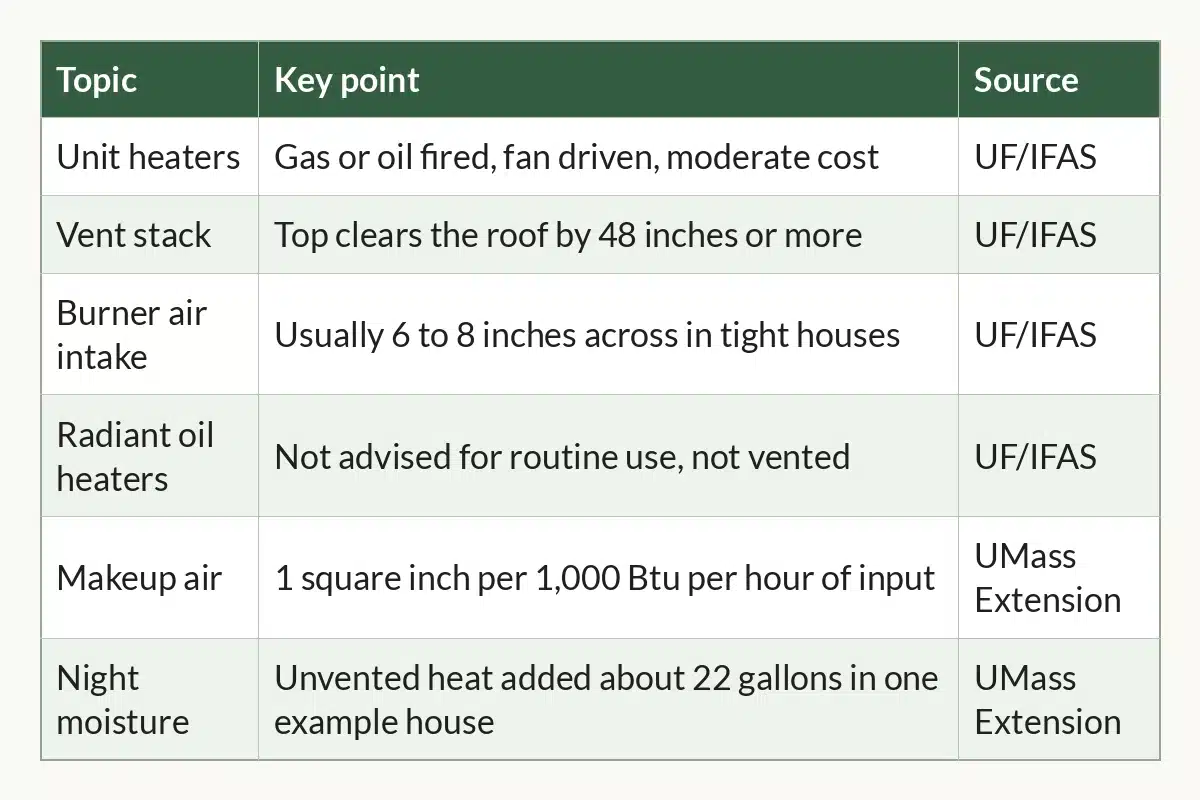
| Topic | Key point | Source |
|---|---|---|
| Unit heaters | Gas or oil fired, fan driven, moderate cost | UF/IFAS |
| Vent stack | Top clears the roof by 48 inches or more | UF/IFAS |
| Burner air intake | Usually 6 to 8 inches across in tight houses | UF/IFAS |
| Radiant oil heaters | Not advised for routine use, not vented | UF/IFAS |
| Makeup air | 1 square inch per 1,000 Btu per hour of input | UMass Extension |
| Night moisture | Unvented heat added about 22 gallons in one example house | UMass Extension |
How Should a Fuel Burning Heater Be Vented?
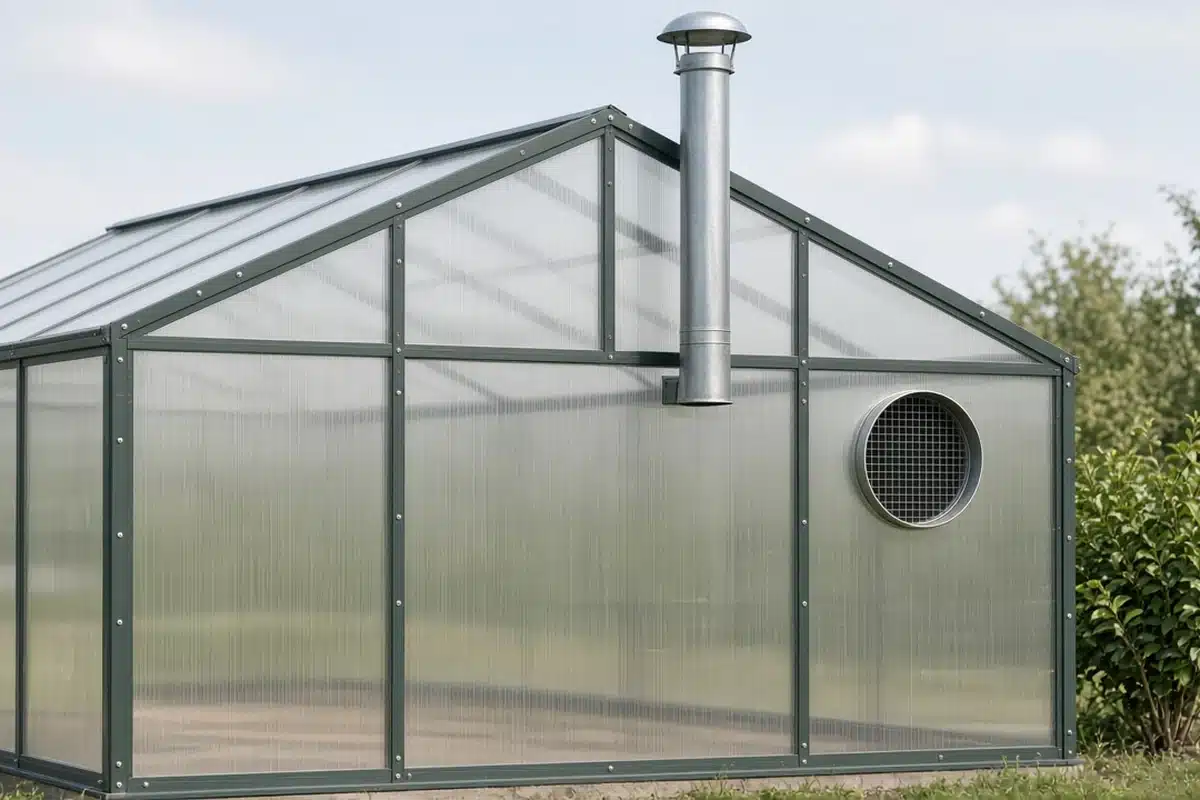
Every fuel burning heater should send its exhaust outdoors through a flue or stack. Florida recommends a vent pipe sized to the maker’s guidance that clears the building’s highest point by 48 inches or more, and it warns that tall trees or buildings nearby can push exhaust back down toward vents and intakes.
Combustion also needs oxygen. A tightly sealed house starves the burner as the night goes on. The UMass Extension page about unvented heaters reports that several tight greenhouses freeze each winter when heaters run short of air and their output falls. Its rule of thumb is a free air inlet of at least one square inch for every 1,000 Btu per hour of heater input. Florida puts typical burner intakes at 6 to 8 inches across.
Unvented heaters dump exhaust straight into the growing space. UMass explains that this adds moisture, and in one example a 30 by 100 foot house heated overnight with unvented propane or kerosene gained about 22 gallons of water vapor. That extra water condenses on cold glazing, drips on plants and raises the odds of mold and blight.
Heater Setup Checklist for Cannabis Growers
These steps protect people, plants and the structure.
- Vent every fuel burning heater outdoors. Florida does not recommend unvented radiant oil heaters for routine greenhouse heating because their combustion gases stay inside.
- Supply fresh air for combustion. Follow the UMass inlet rule so the burner never runs short of oxygen.
- Install a CO alarm. Florida names a gas from incomplete burning as harmful to people. A battery or plug in CO alarm near the work area gives an early warning if the gas builds up.
- Watch for ethylene and exhaust damage. UMass reports that ethylene from combustion can deform leaves and flowers at levels as low as 0.01 parts per million, and other flue gases can scorch and fleck foliage. Twisted new growth near a heater is a warning sign.
- Store fuel apart from plants. Keep propane tanks and fuel oil outside the growing space and follow your fuel supplier and local code.
- Use rated circuits for electric heat. Plug electric heaters into outlets and circuits rated for their full load, never into light extension cords, and keep them clear of plastic, cardboard and dry plant debris.
- Service burners each fall. UMass notes that a burner tuned in fall may run less cleanly by spring, so check flame, flue and intake through the season.
How Much Heat Does Cannabis Need at Night?
Cannabis tolerates a modest drop at night, but long cold spells slow growth and invite moisture problems. Many growers set the thermostat to keep the night air comfortably above the point where dew forms on leaves, then let the sun do the rest. What setting is right depends on your plants’ stage and your local climate, so watch growth and make small adjustments.
Our overview of the ideal grow room climate explains how temperature and humidity work together, and the same logic applies under glass or plastic.
Heating at night costs money, so start by trimming heat loss. Seal gaps around doors, add a second film layer if your frame allows it and keep vents closed on cold nights. Florida points out that heat pumps can save energy compared with fuel heat, though their cost may outweigh the savings where winters are short and mild.
Steps for Setting Up Greenhouse Heat
- Measure the space. Note the floor area, wall height and covering type so a heating dealer can size the unit.
- Pick the fuel. Choose natural gas, propane, fuel oil or electric based on cost and what reaches your site.
- Plan the vent and intake. Route the flue so its top clears the roof peak by 48 inches or more and add an outside air inlet sized by the UMass rule.
- Aim for circulation. Point unit heaters so warm air loops around the house, or add a fan jet tube for even spread.
- Wire electric units correctly. Have a qualified electrician confirm the circuit rating before winter.
- Add alarms and a thermostat. Place a CO alarm near the door and a thermostat at plant height away from direct heater blast.
- Test on a cold night. Check temperatures at several spots before plants move in.
Troubleshooting Greenhouse Heating Problems
Heater runs but the house stays cold. The burner may lack combustion air, or heat may escape through gaps. Open the air inlet and seal leaks.
New leaves twist or droop near the heater. Ethylene or other flue gases may be leaking. Shut the unit down and have the flue and heat exchanger inspected.
Water drips from the roof at dawn. Moisture is condensing on cold glazing. Vent briefly with the heat on and confirm the heater exhausts outdoors.
One end runs much colder. Air is not mixing. Redirect the heater or add circulation fans.
The CO alarm sounds. Leave the greenhouse, ventilate it from outside and have the heater checked before using it again.
Sources
- University of Florida IFAS Extension, Heating Greenhouses (AE015): https://ask.ifas.ufl.edu/publication/AE015
- UMass Extension, Problems With Using Unvented Greenhouse Heaters: https://www.umass.edu/agriculture-food-environment/greenhouse-floriculture/fact-sheets/problems-with-using-unvented-greenhouse-heaters
FAQ
Can I use an unvented propane heater in my greenhouse?
It is risky. Exhaust gases and moisture stay inside and can damage plants and harm people. A vented heater is the better choice.
How big should the fresh air inlet be?
UMass Extension suggests at least one square inch for every 1,000 Btu per hour of heater input.
Is electric heat better than gas?
It produces no exhaust, but it needs a circuit rated for its load and clearance from flammable materials.
Does heater exhaust add useful carbon dioxide?
Heaters run mostly at night, when plants have no use for extra carbon dioxide, so the gain is small.
Where should a CO alarm go?
Mount it near where people work, following the alarm maker's guidance.


