
Greenhouse Shade Paint and Whitewash
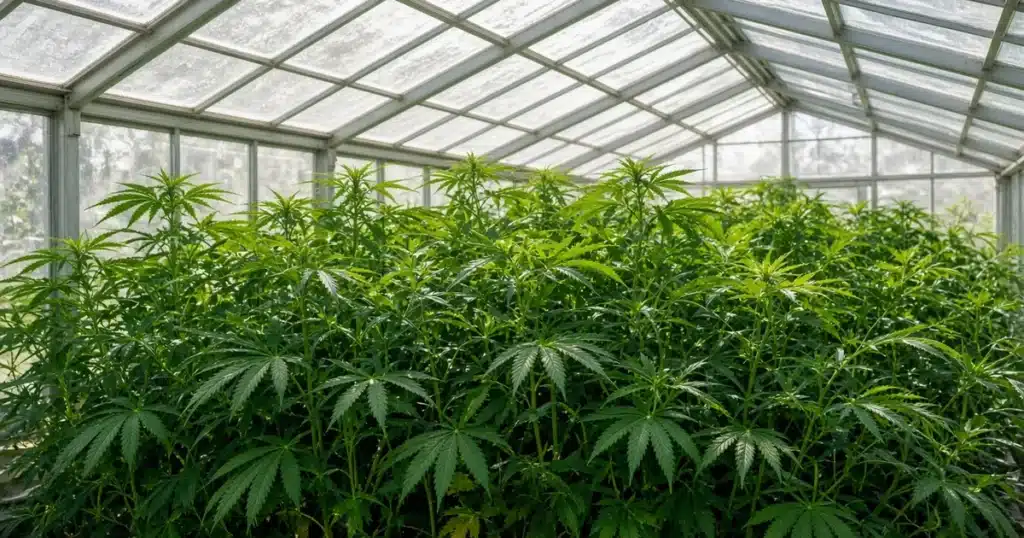
Quick answer: Greenhouse shade paint, often called whitewash or shading compound, is a thin coating sprayed or brushed on the outside of glass to cut summer sun and heat. Oklahoma State Extension advises using it only on glass, because it can harm plastic and other coverings and may not come off fully. University of Tennessee Extension describes applying shade paint in late spring or summer, letting it shade through the hot months, then cleaning off whatever has not worn away by fall. For a cannabis greenhouse with glass panels, paint is a low cost way to tame midsummer heat when shade cloth is not practical.
What Is Greenhouse Shade Paint?
Shade paint is a light colored coating that sits on the outer face of the glazing. It reflects and scatters part of the incoming sunlight before that energy reaches the plants, so the air and leaves inside warm up more slowly.
The Oklahoma State hobby greenhouse fact sheet lists paint on materials alongside roll up screens, shade cloth and vinyl shading film as the standard ways to protect plants from strong sun. It notes that commercial shading compound comes in white or green, that some types thin with paint solvents and that others mix with water.
Growers also make their own. Oklahoma State gives an easy formula based on white latex paint and water. Mixing white latex paint with ten times its volume of water gives heavy shading. Diluting it with 15 to 20 times its volume gives a moderate, standard level. The same page includes an older lime based whitewash recipe, though most home growers today reach for the simpler paint mix.
Why Shade a Cannabis Greenhouse at All?
If you are still planning a structure, our greenhouse growing overview compares glass and plastic houses. Glass lets in plenty of light, and in winter that is exactly what plants want. In midsummer the same glass can let in more sun than a crop can use, and the trapped heat climbs fast on still afternoons.
Virginia Tech, in a bulletin covering greenhouse glazing materials, explains that in summer or in southern locations the light entering a greenhouse can rise above optimal levels. In those cases, growers can cut the incoming light for a while with shade cloth, a shading system that retracts or a shading compound.
Cannabis loves strong light, yet leaves under hot glass can curl, turn pale at the tips and lose water faster than roots can replace it. The cannabis heat stress article walks through those warning signs. A light coat of paint on the roof cuts part of the incoming sun and can ease afternoon heat buildup.
Shade Paint at a Glance
| Topic | Key point | Source |
|---|---|---|
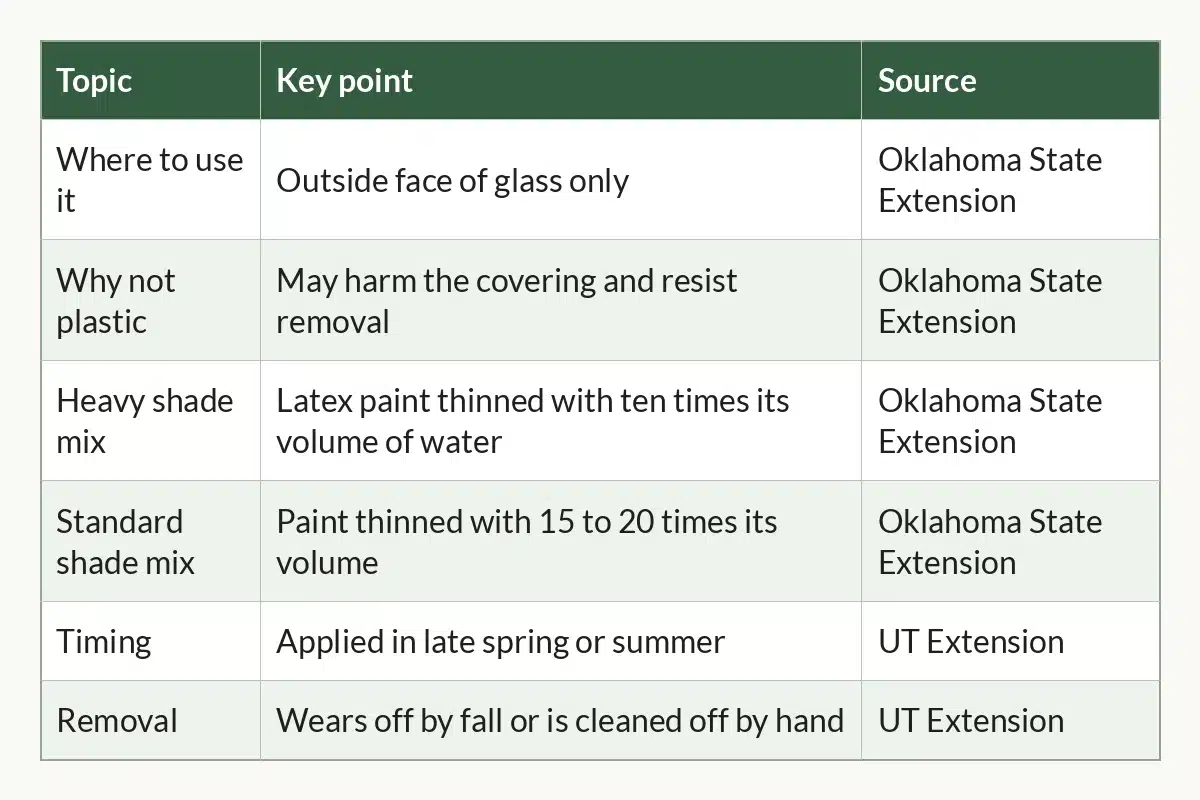
| Where to use it | Outside face of glass only | Oklahoma State Extension |
| Why not plastic | May harm the covering and resist removal | Oklahoma State Extension |
| Heavy shade mix | Latex paint thinned with ten times its volume of water | Oklahoma State Extension |
| Standard shade mix | Paint thinned with 15 to 20 times its volume | Oklahoma State Extension |
| Timing | Applied in late spring or summer | UT Extension |
| Removal | Wears off by fall or is cleaned off by hand | UT Extension |
Shade Paint vs Shade Cloth: Which Fits Your Greenhouse?
Both tools do the same basic job, but they behave differently over a season.
The University of Tennessee publication Selecting and Designing Small Scale Greenhouses says shade cloth can be fastened outside the greenhouse for the high light season, where it reduces incoming light, cuts heat gain and helps the cooling system work better. It then notes that some growers use shade paint instead, applied in late spring or summer.
Paint brings some clear strengths. It costs little, covers odd shaped roofs evenly and needs no frame, clips or ropes. It also cannot blow loose in a storm.
Cloth has its own advantages. Oklahoma State notes that shade cloth comes in grades from 30 to 100 percent light transmission, so you can choose an exact level, and you can pull it off on a cloudy week. Paint stays put once applied, so plants get less light on overcast days as well as bright ones. Our article on shade cloth for cannabis covers cloth grades in detail.
In practice, paint suits glass houses that face long, reliably sunny summers. Cloth is the better fit for plastic houses and for growers who want to adjust shade week by week.
When Should You Apply Shade Paint?
Timing follows the sun. Tennessee describes late spring or early summer as the usual start, once light and heat begin to climb past what plants need. Apply too early and young plants lose light they could have used. Apply too late and the first hot spell may beat you to it.
Watch your greenhouse thermometer through May and June. When afternoon temperatures start running well above outdoor readings even with vents open, it is time for a first light coat. You can add a second coat later in summer if the first one fades or proves too thin.
A simple light reading helps too. Many phone apps and handheld meters give a rough comparison between outdoor sun and the light under the roof. Take a reading at midday before you paint and again after, so you know how much the coating actually removed. If plants start leaning or stretching toward the brightest panels, the coat is probably too heavy for that part of the house.
Save the job for a dry day. Wet glass will not hold the coating well, and rain soon after spraying can wash a fresh layer away before it bonds.
How to Apply Greenhouse Shade Paint
- Confirm the glazing is glass. Oklahoma State warns against using shading compound on other covering materials.
- Clean the glass. Wash off dust and grime so the coating bonds evenly.
- Mix your shade level. Thin white latex paint with ten volumes of water for heavy shade, or with 15 to 20 volumes for standard shade.
- Test a small area. Spray one panel and check the light level inside before coating the whole roof.
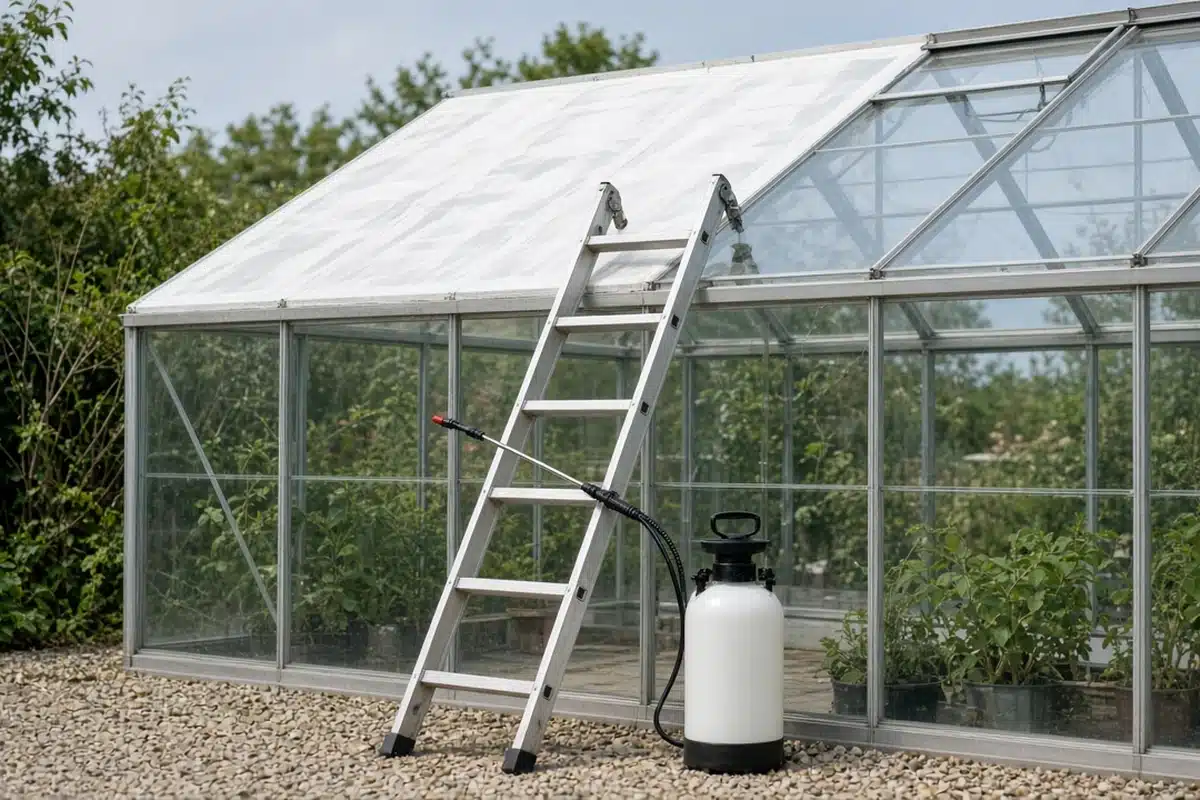
- Apply from the outside. Use a garden sprayer, roller or wide brush and work in thin, even passes.
- Shade the sunny side first. Roof panels facing south and west usually carry the most afternoon heat.
- Keep it off vents and gutters. Paint on moving parts can stiffen hinges and clog drains.
- Check plant response. Look for steadier leaf posture and lower afternoon temperatures over the next week.
How Do You Remove Shade Paint in Fall?
As days shorten, plants need every bit of light again. Oklahoma State notes that much of the compound may already have worn off by fall, depending on the mix. Any coating left behind should be scrubbed off clear glass so the most light can pass through.
Tennessee agrees that shade paint may wear away by fall or may need to be removed by cleaning. A latex paint mix usually comes off with a soft brush, plenty of water and some patience. Work from the top down and rinse often so loosened paint does not dry back onto the panels.
Keep runoff away from plant beds and drains where possible. Clean glass heading into fall helps late season flowers get the light they need to finish.
Troubleshooting Shade Paint Problems
Coating streaks or runs. The mix is too thin or the glass was dirty. Clean the panels and apply thinner coats in more passes.
Plants stretch and look pale. The shade is too heavy. Wash part of the coating off or switch to a weaker mix next season.
Paint washed off after a storm. Rain arrived before it bonded. Reapply on a dry day with a clear forecast.
Paint will not come off plastic. Shading compound was used on the wrong covering. Oklahoma State warns that it may not be easily or totally removable from materials other than glass, so switch to shade cloth on plastic houses.
Still too hot inside. Paint alone may not be enough. Add ventilation or another cooling method alongside the shading.
Sources
- Oklahoma State University Extension, The Hobby Greenhouse: https://extension.okstate.edu/fact-sheets/the-hobby-greenhouse-2.html
- University of Tennessee Extension, Selecting and Designing Small Scale Greenhouses to Fit Your Needs (W935 B): https://uthort.tennessee.edu/wp-content/uploads/sites/228/2023/11/W935-B.pdf
- Virginia Cooperative Extension, Controlled Environment Agriculture Coverings and Glazing Materials (SPES 821): https://www.pubs.ext.vt.edu/content/dam/pubs_ext_vt_edu/spes/spes-821/SPES-821.pdf
FAQ
Can I use shade paint on a polycarbonate greenhouse?
Oklahoma State advises against it. Use shading compound only on glass, and choose shade cloth for plastic coverings.
Is whitewash the same as shade paint?
Growers use the terms loosely for coatings that shade glass, including homemade lime mixes and diluted latex paint.
How long does shade paint last?
Usually one summer. Much of it wears away by fall, and the rest is scrubbed off.
Does shade paint reduce heat?
Yes. It bounces part of the sunlight away before it gets in, so less heat builds up inside.
Should I shade my cannabis in winter?
No. Winter light is scarce, so remove any coating before the short days arrive.


