Composted Bark Fines in Cannabis Mixes: Pine Bark for Structure and Air
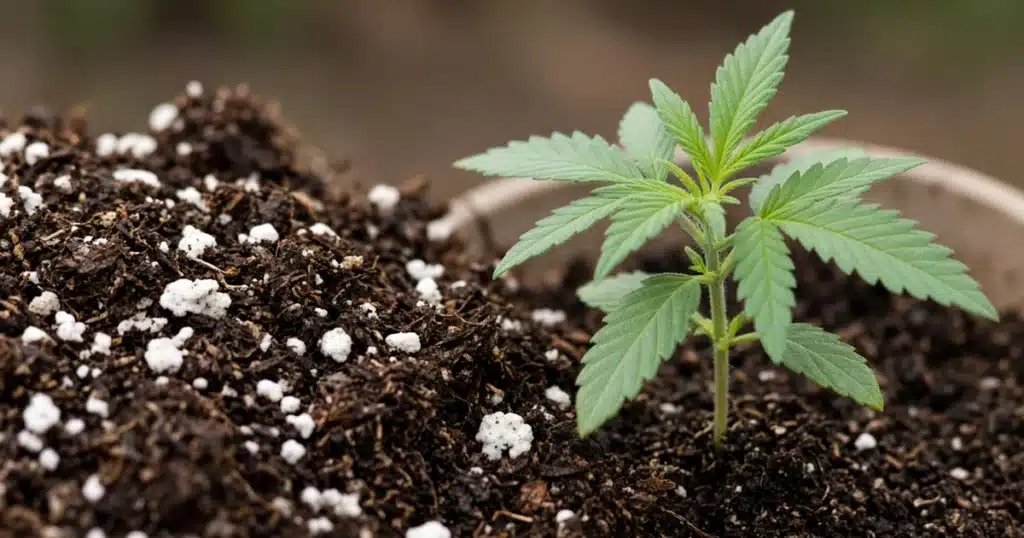
Quick answer: Pine bark fines are small, screened pieces of pine bark, usually aged or composted, used as a structural part of potting mixes. University of Arkansas Extension reports that bark makes up 80 to 100 percent of most outdoor nursery container mixes and that pine bark is preferred over hardwood because it resists decay. Purdue Extension notes that greenhouse growers blend pine bark with peat for structure. For cannabis, composted bark fines at roughly 20 to 30 percent of a mix add lasting air space, but fresh bark can pull nitrogen from plants unless extra nitrogen is supplied.
What Are Pine Bark Fines?
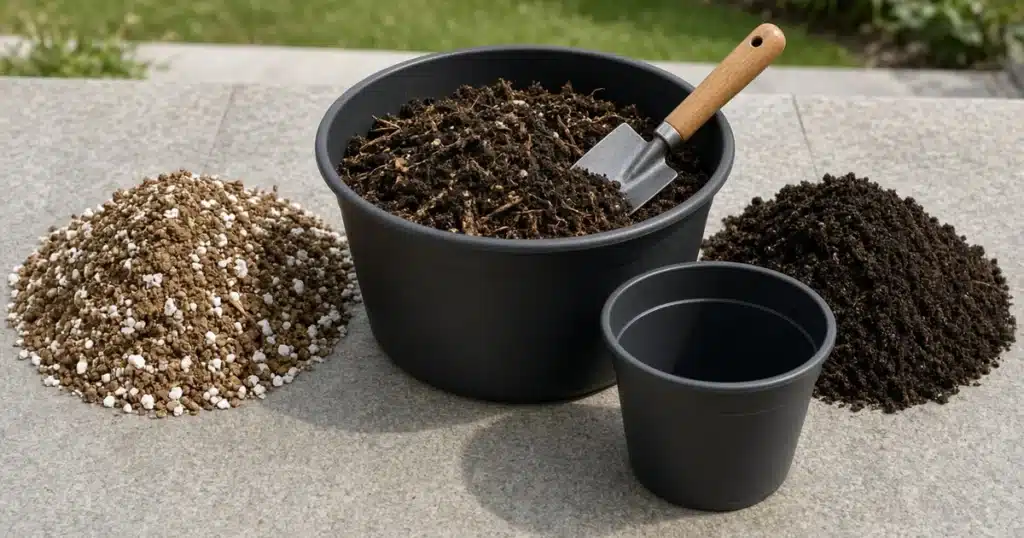
Bark fines are the smaller particles left after pine bark is milled and screened. In a Purdue Extension bulletin on container substrates, the process is described simply. Processors strip bark from harvested pine trees, hammer mill it and screen it to a useful size. Many then age the bark before sale.
The nursery trade relies heavily on it. Purdue calls pine bark the main substrate component for nursery crops and notes that in greenhouse mixes it helps stretch peat moss while adding structure and aggregation.
Bark fines are not the same as bark mulch. Mulch nuggets are much coarser and meant for the soil surface. Our guide to mulch for cannabis covers that use. Iowa State Extension, in a Yard and Garden article on potting media, warns against putting bark mulch into potting media because it has not been processed for that purpose and may come from the wrong tree species.
Why Use Composted Bark in a Cannabis Mix?
Bark brings three useful traits to a container.
Lasting structure. Bark breaks down slowly. An Arkansas Extension publication on container growing media says pine bark resists decomposition better than hardwood bark. That helps a mix keep its shape through a long cannabis grow.
Air space. Coarse particles leave larger pores. Iowa State notes that bark used in orchid mixes is coarser and creates more air filled pores, while finer composted bark holds more water.
Availability. Bark is a byproduct of the timber industry. Arkansas notes that supply can tighten in some markets because of demand for mulch and fuel.
Peat free growers often lean on bark alongside coir. Bark also works well next to perlite. Our perlite vs vermiculite comparison shows how those two minerals behave next to organic components like bark.
Bark is there for structure, which puts it on the amendment side of our amendment and fertilizer guide.
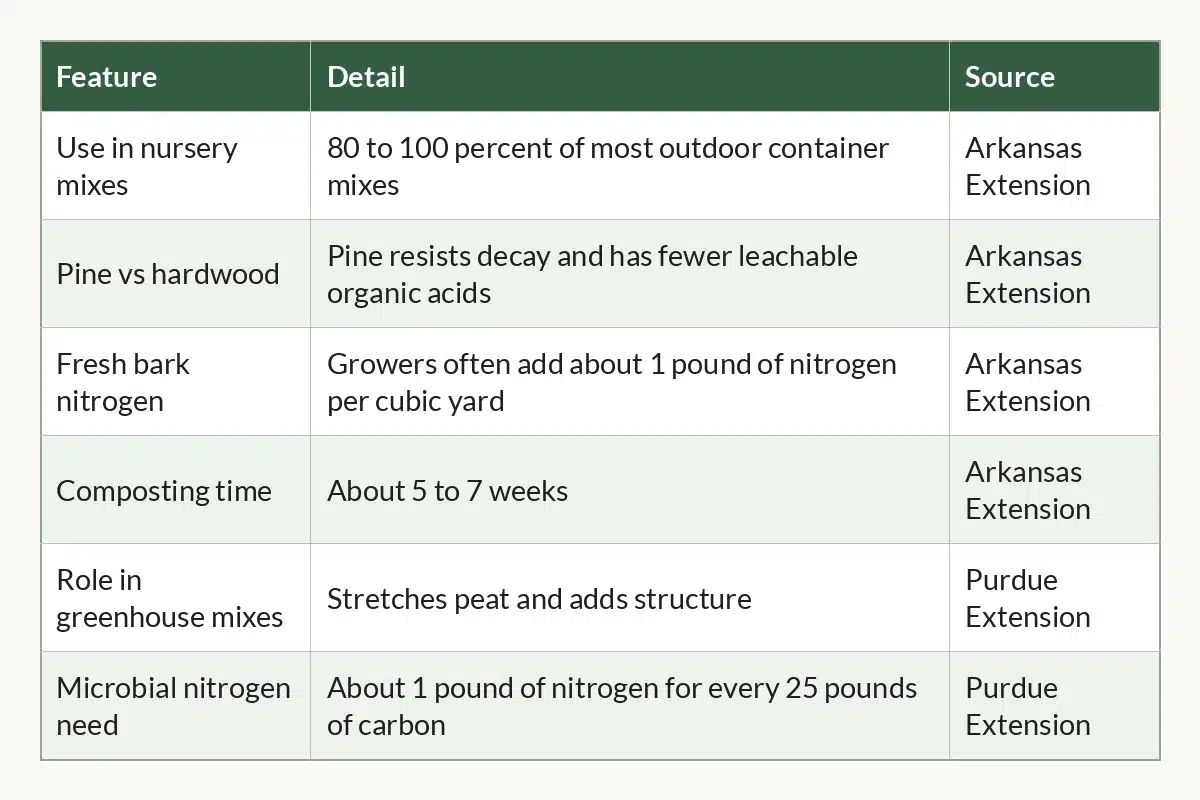
Composted Bark at a Glance
| Feature | Detail | Source |
|---|---|---|
| Use in nursery mixes | 80 to 100 percent of most outdoor container mixes | Arkansas Extension |
| Pine vs hardwood | Pine resists decay and has fewer leachable organic acids | Arkansas Extension |
| Fresh bark nitrogen | Growers often add about 1 pound of nitrogen per cubic yard | Arkansas Extension |
| Composting time | About 5 to 7 weeks | Arkansas Extension |
| Role in greenhouse mixes | Stretches peat and adds structure | Purdue Extension |
| Microbial nitrogen need | About 1 pound of nitrogen for every 25 pounds of carbon | Purdue Extension |
Does Bark Tie Up Nitrogen?
It can, especially when fresh. Purdue explains the mechanism in plain terms. Microbes need about 1 pound of available nitrogen for every 25 pounds of carbon they consume. When a substrate has more carbon than that, microbes take nitrogen intended for the plant. Purdue calls this nitrogen immobilization and notes it can leave the crop short of nitrogen.
Bark is high in carbon, so fresh bark is the main concern. Arkansas notes that many nursery growers using fresh bark add about 1 pound of nitrogen per cubic yard to make up for this draw. It also reports that aged bark has less humus and pulls down more nitrogen in the pot than composted bark.
So for cannabis, buy composted bark whenever you can find it. If you only find aged or fresh bark, plan a little extra nitrogen early in the grow and watch the lower leaves for paling.
Is Pine Bark Better Than Hardwood Bark?
For potting mixes, yes. Arkansas Extension prefers pine bark because it resists decomposition and releases fewer organic acids. Hardwood bark is chemically quite different. Arkansas says hardwood bark carries compounds that make composting necessary before use, and once composted it can turn fairly alkaline, with a pH of 7 to 8.5.
That alkaline swing matters for cannabis, which prefers slightly acidic to near neutral conditions. Arkansas also notes that fresh hardwood bark is less acidic than pine bark, so pine is the better pick for a cannabis blend that already contains lime. If you cannot confirm the source, ask your supplier whether the product is pine.
How Does Bark Compare With Peat and Coir?
Each organic component brings something different, which is why commercial mixes often combine them. Purdue points to cation exchange capacity, the ability of a material to hold nutrients such as potassium, calcium and magnesium so they do not wash away. Peat, coir, vermiculite and most composted organic matter rank high on that scale. Uncomposted organic materials and minerals like perlite and sand rank low.
Composted bark, then, beats fresh bark on more than nitrogen. Once composted, bark behaves more like other organic matter and holds nutrients better. Fresh bark mainly adds structure.
Arkansas describes coir as resistant to breakdown, so it may shrink less than peat, and it rewets more easily after drying. Peat holds plenty of water but repels it when bone dry. Bark sits between them, holding less water than either while keeping pores open for longer.
In a cannabis mix, coir or peat holds moisture, bark keeps the structure from collapsing and perlite adds quick drainage. That balance is very different from a pot of garden soil, which compacts in a container. Our article on why pots need potting mix instead of garden soil explains why containers need a lighter, more open medium.
What pH Range Should a Bark Mix Hit?
Purdue says most greenhouse crops do best when the substrate pH falls between 5.4 and 6.6, and it suggests adding dolomitic or calcitic limestone when formulating a mix to reach that range. That window is a sensible target for cannabis in soilless blends as well.
Because pine bark leans acidic, a bark heavy mix may need a little lime. Test a sample of the finished blend with a simple pour through or slurry test before planting, then adjust.
How Much Bark Should a Cannabis Mix Contain?
Nursery mixes can run nearly all bark. Purdue lists a straight pine bark mix for herbaceous perennials, and Arkansas notes that bark fills 80 to 100 percent of many outdoor container mixes. Cannabis growers usually want more water holding, so bark plays a supporting role.
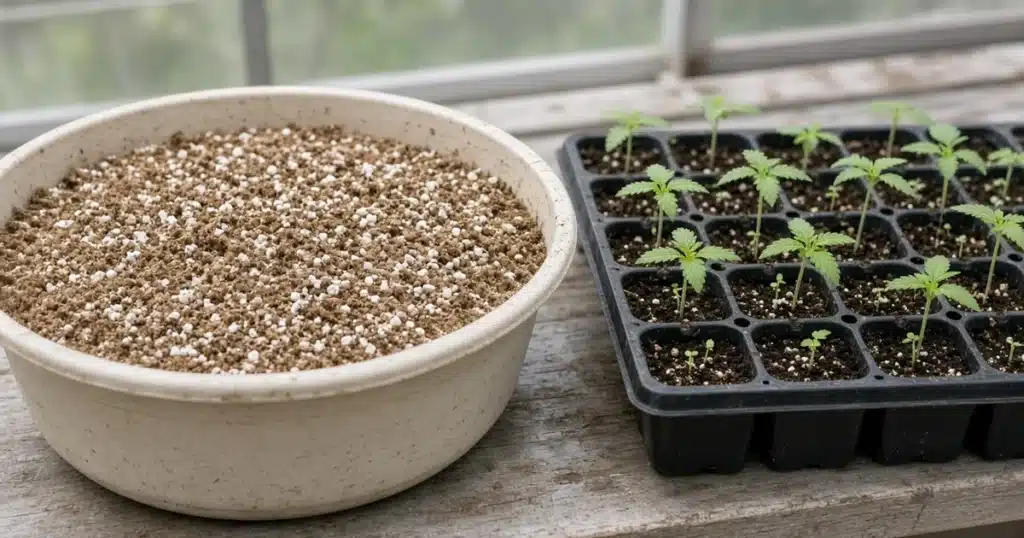
NC State Extension, in the propagation chapter of its gardener handbook, suggests equal parts fine pine bark, sphagnum peat and perlite for starting seedlings. For larger cannabis pots, a good starting point is one part composted bark to three or four parts of a coir or peat based mix, plus perlite for air. That keeps bark near 20 to 30 percent of the volume.
Raise the bark share if you water heavily or grow in large outdoor containers. Lower it for small pots that dry quickly.
How to Add Bark Fines to a Cannabis Mix
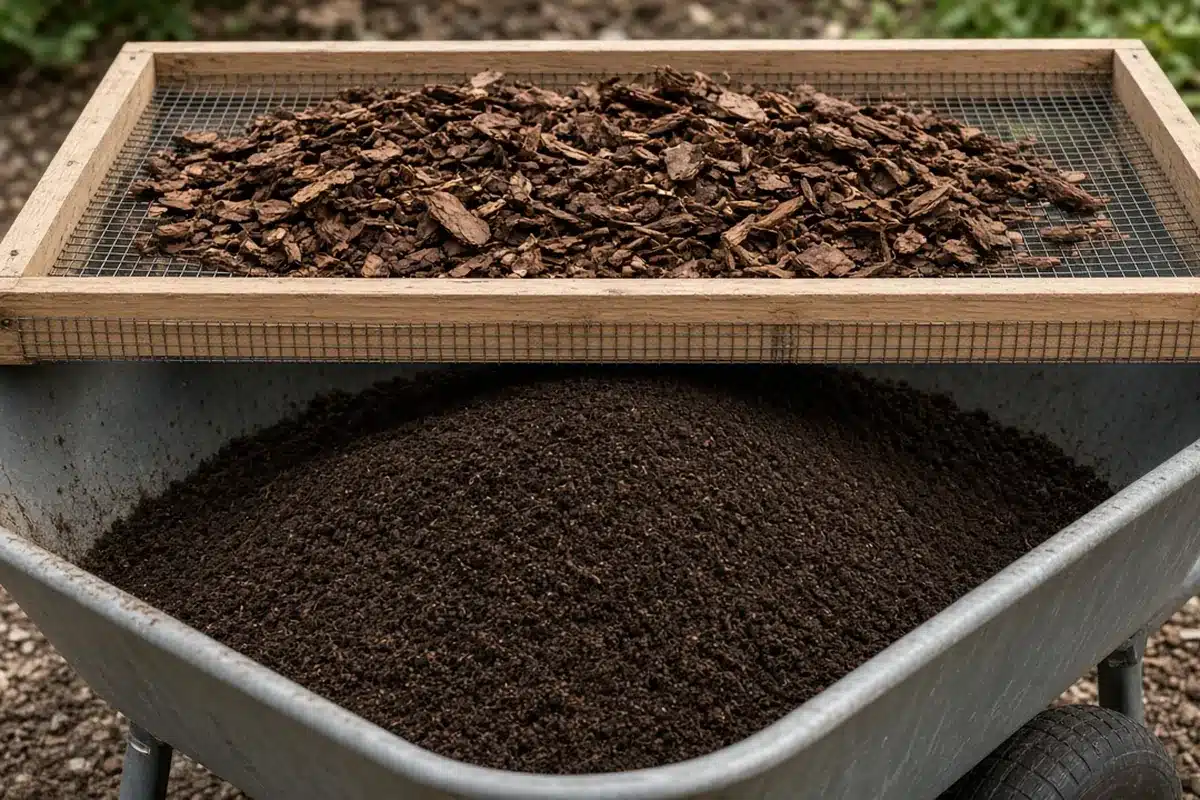
- Choose composted pine bark. Look for fine particles rather than nuggets.
- Screen out large pieces. Remove chunks bigger than about half an inch, following Iowa State guidance for potting media.
- Moisten the bark. Damp bark blends more evenly with coir or peat.
- Measure the share. Start with roughly one part bark to three or four parts base mix.
- Add perlite or pumice. Balance the organic portion with a mineral for air.
- Include nitrogen if the bark is fresh. Blend in a modest extra amount of a nitrogen source.
- Mix evenly and fill loosely. Avoid packing the mix into pots.
Troubleshooting Bark Based Mixes
Lower leaves pale soon after potting. Bark may be tying up nitrogen. Feed a little extra nitrogen.
Mix dries too fast. The bark is too coarse or too abundant. Add more coir or compost.
Mix stays soggy. The bark is very fine. Add perlite or pumice.
pH reading high. Hardwood bark may be in the blend. Switch to pine bark.
Mix sinks over the season. Uncomposted bark is breaking down. Use fully composted bark next time.
Sources
- University of Arkansas Cooperative Extension, Growing Media for Container Production in a Greenhouse or Nursery (FSA6097): https://www.uaex.uada.edu/publications/pdf/FSA-6097.pdf
- Purdue Extension, Evaluating Container Substrates and Their Components (HO 255 W): https://www.extension.purdue.edu/extmedia/ho/ho-255-w.pdf
- Iowa State University Extension and Outreach, Potting Media: https://yardandgarden.extension.iastate.edu/article/2025/03/potting-media-components-and-handling
- NC State Extension, Extension Gardener Handbook, Propagation: https://content.ces.ncsu.edu/extension-gardener-handbook/13-propagation
FAQ
Is pine bark good for cannabis?
Composted pine bark fines are a useful structural ingredient in cannabis mixes.
Does bark lower soil pH?
Pine bark leans acidic, while composted hardwood bark can turn alkaline.
Can I use bark mulch in potting mix?
Iowa State advises against it because mulch is not processed for potting media.
Why does fresh bark yellow plants?
Microbes use nitrogen to break down bark, leaving less for the plant.
How long does bark take to compost?
Arkansas Extension reports about 5 to 7 weeks.