
Insect Screening for Cannabis Greenhouses
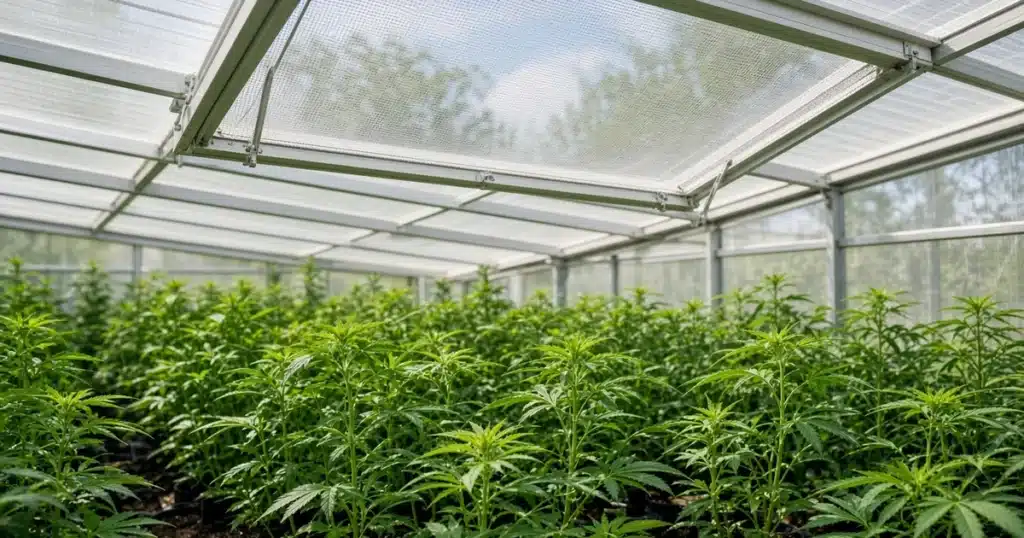
Quick answer: Insect screening keeps small flying pests out of a cannabis greenhouse by covering vents, intakes and doorways with fine mesh. UF/IFAS Extension calls exclusion the first strategy in a greenhouse pest plan and pairs screening with a weed free border and a double door entry. The catch is airflow. According to NC State Extension, smaller holes block more insects but also resist air more, so you need extra screen area to keep the house from overheating. Screens work best when the house starts clean and doors stay shut.
Why Screen a Cannabis Greenhouse?
Vents and doors let in fresh air, and with it come whiteflies, thrips, aphids and other small fliers. Once they reach a warm, sheltered crop with months left to grow, they multiply fast.
The UF/IFAS publication on exclusion methods for greenhouse pests argues that keeping pests out must come first in any greenhouse pest program, because options shrink once insects are inside. It describes Florida growers whose crops faced heavy fall insect pressure, a situation many outdoor cannabis growers will recognize in late summer.
Cannabis in a greenhouse stays in place for a long season, so a single early arrival can turn into a big population by flowering. The green house growing guide covers the basics of the structure, and screening ranks among the most useful upgrades you can add.
How Does Insect Screening Work?
Insect screen is a woven or spun fabric with holes too small for target insects to squeeze through. It goes over every opening that lets outside air in.
UF notes that modern manufacturing can make screen fine enough to keep out even very small insects. Screens fit both naturally vented houses and houses with fans and wet pads.
UF trials near Live Oak found that whiteflies entered through unscreened roof vents as high as 20 feet off the ground. Height alone does not keep insects out, so every vent needs a screen, including those near the ridge.
NC State adds an interesting detail about exhaust fans. Its bulletin on screening for insect exclusion explains that fans fitted with shutters do not need screens, because pests cannot fly against the outgoing air stream. When fans stop and shutters close, most pests are not drawn to them, since insects seek the color of plants rather than smell.
Insect Screening at a Glance
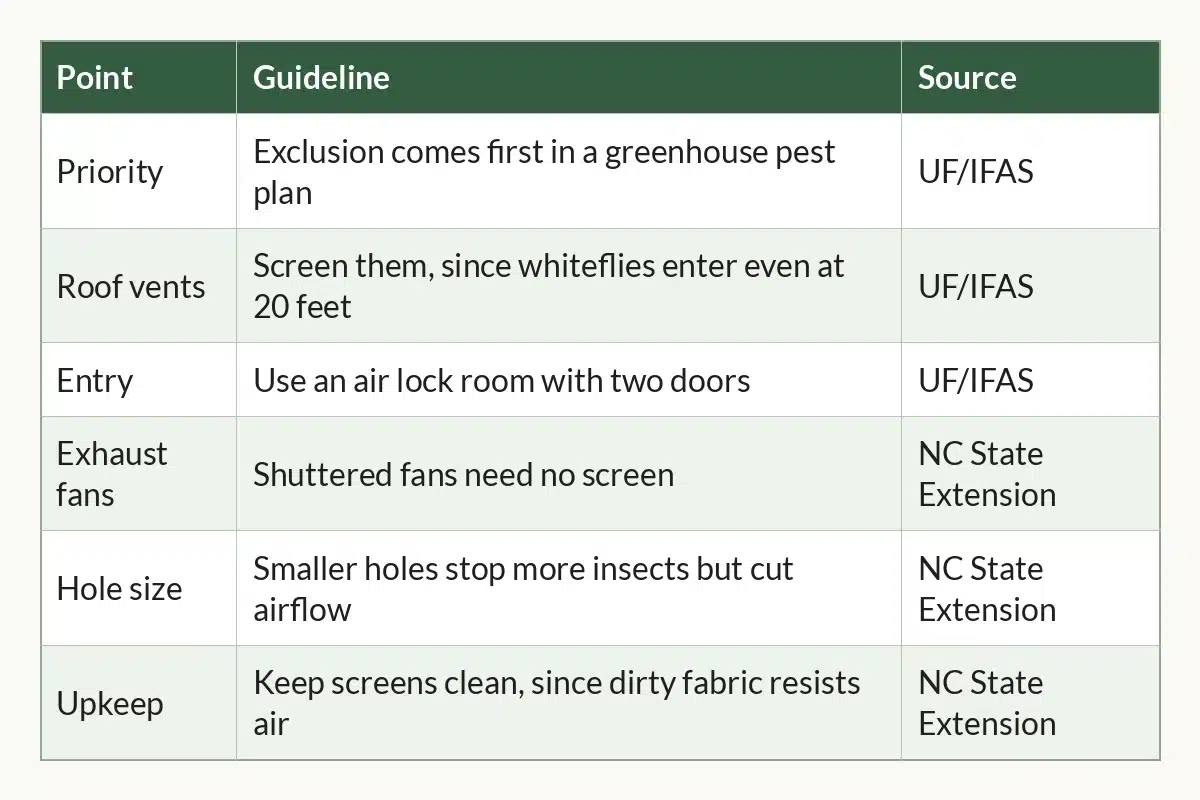
| Point | Guideline | Source |
|---|---|---|
| Priority | Exclusion comes first in a greenhouse pest plan | UF/IFAS |
| Roof vents | Screen them, since whiteflies enter even at 20 feet | UF/IFAS |
| Entry | Use an air lock room with two doors | UF/IFAS |
| Exhaust fans | Shuttered fans need no screen | NC State Extension |
| Hole size | Smaller holes stop more insects but cut airflow | NC State Extension |
| Upkeep | Keep screens clean, since dirty fabric resists air | NC State Extension |
Does Screening Reduce Airflow?
Yes, and more than anything else, this is what to plan for. UF warns that any screen on a vent cuts airflow through that opening. Less airflow can wear out fan motors or reduce cooling.
NC State spells out the trade off. Screens with small holes keep out more insects, yet they push back harder against moving air. If you pick a very fine fabric and underestimate how much you need, the result can be high static pressure, poor air exchange, more power use, worn fans and a hot greenhouse.
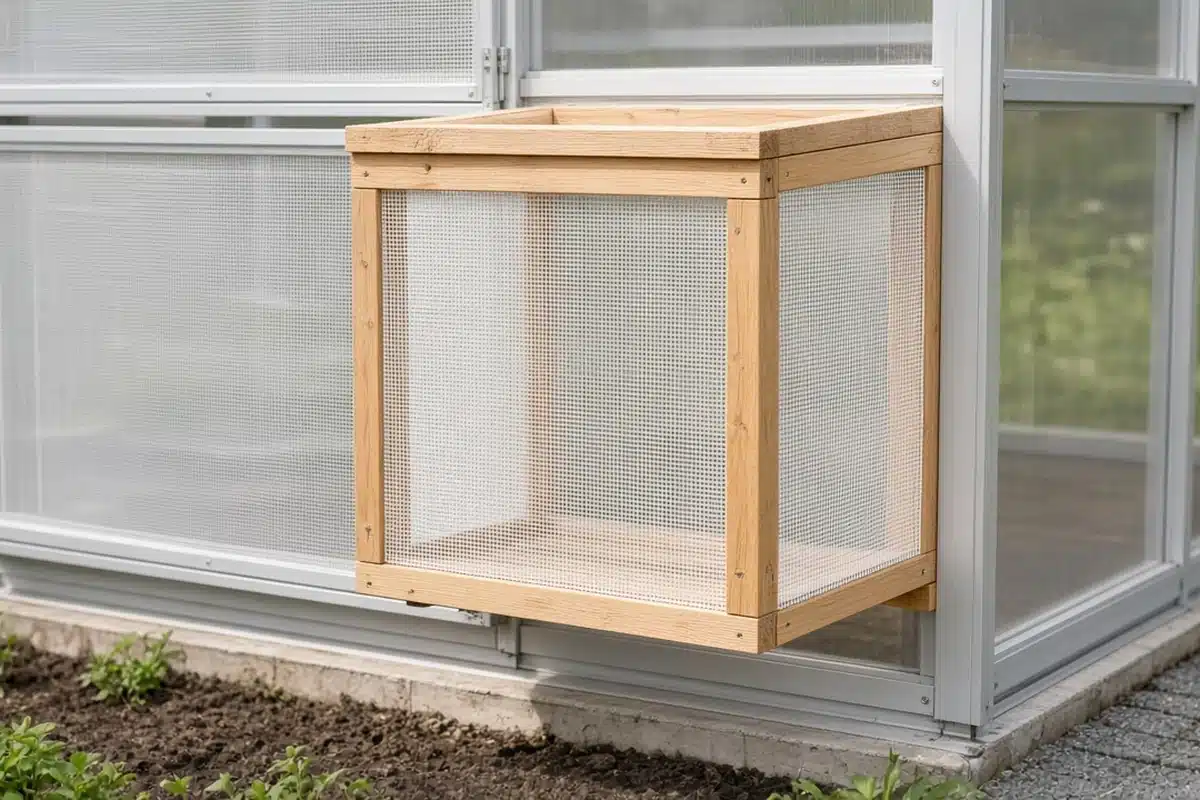
The answer is more surface area. UF advises following the screen maker’s guidance and increasing the area covered by screen to offset the airflow loss. Growers often build a screened box or frame that sticks out from the vent, which gives the air more fabric to pass through.
Heat is a real concern for cannabis. Leaves curl and growth slows when a house runs too hot. Our article on cannabis heat stress explains what to watch for if screens slow your ventilation.
How Do You Check Airflow After Screening?
NC State describes measuring the pressure drop inside the house with a simple gauge called a manometer. When exhaust fans run, air pressure inside drops, and a screen adds to that drop.
The bulletin walks through a few steps: measure the pressure drop with fans running and screens off, figure out how much more resistance the fans can handle, look up how much air each fan moves at the 0.1 inch maximum and then size the screened area to match. It warns that retrofitting a screen with no other changes will reduce airflow and raise temperatures.
For a small hobby greenhouse with a single fan, there is a simpler way to check. Hang a basic thermometer at plant height midway down the house, away from direct sun, so the readings reflect what the plants feel. Install the screen, then watch the temperature on a hot afternoon. If it climbs much higher than before, add screen area or fan capacity.
What Else Keeps Insects Out?
Screens are one layer. UF lists several more that work together.
Clean borders. Keep weeds and other plants away from the greenhouse walls. UF suggests a ground cover strip of 10 to 20 feet around the house, with any weeds in that strip removed. Look at other plants in the yard too, and remove those that attract and shelter pests.
An air lock entry. UF calls a double door entry room essential in houses with fans and wet pads. Without it, fans pull air in through the open doorway instead of the screened intake. UF notes that infestations often start near an unprotected door.
Closed doors. The NC State bulletin adds that exclusion works much better when people keep doors shut, especially while fans are running.
Clean plants. UF stresses checking where transplants come from, since insects often ride in on plants from elsewhere. Inspect every clone before it enters.
Early scouting. Even with screens, some insects get in. UF recommends sticky cards, regular plant checks and a hand lens to spot problems early. The page on ways to protect marijuana plants from pests and bugs lists the early warning signs.
How Should Screens Be Maintained?
Dust clogs screen fabric, and clogged screen resists air even more. NC State recommends building screened structures with easy access to the inside so you can clean the fabric. It suggests checking pressure regularly in hot, dusty weather.
There is one timing rule. NC State says not to wash screens while fans are running. Water can fill the holes and stop airflow entirely, and the house may overheat before the screen dries. Clean them in the evening or early morning instead.
Also remember the caution in the same bulletin: if pests are already inside, or arrive on plants or clothing, the screen will hold them in. Start with a clean house.
How to Add Insect Screening to a Greenhouse
- Clean the house first. Remove plants and debris so nothing is trapped inside.
- List every opening. Include roof vents, side vents, intake louvers and gaps around doors.
- Pick a mesh. Match hole size to your main pests, knowing finer mesh cuts more air.
- Add extra area. Build out frames or boxes so screen area exceeds the vent opening.
- Skip shuttered exhaust fans. NC State notes these do not need screens.
- Build an entry room. Add a second door so the outer door closes before the inner one opens.
- Clear the border. Lay ground cover and keep weeds away from the walls.
- Test on a hot day. Compare temperatures and adjust screen area or fans if needed.
Troubleshooting Greenhouse Insect Screens
House runs hotter after screening. Screen area is too small or fabric is dirty. Add area and clean it.
Insects still appear near the door. Air is entering through the doorway. Add an entry room or keep doors shut.
Pests show up on new plants first. They arrived with the clones. Inspect and isolate new plants.
Screen sags or tears. Frame support is weak. Add battens and patch holes quickly.
Airflow stops after rain or washing. Water is filling the mesh. Let it dry and wash only when fans are off.
Sources
- UF/IFAS Extension, Exclusion Methods for Managing Greenhouse Vegetable Pests (IN730): https://ask.ifas.ufl.edu/publication/IN730
- NC State Extension, An Update on Screening for the Exclusion of Insect Pests: https://hortscans.ces.ncsu.edu/uploads/a/n/an_updat_53e4f5ac74de7.pdf
FAQ
Do roof vents really need screens?
Yes. UF found whiteflies entering through unscreened roof vents 20 feet off the ground.
Will a screen make my greenhouse hotter?
It can, unless you add enough screen area to keep air moving.
Should exhaust fans be screened?
NC State says shuttered exhaust fans do not need screens.
How often should screens be cleaned?
Check them often in hot, dusty weather and clean when fans are off.
Can screens keep out every pest?
No. Some insects still find a way in, so scouting stays important.


