How to Prevent Verticillium Wilt When Growing Cannabis
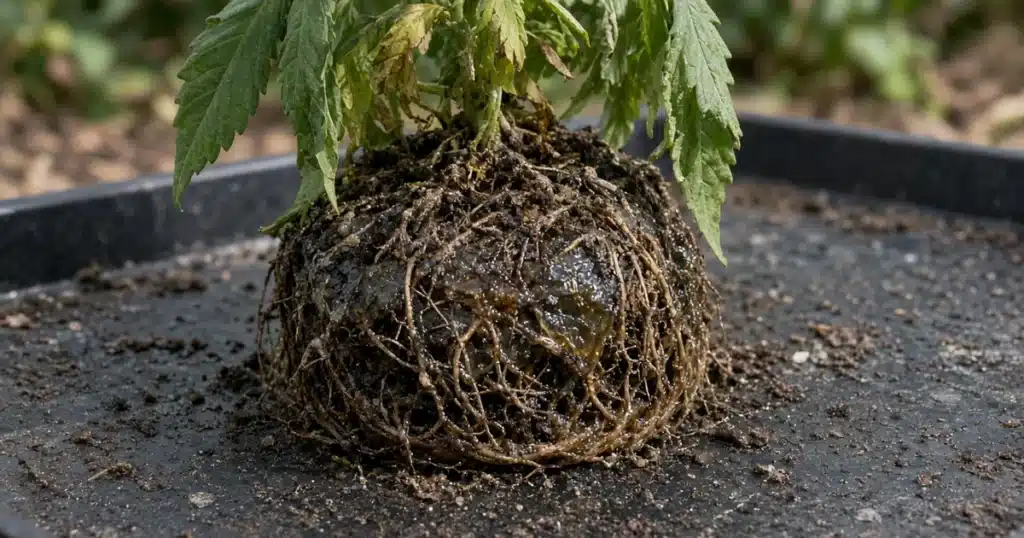
Verticillium wilt in cannabis comes from a soil fungus that gets into the roots and blocks the plant’s water conducting tissue. UC Statewide IPM calls it a fungal disease of the vascular system that persists in soil as tiny resting bodies called microsclerotia.
Once it is in a bed it stays, so prevention matters more than anything you do after it shows. UMass Extension adds that the fungus can infect more than 200 kinds of plants, including many vegetables. The sources here cover garden and vegetable crops rather than cannabis trials, so read their findings as general plant guidance. At Kind Seed Co we would rather you keep it out than fight it, so start with the signs, how it spreads and the steps that stop it.
What Verticillium Wilt Does to a Plant
The fungus clogs the plant’s plumbing. UC IPM says it inhibits nutrient and water transport as it spreads upward through new growth.
According to UC IPM, hyphae grow from the resting bodies when soil is cool and enter the roots of susceptible plants. UMass Extension says infection usually happens through root wounds, such as those made by cultivation, new root growth or nematode feeding. The plant can carry the infection for a while before it shows. UC IPM says a spring infection may stay hidden until warmer weather puts plants under more water stress.
Recognizing Verticillium Wilt
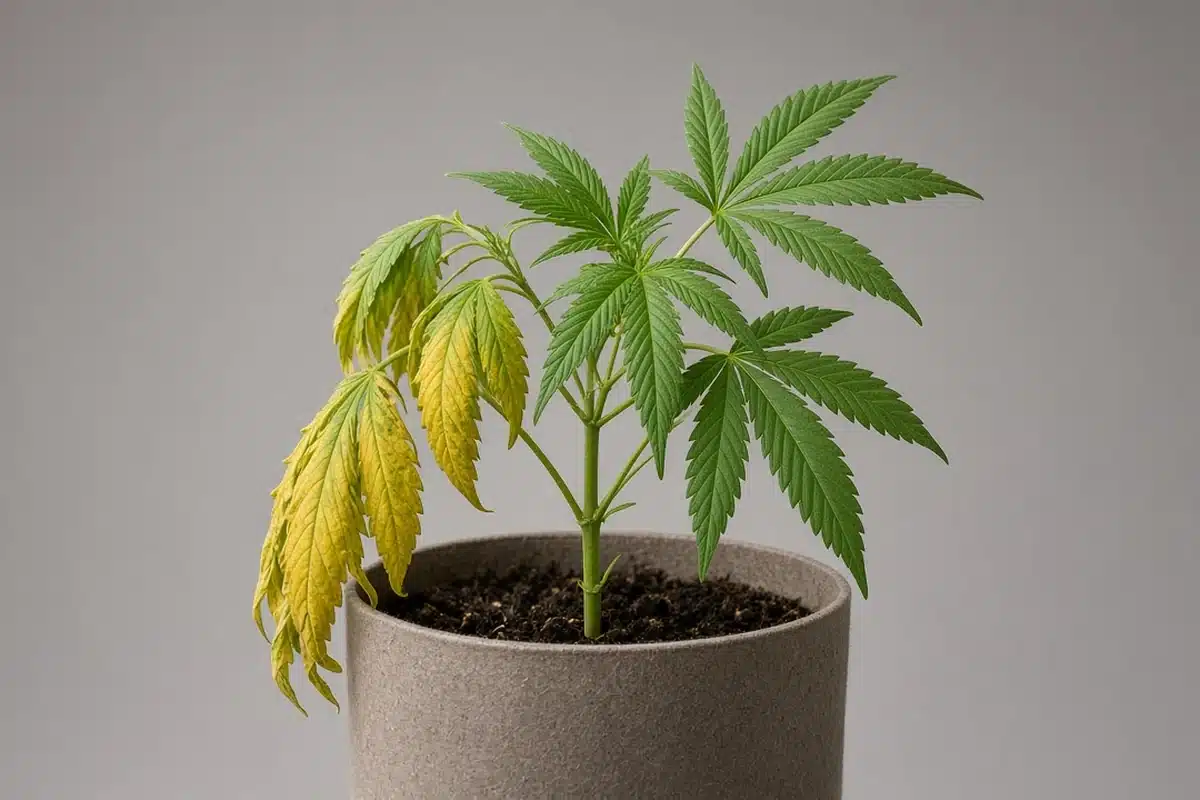
The first sign is usually yellowing on lower leaves. UMass Extension says lower leaves yellow and then wilt, with V shaped patches that are widest at the leaf edge.
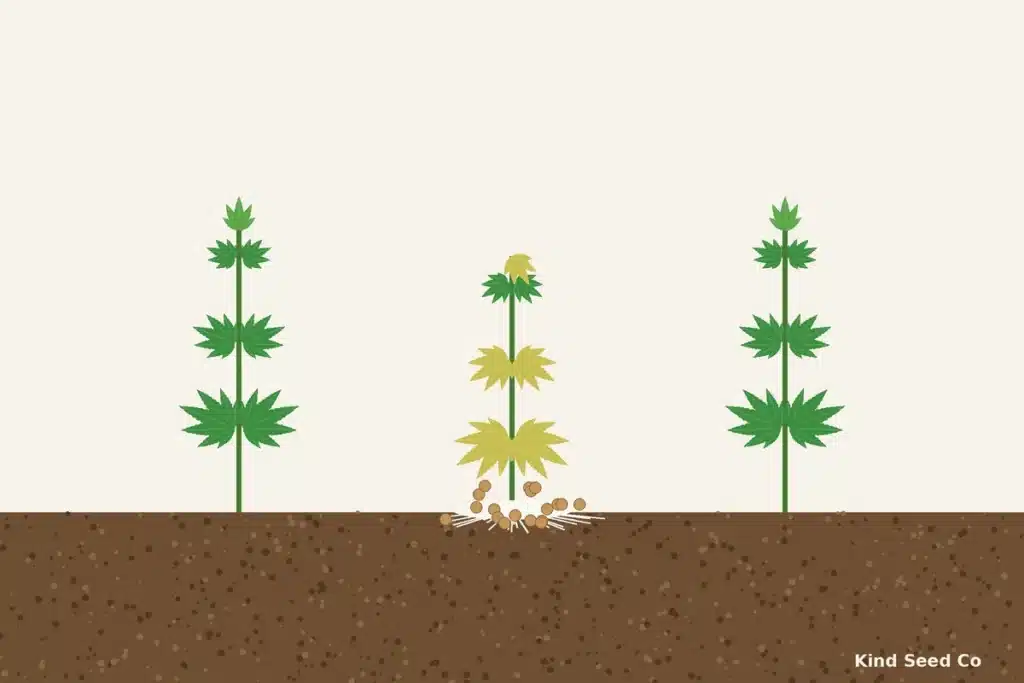
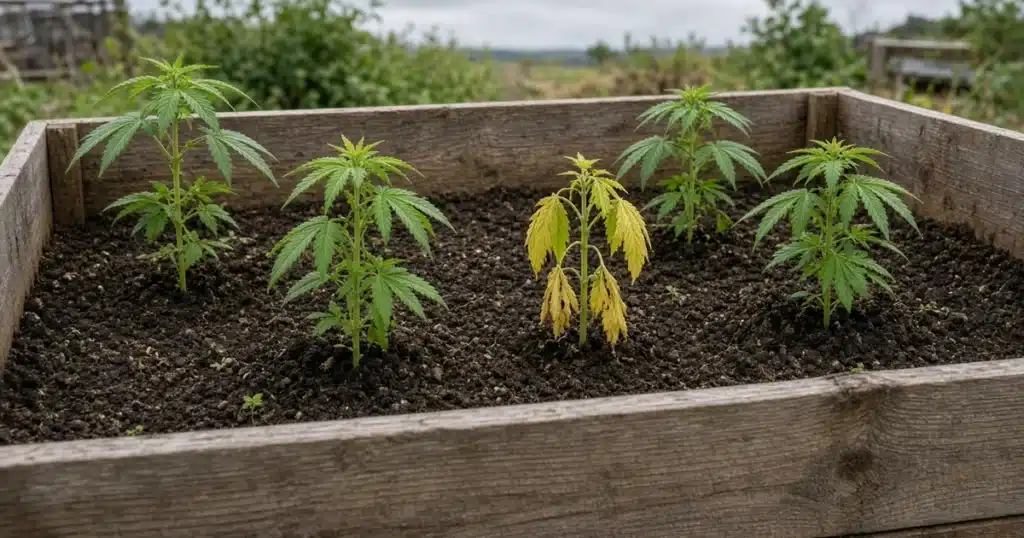
Because the fungus blocks only some water channels at first, UMass notes that damage can start on a single branch or half of a leaf. UC IPM describes shoots and branches dying, often starting on one flank of the plant. Cut a stem lengthwise and look inside. UMass says the vascular tissue shows a brown discoloration.
| Sign | Where to look | Source |
|---|---|---|
| Yellowing then wilting | Lower leaves first | UMass Extension |
| V shaped patches widest at the edge | Leaf margins | UMass Extension, UC IPM tomato |
| Damage on one side | A single branch or half a leaf | UMass Extension, UC IPM |
| Brown streaks inside | Stem cut lengthwise | UMass Extension |
Look Alikes and Lab ID

Verticillium is easy to mistake for other problems. UMass Extension says its early signs are subtle and can be confused with too little water or other vascular wilts.
UC IPM says Fusarium wilt can look the same, and positive identification may need a plant diagnostic lab that cultures the fungus. If the soil is soaked and roots smell sour, check our page on overwatering cannabis before you assume a fungus.
Resistance and Clean Starts
No cannabis cultivar is named as resistant in the sources here. UC IPM advises planting only resistant species where Verticillium has been a problem, because the pathogen persists in soil.
In UC IPM guidance, “FNV” on a plant label means resistance to Fusarium, nematodes and Verticillium. That label applies to plants like tomatoes, not to cannabis. For cannabis, the practical step is a clean start: fresh potting mix in containers and beds with no wilt history.
Clean starts also mean watching what comes in. Plants from another grow can bring infested soil with them in the root ball, so pot them up in fresh mix and keep them apart for a while before they join the rest. Wash boots and tools that have been in a bed with a wilt history before you work in a clean one.
How to Prevent Verticillium Wilt
Keep the fungus out and keep plants vigorous. These steps come from UC IPM and UMass guidance for garden and vegetable crops.
- Start clean. Use fresh potting mix for containers and plant in beds with no wilt history.
- Do not reuse soil from wilted plants. The pathogen persists in soil, per UC IPM, so that soil carries it forward.
- Water evenly. UC IPM points to good cultural care, especially appropriate irrigation, to keep plants vigorous.
- Rotate beds to grasses or grains. UC IPM lists small grains and corn as nonsusceptible crops that help cut inoculum, and UMass advises long rotations that include cereals or grasses. Our post on rotating cannabis beds plans the sequence.
- Control weeds. UMass notes that many weeds also host Verticillium.
- Solarize infested beds. UC IPM reports that summer solarization followed by a year or more with no plants in the site can reduce inoculum. The method is set out in our soil solarization walkthrough.
- Remove infected plants and debris. UMass advises removing infested crop debris well away from growing areas.
- Clean tools and pots. UC IPM tomato guidance says washing equipment to stop infested soil moving may help slow spread. Our walkthrough covers how to clean pots between grows.
Troubleshooting
When wilt shows up, the cause is often already in the soil. Match your case below and act on the bed, not only the plant.
One branch wilts while the soil is moist. That one sided pattern fits UMass and UC IPM descriptions. Cut the stem and check for brown streaks inside.
Signs show in cool spring weather. In tomatoes, UC IPM says cool soil and cool air favor the disease. Keep watching as the weather warms.
Wilt returns in the same bed. Once established, the fungus persists in soil, according to UC IPM. Rotate the bed or solarize it before you plant again.
Plants decline slowly rather than collapsing. UC IPM notes small plants can die in one season while larger ones decline more slowly. Check the stem for brown streaks before you change the feed or watering.
Container plants wilt after you reused old mix. Reused mix may carry the resting bodies. Start the next run in fresh mix and clean the pots.
You cannot tell it from another wilt disease. UC IPM says Fusarium wilt can look the same. Send a sample to a plant diagnostic lab for a culture.
Sources
- UC Statewide IPM Program, Verticillium Wilt (Plants), Home and Landscape: https://ipm.ucanr.edu/home-and-landscape/verticillium-wilt-plants/
- UC Statewide IPM Program, Verticillium Wilt, Tomato Pest Management Guidelines: https://ipm.ucanr.edu/agriculture/tomato/verticillium-wilt/
- UMass Amherst Center for Agriculture, Food, and the Environment, Solanaceous, Verticillium Wilt: https://www.umass.edu/agriculture-food-environment/vegetable/fact-sheets/solanaceous-verticillium-wilt
What is verticillium wilt, and what does it do to cannabis?
It is a soil fungus that enters the roots and blocks water flow inside the plant. UMass Extension describes lower leaves yellowing and then wilting, often on one side, and UC IPM notes branches dying back. Plants decline as the stems lose their ability to move water and nutrients.
What are the early signs of verticillium wilt?
Lower leaves yellow first. UMass Extension describes V shaped patches widest at the leaf edge, followed by wilting that often starts on a single branch while other branches still look normal. Cut a stem lengthwise and check for brown streaks inside, which UMass also describes.
How do I keep verticillium wilt out of my crop?
Start with fresh mix and beds with no wilt history, and never reuse soil from wilted plants. Water evenly, control weeds and clean tools and pots. UC IPM and UMass Extension both point to rotation with grasses or grains and to solarizing infested beds in summer.
How long does verticillium wilt stay in cannabis bed soil?
A long time. The fungus persists in soil as microsclerotia, per UC IPM. A field that has it can infect any susceptible crop planted there later. UMass Extension says both main species survive in soil for many years, so plan rotation or solarization before you replant.
What should I do with a cannabis plant that has verticillium wilt?
Remove it and protect the bed. UMass Extension advises removing infested crop debris well away from growing areas, and UC IPM notes the pathogen persists in soil. Bag the plant and its roots, do not compost them, then solarize or rotate the bed and clean your tools.