Grow Light Diffuser Panels: How Diffusers Spread Light and What They Cost in Output
The short answer
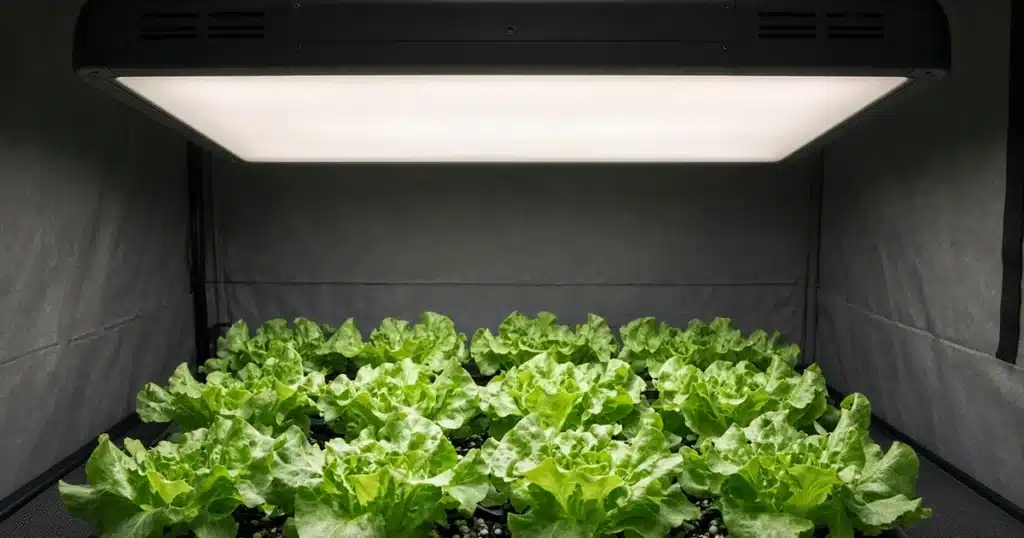
A grow light diffuser is a panel or lens that scatters light from a fixture so it spreads more evenly over plants. It softens hot spots under bright point sources and can improve how evenly light reaches the lower canopy. Every panel also absorbs some light, so a diffuser trades a bit of output for better spread.
Whether that trade is worth it depends on your fixture, its height and how even the light already is.
What does a grow light diffuser do?
Light from a bare LED chip or bulb travels in fairly straight lines. Directly under the fixture, intensity is high. Toward the edges, it falls off, and leaves near the top of the canopy shade the leaves below.
A diffuser scatters light in many directions. Some rays that would have hit the same spot now spread sideways. The pattern under the fixture becomes more even. Shadows soften, and more light slips between upper leaves into the lower canopy.
The University of Missouri Extension guide to grow lights explains how light intensity, spectrum and distribution affect plants indoors. It notes that light falls off fast with distance and that uneven coverage leaves some plants underlit.
How much light does a diffuser cost?
No diffuser passes all light. Some is absorbed, and some reflects back toward the fixture. The share that gets through is called transmission.
Clear panels with a light texture pass most light. Heavily frosted or opal panels scatter more but pass less. A panel that looks milky usually costs more output.
The Resource Innovation Institute lighting best practices guide covers fixture efficiency and light delivery in controlled environment agriculture. It stresses measuring light at the canopy rather than trusting fixture ratings alone. Any add on, including a diffuser, changes what reaches the plants.
| Factor | Benefit | Cost |
|---|---|---|
| Light spread | More even coverage, fewer hot spots | Some output lost to absorption |
| Canopy reach | More light reaches lower leaves | Gains are small under short canopies |
| Fixture heat | Softer glare | Panel can trap heat if airflow is blocked |
| Upkeep | Simple panel | Dust lowers transmission over time |
Sources: University of Missouri Extension, Resource Innovation Institute.
When is a diffuser worth using?
Diffusers help most with bright point sources. A single high power LED or a small fixture hung low over plants creates sharp hot spots. A diffuser evens that out.
They help less with modern bar style LEDs. Bars already spread light across many small diodes. Adding a panel there can cut canopy PAR.
They can help when plants sit close to the light and show bleaching at the top. Our post on light bleaching cannabis explains what bleaching looks like. Raising the light is the first fix. A diffuser is a second option when height is limited.
For choosing fixtures, see choose the right LED lights for your cannabis grow. For hanging height, see LED light distance cannabis.
How does fixture height compare to a diffuser?
Raising a light spreads its beam. The cone of light widens with distance, so hot spots fade. Intensity at the canopy drops too.
A diffuser spreads light without adding height. In a short tent, where you can’t raise the light much, that helps. In a tall room, raising the light is often simpler and costs nothing.
Try height first. If hot spots remain at the highest practical setting, then try a panel.
Which materials are used?
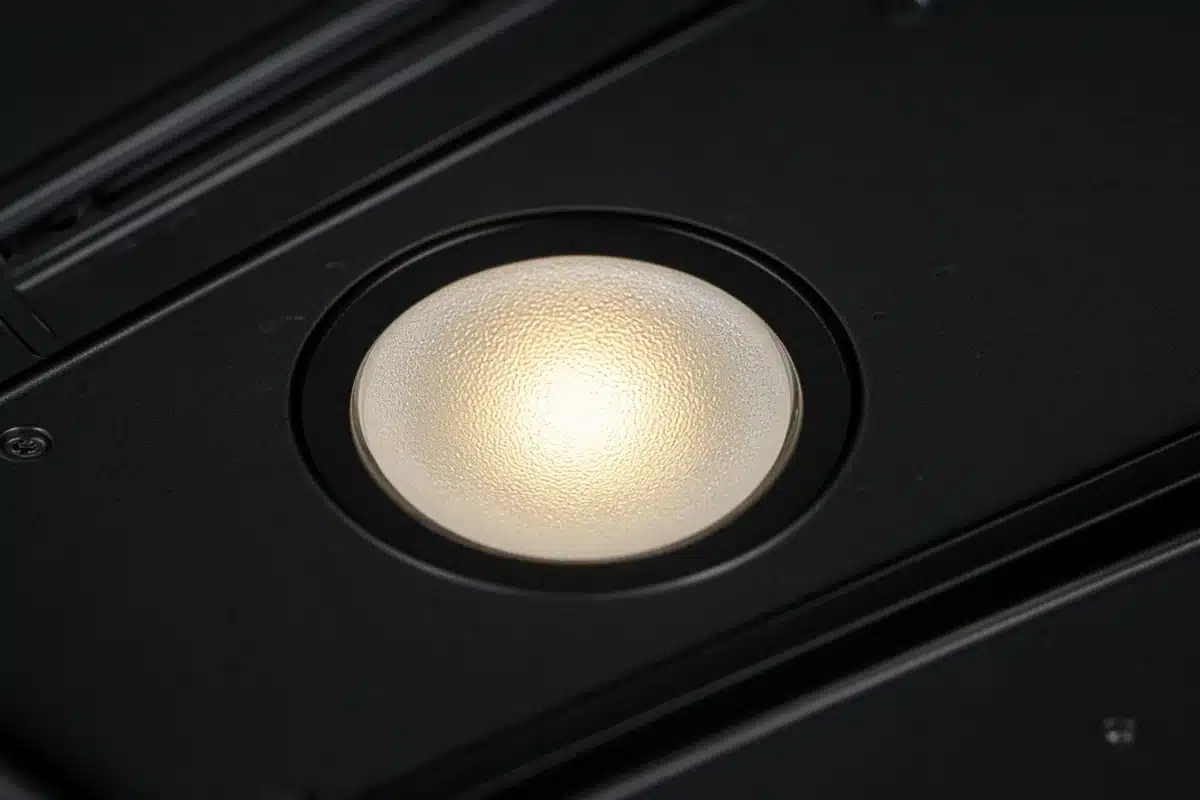
Most panels are acrylic or polycarbonate. Both come in clear, prismatic, frosted and opal grades. Prismatic panels have a pattern of tiny ridges that bend light. Frosted panels have a rough surface. Opal panels have a milky color through the whole sheet.
Look for a transmission figure from the maker. Higher numbers mean less loss. Pick a grade that resists yellowing under intense light and heat.
How do you measure the effect?
Use a PAR meter or a light meter app calibrated for grow lights. Take readings at canopy height in a grid, for example at the center, at each corner and halfway between.
Write the readings down without the panel. Fit the panel and take the same readings. Compare the average and the spread. A good result shows a more even grid with only a small drop in average.
If the average drops a lot and the spread barely changes, the panel isn’t helping.
How to: step by step
- Identify hot spots under your light.
- Check the panel’s light transmission rating.
- Fit the panel per the maker’s guidance.
- Leave vents and heat sinks clear.
- Measure light before and after.
- Clean the panel as dust builds up.
Mount the panel so it doesn’t touch the fixture face. Leave a gap so air can move.
Wipe the panel with a soft damp cloth every few weeks. Dust cuts transmission.
Troubleshooting
Plants dimmer after fitting? Swap to a clearer panel.
Fixture runs hot. Airflow is blocked. Leave clearance around the fixture.
Still hot spots. The light is too close. Raise it.
Panel turned yellow. The material is aging. Replace it with a UV stable grade.
Uneven readings at edges. The fixture is too small for the space. Add a second light rather than a panel.
Compare canopy readings with and without the panel before you commit. Kind Seed Co carries cannabis seeds for growers dialing in a new light.
Sources
- Lighting for controlled environment agriculture, best practices guide, Resource Innovation Institute, Lighting for controlled environment agriculture
- Controlled environment agriculture: understanding grow lights (G6987), University of Missouri Extension, Controlled environment agriculture
FAQ
Do LEDs need diffusers?
Most bar style LEDs do not. They spread light across many diodes already. Diffusers help most with single high power chips hung close to plants.
Do diffusers reduce yield?
They can if they absorb a lot of light. A clear panel with high transmission costs little. Measure light before and after to see.
What material are diffusers made from?
Usually acrylic or polycarbonate in clear, prismatic, frosted or opal grades. Clearer grades pass more light.
Can I make a diffuser at home?
Yes, with a sheet of clear textured acrylic. Leave space for airflow and measure light to check the result.
How often should I clean a diffuser?
Every few weeks, or when dust shows. Dust lowers the light that gets through.