What Is a DLC Grow Light Listing? Horticultural Lighting Explained
The short answer
A DLC grow light listing means the fixture met the DesignLights Consortium’s horticultural technical requirements and appears on its qualified products list. DLC says the list checks efficiency and reports performance data such as output and spectrum. Growers use it to compare fixtures and confirm rebate eligibility before buying.
Grow light shopping is full of claims about output and efficiency. A DLC listing gives a common reference point, so knowing what it covers helps you compare lights fairly.
What is a DLC listing?
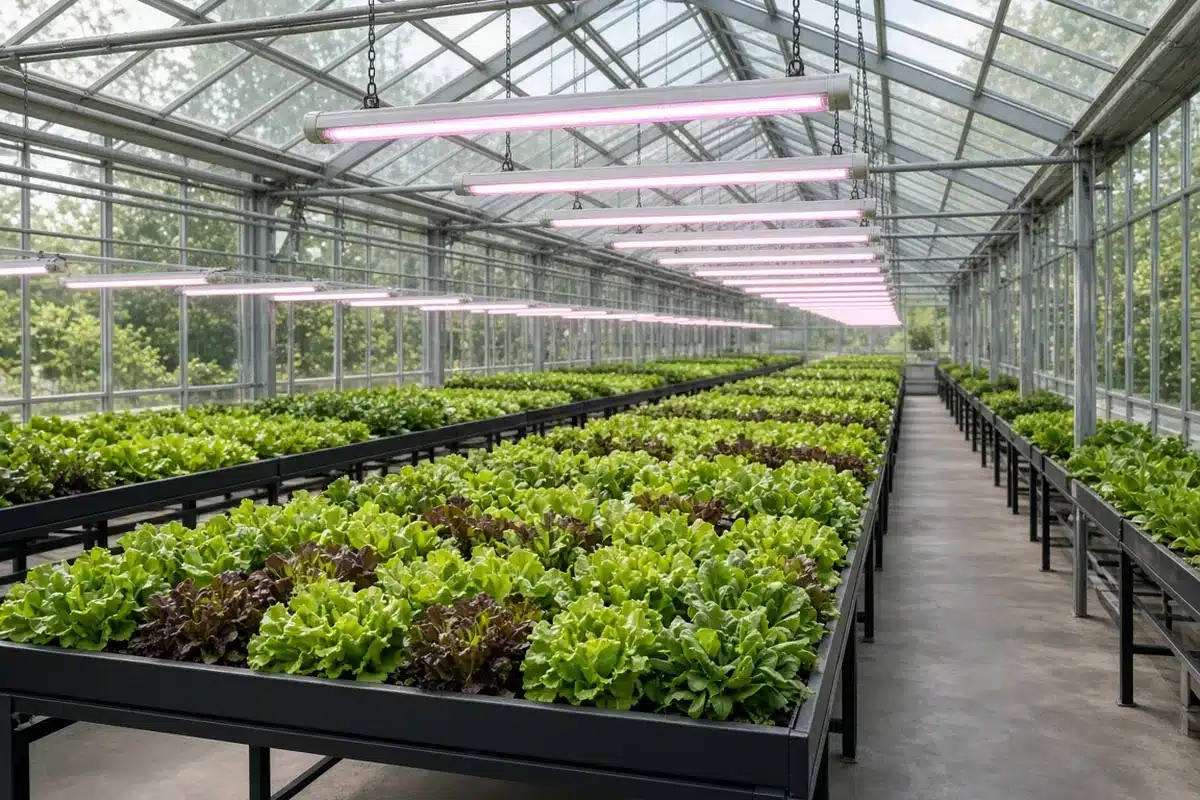
The DesignLights Consortium is a US nonprofit that sets performance requirements for efficient lighting, with separate programs for general and horticultural lighting.
The DesignLights Consortium horticultural lighting program page explains that its requirements aim to promote efficient grow lights for indoor and greenhouse growing.
A fixture with a DLC listing has had its performance data reviewed against those requirements. It then appears on the horticultural qualified products list, often called the QPL.
What does DLC check?
The main focus is efficiency, measured as photosynthetic photon efficacy. This is the amount of plant usable light a fixture produces per watt, shown as micromoles per joule.
| Item reported | What it means | Why growers care |
|---|---|---|
| Photon efficacy | Light output per watt | Lower power costs for the same light |
| Photosynthetic photon flux | Total plant usable light | Helps size lights to a space |
| Spectrum | Share of blue, green, red and far red | Shapes plant growth |
| Light maintenance | How output holds up over time | Plans for replacement |
| Driver and power data | Power factor and related details | Matches electrical setups |
| Dimming | Whether output can be adjusted | Fits different growth stages |
Sources: DesignLights Consortium.
The DLC quick facts sheet gives an overview of the organization, its programs and how utilities use its lists.
Our post on grow light watts per square foot shows how to size lights to your space.
How do you look up a fixture?
The DLC qualified products lists are free to search online, so choose the horticultural one.
Search by brand or model number, and each listing shows the reported data for that exact product.
Listings apply to specific model numbers, so a brand may have some fixtures listed and others not.
Look at the date of the listing. Requirements are updated over time, and older listings may fall under earlier versions.
How to: step by step
- Find the fixture brand and model number.
- Search the DLC horticultural qualified products list.
- Confirm the exact model is listed.
- Review the reported performance data.
- Save the listing page.
- Compare listed fixtures for your space.
Why do rebates require DLC?
Many US utilities offer rebates for efficient grow lights. They often use the DLC horticultural list to decide which fixtures qualify.
The list gives utilities an easy way to check efficiency claims. If you plan to apply for a rebate, check both the listing and the utility’s own rules.
Is DLC the same as Energy Star?
No. Energy Star is an EPA program for many household products, while DLC is a separate nonprofit with its own requirements.
Horticultural fixtures fall mainly under DLC rather than Energy Star.
Do all good grow lights have DLC listings?
No. Listing is voluntary, and some makers, often small or new brands, never apply.
A missing listing doesn’t mean a light performs poorly, only that DLC hasn’t reviewed its data.
Our post on choosing LED lights covers other ways to compare fixtures.
How does a listing help over time?
Light maintenance data shows how a fixture’s output holds up after many hours. That helps you plan when lights may need replacing. Our post on when to replace grow lights explains the signs.
What do the numbers mean for a home grow?
Higher photon efficacy means more light for the same power bill. Many current LED fixtures report figures well above older lighting types.
Total photon flux tells you how much light the fixture puts out. Pair it with the size of your space to see if one light is enough.
Spectrum data shows how much of the output falls in blue, red and far red ranges. Full spectrum fixtures suit most plants from seedling to flower.
Use these numbers together, since an efficient light that’s too small for the space still leaves plants short.
Troubleshooting
Model not found. Check for a slightly different model number or a newer version.
Brand listed but your model is not. Listings apply to exact models only.
Rebate denied. The utility may have extra rules. Read its program terms.
Spec sheet differs from listing. Trust the listing data for comparisons.
Old listing. Requirements change, so compare against current versions.
Listed data makes it easier to compare grow lights side by side. Kind Seed Co carries cannabis seeds for growers setting up indoor spaces.
Sources
- Horticultural lighting, DesignLights Consortium, Horticultural lighting
- DLC qualified products lists, DesignLights Consortium, DLC qualified products lists
- DLC quick facts, DesignLights Consortium, DLC quick facts
FAQ
Is DLC the same as Energy Star?
No. DLC is a separate nonprofit with its own lighting requirements.
Do all good grow lights have DLC listings?
No. Listing is voluntary, so some good lights are not listed.
Is the DLC list free to search?
Yes. The qualified products list is free online.
Why do rebates require DLC?
Utilities use the list to confirm efficiency before paying rebates.
What is photon efficacy?
It is plant usable light per watt, shown in micromoles per joule.