Grow Light L90 Rating: What L70 and L90 Mean for Lumen Maintenance
The short answer
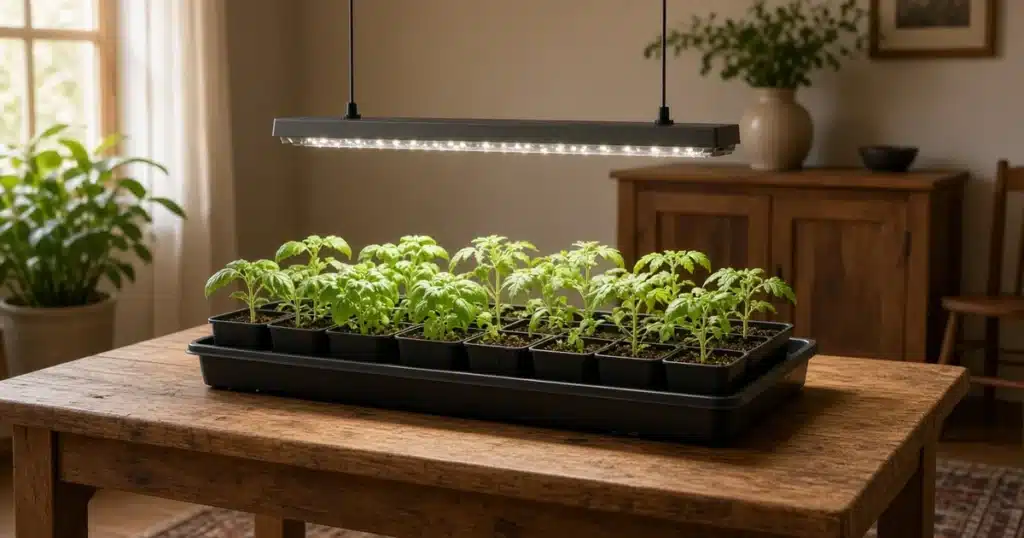
A grow light L90 rating is the number of hours before an LED fixture falls to 90 percent of its starting light output. L70 marks 70 percent. Researchers note these figures are projected from LED package data, so heat and the driver also shape real life. Higher L90 hours point to slower fading.
What is lumen maintenance?
Lumen maintenance is how well a light holds its output over time. LEDs rarely burn out like a bulb. Instead they dim slowly. A US Department of Energy (DOE) guide says LED lifetimes are usually given as the operating hours until output falls to 70 percent of initial levels, which is called L70 life.
Researchers at Utah State University and DOE, writing in Horticulture Research, say LEDs degrade with time as a function of temperature and current density. They add that fixture aging rates can vary greatly among makers.
For grow lights, output is often counted in photons, not lumens. The same paper notes the L70 figure is sometimes called Q70 for horticultural products, and that makers describe lifetime as L70, L90, Q70 or Q90.
How do L70 and L90 differ?
The number after the L represents the percentage of starting output remaining. L70 is the time until a fixture gives 70 percent of its original output. L90 is the time until it gives 90 percent, so it marks a much smaller loss.
| Rating | Meaning | Notes |
|---|---|---|
| L70 | Hours until output falls to 70 percent | A typical L70 for LED fixtures is 50,000 hours |
| L90 | Hours until output falls to 90 percent | Michigan State guidance suggests at least 36,000 hours |
| Q70 or Q90 | Same idea measured in photons | Used for horticultural products |
| B50/L70 | Half of units below 70 percent | DOE definition that includes any failure |
Sources: Horticulture Research (Kusuma, Pattison and Bugbee), Michigan State University, US Department of Energy.
A lighting guide edited by Michigan State University floriculture staff advises looking for fixtures designed to last at least 36,000 hours before light output drops by more than 10 percent of its initial intensity. That’s an L90 or Q90 figure of 36,000 hours.
How should you use these ratings when buying?
Read the number as a projection. The Horticulture Research paper explains that most makers base lifetime on a standard LED package method called IES LM 80. Projections cannot exceed six times the length of that data, so a 60,000 hour claim needs 10,000 hours of LED data. The authors warn that many fixtures claiming long lifetimes go past that limit.
Lifetime claims also leave things out. The same paper says they do not include optical losses in the fixture or faster aging from higher temperatures. Typical claims also ignore the LED driver, which often fails before the LEDs reach L70. A DOE lifetime guide says a full lifetime definition should count gradual dimming plus failure of any component.
Compare like with like. An L90 figure will be fewer hours than an L70 figure for the same fixture. See when to replace grow lights and grow lights for cannabis for more.
How to: step by step
- Find the L70 or L90 figure on the spec sheet.
- Check whether it is in lumens or photons.
- Compare hours at the same rating level.
- Ask how many hours of LED data back the claim.
- Look at driver and heat sink design.
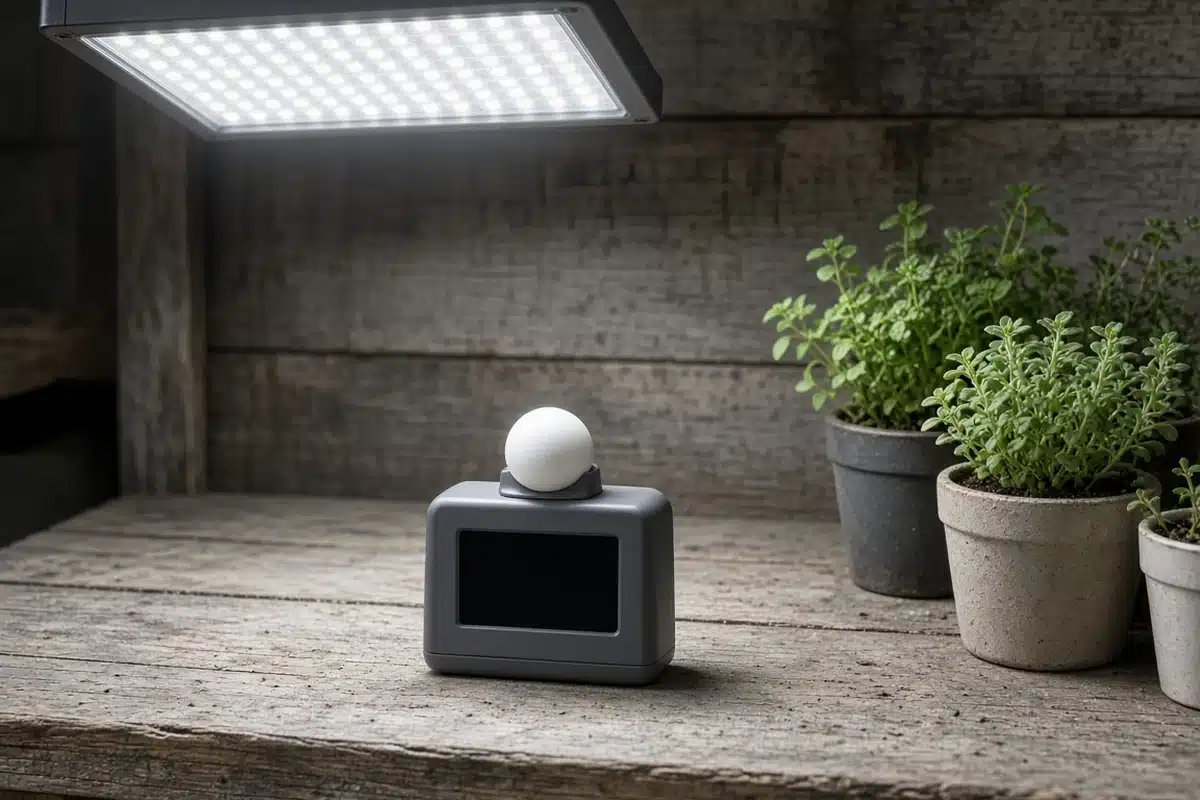
- Measure output yearly to track fading.
University of Missouri Extension says a quantum sensor can measure PPFD at the desired height, which gives you a baseline for later.
Troubleshooting
No rating listed: ask the maker for L70, L90 or Q90 hours and the data behind them.
Fast fading: heat buildup. The Horticulture Research paper says high junction temperatures make efficacy decline faster. Improve airflow. See grow light heat management.
Sudden failure: often a driver issue, not lumen loss. The same paper says drivers often fail before LEDs reach L70. Check the warranty.
Claim seems too high: check it against the six times projection limit above.
Reading the numbers
L70 and L90 hours help you compare how slowly fixtures fade, but they’re projections, not promises. Pair them with warranty terms and your own light readings. The Kind Seed Co blog has more on grow light care, and you can browse our cannabis seeds for your next grow.
Sources
- From physics to fixtures to food: current and potential LED efficacy, Kusuma, Pattison and Bugbee, Horticulture Research (Utah State University)
- The indoor lighting guide: growing seedlings under LEDs, edited by Erik Runkle, Michigan State University
- LED luminaire lifetime guide, US Department of Energy
- Guide to evaluating LED lumen maintenance, US Department of Energy
- Controlled environment agriculture: understanding grow lights (G6987), University of Missouri Extension
- A closer look at LED efficacy, Erik Runkle, University of Kentucky Greenhouse Horticulture
FAQ
Is L90 better than L70?
They measure different points. L70 is the time until output falls to 70 percent and L90 the time until it falls to 90 percent. For one fixture the L90 figure is always fewer hours. Compare fixtures at the same level, such as L90 against L90, for a fair read.
Does lumen maintenance apply to PPF too?
Yes. Researchers writing in Horticulture Research note the same idea is called Q70 or Q90 for horticultural products, where output is counted in photons. Makers may list lifetime as L70, L90, Q70 or Q90, so check which one a spec sheet uses before you compare fixtures.
How long do LED grow lights last?
Researchers say a typical L70 for LED fixtures is 50,000 hours. A Michigan State University guide suggests fixtures designed to last at least 36,000 hours before output drops more than 10 percent. Drivers can fail sooner, so warranty terms matter as much as the rated hours on paper.
Can heat shorten LED life?
Yes. Researchers say LEDs degrade over time based on temperature and current density. High junction temperatures speed up efficacy decline. They note better thermal management increases the longevity of the LEDs. Good airflow and a clean heat sink help a fixture hold its output longer.
Why might a lifetime claim be too high?
Researchers explain that projections from LED package data cannot exceed six times the hours of data behind them. A 60,000 hour claim needs 10,000 hours of LED data. They warn that many fixtures claiming extended lifetimes go past that limit, so ask the maker what supports the number.