Sweet Corn Not Sweet: Harvest Timing and Cross Pollination
The short answer
Sweet corn not sweet usually comes from picking too late, waiting too long to eat it or cross pollination. Sugars turn to starch after harvest, and standard types can lose half their sugar within 12 hours without chilling. Pollen from field corn or popcorn can make kernels tough and starchy. Pick at the milk stage, chill ears and isolate types.
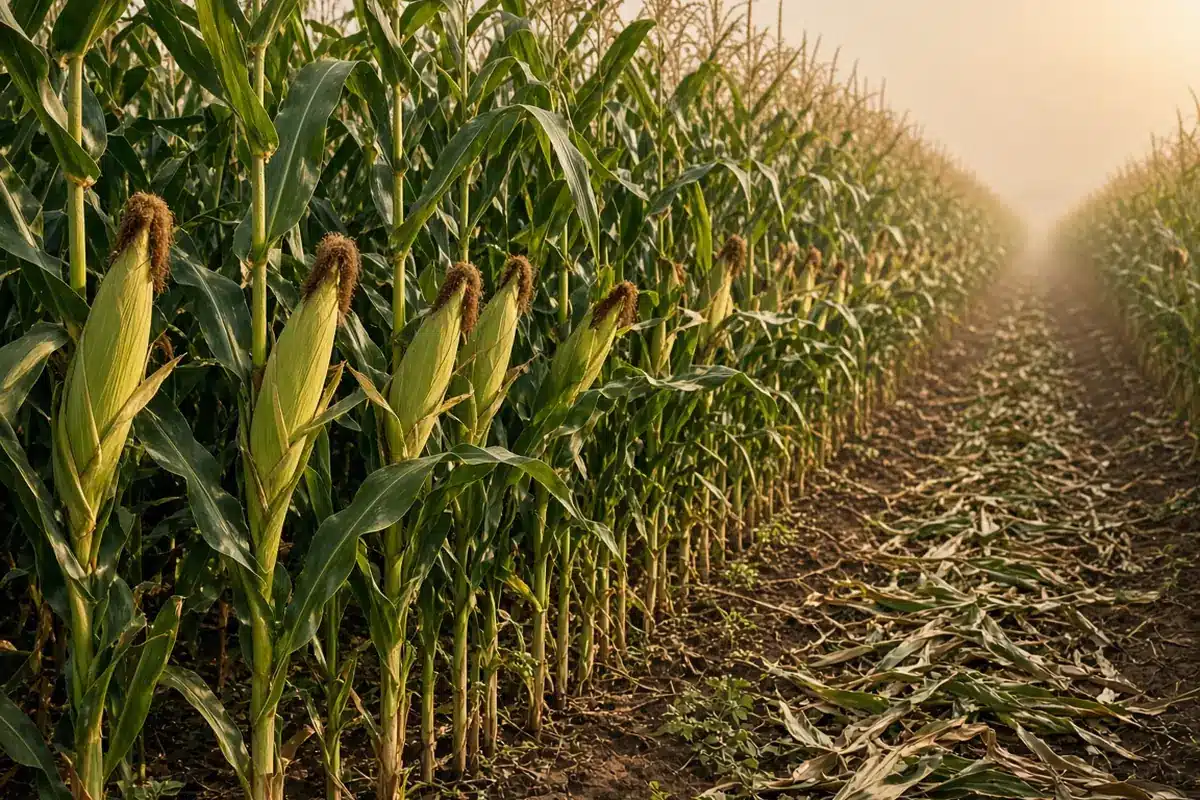
Why is my sweet corn not sweet?
Most bland ears trace back to three things: the ear was picked past its prime, it sat warm after picking or the wrong kind of corn pollinated it.
Genetics set the starting point. University of Minnesota Extension says three genes control sweetness in corn: sugary (su), sugary enhanced (se) and shrunken 2 (sh). Standard sugary corn has an average sugar level that becomes starch quickly after harvest. Sugary enhanced types turn sugar to starch more slowly, and shrunken types can last more than a week in the refrigerator.
Oregon State University notes that standard sweet corn holds 5 to 10 percent sugar at normal maturity, while supersweet types reach 20 to 30 percent. A standard variety won’t taste like a supersweet one, even when grown well.
Stress can matter too, and for how heat and drought affect plants in general, see the effects of environmental stresses on weed plants.
How does harvest timing change sweetness?
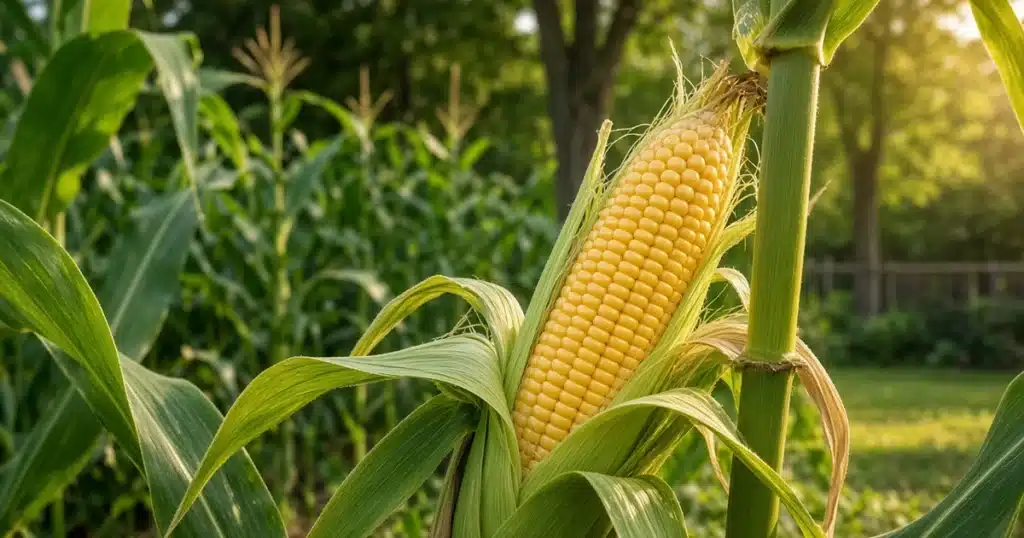
Iowa State University Extension says sweet corn should be harvested at the milk stage. At this stage the silks are brown and dry at the ear tip, and a kernel punctured with a thumbnail gives a milky juice. An immature ear is not filled to the tip and gives a clear, watery liquid.
You can estimate the date from silking, since Iowa State puts harvest about 18 to 23 days after silks emerge, and Minnesota Extension says 18 to 24 days.
Speed after picking matters as much as timing. Iowa State says to use or refrigerate sweet corn right away, since standard varieties may lose 50 percent of their sugar within 12 hours of harvest if not refrigerated. Minnesota Extension adds that, depending on type, fresh corn may hold its quality for one to seven or more days in the refrigerator.
Can cross pollination make corn starchy?
Yes. Corn is wind pollinated, and Minnesota Extension explains that wind moves pollen from the tassel to the silks of the ears.
Iowa State says sweet corn should be isolated from popcorn and field corn, since cross pollination lowers quality. Sweet corn pollinated by popcorn will be tough and starchy. Different sweet corn types should also be kept apart, and supersweet types in particular should be isolated from standard, sugary enhanced and synergistic types.
Minnesota Extension suggests planting sweet corn 300 feet from the nearest cornfield in farm areas. You can also isolate by time, with at least two weeks between the days to maturity of each variety. Oregon State found that outcrossing drops off rapidly beyond 10 rows, and at about 100 feet only up to 1 percent of kernels may be starchy.
| Factor | Effect | Fix |
|---|---|---|
| Standard (su) type | Sugar turns to starch quickly | Eat or chill right away |
| Picked past milk stage | Starchy, chewy kernels | Harvest 18 to 23 days after silking |
| Warm storage | Up to 50 percent sugar lost in 12 hours | Refrigerate at once |
| Field corn or popcorn nearby | Tough, starchy kernels | Plant 300 feet away |
| Mixed sweet corn types | Lower quality | Isolate by distance or two weeks timing |
| Long single rows | Poorly filled ears | Plant in short blocks |
Sources: Iowa State University Extension, University of Minnesota Extension, Oregon State University.
How to: step by step
- Note the days to maturity for your variety.
- Write down the date silks first appear.
- Check silks for browning and drying at the ear tip.
- Press a kernel with a thumbnail to see milky juice.
- Pick and refrigerate ears right away.
- Isolate sweet corn types by distance or timing.
- Plant in several short rows or blocks for even pollination.
Iowa State says planting several short rows or blocks rather than one or two long rows supports good pollination and ear fill. Bees are not the main pollinator here, but you can read what roles do bees play in outdoor cannabis for more on pollination outdoors. For spacing ideas, see planning an outdoor cannabis garden layout.
Troubleshooting
Starchy, chewy kernels: picked late. Check ears sooner, using the milk stage as your guide.
Bland ears from the garden: stored warm. Iowa State says quality rapidly declines after harvest, so chill ears at once.
Watery kernels and an unfilled tip: picked too early, so wait a few more days.
Tough, starchy kernels in a sweet variety: cross pollination from field corn, popcorn or another sweet type. Isolate types next year.
Missing kernels: poor pollination. Iowa State says hot, dry winds and dry soil can hurt pollination and lead to poorly filled ears.
Pick on time and chill fast
Sweet flavor depends on the variety, the harvest window and how fast the ears reach the refrigerator. Keeping it apart from other corn finishes the job. The Kind Seed Co blog has more garden tips for plants beyond cannabis.
Sources
- Growing sweet corn in the home garden, Iowa State University Extension
- Growing sweet corn in home gardens, University of Minnesota Extension
- Corn, sweet for fresh market, Oregon State University Horticulture
- Zea mays (corn), NC State Extension Gardener Plant Toolbox
FAQ
What is the milk stage?
Iowa State University Extension describes the milk stage as the point when silks are brown and dry at the ear tip. Puncture a kernel with a thumbnail and it gives a milky juice. An immature ear gives a clear, watery liquid and is not filled to the tip.
How long does corn stay sweet after picking?
It depends on the type. Iowa State says standard sweet corn may lose 50 percent of its sugar within 12 hours if not refrigerated. Minnesota Extension says fresh corn may hold quality for one to seven or more days in the refrigerator, with shrunken types lasting longest.
Do supersweet types need isolation?
Yes. Iowa State University Extension says supersweet and augmented supersweet cultivars should be isolated from standard, sugary enhanced and synergistic sweet corn types. Minnesota Extension says shrunken types should be isolated from all other sweet corn. Distance or a gap in pollination time both work.
Why are some kernels missing?
Missing kernels usually mean poor pollination. Iowa State says hot, dry winds and dry soil can hurt pollination and fertilization. Planting several short rows or blocks instead of one or two long rows gives the wind a better chance to move pollen from tassels to silks.
How far should sweet corn be from field corn?
University of Minnesota Extension suggests planting sweet corn 300 feet from the nearest cornfield if you garden in a farm area. Oregon State University found that at about 100 feet, only up to 1 percent of kernels may be starchy from outcrossing.