Grow Tent Fire Safety and Electrical Setup
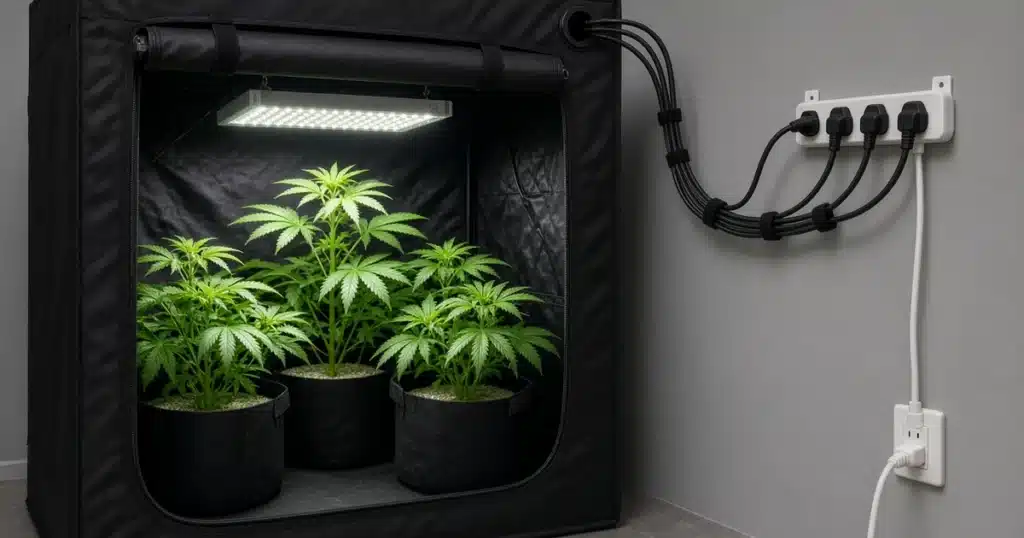
Quick answer: A safe grow tent setup plugs each major device into a properly installed wall outlet or a single listed power strip with a breaker, never into strips chained together. Use GFCI protection anywhere water is nearby, keep cords off the floor and away from heat, and stop adding load when a breaker trips. Put a working smoke alarm in the room. University safety offices at Texas Woman’s University and the Naval Postgraduate School, plus a Michigan State University Extension farm safety guide, back these rules, and West Virginia University Extension covers smoke alarms.
Why Are Grow Tents a Fire Risk?
A tent packs lights, fans, pumps and climate gear into a small space, often running for long hours. Each device draws power, and every connection between the outlet and the device adds a chance for heat to build. Water and damp air are never far away. Add fabric walls and dry plant material, and small electrical faults matter more than they would in an empty room.
The Michigan State University Extension farm electrical hazards guide, hosted by the University of Arkansas, says electrical hazards can lead to shock and possibly fire within structures or in equipment. Those risks rise with moisture, it explains, especially the dampness common in confined livestock areas. A grow room is not a barn, but it shares that mix of power and water.
Before you plan wiring, add up your load. Our guide to grow light watts per square foot helps you estimate how much power your lights will draw, which is usually the biggest single number.
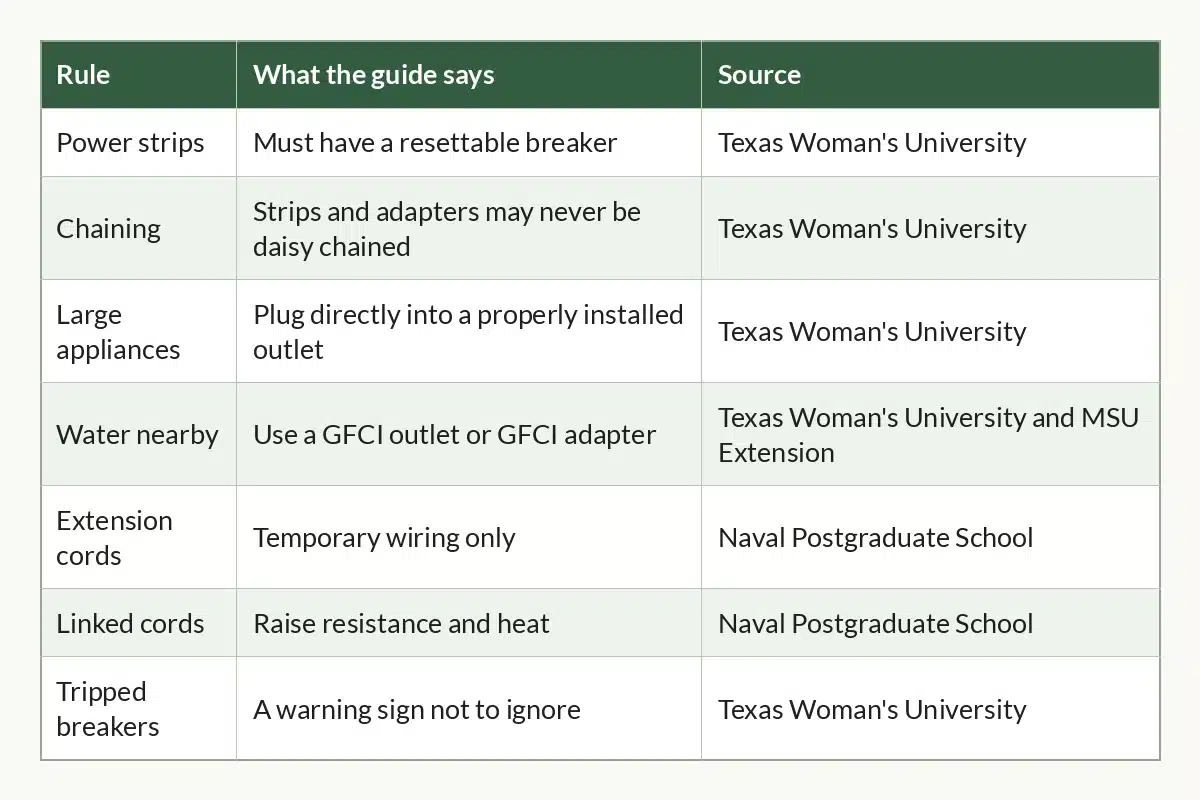
Electrical Safety Rules at a Glance
| Rule | What the guide says | Source |
|---|---|---|
| Power strips | Must have a resettable breaker | Texas Woman’s University |
| Chaining | Strips and adapters may never be daisy chained | Texas Woman’s University |
| Large appliances | Plug directly into a properly installed outlet | Texas Woman’s University |
| Water nearby | Use a GFCI outlet or GFCI adapter | Texas Woman’s University and MSU Extension |
| Extension cords | Temporary wiring only | Naval Postgraduate School |
| Linked cords | Raise resistance and heat | Naval Postgraduate School |
| Tripped breakers | A warning sign not to ignore | Texas Woman’s University |
Electrical and Fire Safety for Grow Tents
What follows are the rules that count most. Each comes from a university or Extension safety source written for homes, campus buildings or farms, not from cannabis research.
Circuit and breaker load. The Texas Woman’s University extension cord and power strip guide warns against overloading outlets or strips and calls a tripping breaker a signal you must act on. Lights, fans, a heater and a dehumidifier on one circuit can add up fast. Spread large loads across separate circuits, and ask an electrician if you are unsure how much a circuit can carry.
GFCI near water. The MSU Extension guide explains that a ground fault circuit interrupter is a breaker designed to prevent serious shock under certain conditions, and that it reduces the risk when tools or appliances are used in damp or wet areas. It recommends having an electrician install GFCIs permanently or using a portable GFCI. TWU goes further. Any equipment used near moisture, it says, needs either an outlet with GFCI built in or a GFCI adapter that goes straight into the wall. Pumps, humidifiers and anything near a reservoir belong on GFCI protection.
No daisy chained strips. TWU says power strips, uninterruptible power supplies and multi outlet adapters may never be plugged into one another. Each must go directly into a properly installed outlet and must have a resettable circuit breaker. Bigger appliances, it says, should skip strips and extension cords entirely.
Cords as temporary wiring only. The Naval Postgraduate School extension cord safety page states that even approved extension cords are only for temporary wiring. It explains that resistance grows with cord length, so joining cords raises total resistance and creates heat, with added risk of failure and fire when paper or other combustible material touches the wires. Light duty cords, NPS adds, should not feed several high energy items at once.
Cord routing away from water and heat. Keep cords up off the floor where spills collect, and away from lights, ballasts and heaters. TWU says never to use cords or strips that show any sign of damage or overheating, including a cord wrapped in electrical tape. When you shop, look for a UL Listed or ETL mark on the strip or cord. MSU Extension explains that UL Listed means an item was evaluated for electrical safety, and TWU requires strips and cords to carry that kind of listing.
Smoke alarm and a plan if it trips. The WVU Extension home fire safety page recommends smoke alarms on every level and outside sleeping areas, tested monthly, with batteries changed yearly and alarms replaced every ten years. Put one in the room with the tent. If a breaker trips, switch off and unplug the gear on that circuit, look for heat, damage or water, and reduce the load before you reset it. TWU sees a trip as a signal to act, so do not simply flip it back and walk away.
How Do You Set Up Power Around a Grow Tent?
- List every device and its wattage. Lights, fans, pumps, heaters and humidity gear all count.
- Map your circuits. Find out which outlets share a breaker so you can spread the load.
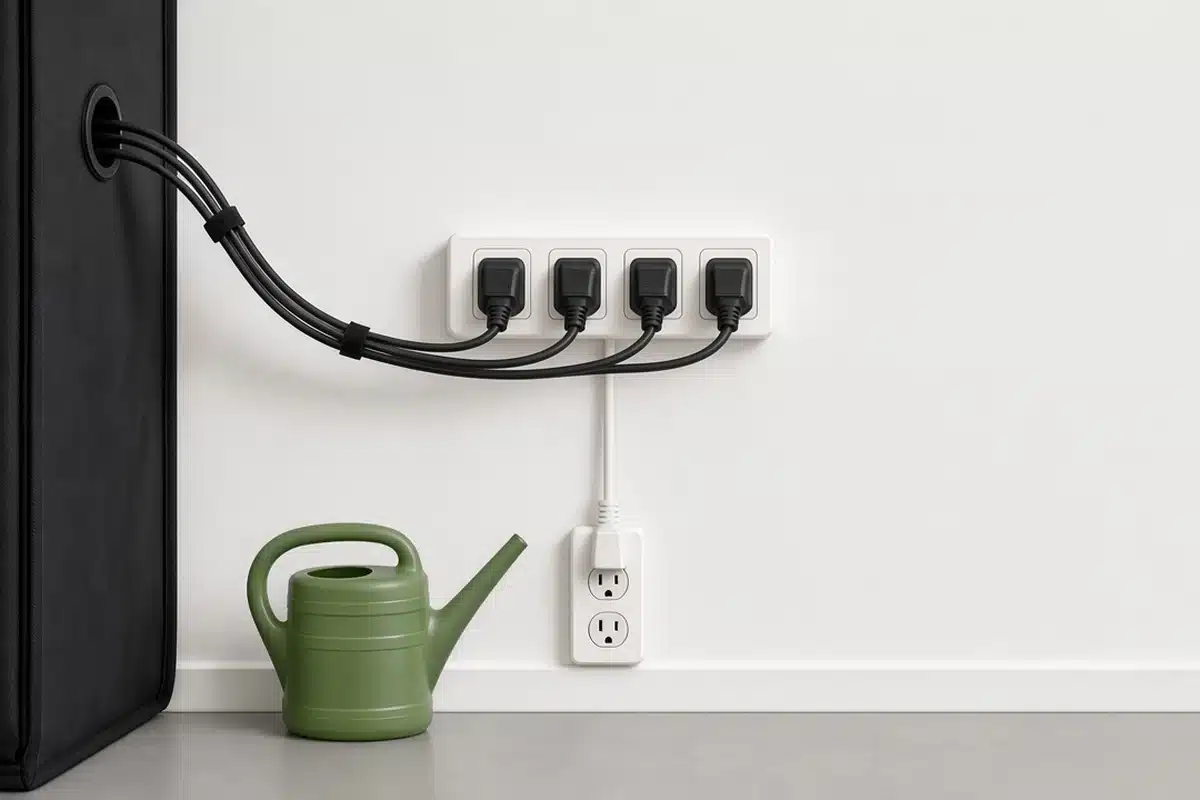
- Plug large appliances straight into the wall. TWU says larger appliances may not use strips or extension cords.
- Use one listed strip per outlet. Choose a strip with a resettable breaker, as TWU requires, and never chain strips.
- Add GFCI protection for wet zones. Use a GFCI outlet or adapter for anything near water.
- Mount strips off the floor. A wall or post keeps them clear of spills and runoff.
- Route cords up and away. Keep them clear of heat sources and out of walkways.
- Set up timers safely. Our grow light timer guide explains how to schedule lights, and each timer should be rated for its load.
- Test the smoke alarm. WVU Extension advises a monthly test.
What Should You Avoid When Wiring a Grow Room?
Shortcuts that hide heat. Most of the bad habits below save a few minutes or a few dollars, and each one adds a weak point that is hard to see once the tent is full of plants. They are worth undoing even if nothing has gone wrong yet. TWU bans homemade cords pieced together from loose wire and a spare outlet box. It also rules out adapters that turn a three prong plug into a two prong one. MSU Extension reaches the same conclusion from another angle. Older two wire circuits have nothing for a grounding adapter’s pigtail to connect to, so the adapter gives a false sense of protection.
Running cords under rugs or mats also hides damage and traps heat. University of Minnesota Morris facilities guidance, written for space heaters, says never to run cords under carpets, rugs or floor mats. The same caution applies to any cord carrying a heavy load.
If the tent itself is still in pieces, our complete tent assembly guide covers the full build. For the wider set of habits that keep a home grow safe, read our separate guide to growing marijuana safely.
Troubleshooting Grow Tent Electrical Problems
A breaker trips when the lights switch on. The circuit is overloaded. TWU calls this a warning sign, so move some load to another circuit before resetting.
A plug or cord feels warm. Unplug it and look it over for damage. TWU says never to use cords that show signs of overheating.
The GFCI keeps tripping. It may be sensing a leak to ground, often from moisture. Dry the area and check the device before resetting.
Cords pile up behind the tent. Bundled cords hold heat and hide damage. NPS links extra cord length to added resistance and heat, so shorten runs and spread devices across outlets.
You need power far from the wall. NPS says extension cords are temporary wiring only. Ask an electrician about adding an outlet.
The smoke alarm chirps. Change the battery. WVU Extension advises yearly battery changes and a new alarm every ten years.
Sources
- Texas Woman’s University, Extension Cord and Power Strip Use: https://twu.edu/health-safety/fire-safety/extension-cord-and-power-strip-use/
- Michigan State University Extension, Electrical Hazards on the Farm, hosted by University of Arkansas Cooperative Extension: https://www.uaex.uada.edu/farm-ranch/special-programs/safety-services/farm_safety_docs/Electrical%20Hazards%20on%20the%20Farm.pdf
- Naval Postgraduate School Safety Office, Extension Cords and Power Strips: https://nps.edu/web/safety/extensioncords
- University of Minnesota Morris Facilities Management, Space Heater Best Practices: https://morris.umn.edu/facilities-management/space-heater-best-practices
- West Virginia University Extension, Home Fire Safety: https://extension.wvu.edu/community-business-safety/home-safety/home-fire-safety
FAQ
Can I plug a power strip into another power strip?
No. TWU says strips and multi outlet adapters may never be daisy chained and must go directly into a wall outlet.
Do grow tents need GFCI outlets?
Anything used near water should be on GFCI protection, according to TWU and MSU Extension.
Are extension cords safe for grow lights?
NPS says extension cords are only for temporary wiring. Linking cords adds resistance and heat.
What should I do if a breaker trips?
Switch off and unplug the gear on that circuit, check for damage, and reduce the load before resetting it.
Where should a smoke alarm go?
WVU Extension recommends one on every level and outside sleeping areas. Add one in the room with your tent.