
Growing Cannabis on a Slope: Terraces and Water
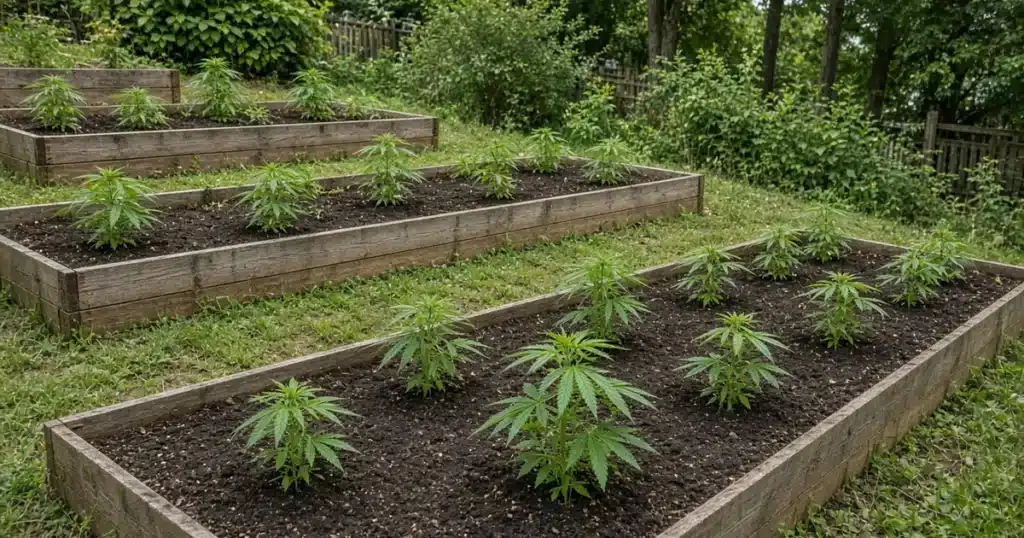
Not every backyard is flat. If the sunniest spot you have runs downhill, you can still grow there, but a slope changes how soil, water and plants behave. Rain runs off instead of soaking in. Soil washes down toward the bottom. Even simple jobs like weeding or carrying water get harder when you are standing on an angle.
Iowa State University Extension puts the main challenge simply. Slopes are highly prone to erosion, and the steeper the hillside, the more likely erosion becomes, especially when no root systems are in place to hold the soil. The fix is to work with the shape of the land. The plan is simple: measure your slope, build beds that follow the contour, stop soil from washing away and water so it reaches the roots.
Measure your slope first
Iowa State Extension explains that slope is measured as rise over run, meaning how many feet the hill rises over a horizontal distance. It can be written as a ratio or a percentage. For example, a rise of one foot over 12 feet is 1:12, or about 8.33 percent.
Iowa State Extension gives useful ranges:
- Gentle slopes of less than 5 percent generally have few special planting needs.
- Moderately steep slopes of around 8 to 16 percent need special planting methods. They are harder to walk on and water, because water runs off before it soaks in.
- Slopes of 20 percent or more are considered steep and need special planting methods.
- Slopes of about 30 percent or more are too steep to mow.
- A slope of 50 percent is often considered the steepest that can support plant growth.
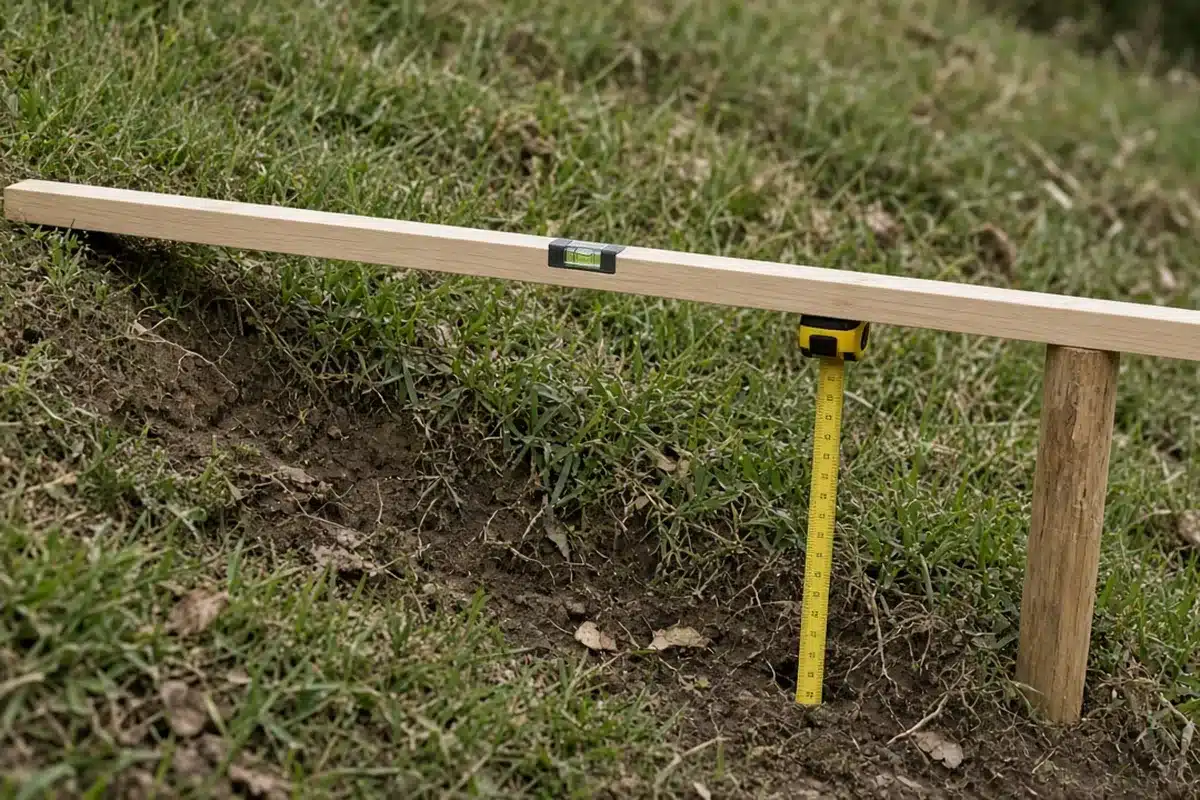
To measure at home, set one end of a straight board on the slope, hold it level with a level tool, and measure the gap from the low end of the board down to the ground. Divide the rise by the length of the board to get the ratio. Take readings in a few places, since slopes are rarely even.
Read the site before you dig
Iowa State Extension notes that steep slopes tend to be drier as a general rule. It also notes that the soil at the base of a slope is often wetter than soil further up. Spend some time watching your hillside during and after rain:
- Which areas stay wet and which dry out fast?
- Are there gullies or bare channels where water already runs?
- Is the slope in full sun or partly shaded?
- Is it open to prevailing winds or sheltered?
- Is the soil rocky, sandy or heavy?
Iowa State Extension advises knowing the site’s growing conditions, since getting around a hillside can be hard, and it notes that areas with signs of erosion can be modified to slow or redirect surface water. For a broader look at choosing a growing spot, turn to Kind Seed Co’s the best places to grow outdoors.
Build terraced beds on the contour
University of Maine Cooperative Extension reports the most success on slopes from building permanent raised beds that are terraced and run parallel with the contours of the land. The extension educator describes using large rocks dug from the garden and wooden frames to hold the soil in place.
It also gives practical sizes. Raised beds should be between 8 and 12 inches tall and no more than 4 feet wide, so you can reach the center from either side without stepping in them. This, it notes, keeps beds from being compacted by foot traffic, since people and pets know exactly where to walk.
Iowa State Extension describes terracing as creating flat areas on the slope using retaining walls, boulders, field stones, bricks or wooden timbers. These slow down runoff and create planting zones. A basic approach for a home bed:
- Mark a line across the slope at the same height from end to end. That is your contour line.
- Set a frame of timbers or stones along the downhill side of that line.
- Move soil from the uphill side to the downhill side to make a level planting surface.
- Fill and level the bed so water spreads across it instead of running to one end.
- Leave a path above the next bed down so you never have to stand in a growing area.
Stop erosion before it starts
Iowa State Extension recommends covering the soil to prevent splashing and erosion. It suggests a thick layer of mulch around plants, and notes that coarse, natural mulches with angular edges work well. Shredded bark, leaf mold and grass clippings are less likely to wash downhill than bark chips and river rock.
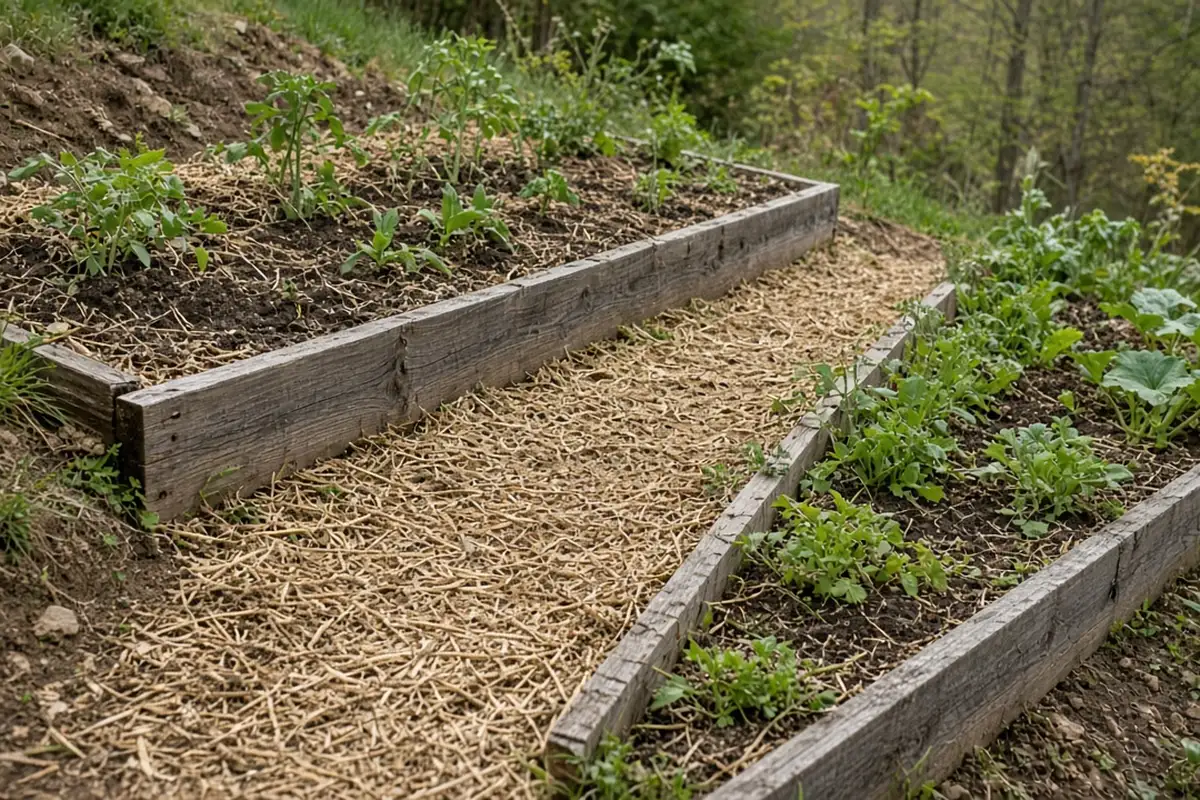
University of Maine Extension advises mulching the paths between beds with organic material such as straw, leaves or wood shavings, or planting them with a groundcover such as white clover. That keeps the walking areas from turning into gullies.
Iowa State Extension also recommends slowing water at the top of the hill. Redirect water from driveways, downspouts and other areas above the slope, for example with small trenches along the top, drainage tile or surface drains. Less water running down the hill means less erosion. It also advises keeping an eye on how water flows over time and adjusting if gullies or channels form.
Set rows across the slope, not down it
Iowa State Extension advises staggering plantings so water does not gather and run down rows, carrying soil with it. If you plant in rows, run them perpendicular to the slope. Planting along the contour lines helps slow water and reduce erosion.
Think about what water does in each case. A row running straight downhill acts like a channel, and every rain sends soil to the bottom. A row running across the slope acts like a small dam. Each bed catches water and gives it time to soak in.
Planting on an angle
Iowa State Extension notes that on slopes it is easy to bury the crown of a plant by accident, because soil washes down and covers it after planting. It gives a simple method for transplants:
- Set the root ball level, with its top even with the soil on the uphill side.
- Mound and firm soil on the downhill side to cover the root ball.
- Hold the soil in place on the downhill side with stones, bricks, strips of cardboard or half of a pot, keeping them a little away from the stem.
- Leave these in place until roots are established. Cardboard usually breaks down on its own.
Iowa State Extension also describes carving small planting terraces by moving soil from the uphill side to the downhill side. It notes these should be two to three times wider than the root ball. For cannabis transplants, wide planting pockets like these give roots a level start and catch water around the stem.
Water so it soaks in
Iowa State Extension calls watering one of the hardest parts of establishing a hillside garden. Water can run downhill before soaking in, which makes it hard to wet the root zone. It names drip irrigation, soaker hoses and other low volume systems as the best options on a slope.
When drip is not available, Iowa State suggests a cycle method:
- Water a plant until water starts to run down the slope.
- Move on to the other plants.
- Come back and water the first plants again.
- Repeat until the root zone is thoroughly wet.
It adds that a small water basin, made by mounding soil on the downhill side of the root ball, helps hold water around the roots long enough to soak in. When watering seeded areas, it suggests a mist or other low flow sprinkler so seeds are not washed downhill.
Keep up with maintenance
Iowa State Extension notes that sloped gardens need regular maintenance like any other bed. Stay on top of weeds, which compete with plants for water and nutrients. Watch how water moves down the hill and fix problems as soon as gullies or small channels form.
Good paths make all of this easier. When every bed can be reached from a path, you avoid trampling soil, which matters on slopes where soil is already under stress. If beds start to feel hard underfoot, check the warning signs in soil compaction in cannabis beds.
Troubleshooting
Water runs off before it soaks in. Use drip lines, a soaker hose or short watering cycles instead. Build small basins on the downhill side of each plant.
Soil collects at the bottom of the bed. The bed is not level or rows run downhill. Rebuild it along the contour with a solid frame on the downhill side.
Gullies form in paths. Mulch the paths with straw, leaves or wood shavings, or plant a groundcover. Redirect water coming from above the slope.
Plants at the top wilt while plants at the bottom stay wet. That matches the pattern of drier soil higher up and wetter soil at the base. Water the top beds more often and space waterings out at the bottom.
Plant crowns get buried after rain. Hold soil on the downhill side with stones or a half pot, and set new plants level with the uphill side.
Sources
- Iowa State University Extension and Outreach, Yard and Garden. Gardening on Slopes and Hillsides. https://yardandgarden.extension.iastate.edu/how-to/gardening-slopes-and-hillsides
- University of Maine Cooperative Extension. Do you have any tips to help with gardening on slopes? https://extension.umaine.edu/gardening/2021/01/26/gardening-on-slopes/
FAQ
Can you grow cannabis on a slope?
Yes. Build terraced raised beds that follow the contour of the land, keep paths mulched or planted, and water slowly so it soaks in. University of Maine Extension recommends permanent terraced beds held with rocks or wooden frames, 8 to 12 inches tall and no more than 4 feet wide.
How steep is too steep for a garden?
Iowa State Extension notes that slopes under 5 percent need few special measures, while slopes of 20 percent or more are steep and need special planting methods. A 50 percent slope is often considered the steepest that can support plant growth. Measure rise over run at a few spots first.
Should garden rows go up and down a slope or across it?
Across it. Iowa State Extension advises running rows perpendicular to the slope and along contour lines so water does not gather and run down the rows, carrying soil away. Rows across the slope act like small dams that slow water and give it time to soak in.
What is the best way to water plants on a hill?
Iowa State Extension says drip irrigation, soaker hoses and other low volume systems work best on slopes. Without drip, water each plant until runoff starts, move on, then return and repeat until the root zone is wet. A small soil basin on the downhill side helps hold water around the roots.


