
Hot Pots: Root Zone Heat in Cannabis Containers
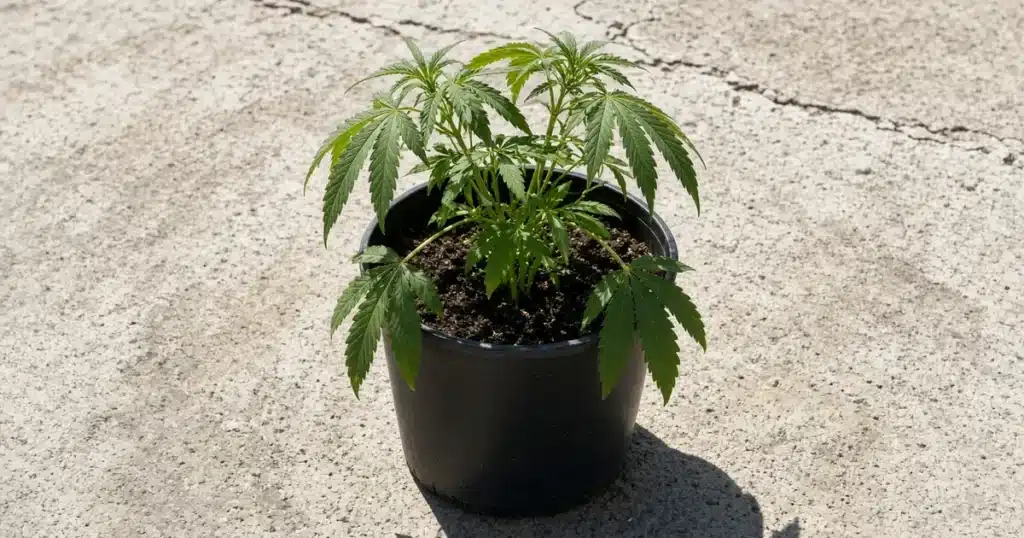
On a hot afternoon, most growers check the leaves. Are they drooping, curling or bleaching? That makes sense, but in a container the bigger risk is often hidden below the rim. The walls of a pot sitting in full sun soak up heat all day, and the roots inside sit right against those walls.
NC State Extension makes the point that while we tend to focus on protecting foliage, roots are adapted to a relatively cool and stable temperature below ground and are far more sensitive to heat. We look at how hot container soil can get, why pot color matters so much, and simple ways to keep the root zone cooler when summer sun hits your pots. The focus stays on heat and pot color. Pot material and water loss are a separate topic.
How hot container soil gets
NC State Extension explains that in summer, the roots of container plants experience much higher temperatures than the parts of the plant above ground. It compares a dark pot in the sun to a car dashboard on a summer day.
The numbers are worth knowing. NC State Extension notes that black or dark colored containers in the sun can heat up fast, with soil temperatures 20 to 30 degrees F higher than the surrounding air. On days in the 90s, it notes, the soil around the roots was likely reaching more than 100 degrees F.
That heat does not need to last long to do harm. NC State Extension reports that soil temperatures above 100 degrees F for five hours, or 113 degrees F for 30 minutes, can leave roots severely injured. Injured roots can no longer do their job of keeping the plant growing, and in bad cases the plant may not survive.
Why pot color matters
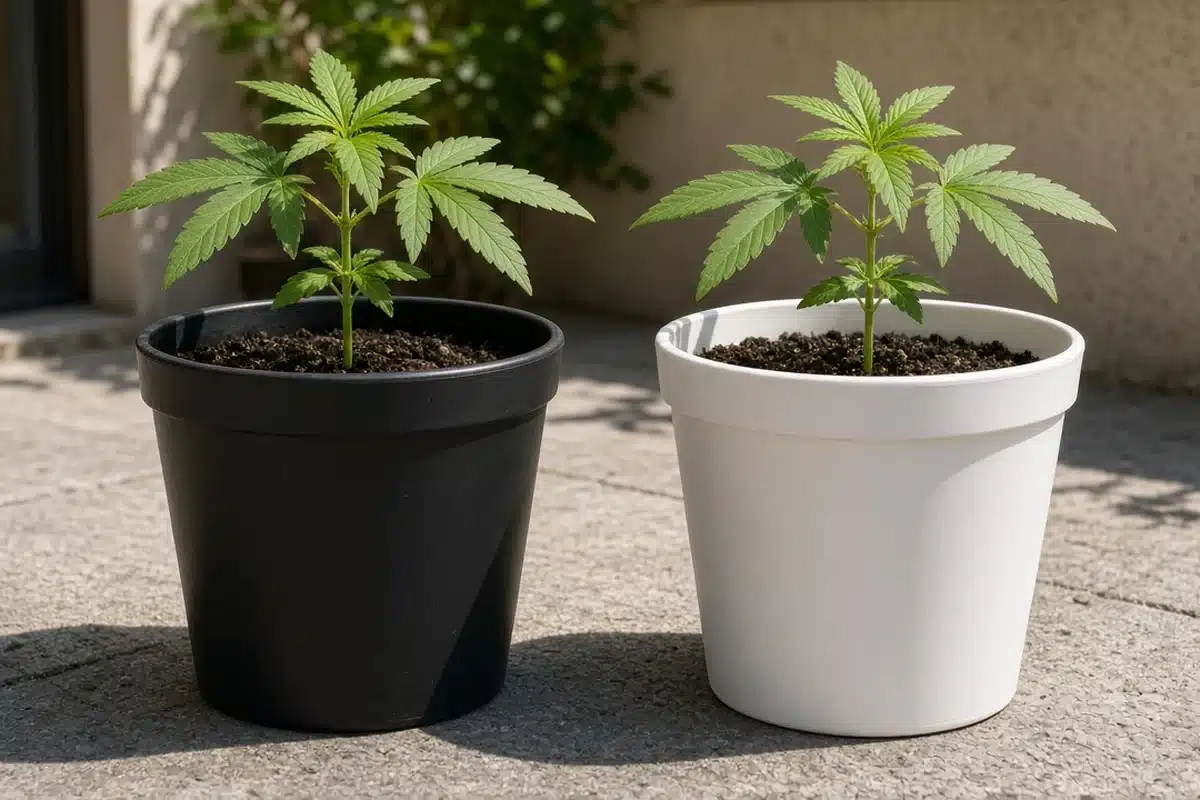
Dark surfaces absorb more sunlight and turn it into heat. Illinois Extension warns that dark colored containers exposed to full summer sun can get so hot that roots are damaged and the potting mix dries out very quickly. It advises paying attention to heat absorption by dark containers when you think about the light in your growing area.
This matters because many common nursery pots are black. A black pot looks practical and cheap, but in full sun it can become a heat trap. A light colored outer surface reflects more sunlight, so the wall stays cooler to the touch.
What this means for your setup:
- Dark pots in full sun carry the highest risk of root zone heat.
- The side of the pot facing afternoon sun usually heats the most.
- Pots on pavement, decking or near a sunny wall take in extra heat from their surroundings.
- Small pots heat through faster than large ones, since there is less soil to buffer the heat.
The last two points are general guidance rather than measured figures, but they follow from the same idea. Anything that adds heat to the pot wall or reduces the amount of soil inside makes the root zone warmer.
Signs the root zone is too hot
Heat damage to roots is hard to see directly, so watch for clues on a hot day:
- The pot wall feels hot to your hand in the afternoon.
- The plant wilts during the hottest part of the day even though the mix is still moist.
- Potting mix dries out much faster than usual.
- Growth slows during a hot spell even with steady watering.
- Roots near the pot wall look brown or thin when you check at transplant time, while roots in the center look healthier.
Leaf damage from high air temperature has its own post, cannabis heat stress. Root zone heat and leaf heat often show up together on very hot days, so it helps to address both.
Move the pot
Illinois Extension points out that containers have one big advantage: they can be moved. As seasons, temperature and light change, you can move containers to keep conditions where you want them. It specifically advises moving dark colored containers to shaded areas.
Moving pots does not have to mean losing sun on the plant. A few options:
- Shift pots so the plant gets morning sun and the pot sits in afternoon shade.
- Move pots off hot pavement or decking onto soil, gravel or grass.
- Pull pots away from walls that reflect heat.
- Group pots together so they shade each other’s walls.
- Use a cart or wheeled base for heavy pots so moving them is realistic.
Illinois Extension also notes that larger plants may need heavier, stronger pots so they do not blow over. If you put a pot on wheels, make sure the combined weight of pot and soil still matches the size of the plant.
Ways to shade the pot, not the plant
Cannabis needs strong light on its leaves, but the pot itself does not need sun. Illinois Extension suggests shading dark containers with trailing plants to cut down heat absorption. The same idea can be applied in other ways:
- Place a board, a low fence or a row of other pots on the sunny side of the container.
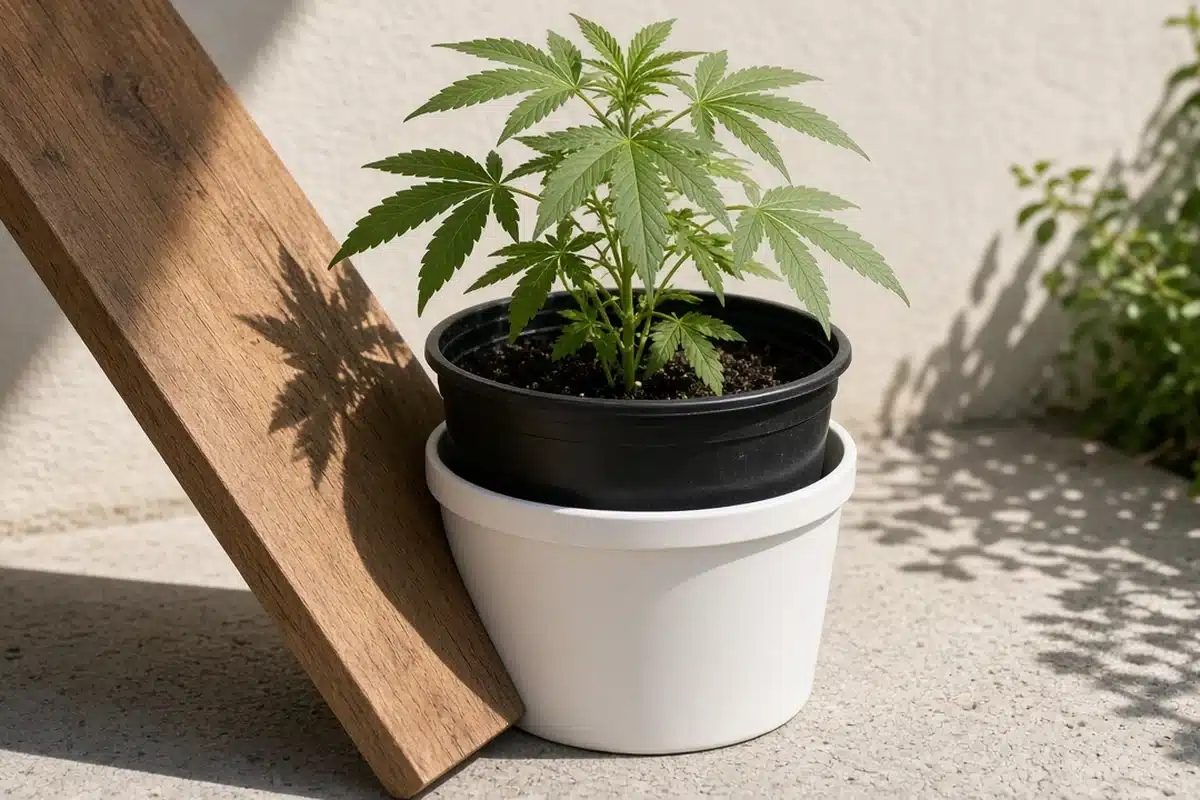
- Set the pot inside a slightly larger light colored outer pot to create a shaded air gap.
- Wrap the outside of the pot with a light colored cover.
- Mulch the top of the mix to shade the soil surface.
These are practical steps that follow the same advice: keep sun off the pot wall. Test one method and feel the pot wall in the afternoon to see if it helps.
Water timing and water temperature
NC State Extension lists the timing of watering and the temperature of the water as tools for managing soil temperature in containers. It does not give a set schedule, so treat the following as general guidance:
- Water early in the day so the mix starts the hottest hours moist.
- Check pots again in the afternoon during a heat wave, since dark pots dry out quickly.
- Avoid using water from a hose that has been sitting in the sun, which can come out hot. Run it until it feels cool.
- Water slowly so the whole root ball gets wet rather than only one side.
Illinois Extension notes that dark containers in full sun dry out very quickly. So hot pots need more frequent checks, not only cooler conditions.
Choosing pots for hot summers
If you are buying new containers, consider color as part of the choice. A light colored pot reflects more sun than a dark one. A larger pot holds more soil to buffer heat. Sizes and types are compared in more depth in Kind Seed Co’s the best cannabis growing containers.
Already own dark pots? You do not need to throw them out. Use them in spots with afternoon shade, put them inside light outer pots, or shade their walls. Save the most exposed sunny spots for lighter containers. Planning pot placement in spring, before the first hot spell, is easier than moving full pots in midsummer.
Troubleshooting
The plant wilts every afternoon but the mix is moist. Feel the pot wall. If it is hot, shade the pot or move it to afternoon shade.
The mix dries out by midday. Dark pots in full sun dry quickly. Water early, check again in the afternoon and shade the pot wall.
Roots on the sunny side look damaged at transplant time. Heat from the pot wall may be the cause. Use a lighter pot or shade that side next season.
The pot is too heavy to move. Use shade boards, an outer pot or nearby pots to block sun from its sides.
Plants recover at night but struggle every hot day. Address both root heat and leaf heat. Cooler pots help the plant handle hot air better.
Sources
- NC State Extension, Swain County Center. Hot Pots, What?!? https://swain.ces.ncsu.edu/2025/02/hot-pots-what/
- Illinois Extension. Containers. https://extension.illinois.edu/container-gardens/containers-0
FAQ
Do black pots overheat plant roots?
They can. NC State Extension notes that dark containers in the sun can heat soil 20 to 30 degrees F above the air temperature. Illinois Extension adds that dark pots in full summer sun can get hot enough to damage roots and dry the mix quickly. Shade the pot or move it to afternoon shade.
How hot is too hot for container roots?
NC State Extension reports that potting mix above 100 degrees F for five hours, or 113 degrees F for 30 minutes, can severely injure roots. Roots are adapted to cool, stable soil and are more sensitive to heat than leaves, so protect the root zone during hot weather, especially in dark pots.
How do I keep container roots cool?
Move dark pots out of afternoon sun, shade the pot wall with boards, trailing plants or a light outer pot, and lift pots off hot pavement. Illinois Extension recommends shading dark containers or moving them. NC State Extension adds that water timing and water temperature also help manage root zone heat.
Is pot color more important than pot size?
Both matter. Pot color affects how much sun the wall absorbs, and dark pots heat up fastest. A larger pot holds more soil, which generally buffers heat better than a small one. In full sun, a light colored pot or a shaded pot wall usually makes the biggest difference.


