Growing Hydroponic Barley Grass in Trays for Juicing
The short answer
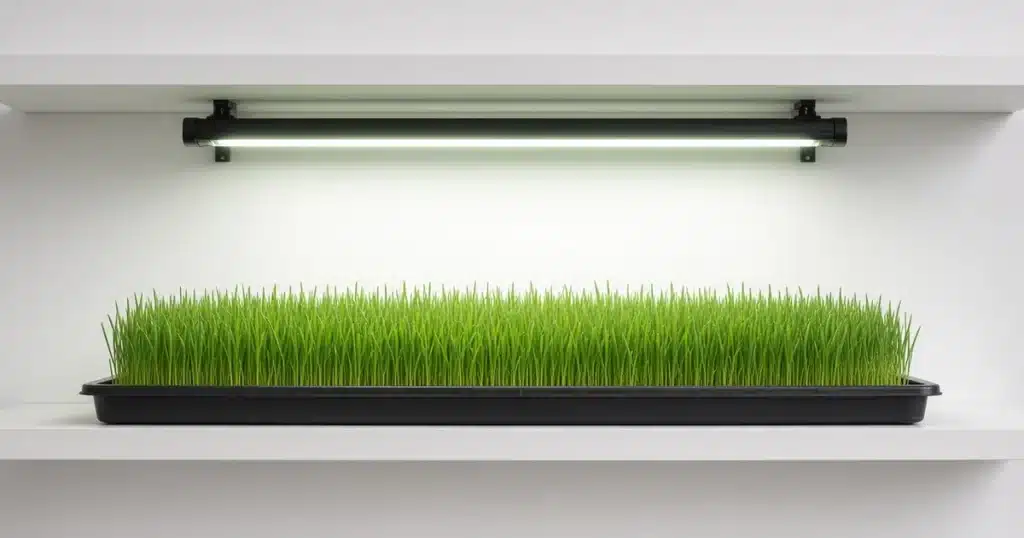
Hydroponic barley grass is grown by soaking clean barley seed, spreading it in shallow trays and watering it a few times a day. University fodder guides describe harvest after about a week. Keep trays clean and drained with moving air, since warm, wet and still conditions are where mold starts.
How does tray grown barley grass work?
Tray grown barley grass is the same idea that livestock farms call fodder. The University of Minnesota West Central Research and Outreach Center explains that in a fodder system a grain like barley, wheat or oats is sprouted in plastic trays and grown for seven days. Sprouted grains can be grown indoors without soil.
University of Vermont Extension describes the same process. Grain, typically barley, is soaked and then placed in trays under a constant temperature for 6 to 8 days, with or without artificial light. The result is a mat of shoots and roots that is cut and fed fresh.
At home you’re doing a smaller version of that. A tray, clean seed, clean water and a spot with steady room temperatures are the core of the setup. No growing medium is required, and the seed itself carries what the young shoots need for this short window. University of Maryland Extension notes that microgreens need no fertilizer because seeds contain the nutrients for initial growth and are harvested before they run out.
Barley itself is a familiar plant. NC State Extension describes it as an annual grass grown as a cover crop, for forage or for grain. Its growth rate is listed as rapid, so a tray fills quickly.
If you’re new to growing without soil, our post on hydroponic in different mediums covers the main ways plants can be grown in water and inert materials.
How do you soak and spread the seed?
Start with clean seed. The Minnesota center says it is essential to begin with clean seed that is free from mold. Rinse it so dust and chaff float off.
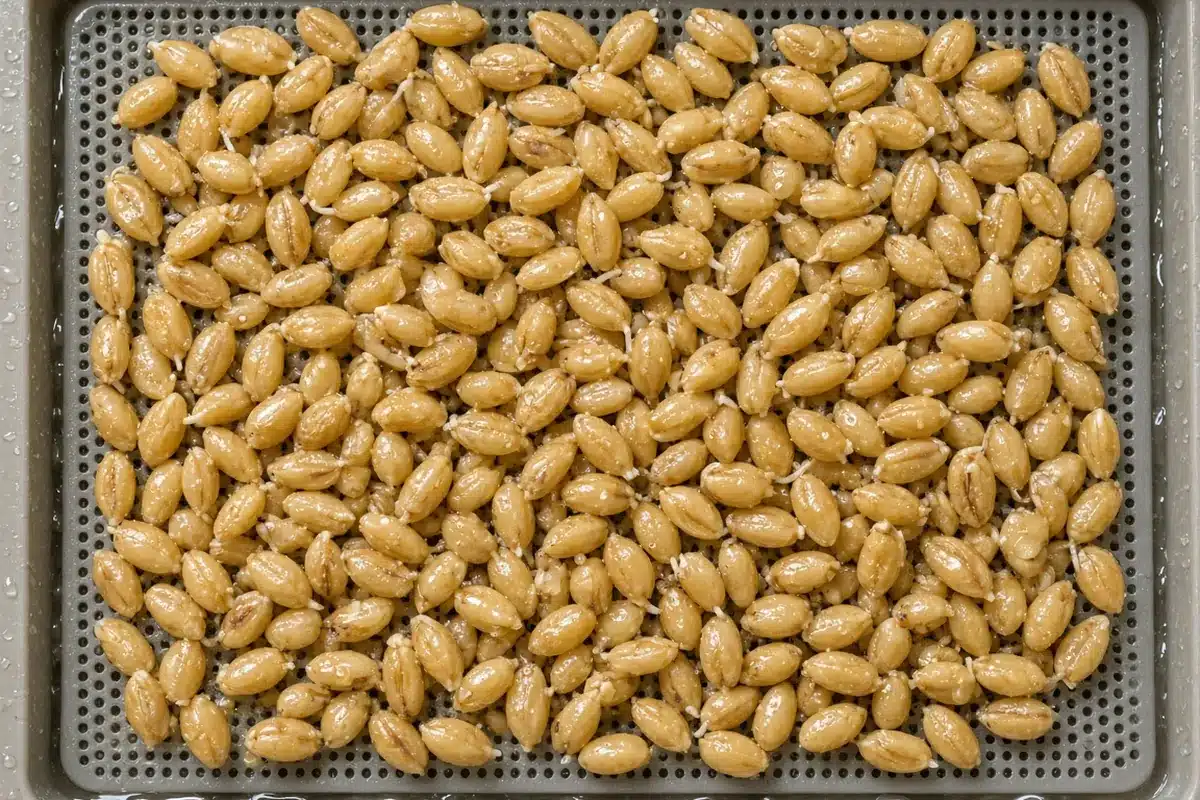
Soaking times vary by source. Vermont Extension describes soaking for about 8 to 12 hours. The Minnesota center describes soaking for 12 to 24 hours. Either way, the goal is to wake the seed before it goes in the tray.
After soaking, drain the seed and spread it in an even layer across a tray with drainage. University of Maryland Extension notes that seeds for microgreens are sown more densely than seeds for crops that will fully mature, because seedlings are harvested before crowding causes problems. A dense, even layer gives you a solid mat at harvest.
Water two or three times a day. That’s the rhythm the Minnesota center describes. Let each watering drain away fully so seed never sits in a puddle.
Clean trays matter between rounds too. Vermont Extension lists cleaning and sanitizing the seed trays as part of the regular labor in a fodder system. For more on routine upkeep, read caring for your hydroponic system.
When do you cut barley grass?
The Minnesota center harvests its sprouts at seven days. Vermont Extension describes a growing window of 6 to 8 days. At home you can cut a little earlier or later depending on the height you want.
| Stage | What to do | Notes |
|---|---|---|
| Start | Rinse clean seed | Begin with seed free from mold (University of Minnesota) |
| Soak | Soak in clean water | About 8 to 12 hours (University of Vermont) or 12 to 24 hours (University of Minnesota) |
| Spread | Spread seed in a draining tray | Sow densely for a solid mat (University of Maryland) |
| Grow | Water two or three times daily | Constant temperature, often between 60ºF and 70ºF (University of Vermont) |
| Cut | Harvest the mat | About 6 to 8 days after the start (University of Vermont, University of Minnesota) |
Sources: University of Minnesota West Central Research and Outreach Center, University of Vermont Extension, University of Maryland Extension.
Use clean, sharp scissors or a knife, as University of Maryland Extension suggests for microgreens. Cut just above the seed layer. Rinse what you harvest and use it soon. The same source suggests rinsing harvested microgreens, patting them dry and using them right away or refrigerating them.
Plan your next tray before cutting this one. The Minnesota center places new, clean seed in trays as each round is harvested. Our post on the growing schedule for your hydroponics explains how to stagger starts so something is always ready.
How to: step by step
- Rinse clean barley seed.
- Soak it in clean water for several hours.
- Drain it and spread a thick, even layer in a draining tray.
- Water the tray two or three times a day and let it drain fully.
- Give light once green shoots appear.
- Cut the grass when it reaches the height you want.
Light is optional. Vermont Extension notes that fodder can be grown with or without artificial light, so a grow light is a choice rather than a must for a short tray.
Troubleshooting
Mold on seed: Vermont Extension calls mold a primary drawback of fodder systems. Sprouts thrive in warm, moist conditions, which also invite mold. Drain trays fully and add a small fan. University of Maryland Extension suggests a gentle breeze from a nearby fan to move air around dense plantings.
Patchy growth: seed quality varies. The Minnesota center says to begin with clean seed that is free from mold, so start each tray with fresh, clean seed.
Sour smell: water left standing in the tray. Rinse and drain more often and clean the tray before the next round.
Where barley grass fits indoors
Barley grass is one of the quickest crops you can grow on a counter. It needs no soil, no fertilizer and only a week or so of attention. If you enjoy fast indoor greens, the Kind Seed Co blog has more articles on coco and hydro mixes and other ways to grow without a garden bed.
Sources
- Fodder production systems, University of Minnesota West Central Research and Outreach Center
- Fodder systems on the certified organic dairy farm, University of Vermont Extension
- Hordeum vulgare (barley), NC State Extension Gardener Plant Toolbox
- Growing microgreens and baby greens indoors, University of Maryland Extension
FAQ
Is barley grass the same as wheatgrass?
No. They are different grains, though both can be sprouted in trays. The University of Minnesota fodder center lists barley, wheat and oats as grains that can be sprouted the same way. The soaking, spreading and watering methods are similar, so you can use the same trays.
Do you need nutrients for barley grass?
No added nutrients are needed for a short tray. University of Maryland Extension notes that seeds contain the nutrients for initial growth and are harvested before they run out. Clean water, drainage and moving air matter far more for a tray cut after about a week.
Can you regrow barley grass after cutting?
Plan on one cut per tray. University of Maryland Extension notes that microgreens cut at the seedling stage will not regrow. Fodder farms place new, clean seed in trays after each harvest. Start a fresh tray every few days if you want a steady supply.
Does barley grass need a grow light?
No. University of Vermont Extension notes that fodder is grown with or without artificial light for a period of 6 to 8 days. A bright window or a simple grow light is fine if you want one, but the short growing window means light is optional.
What temperature does barley grass like?
Steady room temperatures suit it. University of Vermont Extension describes fodder grown under a constant temperature, typically between 60ºF and 70ºF. Avoid warm, still corners, since the same source notes that warm temperatures and high moisture are also prime conditions for mold in trays.