
Hydroponic Mitsuba: Growing Japanese Parsley in Water
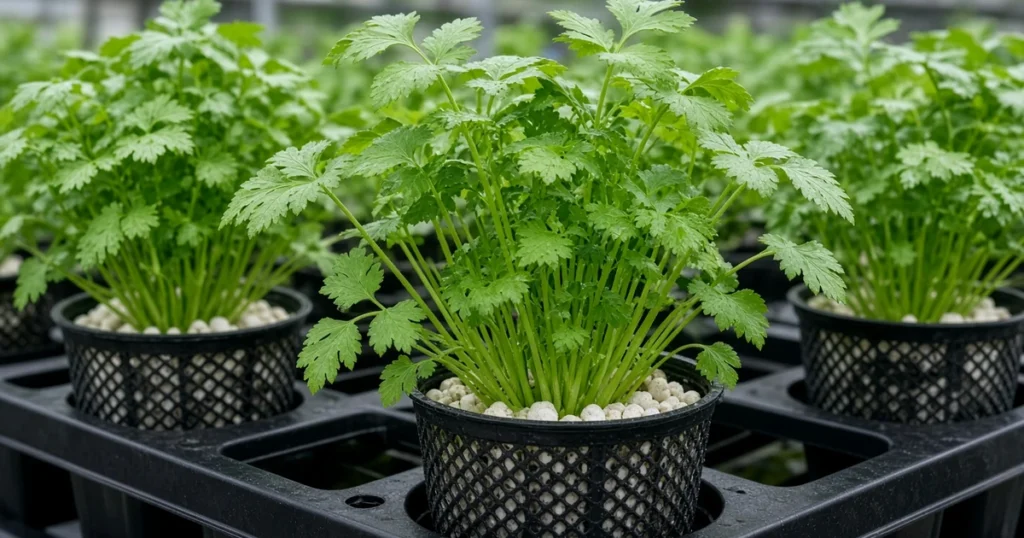
Hydroponic mitsuba is Cryptotaenia japonica, also called Japanese parsley, grown in a nutrient solution instead of soil. NC State Extension says the name means trefoil or three leaf in Japanese, after its foliage. Japanese cooks use it much as others use common parsley.
The short answer
Mitsuba grows well in a small raft, bucket or NFT system. Give it bright light without hard full sun, since NC State says full sun can yellow the leaves. Check pH and EC often and cut outer leaves so new ones grow from the base.
Can mitsuba grow in a hydroponic system?
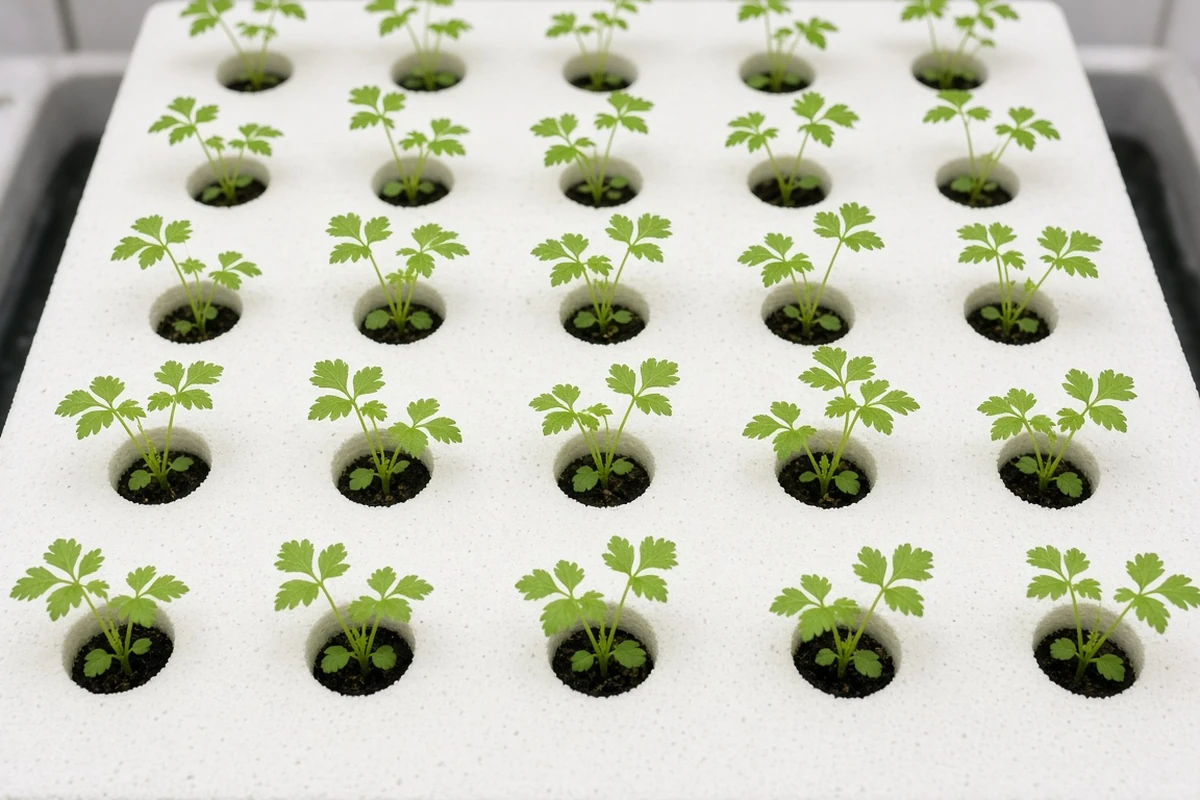
Yes. NC State describes mitsuba as a perennial with thick roots and leaves that grow straight from the root base. It starts easily from seed and is usually grown as an annual. Leafy herbs with that habit suit net pots, where the University of Minnesota Extension suggests the pot should be only partly submerged so the roots get oxygen. Compare root zone materials in hydroponic in different mediums.
Which hydroponic setup suits mitsuba?
A raft or bucket is simplest. The University of Minnesota Extension describes the Kratky method, where an air gap above the water gives roots air, and active aeration with an airstone and pump.
A nutrient film technique (NFT) channel also suits a low herb like mitsuba. Virginia Cooperative Extension explains that NFT feeds a thin flow of solution through channels. It notes that shut off valves can be added to delivery lines or manifolds to adjust flow into each channel. Virginia Extension lists meters for EC, pH and dissolved oxygen as part of managing the solution. Use caring for your hydroponic system for routine upkeep.
NC State notes that mitsuba grows upright in shade and flatter in sun, where the leaves tend to yellow and taste more bitter.
How do you harvest mitsuba grown in water?
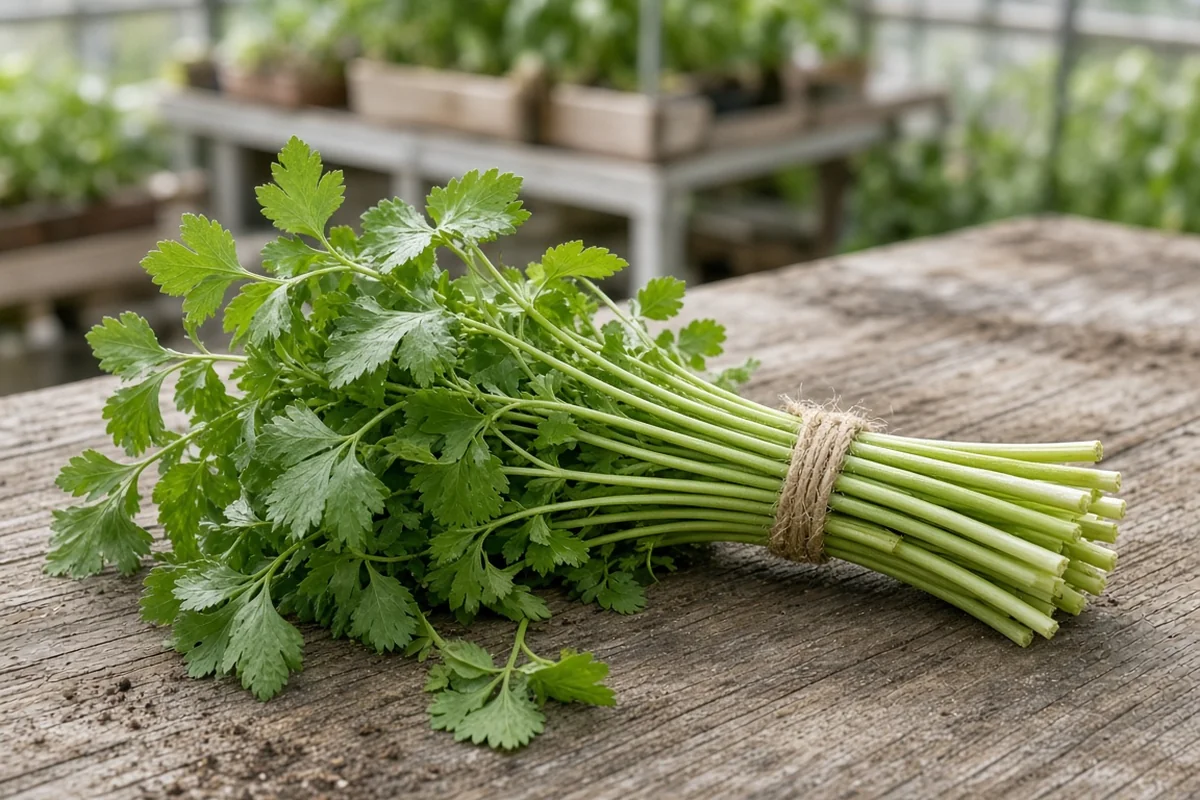
Cut the outer stalks and leave the center. NC State says one root base can grow several new segments of leaves and rosettes, and that a clump can live on for years. The University of Minnesota Extension says most hydroponic growers harvest three to five times from the same plants before restarting. Plan restarts with growing schedule for your hydroponics.
Mitsuba in hydroponics
| Need | What to do | Why |
|---|---|---|
| Light | Bright, not hard full sun | Full sun can yellow leaves |
| System | Raft, bucket or NFT channel | Low leafy herb |
| Roots | Net pot partly submerged | Roots get oxygen |
| Flow | Shut off valve on NFT lines | Adjust flow per channel |
| Harvest | Cut outer stalks | New rosettes form |
Sources: NC State Extension, University of Minnesota Extension, Virginia Cooperative Extension, UF/IFAS Extension.
How to: step by step
- Sow mitsuba seed in plugs or starter cubes.
- Move seedlings into net pots in a raft, bucket or NFT channel.
- Run an airstone or leave an air gap below the pots.
- Check pH and EC often with meters.
- Give bright light that is softer than full sun.
- Cut the outer stalks and let new rosettes grow.
Troubleshooting
Yellow, bitter leaves: too much sun. Move plants or raise the light.
Gray mold or white flies: NC State lists both in greenhouse settings. Improve airflow and check under leaves.
Slow growth in warm water: low oxygen, as UF/IFAS notes. Cool the room with help from hydro setup environment.
Kind Seed Co shares these notes for growers who like Japanese herbs.
Sources
- Cryptotaenia japonica (mitsuba), NC State Extension Gardener Plant Toolbox
- Small scale hydroponics, University of Minnesota Extension
- Hydroponic production of edible crops: nutrient film technique (SPES 463), Virginia Cooperative Extension
- Leafy greens in hydroponics and protected culture for Florida (HS1279), UF IFAS Extension
FAQ
What does mitsuba look like?
NC State Extension says the leaves have a clasping base, a long stalk and three toothed leaflets. The name mitsuba means trefoil or three leaf in Japanese.
Does mitsuba need full light?
No. NC State says full sun tends to yellow the leaves and can make them taste more bitter. It grows upright in shade and flatter in sun.
How do you harvest mitsuba?
Cut the outer stalks and leave the center. One root base can grow several new rosettes, so the plant can be cut again.
Can mitsuba be grown in soil too?
Yes. NC State describes it as a cultivated vegetable that is easily grown from seed and can be propagated by division.
What pests show up on mitsuba?
NC State lists snails and slugs, and white flies and gray mold in greenhouse settings.



