Southern Blight On Hemp And Cannabis: Signs And Prevention
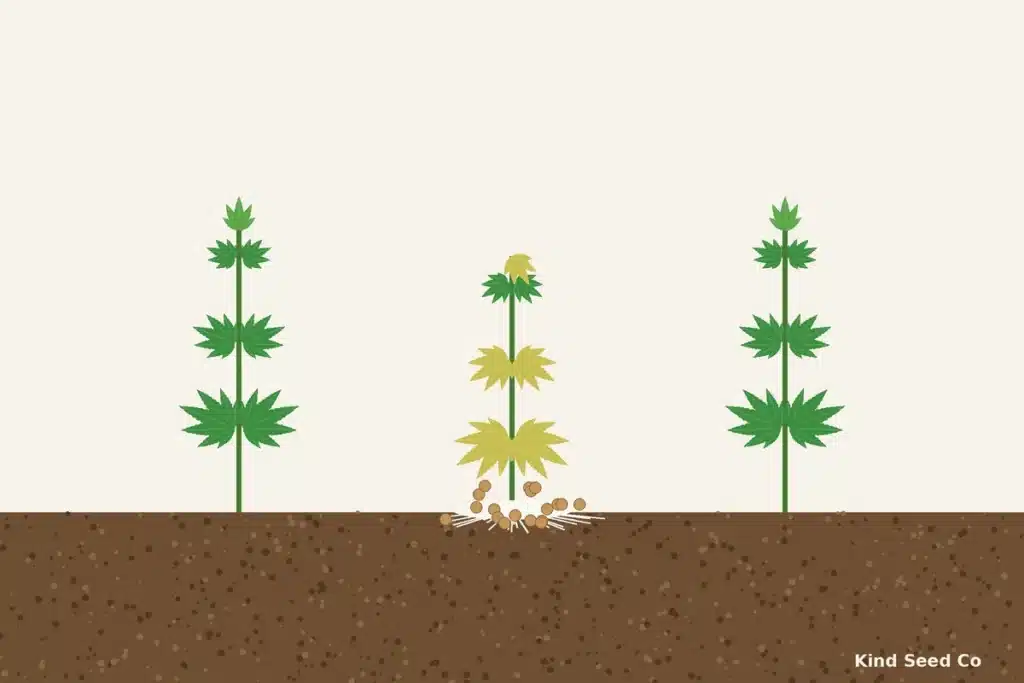
Quick answer: Southern blight is a disease caused by the soilborne fungus Athelia rolfsii, also called Sclerotium rolfsii. On hemp and cannabis, look for sudden wilting that doesn’t improve after watering, white fungal growth at the stem base, and small tan to brown balls called sclerotia. An infected plant can’t be saved, so prevention matters most.
What Is Southern Blight?
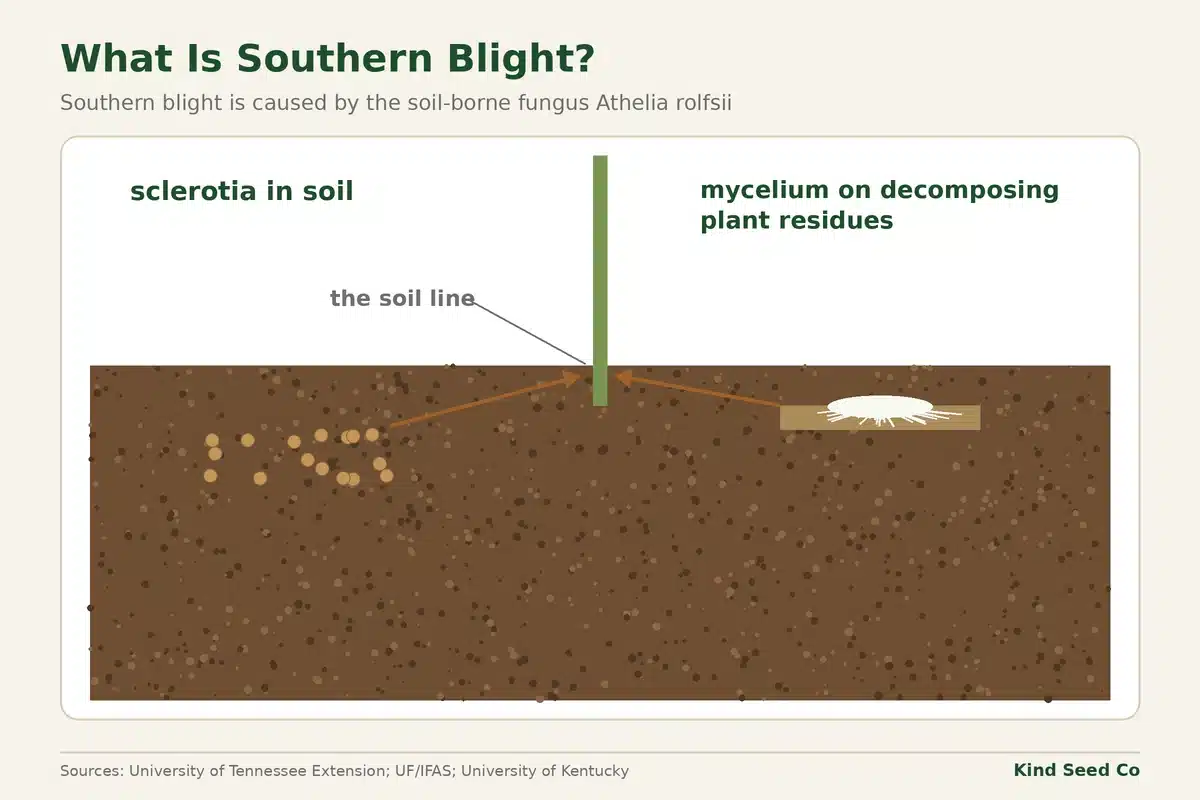
Southern blight is caused by the soil-borne fungus Athelia rolfsii, also called Sclerotium rolfsii. Recent UF/IFAS publications use the name Agroathelia rolfsii. It affects hundreds of different plants, including vegetables, field crops, ornamentals and fruit, and University of Kentucky lists hemp among them.
The disease goes by several other names: southern stem blight, basal stem rot, Sclerotium blight, crown rot and white mold, which is not to be confused with Sclerotinia white mold.
Why It Matters for Hemp Growers
University of Tennessee Extension calls southern blight the most damaging disease in Tennessee hemp production in recent years. Hemp plants are susceptible at any age from seedling to full maturity, and once a plant becomes infected with southern blight, it can’t be saved.
Southern Blight Symptoms on Hemp and Cannabis
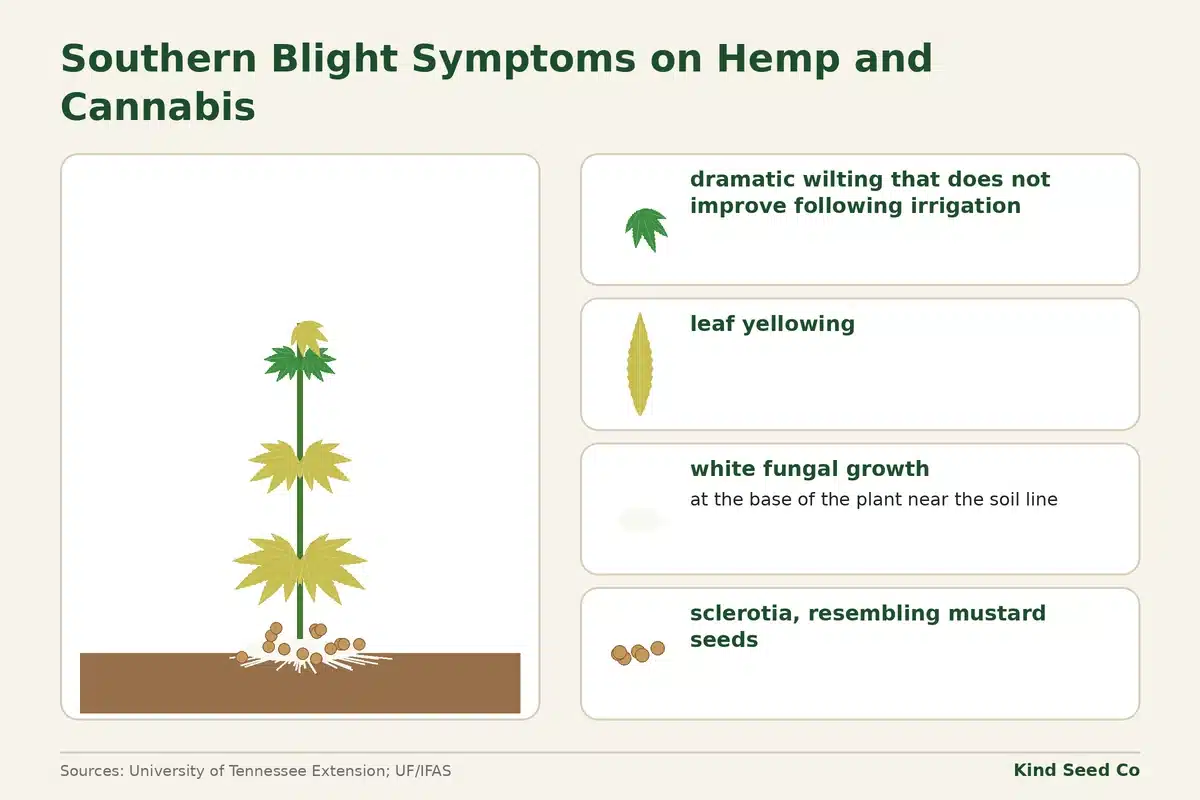
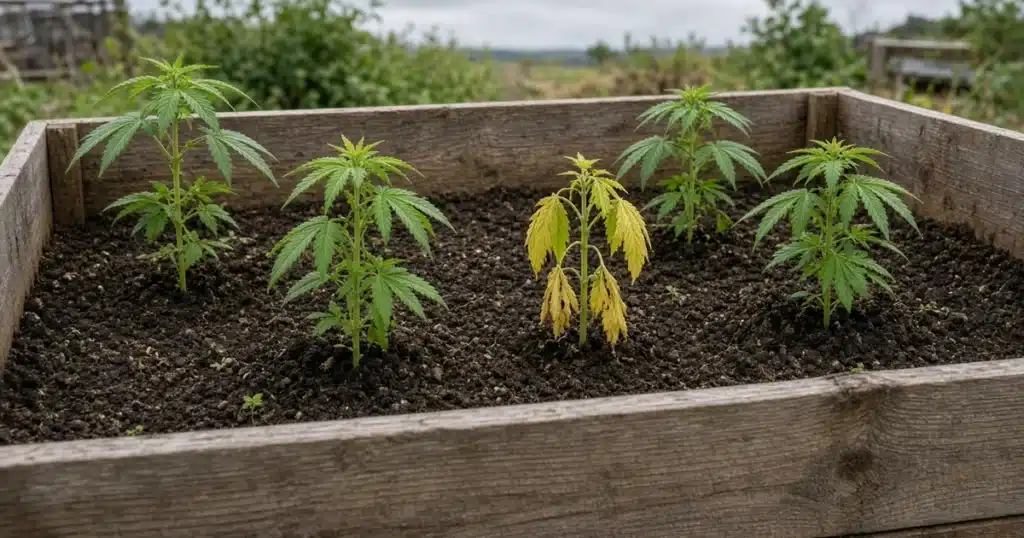
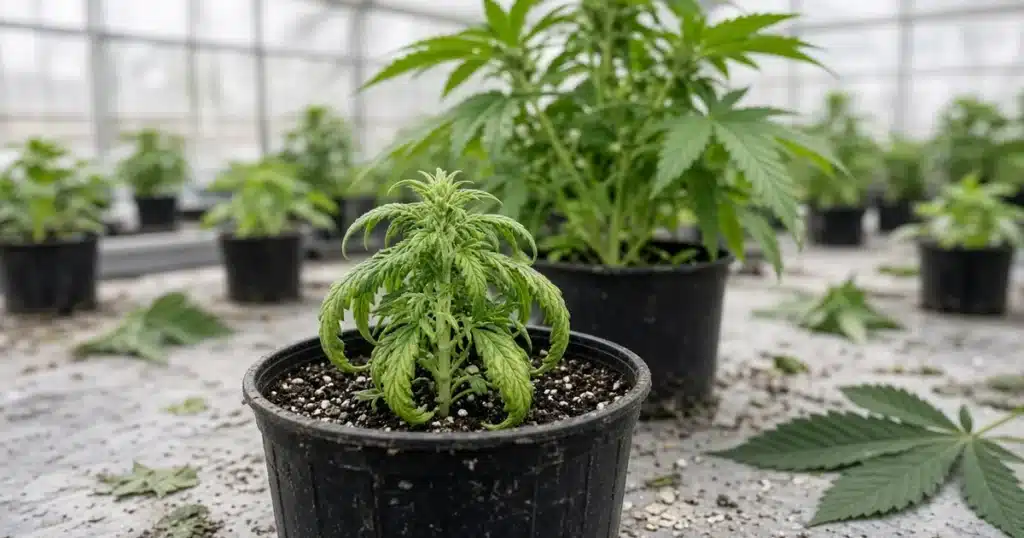
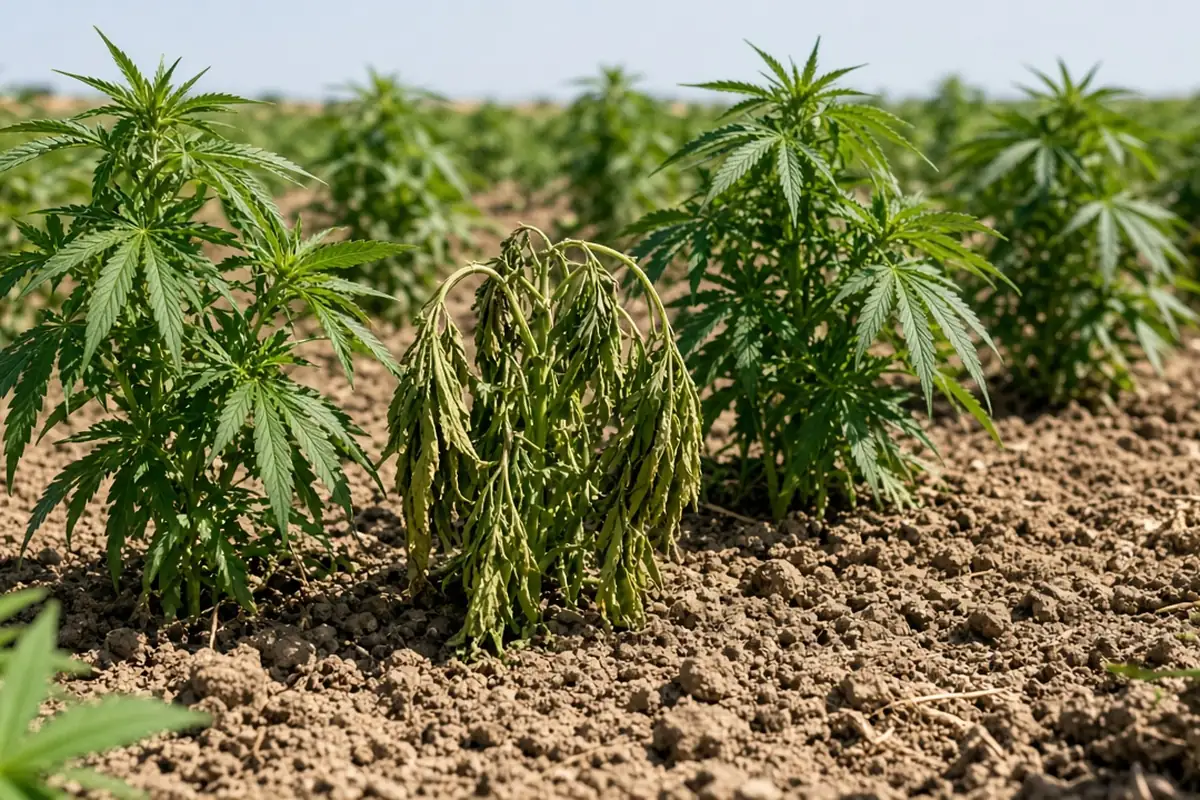
The most obvious symptom of southern blight is dramatic wilting that does not improve following irrigation, according to University of Tennessee Extension. Wilt may come with leaf yellowing, though UF/IFAS notes that leaves of wilted plants may remain green.
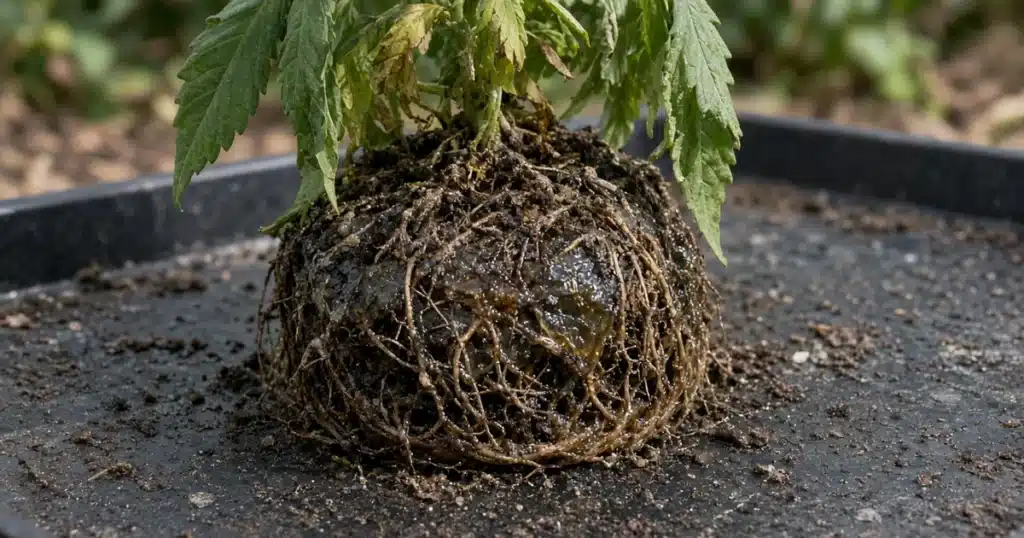
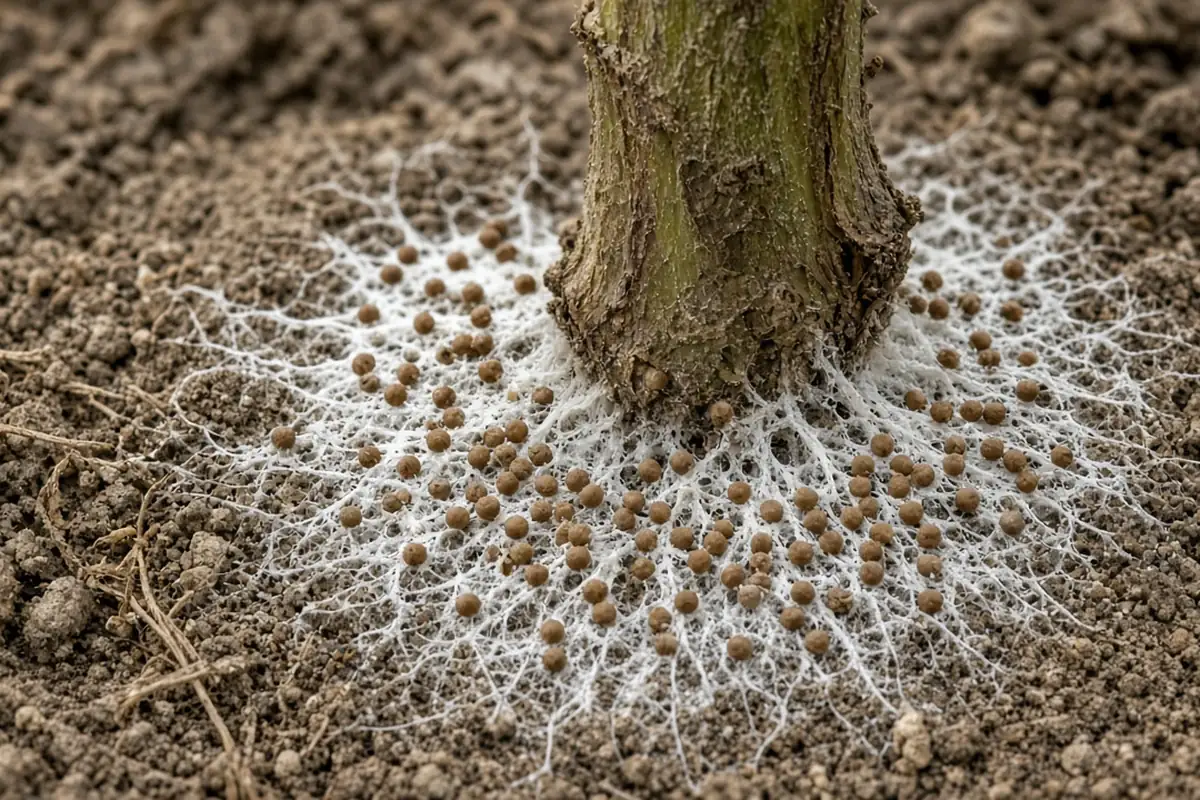
Look at the base of the plant. Affected plants show white fungal growth, easily observed with the naked eye, at the base of the plant near the soil line. Small, round, tan to brown balls called sclerotia, resembling mustard seeds, will be embedded in the white fungal growth.
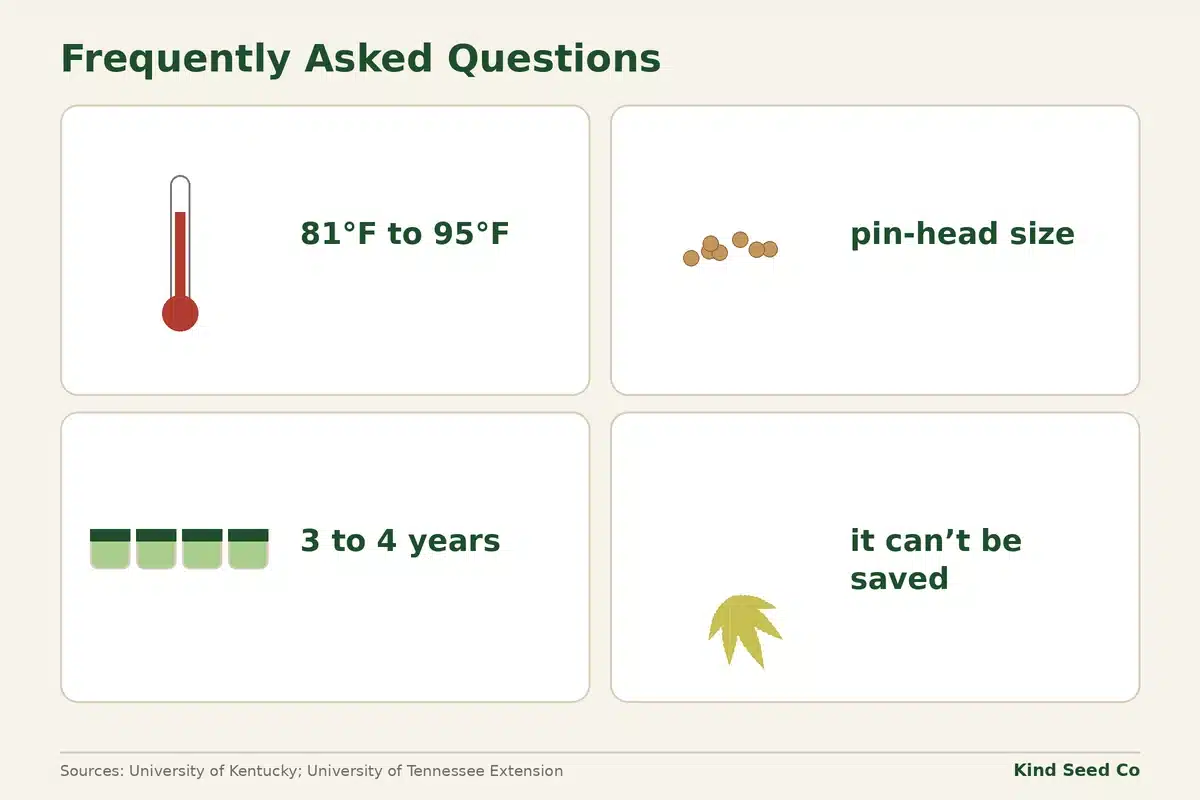
The fungal growth and sclerotia may extend beyond the stem to plant residue on the surrounding soil surface. University of Kentucky describes the sclerotia as tiny, about the size of a pin head. They start white and darken to tan, brown, orange or reddish-brown as they mature.
A Pattern in the Field
Infections are often sporadic within a field, and affected plants may be surrounded by healthy plants. The UF/IFAS plant pathology team notes that it’s common to see symptomatic plants next to healthy plants.
How to Tell Southern Blight From Other Wilts
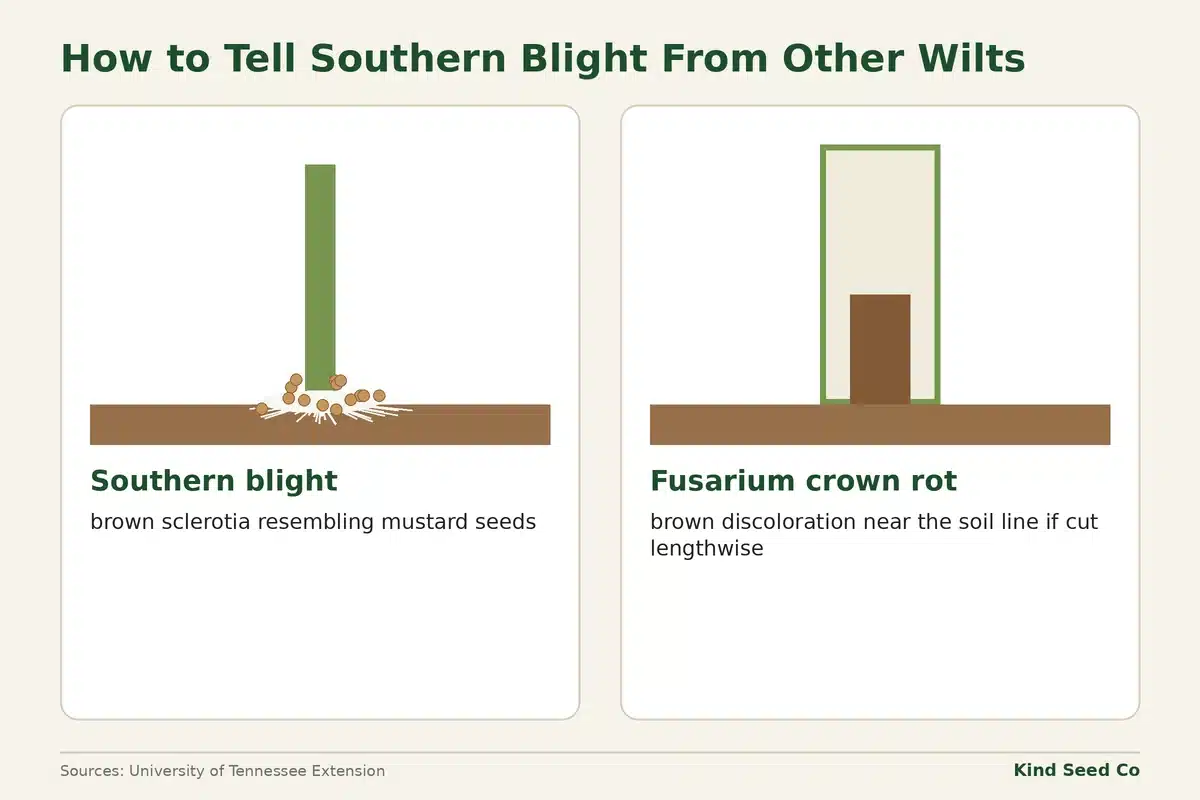
In the field, Fusarium diseases may be confused with southern blight. University of Tennessee Extension explains the difference: disease caused by Fusarium will not produce the brown sclerotia resembling mustard seeds that are characteristic of southern blight.
Fusarium crown rot also causes wilting that does not recover following irrigation. The telltale sign is inside the stem, which shows brown discoloration near the soil line if cut lengthwise, rather than the white color of healthy stem tissue.
Symptoms alone shouldn’t be used to diagnose it. The UF/IFAS plant pathology team advises that if any of these soilborne diseases are seen in a field, the most important thing is to prevent any further spread of the pathogen, and to always confirm with a diagnostic lab.
Conditions That Favor Southern Blight
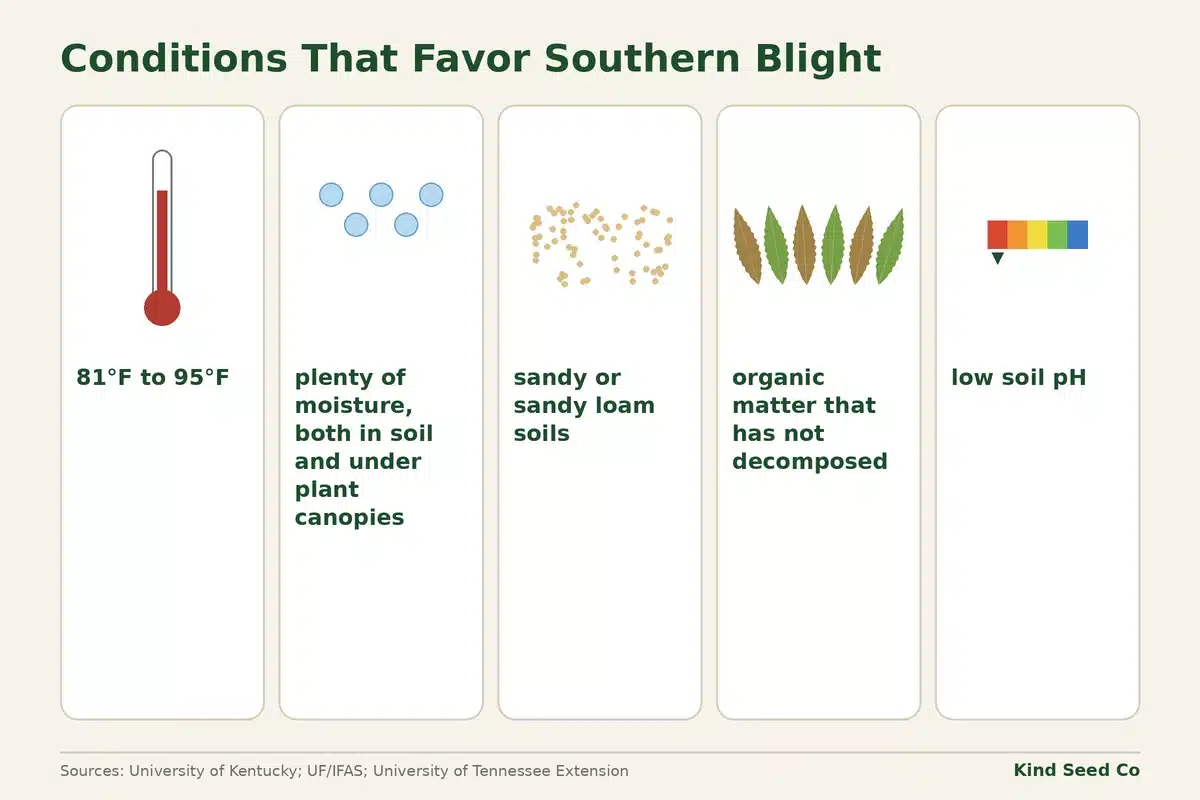
Warm, wet weather drives this disease. University of Kentucky lists the favoring conditions as plenty of moisture, both in soil and under plant canopies, and relatively warm temperatures, with an optimum of 81°F to 95°F. UF/IFAS gives the same optimum range for disease development.
Soil matters too. The disease tends to be more prevalent in sandy or sandy loam soils, and in soils rich in organic matter that has not decomposed. University of Tennessee Extension adds that it’s favored by low soil pH. See understanding pH and how it affects cannabis plants for testing basics.
It moves fast once conditions line up. Mycelial mats become visible 2 to 4 days after infection, and sclerotia can begin to develop about 7 days after infection.
How Southern Blight Spreads
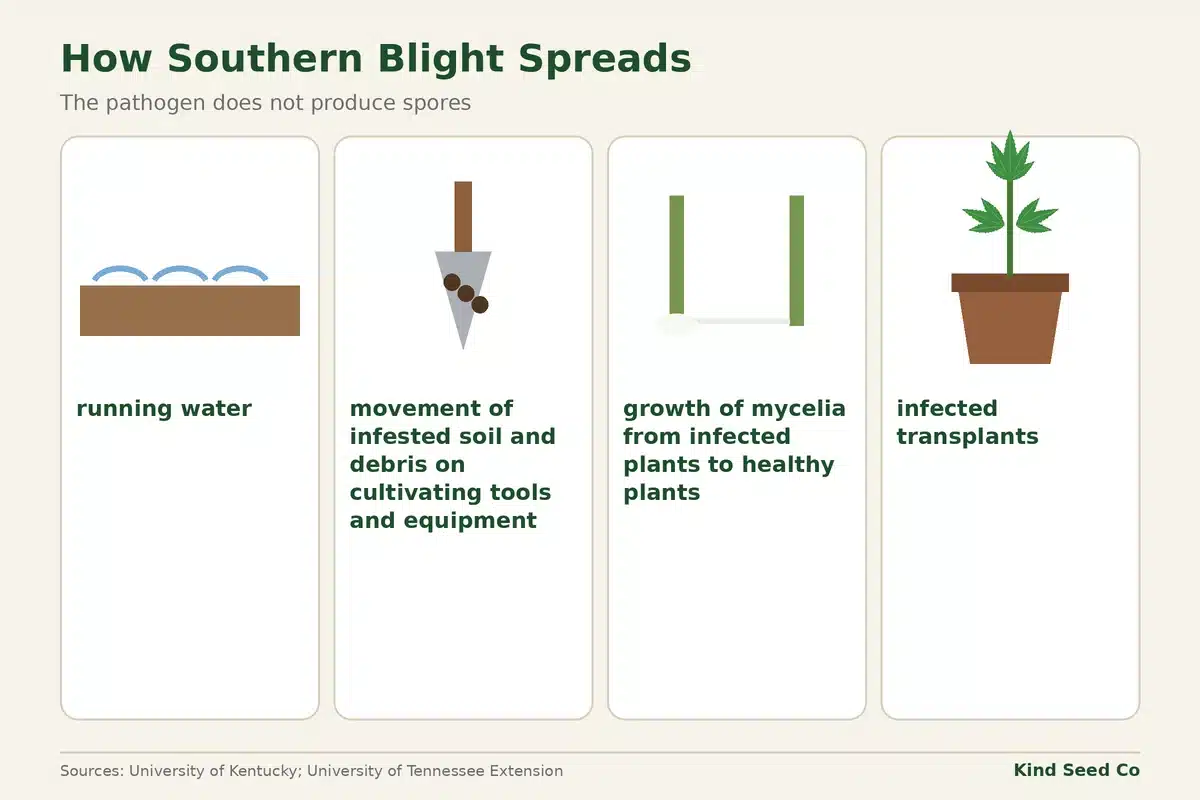
The pathogen does not produce spores, so a plant must be in close physical proximity to one of the sclerotia to become infected. Sclerotia are the pathogen’s hardy overwintering structures. They can persist in upper soil layers for many years, and the fungus also survives as mycelium on decomposing plant residues.
Over short distances, University of Kentucky says the pathogen moves via running water, movement of infested soil and debris on cultivating tools and equipment, and growth of mycelia from infected plants to healthy plants. Long distance spread can occur via infected transplants and infested soil.
How to Prevent Southern Blight
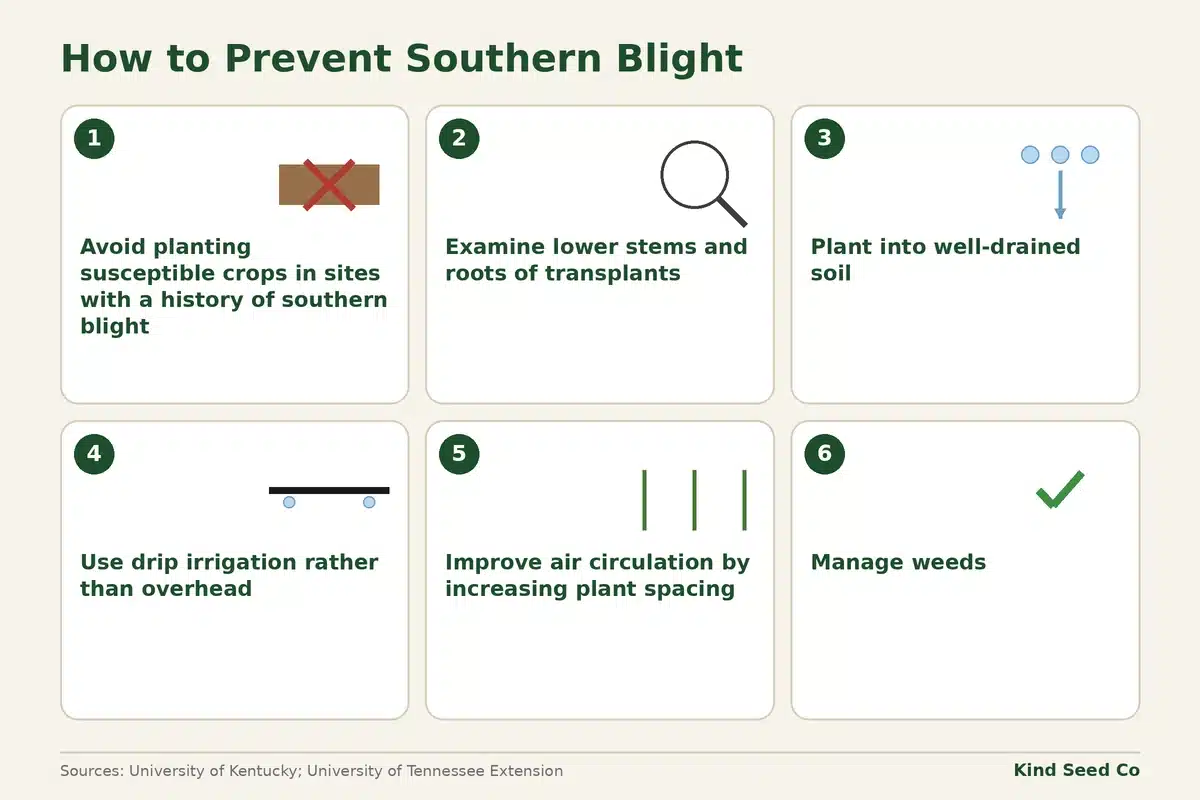
- Avoid planting susceptible crops in sites with a history of southern blight.
- Examine lower stems and roots of transplants for fungal mats and sclerotia, and plant only pathogen-free plants.
- Plant into well-drained soil, and keep soil pH between 6 and 7 to avoid the low pH that favors southern blight.
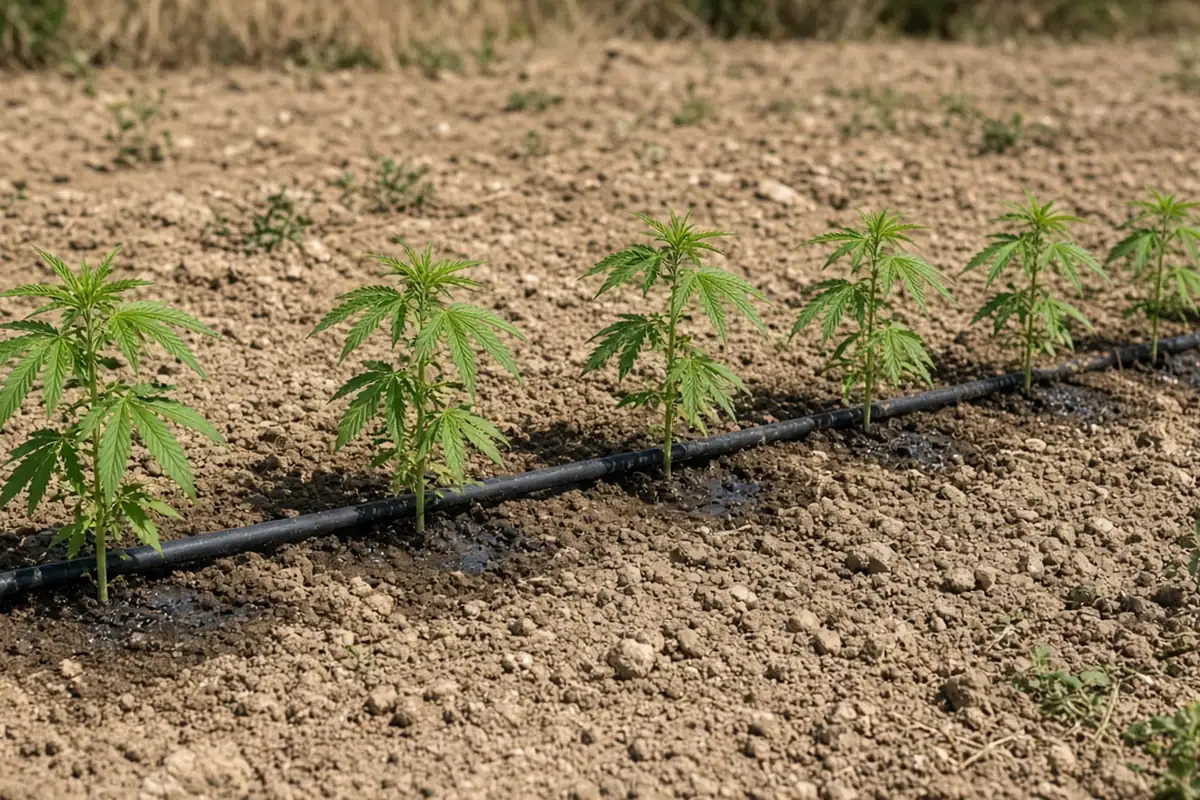
- Use drip irrigation rather than overhead.
- Improve air circulation by increasing plant spacing. Moisture trapped within a dense plant canopy favors disease development.
- Manage weeds. Many weeds can serve as hosts, and weed management during rotations or fallow periods is essential to reduce survival of the fungus.
Rotation Takes Time
On a site with a history of southern blight, University of Kentucky suggests rotating to a non-host for 3 to 4 years. Suggested non-host crops include corn, small grains, grain sorghum and pasture grasses. Grasses are considered the best crop rotation partners, though University of Tennessee notes some fields that were fallow or in pasture for several years still had southern blight in the next hemp crop.
What to Do If Southern Blight Shows Up
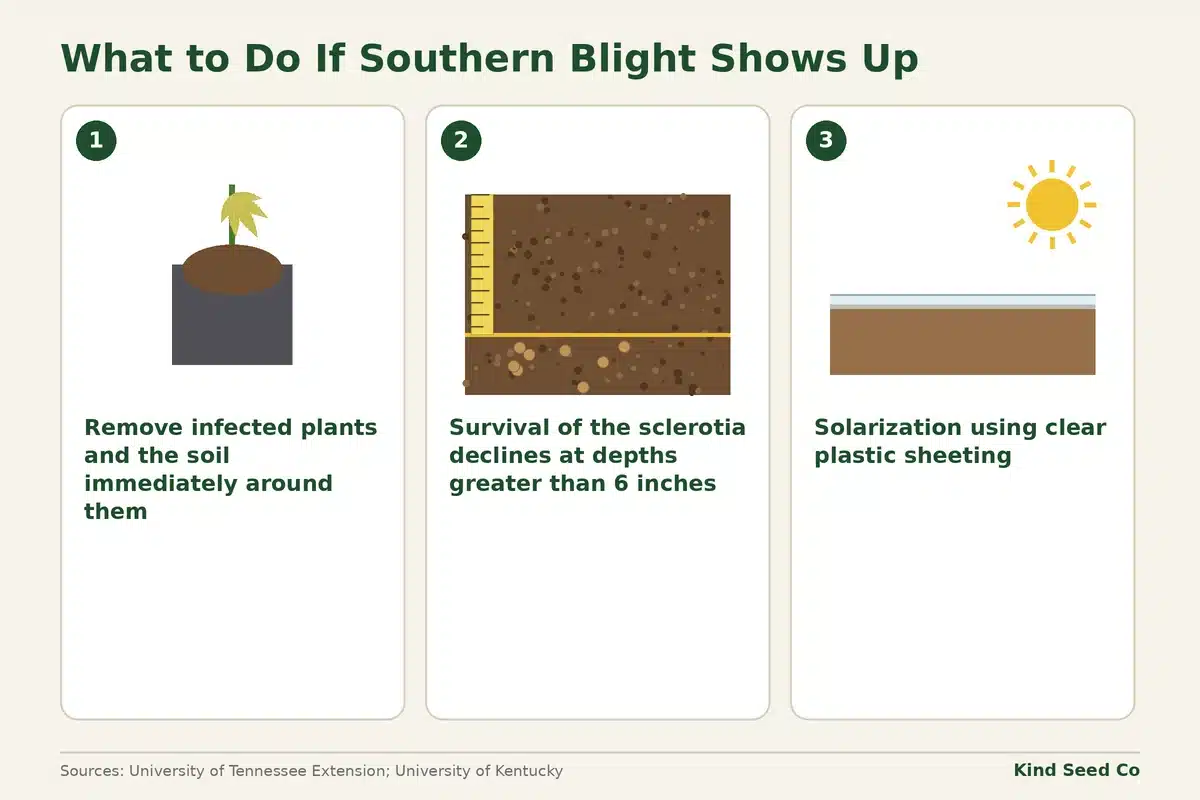
Remove infected plants and the soil immediately around them if practical, to reduce overwintering sclerotia. When digging plants, remove surrounding soil and plant debris, and don’t allow sclerotia to drop back onto the planting site or surrounding soil.
Deep tillage can bury sclerotia and infected plant debris after plants are removed, since survival of the sclerotia declines at depths greater than 6 inches. Without crop rotation, deep plowing is less effective, because buried sclerotia may be returned to the upper layer of soil. Working the soil may also spread the fungus through the field.
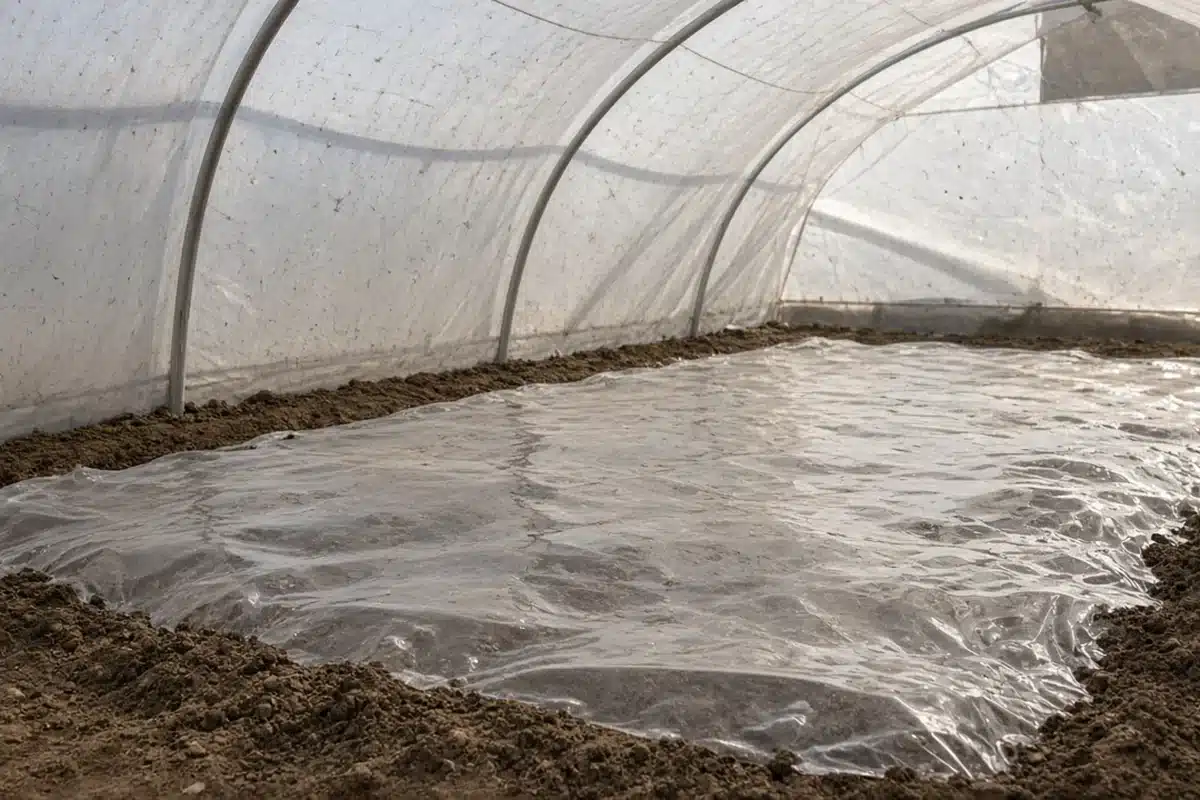
In greenhouse ground beds and hoop houses, solarization using clear plastic sheeting can be an effective way to reduce pathogen levels. The soil needs full sunlight and a temperature of 110°F to 125°F for at least 4 to 6 weeks. For other common diseases, see 8 common diseases for weed seedlings.
Frequently Asked Questions
What Does Southern Blight Look Like on Hemp?
Look for a plant that wilts and stays wilted after watering, sometimes with yellow leaves, while the plants beside it look fine. At the stem base, near the soil line, there’s white fungal growth dotted with small tan to brown balls called sclerotia, which resemble mustard seeds, according to University of Tennessee Extension.
What Causes Southern Blight?
A soilborne fungus, Athelia rolfsii, also called Sclerotium rolfsii, causes southern blight. University of Kentucky says the fungus survives as sclerotia in soil and as mycelium on decomposing plant residues. Disease is favored by plenty of moisture in the soil and under plant canopies and by temperatures between 81°F and 95°F.
Can a Plant Recover From Southern Blight?
No. University of Tennessee Extension says that once a plant becomes infected with southern blight, it can’t be saved. Hemp plants are susceptible at any age from seedling to full maturity, so the focus shifts to removing the infected plant and the soil around it to reduce the sclerotia left behind.
How Long Does Southern Blight Stay in the Soil?
For years. University of Kentucky says sclerotia can persist in upper soil layers for many years, and University of Tennessee notes they can overwinter for several years without a host. That’s why rotation to a non-host crop, such as grasses, for 3 to 4 years is suggested for sites with a history of the disease.
Is Southern Blight the Same as White Mold?
Not exactly. University of Kentucky notes southern blight is sometimes called white mold, but it should not be confused with Sclerotinia white mold, a different disease. Southern blight is caused by Athelia rolfsii, also called Sclerotium rolfsii. Its sclerotia are round, tan to brown and about the size of a pin head.
Does Southern Blight Spread Through the Air?
No. University of Tennessee Extension explains that the pathogen does not produce spores, so a plant must be in close physical proximity to sclerotia to become infected. It moves with running water, infested soil and debris on tools and equipment, mycelial growth from plant to plant, and infected transplants.
Sources