
How Many Plants per Hydroponic Bucket by Crop Size
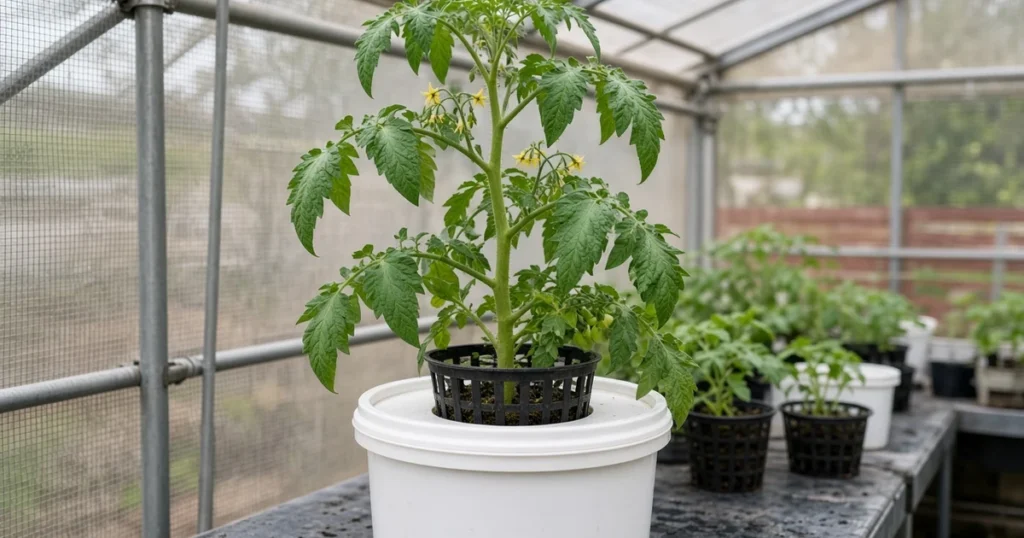
How many plants per hydroponic bucket depends on how big the crop grows. University of Tennessee Extension notes fruiting crops such as tomatoes need room for root growth plus plant support. University of Minnesota Extension notes leafy greens plus herbs suit simple deep water culture, where net pots sit in a bucket lid.
The short answer
How many plants per hydroponic bucket comes down to crop size. Large fruiting crops like tomatoes, peppers plus cucumbers need room for roots plus support, so fewer plants per bucket is the rule. Leafy greens plus herbs stay smaller, so a lid with several net pots works. Space pots so mature leaves do not crowd.

Why do large fruiting plants need their own bucket?
University of Tennessee Extension notes that fruiting crops need room for root growth, plant support plus nutrient management. It notes compact tomato or pepper plants can grow in towers, but light plus nutrients still have to reach each one.
| Crop | Plants per bucket | Notes |
|---|---|---|
| Tomato | Fewer, larger plants | Needs room for roots plus support |
| Pepper or cucumber | Fewer, larger plants | Needs room for roots plus support |
| Lettuce | Several net pots on a lid | Suits simple deep water culture |
| Herbs | Several net pots on a lid | Suits simple deep water culture |
Source: University of Tennessee Extension plus University of Minnesota Extension.
How close can leafy greens and herbs grow?
University of Minnesota Extension describes a simple setup where plants sit in net pots in a lid plus roots hang into the water. Leafy greens plus herbs are smaller, so many pots fit. Leave enough space that mature leaves do not shade the plant next to them.
How does bucket volume affect water use?
University of Minnesota Extension notes a container can be as simple as a 5 gallon bucket or a plastic bin. A large plant draws more water than a small one, so the level drops faster in the same bucket. Watch the level often as crops grow.

How to: step by step
- Check the mature size of the crop.
- Give each tomato, pepper or cucumber ample room.
- Use a lid with several net pots for lettuce or herbs.
- Space net pots so mature leaves do not shade each other.
- Fit an air stone sized for the bucket.
- Check the water level daily as plants grow.
Troubleshooting
Plants shade each other: there are too many per bucket. Thin or shift them.
Bucket drains fast: a big plant is in a small volume. Top up daily or size up.
Roots tangle into one mass: the bucket is crowded. Space crops wider next time.
For related reading see caring for your hydroponic system, growing schedule for your hydroponics plus hydroponic in different mediums. Kind Seed Co also stocks cannabis seeds.
Sources
- Tomatoes, peppers and cucumbers in small scale soilless and hydroponic systems (W 844 C), University of Tennessee Extension
- Leafy crop production in small scale soilless and hydroponic systems (W 844 B), University of Tennessee Extension
- Hydroponic production of edible crops: deep water culture (DWC) systems (SPES 464), Virginia Cooperative Extension
- Small scale hydroponics, University of Minnesota Extension
FAQ
Can two tomato plants share one bucket?
University of Tennessee Extension notes fruiting crops like tomatoes need room for root growth plus plant support. Two plants in one bucket compete for root space, water plus light. Giving each tomato its own container makes support plus nutrient management simpler as the plants reach full size.
How many lettuce plants fit on one lid?
University of Minnesota Extension describes a bucket lid with holes cut for net pots as the most common support. The number depends on lid size plus how large the heads grow. Space the holes so mature leaves do not overlap, which leaves light plus air for each plant.
Does a bigger bucket mean bigger plants?
Not on its own. A larger bucket holds more water, so the level plus nutrient balance shift more slowly. University of Tennessee Extension notes fruiting crops need room for roots, plus extra volume helps there. Light, temperature plus nutrients still set how large the plant grows.
Do herbs need their own buckets?
Most herbs stay compact, so several can share one lid in a simple deep water culture setup. University of Minnesota Extension lists herbs plus leafy greens as good indoor winter crops. Group herbs with similar size plus growth rate so one does not shade the rest of the lid.
Why does each bucket need an air stone?
University of Minnesota Extension notes that roots need air in a hydroponic system as well as water plus nutrients. In deep water culture roots hang in the solution, so an air stone adds oxygen. One stone sized for the bucket supplies every plant sharing that lid with air at the roots.



