Humulene Terpene in Cannabis: Aroma and Basics
Humulene is one of the aroma compounds that gives some cannabis an earthy, woody, hoppy smell. It gets its name from hops, whose botanical name is Humulus lupulus. This guide explains what humulene is, where it shows up, what affects how much of it survives in your buds, and how to grow, dry and store with aroma in mind. It draws on the NIH PubChem database and a published study on hop oil storage. We keep this page about aroma and plant care. We do not make health claims for humulene or any cannabis compound. If you grow, check your state’s home grow law first.
What humulene is
Humulene is a terpene, one of the many small, smelly compounds plants make. More specifically it is a sesquiterpene, a slightly larger and less volatile kind of terpene than the ones that give citrus or pine notes. The NIH PubChem database lists alpha humulene and notes that “humulene has been reported in Trichogonia grazielae, Callilepis laureola, and other organisms,” and that it “is a metabolite found in or produced by Saccharomyces cerevisiae,” which is brewer’s yeast. In other words, it is a widespread plant compound, not something unique to cannabis.
Why it smells like hops
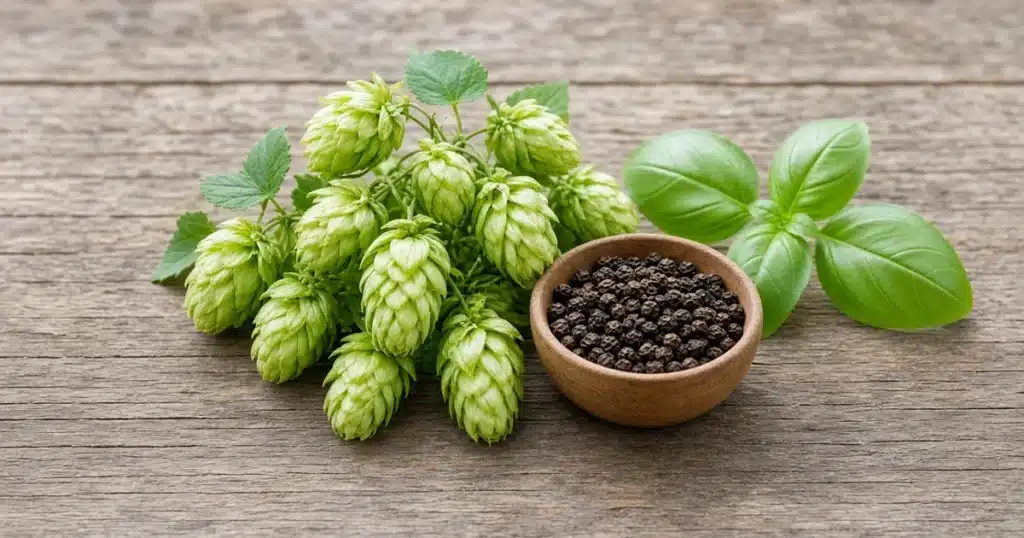
Hops and cannabis are close relatives in the same plant family, Cannabaceae. Both make resin rich in terpenes, and both commonly contain humulene and its frequent partner, beta caryophyllene. That shared chemistry is why some cannabis can smell a little like a hoppy beer.
People usually describe humulene’s own smell as woody, earthy and herbal rather than fruity. In real buds you never smell one terpene alone, so think of humulene as one note in a blend.
What affects humulene in your buds
Genetics come first
Terpene profiles are largely set by genetics. Two plants grown side by side can smell very different. If you want an earthy, hoppy profile, start with a strain whose breeder describes that aroma. Be wary of exact terpene percentages on a label unless a lab report backs them up.
Drying, heat and air
Terpenes are volatile. A 2022 hop storage study published on NIH PubMed Central tracked hop oil over long term storage. Its review of earlier work cites one study in which hop pellets lost roughly 4% to 63% of their oil over six months at about 37°F (3°C), and another in which 20 hop varieties lost roughly 28% to 90% at room temperature. The losses depended on variety and on the study. The same paper notes that some compounds dropped over time while “the levels of other compounds, such as humulene epoxide and caryophyllene oxide, increased.” Humulene epoxide is an oxidized form of humulene. That suggests heat and air change the terpene profile over time.
This is hop research, not cannabis research, but hops are the closest well studied relative, and the lesson matches what growers notice: warm, airy storage dulls aroma.
How to grow, dry and store for aroma: step by step
- Choose genetics for aroma. Read breeder descriptions and pick a strain described as earthy, woody or hoppy.
- Keep late flower temperatures moderate. Very hot rooms near harvest can fade aroma. Steady airflow helps as well.
- Harvest on time. Check trichomes with a loupe. Overripe flowers can lose some of their brightness.
- Dry slowly in the dark. Oregon State University Extension recommends a well ventilated room at about 64 to 70°F (18 to 21°C) and 50 to 55% relative humidity for slow drying of hemp.
- Trim gently. Handle each bud by the stem. Crushing trichome heads releases and loses aroma.
- Jar and store cool and dark. Use airtight glass, fill jars loosely and keep them away from heat and light.
- Limit air exposure. Open jars only when needed after the first weeks of curing. The hop study’s results point to air and warmth as the main enemies of aroma.
Reading terpene claims on labels
Some seed and product listings print a terpene breakdown. A lab report on a specific batch of flower is useful, because it measured that batch. A terpene list on a seed pack is a description of what the breeder has seen, not a promise for your plant. Your light, temperature, harvest timing, drying and storage all shift the final profile, so two growers can get different results from the same seeds. Use labels to narrow your choice, then trust your own nose and notes.
Humulene alongside other terpenes
| Terpene | Common aroma notes | Also found in |
|---|---|---|
| Humulene | Woody, earthy, hoppy | Hops |
| Beta caryophyllene | Peppery, spicy | Black pepper, cloves |
| Myrcene | Earthy, musky, fruity | Hops, mango |
| Pinene | Pine, fresh | Pine needles, rosemary |
| Limonene | Citrus | Citrus peel |
Aroma notes here are common descriptions, not lab measurements.
Where humulene sits in the plant
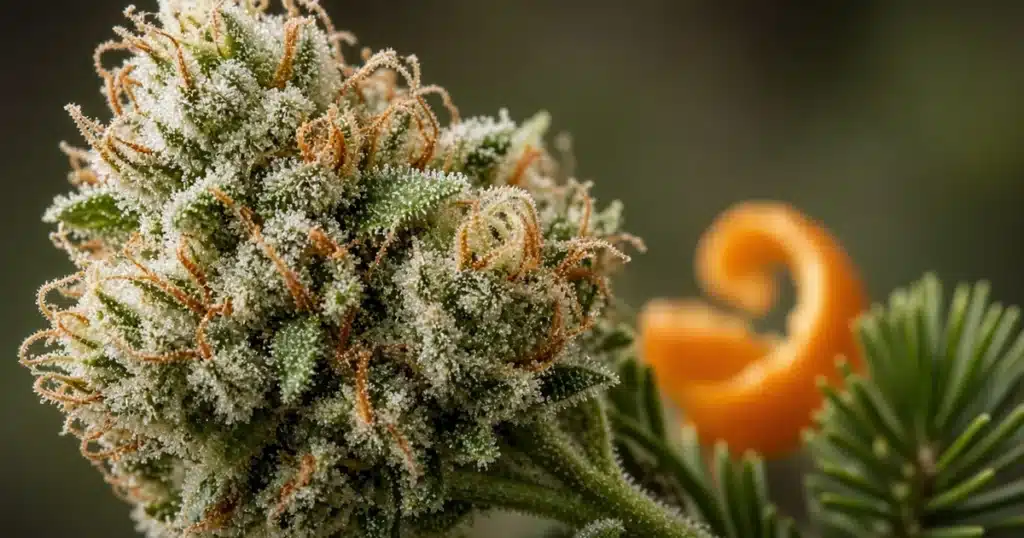
Terpenes like humulene are made and stored in the resin heads of glandular trichomes, the tiny mushroom shaped structures that cover buds and sugar leaves. That is why aroma is strongest on well formed, intact buds, and why rough handling at harvest costs smell. Anything that knocks trichome heads off, such as heavy trimming by hand, tumbling or squeezing buds into jars, also removes some of the aroma compounds they hold.
It also explains why the smell of a live plant and a dried bud differ. Fresh plant material carries moisture and green, grassy notes. As water leaves during a slow dry, the resin aroma comes forward. Drying too fast or too hot can lock in that grassy smell instead.
A note on “benefits”
You will see humulene described online with long lists of benefits. Most of those claims come from early lab or animal studies, not from people using cannabis. We do not make health claims for humulene. If you have a health question, talk to a licensed medical professional.
Troubleshooting aroma problems
My buds smell like hay or grass. That usually points to drying too fast or too warm. Slow the next dry and keep the room dark.
The smell faded after a few months. Storage was likely too warm, too bright or opened too often. Move jars somewhere cool and dark.
My buds smell musty or damp. Check for mold right away. If you see fuzz, webbing or dark spots, or the smell is moldy, throw that material away. Do not smoke, eat or use moldy buds.
Every plant smells the same. Aroma comes mostly from genetics. Try a different strain or several phenotypes from a seed pack.
Related reading
Learn more about trichomes, where terpenes are made, and how to rehydrate buds that dried out without inviting mold.
FAQ
What does humulene smell like?
Humulene is usually described as woody, earthy and herbal, a bit like hops. In real buds it mixes with other terpenes, so you rarely smell it on its own.
Why is it called humulene?
It is named after hops, whose botanical name is Humulus lupulus. Hops and cannabis are related plants in the same family.
Which strains are high in humulene?
Terpene levels vary by plant and growing conditions, so no strain is guaranteed. Look for breeder descriptions of earthy or hoppy aroma, and trust lab reports over labels.
Does drying affect humulene?
Yes. Terpenes are volatile. A hop storage study found large oil losses in storage and more oxidized compounds over time, so slow, cool, dark drying and storage help keep aroma.
Does humulene have health benefits?
We do not make health claims for humulene. Most claims online come from early lab or animal research. Ask a licensed medical professional if you have health questions.
Sources
- National Library of Medicine (NIH), PubChem: Humulene. https://pubchem.ncbi.nlm.nih.gov/compound/Humulene (opened 2026-10-16)
- NIH PubMed Central, Changes in Hop (Humulus lupulus L.) Oil Content and Composition during Long-Term Storage under Different Conditions (Foods, 2022). https://pmc.ncbi.nlm.nih.gov/articles/PMC9563567/ (opened 2026-10-16)
- Oregon State University Extension, Post-harvest processing of hemp flowers. https://extension.oregonstate.edu/catalog/post-harvest-processing-hemp-flowers (opened 2026-10-16)