
Hydrogen Peroxide for Cannabis: Uses and Limits
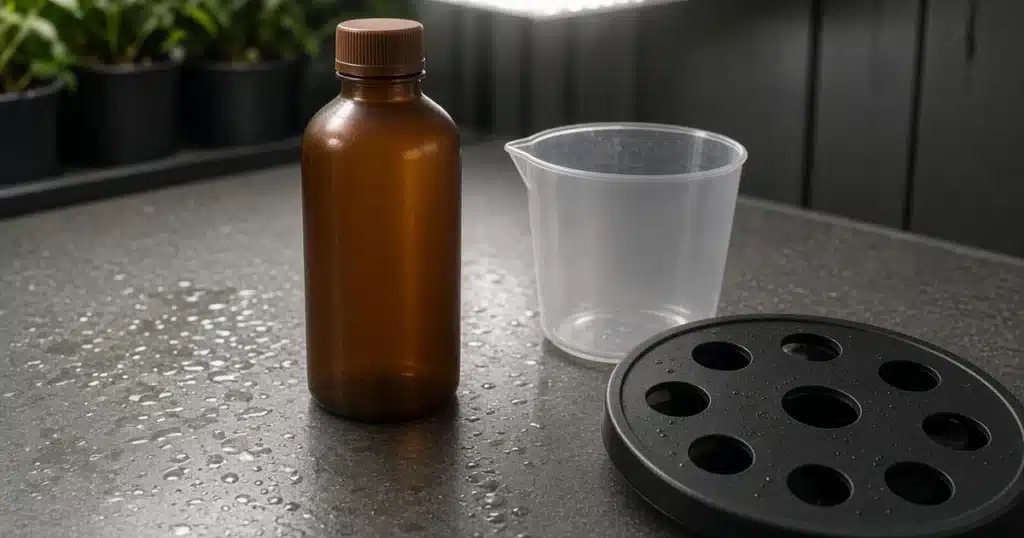
Hydrogen peroxide for cannabis is a diluted oxidizer some growers add to water or hydroponic reservoirs to limit microbes. It is not a cure for root rot. Common 3 percent stock holds about 30,000 ppm, so 1 mL per liter gives about 30 ppm. That is math, not a dose. Check the product label and local rules.
What Is Hydrogen Peroxide Used for in Cannabis Grows?
Hydrogen peroxide is a strong oxidizer that breaks down into water and oxygen. Growers use diluted peroxide to clean tools, trays and reservoirs between runs, and some add small amounts to water or hydroponic systems to limit microbes. Our guide to hydroponic system care covers routine cleaning. There is no tested safe dose for use around living cannabis roots, so no dose is given here.
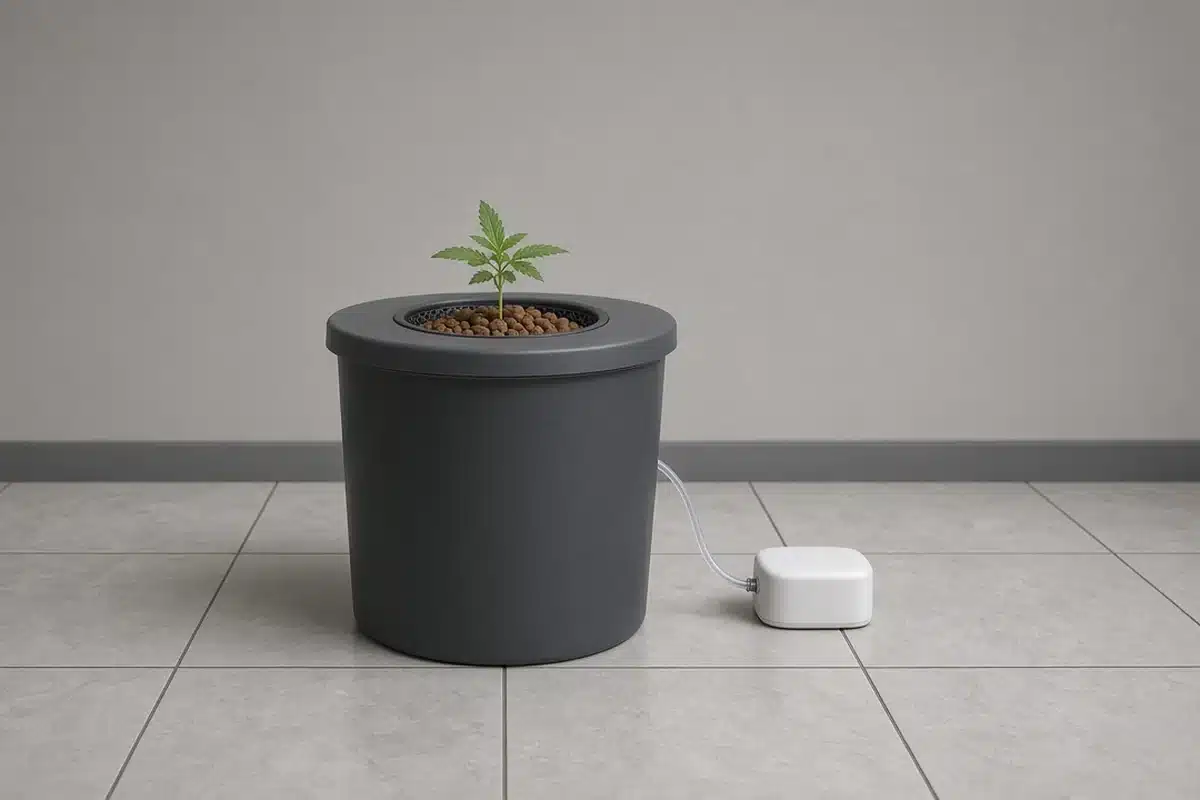
Can Hydrogen Peroxide Help With Root Rot?
It is not a cure. Root rot is linked to organisms such as Pythium. Peroxide may kill microbes it touches, but it does not fix the conditions that let rot take hold, and it may harm healthy roots too. Our guide to pythium root rot covers the causes and the steps that help. In soil, root problems often start with too much water, which our guide to overwatering explains.
How Do You Dilute 3 Percent Hydrogen Peroxide?
Start with the math. Three percent means 3 grams of peroxide in every 100 mL, which is 30 grams per liter, or about 30,000 ppm. Adding 1 mL of that stock to 1 liter of water gives roughly 30 ppm. That math only works for 3 percent stock, and the same 1 mL of a stronger grade makes a much stronger mix. This is arithmetic only, not a recommended dose, because there is no tested cannabis dose to point to.
Check the product label and local rules.
What Are the Risks of Hydrogen Peroxide?
Peroxide does not pick and choose. At the wrong strength it may damage roots, leaves and the helpful microbes in living soil. NIOSH lists hydrogen peroxide as a powerful oxidizer that can irritate the eyes, nose and throat and redden or blister skin, and it advises preventing skin and eye contact (CDC NIOSH Pocket Guide). Wear eye and skin protection, and keep it away from metals and combustible materials, which NIOSH lists as incompatible. Keep it away from children and pets. PubChem notes that peroxide solutions break down on standing and faster in light, so store it closed and out of light, and expect old stock to be weaker than the bottle says (PubChem). Use it as a cleaning and support tool, not a treatment for a sick plant.
Sources
No cannabis study is cited on this page. Safety and storage statements come from the CDC NIOSH Pocket Guide and PubChem, and the dilution figures are plain arithmetic.
Dilution math is all this page gives. Kind Seed Co makes no dose or cure claim, and the rest is general growing information.
FAQ
Does hydrogen peroxide add oxygen to roots?
Hydrogen peroxide breaks down into water and oxygen, so some growers use it hoping to add oxygen to the root zone. There is little research on how much it helps cannabis roots. Good drainage, air in the media and moving water in hydroponic systems are the usual ways growers keep roots supplied with oxygen.
Can I spray hydrogen peroxide on cannabis leaves?
Many growers avoid it. There is no tested cannabis dose for leaf sprays, and peroxide can damage leaf tissue at the wrong strength. Spraying flowers also risks the harvest. If you are dealing with a leaf problem, identify the cause first and choose a product made for that use. Check the product label and local rules.
Is food grade hydrogen peroxide safer?
Not by itself. Food grade describes purity, not strength, and food grade peroxide can be stronger than the 3 percent stock found in stores. Concentrated grades can irritate skin and eyes, so wear eye and skin protection. Whatever grade you have, read the label first. Check the product label and local rules.
Can hydrogen peroxide be used with organic nutrients?
Growers who use living soil or organic nutrients usually avoid it in the root zone. Peroxide does not tell good microbes from bad ones, so it can harm the soil life those systems depend on. If you clean tools or trays with it, rinse them before use. Check the product label and local rules.


