
Olla Irrigation: How to Water Cannabis With Clay Pots
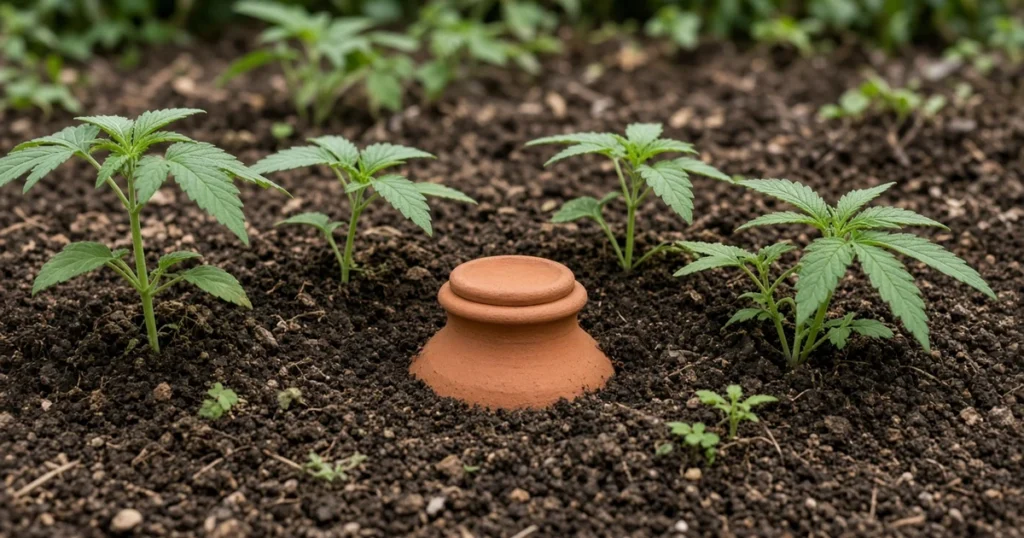
Olla irrigation is one of the oldest ways to water a garden, and University of Arizona Cooperative Extension presents it as an option for hot, dry desert gardens. An olla is an unglazed clay pot buried in the soil and filled with water. Arizona Extension explains that the word olla, pronounced oy-ya, is Spanish for clay pot. Water seeps through the clay walls into the soil around the pot, where roots can reach it. Kansas State University Research and Extension calls ollas an efficient way to water non-woody plants. You will see how ollas work, how to make one, where to bury it, how often to refill it, how to look after it and what its limits are.
How olla irrigation works
University of Arizona Extension explains the science. Unglazed clay pots are porous enough to let water seep through their walls and fill the pore spaces of the surrounding soil. Water moves from the full olla toward the drier soil until the soil around the pot is moist. Arizona notes that if ollas are kept full, the soil in the area they serve stays moist.
The same idea appears in material from Colorado State University Extension in Pueblo County. Water inside the olla seeps through the walls until it is in balance with the surrounding soil. It calls the olla an underground reservoir that plants can tap.
Roots respond to that steady supply. K-State Extension notes that plant roots grow around the olla to get the available moisture. Arizona Extension adds that many roots find their way to the pot, encircling the olla and taking water directly from the clay.
Why growers use ollas
The sources agree on several benefits:
- Water savings. Arizona Extension cites research showing olla irrigation may save 60 to 70 percent of water compared with a watering can.
- Little waste. K-State Extension says the method virtually eliminates runoff and evaporation, letting the plant absorb nearly all the water delivered.
- Steady moisture. Arizona Extension notes that because ollas give the soil a consistent amount of water, nearby plants keep access to water regardless of heat, wind or light.
- No pressure needed. Arizona Extension notes that ollas can work where drip systems are ill suited, such as remote areas or sites with unpressurized or unfiltered water.
- Durability. The Pueblo County writer reports that their ollas were heading into a fourth growing season.
Arizona Extension quotes a New Mexico State University specialist who says the method is equal to or slightly better than drip irrigation, depending on how the drip system is used. If you want a pressurized system instead, Kind Seed Co compares it in drip irrigation for cannabis.
Choosing an olla
Arizona Extension notes that traditional ollas are shaped like a round jug with a long neck and are often made by artisans, which can make them expensive. A more economical approach is to modify basic terracotta pots so they hold water.
The key is that the clay must be unglazed and porous. K-State Extension recommends matching olla porosity, size and shape to the plants’ water needs and root spread. It also suggests matching the olla’s diameter to the diameter of the plant cluster it will serve.
Homemade ollas start from ordinary terracotta planting pots, as Arizona Extension describes. For more on clay containers, see our comparison of terracotta vs plastic pots for cannabis.
How to make an olla from clay pots
Arizona Extension and the Pueblo County article describe the same homemade method:
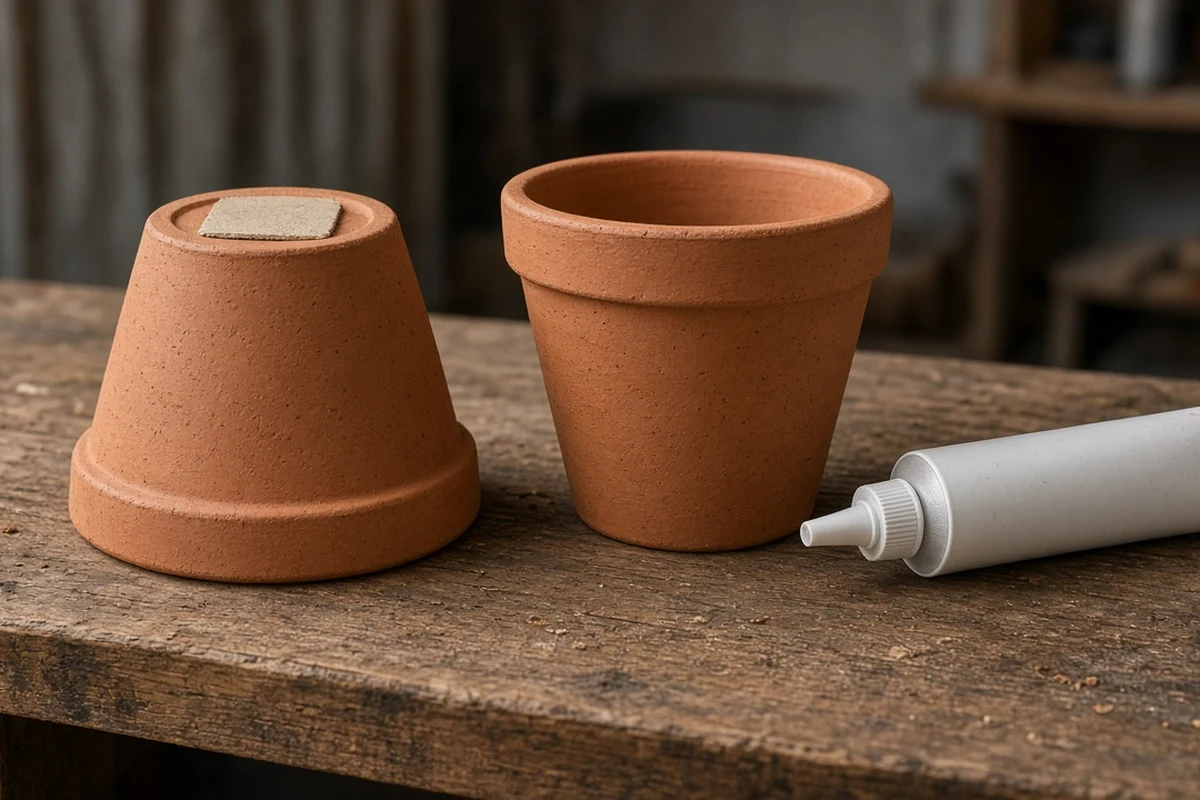
- Choose two unglazed terracotta pots of the same size. The Pueblo County writers used two seven-inch pots.
- Cover the drain hole of one pot with a piece of tile or a small flat stone a little larger than the hole.
- Seal it with a watertight adhesive. Arizona suggests a food-grade silicone, and the Pueblo County article recommends food-safe caulk.
- Glue the rims of the two pots together.
- Leave the drain hole of the top pot open as the fill hole.
You can also use a single pot. The Pueblo County article notes that some growers plug the drain hole of one pot and use a waterproof cover over the top to slow evaporation and keep soil and debris out.
Size matters for how much water each olla holds. The Pueblo County writers report that one seven-inch terracotta pot holds about half a gallon, so a pair joined together delivers about a gallon.
Where to bury ollas and how far apart
Arizona Extension says the entire vessel is buried in the ground with the opening exposed but covered, so you can refill it. K-State Extension agrees that the open end should stick out above the ground for easy filling, with a flat cover over the opening to avoid water loss.
Spacing depends on how far water spreads from the pot. Arizona Extension notes that research on ideal spacing is limited:
- One study of maize suggested a spacing of up to 20 to 30 centimeters may be sufficient.
- Other evidence suggests an olla serves a circle about twice its own diameter. Arizona gives the example of an eight-inch pot reaching plants within about sixteen inches.
- The Pueblo County article cites a 2017 study that found about 20 centimeters, roughly seven inches, was the maximum reach.
Arizona Extension adds that the best spacing depends on soil type, plant type and climate. Place each olla close to the plants it will water, and cluster plants around it. K-State Extension recommends clustering ollas and plants to make the best use of water.
Which plants suit ollas
K-State Extension recommends ollas for non-woody plants. Arizona Extension notes that herbaceous plants such as grasses, flowering plants and many vegetables are ideal, while trees and shrubs are not recommended because their roots are likely to break the pots.
Ollas work well in beds and containers. K-State Extension notes that ollas may be most practical in container gardens. The Pueblo County writers call ollas and raised beds a match, because raised beds dry out quickly on hot, windy days. Raised bed basics are in raised beds for cannabis.
Filling and refilling ollas
Arizona Extension says refilling is traditionally done by hand as needed. How often you refill varies with soil type, weather and the plants you are growing.
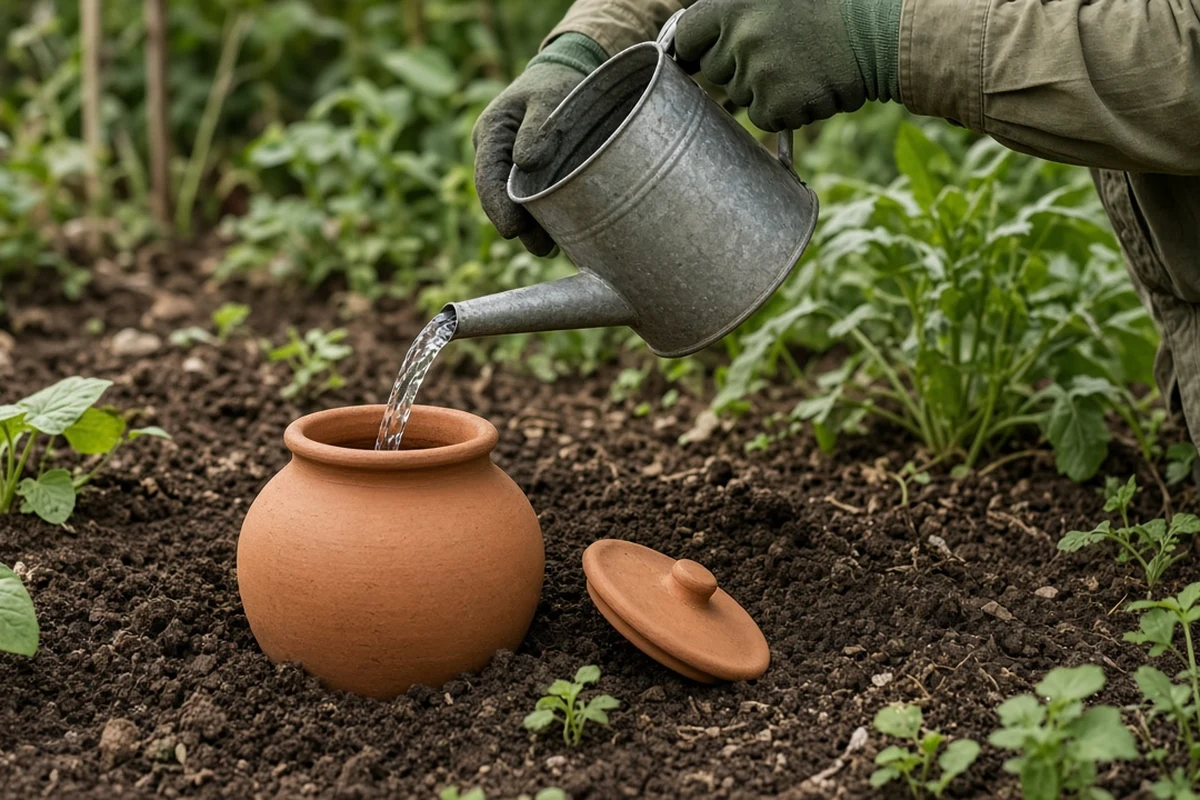
The Pueblo County writer fills each olla every morning during the growing season using a watering can with no sprinkler head. They use rainwater from barrels when they have it, and note that others refill with a garden hose.
There are more hands-off options too. Arizona Extension describes linking ollas with irrigation tubing and using gravity flow from a larger tank to keep them filled. The Pueblo County article mentions growers who rig drip lines to refill their ollas. Arizona notes that ollas work with rainwater collection or delivered water where running water is not available.
Keep the cover on between fillings. K-State Extension says the above-ground part should be treated or covered to prevent evaporation, and the Pueblo County article suggests an upside-down plastic plant saucer as a simple cover.
Watering new plants
Ollas do not water seedlings or new transplants right away. Arizona Extension notes that seedlings and new transplants need extra water until their roots find their way to the olla. It says this can take up to a month or more before a plant can live on olla water alone. The Pueblo County article says young transplants need extra water for a few weeks while their roots find the olla and grow to it.
The same article does not recommend ollas for seeds sown directly in the soil, because the moist area around an olla is limited.
Looking after ollas through the year
The Pueblo County writer describes an end-of-season routine:
- Lift the ollas out of the bed after the season ends and before any hard freeze.
- Empty any water left inside.
- Set them in the sun until completely dry.
- Brush off any soil or roots still attached.
- Store them in a shed through winter.
- Before planting in spring, brush them again to remove debris and mineral deposits.
Arizona Extension notes that salts may build up in the olla and clog its pores, which is another reason to clean them.
Troubleshooting
Plants near the olla wilt anyway. They may be too far away. Arizona Extension suggests an olla serves a circle about twice its own diameter. Move plants closer or add another olla.
New transplants struggle. Their roots have not reached the olla yet. Arizona Extension says new plants need extra water for up to a month or more.
The olla empties too fast or too slow. Refill frequency varies with soil, weather and plants, as Arizona Extension notes. Adjust your filling schedule to match.
Water seeps out more slowly over time. The pores may be clogging with salts, which Arizona Extension warns about. Lift, clean and dry the olla.
You keep forgetting to refill. Arizona Extension notes that hand filling can be unreliable. Consider linking ollas with tubing to a larger tank.
Sources
- University of Arizona Cooperative Extension. Irrigating with Ollas (AZ1911). https://extension.arizona.edu/publication/irrigating-ollas
- Colorado State University Extension, Pueblo County. Olla Pots: An Ancient Irrigation Technique. https://pueblo.extension.colostate.edu/olla-pots-an-ancient-irrigation-technique/
- Kansas State University Research and Extension, Riley County. Olla Irrigation. https://www.riley.k-state.edu/docs/lawnandgardenandother/olla.pdf
FAQ
How far does water spread from an olla?
Not very far. University of Arizona Extension says an olla may serve a circle about twice its own diameter, so an eight-inch pot reaches plants within about sixteen inches. Colorado State Extension in Pueblo County cites a study that found about seven inches was the maximum reach. Place plants close to the pot.
How often should I refill an olla?
It depends on your soil, weather and plants. University of Arizona Extension says refill frequency varies with all three. During the growing season, a Colorado State Extension writer in Pueblo County fills each olla every morning. Check the water level often until you learn how fast your ollas empty.
Can I make my own olla?
Yes. University of Arizona Extension and Colorado State Extension both describe sealing the drain hole of an unglazed terracotta pot with a small tile and watertight sealant. You can glue a second pot rim to rim on top, leaving its drain hole open to fill. Keep the opening covered.
Do ollas work for new transplants?
Not at first. University of Arizona Extension says seedlings and new transplants need extra water until their roots reach the olla, which can take up to a month or more. Colorado State Extension in Pueblo County says to give young transplants supplemental water for a few weeks while roots grow to the pot.


