
Keyhole Garden: How to Build and Water One for Cannabis
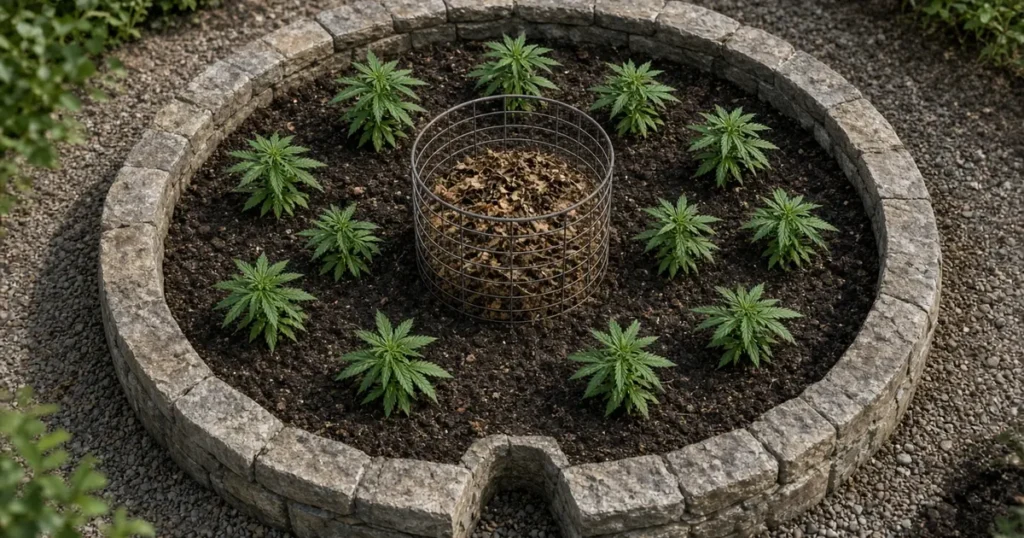
A keyhole garden is a round raised bed with a slice cut out of one side and a basket standing in the middle. From above, it looks like a keyhole. South Dakota State University Extension explains that the design began in parts of Africa as a way to grow food in dry climates with limited resources. University of Illinois Extension notes that keyhole gardens have gained popularity in dry parts of the US and are also built in more humid regions. For an outdoor cannabis grower with poor soil, little water or limited space, the design is worth a look. Here you will learn the parts of a keyhole bed, how big to make it, how to build the structure, where to put it and how to water it.
What a keyhole garden is
University of Illinois Extension, in its Flowers, Fruits and Frass blog, describes keyhole gardening as a raised-bed system. It describes a raised bed built in a six-foot circle at waist height, with a wedge cut out for easy access and a wire basket standing in the center.
The design has three main parts:
- An outer wall that holds the soil and gives the bed its height.
- A notch, the missing slice, that lets you reach the center.
- A center basket that stands at the point of the notch.
Illinois Extension explains that the basket extends above the raised bed so that water can enter the soil around it. The notch is what gives the bed its keyhole shape when you look down on it. SDSU Extension adds that keyhole beds can be circular or irregular in shape, and that the notch lets the gardener step into the bed and reach the center without compacting the soil around the plants.
Why growers build them
The sources point to several practical benefits:
- Water use. Illinois Extension notes that these compact, efficient gardens have been publicized for reduced water use and increased productivity compared with conventional gardening methods.
- Reach. SDSU Extension notes that the raised height and the access notch make the bed easier to manage for gardeners who have difficulty bending or kneeling. Illinois Extension describes the wedge as being cut out for easy access.
- Soil problems. SDSU Extension notes it gives home gardeners a way to grow in challenging soils, with variable rainfall and in limited space.
- Small footprint. SDSU Extension says a single keyhole garden can produce good yields in a small footprint.
Raised growing in general is explained in more depth in Kind Seed Co’s post on raised beds for cannabis.
How big to make a keyhole garden
The sources agree on a compact bed, with some range in the numbers:
- Diameter. SDSU Extension gives six to eight feet. Both Illinois Extension blogs describe gardens of about six feet.
- Wall height. SDSU Extension gives two to three feet. Illinois Extension’s Flowers, Fruits and Frass blog says to build the bed at waist height.
- Notch width. SDSU Extension suggests leaving an opening about two feet wide to form the keyhole entrance.
- Basket size. The Flowers, Fruits and Frass blog describes a chicken wire cylinder about a foot wide that protrudes from the center. The Garden Scoop blog gives a typical diameter of about one and a half feet.
Choosing a spot
SDSU Extension says to begin by selecting a sunny location with good drainage. It also advises monitoring soil temperatures before planting to be sure they remain consistent.
SDSU Extension also suggests arranging taller crops near the center and shorter ones near the edges for good light exposure. SDSU also notes that vining vegetables can grow on trellises in the center or back of the bed.
Choosing wall materials
Illinois Extension says the outside wall can be built from anything that will hold back the soil and provide some structural support. It names rocks and recycled bricks as excellent wall materials and notes that something as simple as old lumber will work. SDSU Extension suggests stone, brick, wood or another durable material. The Flowers, Fruits and Frass blog mentions found materials such as cinder blocks.
SDSU Extension points out one extra benefit of stone or brick. The thermal mass of those walls can help hold warmth during autumn, which can extend the season.
For the center basket, Illinois Extension says the basket is commonly made from chicken wire or woven wire, but any material that holds its contents and still lets water through will work. It mentions a simple tower of sticks as one effective design.
How to build a keyhole garden, step by step
These steps draw on SDSU Extension and the two Illinois Extension blogs:
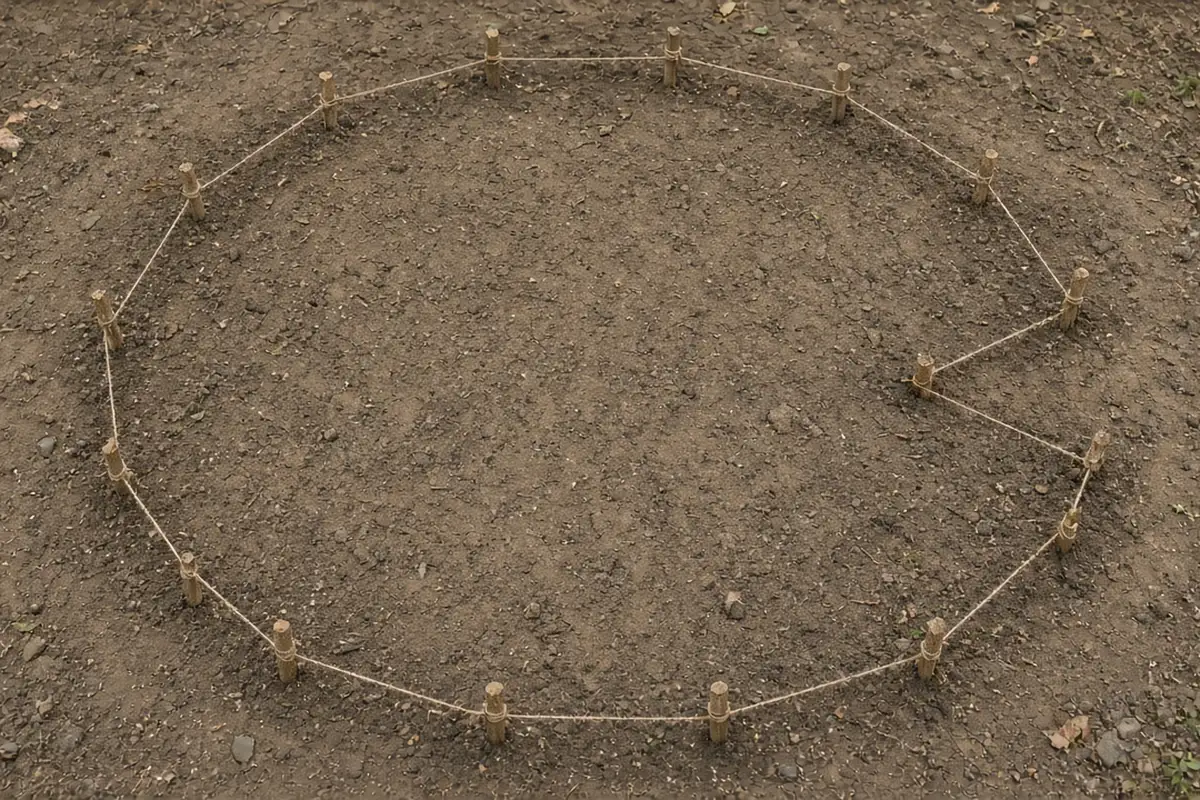
- Measure a circle about six feet across to mark the inside of the wall.
- Notch the circle, like cutting a wedge from a pie, so you can reach the center. SDSU suggests an opening about two feet wide.
- Build the outer wall to about waist height, which SDSU puts at two to three feet, from stone, brick, wood or another durable material.
- Form a chicken wire cylinder about a foot wide for the center basket, tall enough to protrude above the soil.
- Layer the bottom with cardboard, as the Flowers, Fruits and Frass blog describes.
- Stand the basket in the center of the circle at the point of the notch.
- Place larger materials in the lowest layer to help drainage. Illinois Extension suggests sticks, old broken pots, rocks and tin cans.
- Fill the bed. SDSU Extension notes that in a taller bed, larger logs and branches can fill space at the bottom so less soil is needed, but the wood should not be freshly cut.
- Top off with soil, sloping it away from the basket. Illinois Extension says the soil should lead away from the basket so water runs off onto the plants.
How to water a keyhole garden
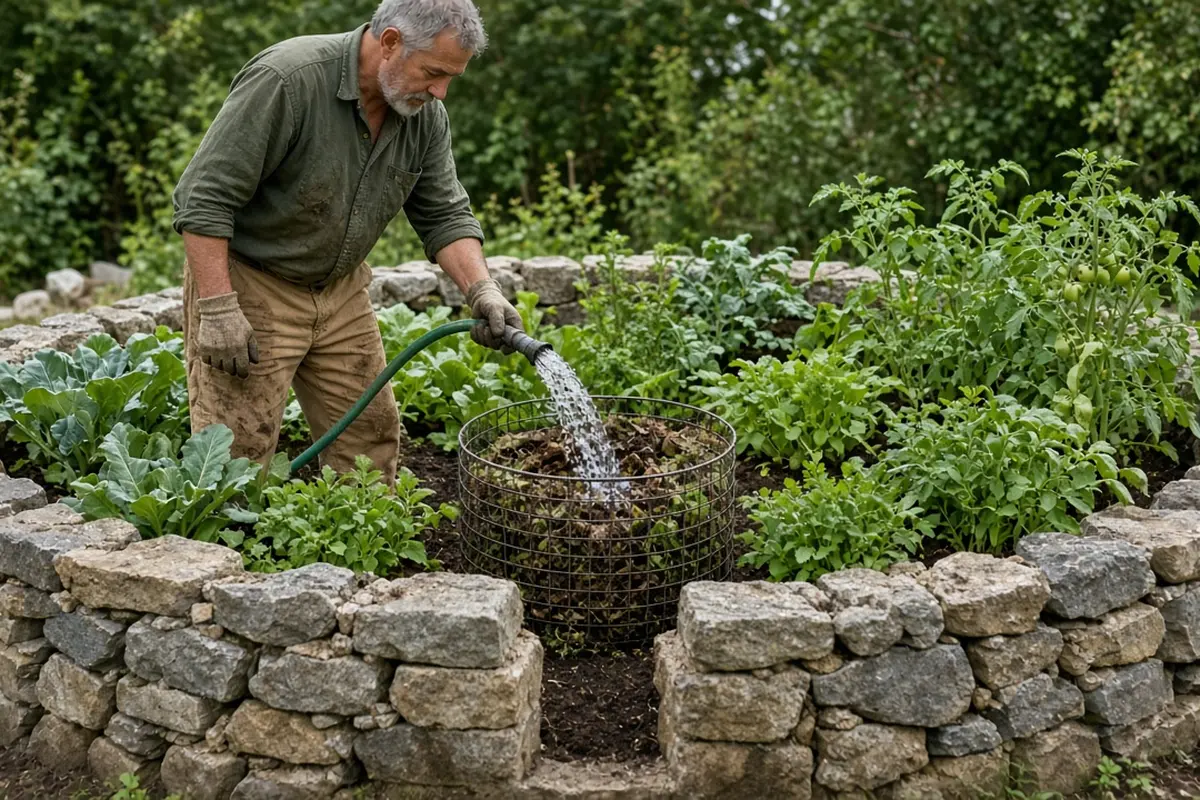
Watering is where the keyhole design earns its place. SDSU Extension says keyhole gardens direct water toward the center basket and recommends that you plant the bed and water through the basket so moisture reaches the root zone efficiently.
Illinois Extension’s Flowers, Fruits and Frass blog says to water periodically and explains that the soil should lead away from the basket, so water runs off onto the plants around it. The Garden Scoop blog adds that the basket extends above the raised bed, which lets water enter the soil.
Another point from SDSU Extension is that the system depends on consistent watering and that the basket should be watered regularly so the bed continues to work as intended.
Shade and covers
SDSU Extension notes that gardeners in northern climates may consider simple covers to make the most of the shoulder seasons. If heat is your main concern, the post on shade cloth for cannabis can help.
Looking after the structure
SDSU Extension notes that a keyhole garden takes an initial investment of time and materials to build a sturdy structure.
Keyhole beds share some ideas with other built-up beds. A different approach that buries wood under soil is explained in hugelkultur for cannabis.
Troubleshooting
The outer edge of the bed stays dry. Check the soil slope. Illinois Extension says the soil should lead away from the basket so water runs off onto the plants. Rebuild that slope if the surface has flattened.
The far side is out of reach. The bed is probably too wide. The sources keep the diameter to about six feet, with SDSU allowing up to eight, so every part stays within reach.
The wall is bowing or slumping. The material may not be strong enough. Illinois Extension calls for a wall that can hold back the soil and provide some structural support, such as rocks or recycled bricks.
Sources
- South Dakota State University Extension. Keyhole Gardens. https://extension.sdstate.edu/keyhole-gardens
- University of Illinois Extension, The Garden Scoop. Keyhole Gardens. https://extension.illinois.edu/blogs/garden-scoop/2017-09-06-keyhole-gardens
- University of Illinois Extension, Flowers, Fruits and Frass. Trench, keyhole and mound gardening reuses plant materials. https://extension.illinois.edu/blogs/flowers-fruits-and-frass/2016-12-03-trench-keyhole-and-mound-gardening-reuses-plant-materials
FAQ
How big should a keyhole garden be?
SDSU Extension gives a typical size of six to eight feet across and two to three feet high. Illinois Extension describes a six-foot circle built at waist height, with a wedge cut out for easy access to the center. Keep the bed small enough to reach the center from the notch.
How do you water a keyhole garden?
Pour water into the center basket. SDSU Extension says to water through the basket so moisture reaches the root zone efficiently. Illinois Extension says the soil should slope away from the basket so water runs off onto the plants, and that the bed should be watered periodically.
What can I use to build the walls?
Almost anything sturdy. Illinois Extension names rocks and recycled bricks as excellent wall materials and says even old lumber will work. SDSU Extension suggests stone, brick or wood. It adds that the thermal mass of stone or brick walls can help hold warmth in autumn.
Where should I put a keyhole garden?
SDSU Extension recommends a sunny location with good drainage. It also suggests arranging taller crops near the center and shorter ones near the edges for good light exposure. SDSU also notes that vining vegetables can grow on trellises in the center or back of the bed.


