
Buying Topsoil for Outdoor Cannabis Beds: What to Check
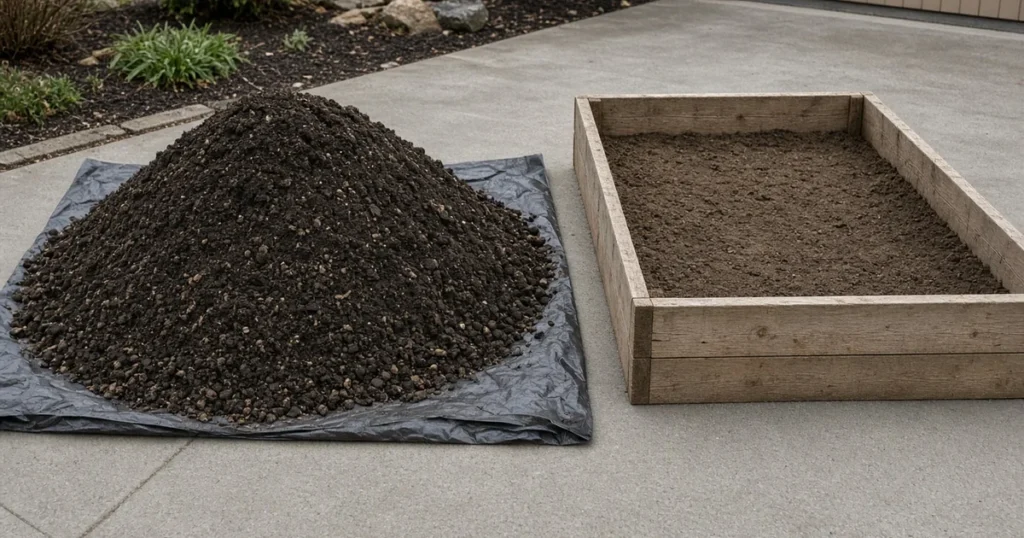
A truckload of topsoil can look like the quick fix for a new outdoor cannabis bed or a patch of poor ground. But the word topsoil is not a promise of quality. The University of Connecticut Home Garden Education Office notes that, depending on its source, topsoil may be dense, low in organic matter, full of stones or a poor match for the job. University of New Hampshire Extension adds that it is impossible to judge topsoil quality just by looking at a pile of it, and that topsoil is one product you cannot take back to the store. Here you will find what topsoil really is, the questions to ask a supplier, how to check a load by hand, what to avoid and when to test before you buy.
What topsoil is
Soil is made of layers, Utah State University Extension explains. The surface layer is usually darker than the layers below it, because it holds more organic matter. USU defines topsoil as that surface layer only. The layers underneath make up the subsoil.
The difference matters. USU Extension notes that subsoil layers have higher levels of clay, salts and lime than topsoil, which makes subsoil a poor substitute. It warns that many materials sold as topsoil, particularly from pits, are in fact subsoil, because the true topsoil was removed from the surface of the pit in the first sale.
University of Missouri Extension describes topsoil as the top three to ten inches of soil and notes that most surface soils have higher organic matter than subsoil. It adds that not all surface soil is ideal for gardens.
Bagged or bulk
Missouri Extension explains the two ways topsoil is sold. Bagged topsoil usually comes in 40 to 50 pound bags at garden centers and has added lime, fertilizer and organic matter. Bulk topsoil is generally native soil taken from the surface and sold by the truckload.
UConn notes that bulk soil is usually cheaper than bagged soil and creates less plastic waste. It also warns that the cheapest load may not be the best buy if it leaves you with hard material low in organic matter that will not support plant growth well. The focus here is bulk loads. Kind Seed Co explains the difference between ground soil and container mixes in garden soil vs potting mix for cannabis.
Decide whether you need topsoil at all
Before you order, check whether new soil will actually help. UConn says the first question is what problem you are trying to solve. If the real issue is low pH, low fertility or another imbalance, another load of soil may not help much.
USU Extension makes a similar point. In some cases importing topsoil is essential, but in others the purchased soil may be no better than the soil already on site. It suggests testing both soils if possible, comparing the results and deciding whether buying new topsoil is the best use of your money.
Questions to ask the supplier
The sources agree that the buyer has to ask. UNH Extension and UConn both give key questions:
- Where did the soil come from? UNH notes that a load might come from prime farmland, a recently cleared forest or an old field grown up to brambles and thistles.
- Has it been screened? UNH warns that unscreened topsoil can be full of rocks and roots. UConn asks the same question.
- Is it an amended product? UNH suggests asking for the recipe if it is. UConn suggests asking whether compost is already mixed in and how much.
- What is it meant for? UConn notes that soil sold for grading can be fine for filling low spots but a poor choice for a vegetable bed.
- Has it been tested? UNH suggests asking a garden or landscape supply center for the product’s test data.
- Was it treated for weeds? USU Extension suggests asking whether the material was treated to control noxious weeds and, if so, what the residual or planting restriction time is.
Get a soil test before you buy
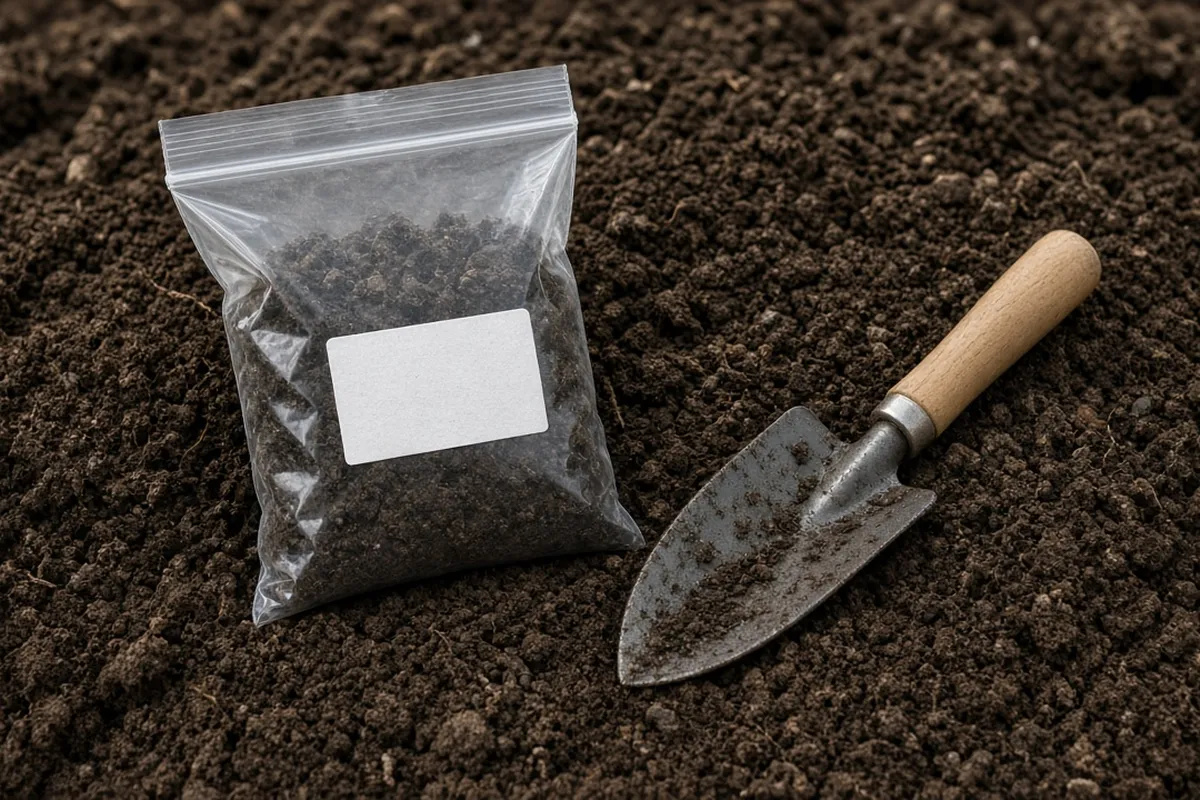
A lab test is the most reliable check. Missouri Extension calls a soil test the most reliable way to determine topsoil quality and recommends testing when buying a large quantity. UNH Extension suggests that if the topsoil has not been tested, you ask for a small sample and have it tested yourself. USU Extension also recommends testing before purchase if possible.
UNH says the analysis should at least include pH and soil texture class. Here are the target ranges the sources give:
- pH. UNH Extension calls a pH between 5.5 and 7.5 acceptable. Missouri Extension gives the same 5.5 to 7.5 range as ideal, and USU’s table calls it ideal too.
- Texture. UNH Extension says loam or sandy loam is best. Missouri Extension names loam and silt loam as ideal. USU Extension says a mixture of sand, silt and clay is desirable and that soils dominated by one particle size are unacceptable.
- Organic matter. Missouri Extension gives an ideal of 3 percent or greater.
Texture deserves extra attention. UNH Extension notes that it is very difficult to change a soil’s texture. USU agrees that it is not practical to change soil texture on a large scale. That makes texture the property to get right at purchase. Testing is explained further in soil testing for cannabis.
How to check a load by hand
USU Extension notes that a soil test is not always possible, and that a final visual check before delivery can help. It also warns that looks alone are not a reliable guide, because a soil can look like good topsoil while having high salt, pH or other problems. With that caution, here are the checks the sources describe:
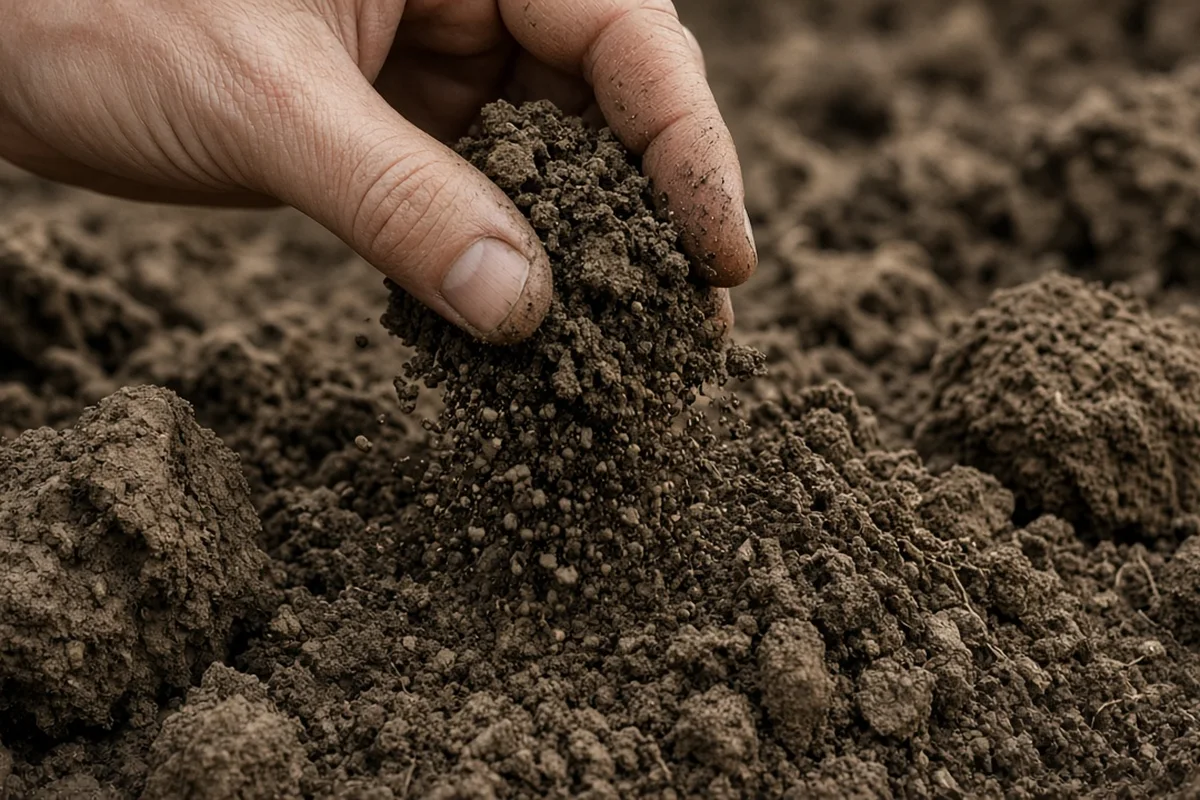
- Crush a dry clump. USU says dry clumps should crumble easily under pressure. Be suspicious of very hard material, which USU links to low organic matter or high clay.
- Wet a small sample in your palm. USU suggests feeling whether grit (sand), smoothness (silt) or stickiness (clay) dominates. Ideally no one feel should dominate.
- Look at the color. USU notes that light-colored materials generally have less organic matter than dark brown or black soils, and very light or white soils may contain excess salts or lime.
- Look for salt crust. USU warns that light deposits on the surface can signal high salinity, and advises not to accept such a load unless it has been tested.
- Smell it. UConn says good soil should smell earthy, not sour or strongly of ammonia. UNH warns against any product with a chemical or other off-odor.
- Feel it when wet. UConn notes that soil that feels sticky and heavy when wet may seal up and drain poorly, while material that feels very light, peaty or woody may settle quickly after a season or two.
USU adds an important reminder. The material will behave in your bed the same way it behaves in your hand.
What to watch out for
The sources flag several problems that can come with a load:
- Rocks and debris. USU Extension notes that large amounts of gravel or rocks make soil hard to manage, and that construction waste such as concrete also counts. It says soil with a high percentage of coarse fragments should be screened before use.
- Weeds. USU says topsoil should be free of noxious weeds and weed seeds. UNH warns that a load may carry undesirable weed seeds or hard-to-control perennial weeds.
- Herbicide residues. UNH notes that topsoil stripped from farmland may occasionally carry residues that hinder crop germination. UNH suggests planting a few different seeds in a sample to see if they come up well. USU adds that soil should not have been treated with long-lasting weed killers.
- Contaminants. UConn notes that poorly sourced soil can carry contaminants from past land use. It suggests asking about origin and, if there is reason for concern, testing for lead or pesticide residues before planting.
- Jumping worms. UConn warns that invasive jumping worms and their cocoons can hitch a ride in soil, so buy from reputable sources. To spot them, read jumping worms in cannabis gardens.
- Out-of-range soil. Missouri Extension recommends choosing topsoil free of weeds, disease pathogens and large stones. It adds that if the soil falls outside acceptable ranges for any one property, you should reject it.
Why it pays to be picky
USU Extension argues that it is worth making the effort to get high-quality soil, even if it costs more at first. It notes that good soil is less expensive in the long term than treating recurring problems or replacing plants that fail in poor soil. Missouri Extension agrees, noting that if you accept soil outside the acceptable ranges, you will likely spend a lot of money and time improving it.
Troubleshooting
The load arrived full of rocks and roots. It was probably unscreened. UNH Extension recommends asking up front whether a load has been screened, and USU suggests screening soil with many coarse fragments before use.
The soil sets hard as it dries. It may be low in organic matter or high in clay, which USU links to very hard clumps. Check the texture before the next order.
The soil smells sour or chemical. Do not use it. UConn says good soil smells earthy, and UNH warns against products with a chemical or off-odor.
Plants struggle in the new soil. Have it tested. Missouri Extension calls a soil test the most reliable check of topsoil quality.
Weeds you never had before are sprouting. The load may have carried weed seeds or perennial weeds, as UNH warns. Ask suppliers about weed control next time.
Sources
- University of New Hampshire Extension. Purchasing Top Soil [fact sheet]. https://extension.unh.edu/resource/purchasing-top-soil-fact-sheet
- University of Connecticut Home Garden Education Office. What to Know Before You Buy Topsoil. https://homegarden.cahnr.uconn.edu/2026/05/17/topsoil/
- Utah State University Extension. Topsoil Quality Guidelines for Landscaping. https://extension.usu.edu/yardandgarden/research/topsoil-quality-guidelines-for-landscaping
- University of Missouri Extension. Great landscapes begin with quality topsoil. https://extension.missouri.edu/news/great-landscapes-begin-with-quality-topsoil
FAQ
How can I tell if topsoil is good quality?
A lab test is the most reliable way, according to University of Missouri Extension. Without one, Utah State Extension suggests crushing dry clumps to see if they crumble, feeling a wet sample for grit or stickiness and checking color. UConn adds that good soil should smell earthy. UNH Extension warns that looks alone cannot judge quality.
What is the difference between topsoil and subsoil?
Utah State Extension defines topsoil as only the darker surface layer of soil, which holds more organic matter. The layers below are subsoil, which have more clay, salts and lime. USU warns that many materials sold as topsoil, especially from pits, are actually subsoil because the true topsoil was sold first.
What questions should I ask a topsoil supplier?
UNH Extension and UConn suggest asking where the soil came from, whether it has been screened, whether anything has been mixed in and whether test data is available. UConn also suggests asking what the soil is meant for. Utah State adds asking whether it was treated for weeds and the planting restriction time.
What pH and texture should topsoil have?
UNH Extension and University of Missouri Extension both give a pH of 5.5 to 7.5. For texture, UNH says loam or sandy loam is best, and Missouri names loam and silt loam. UNH notes that texture is very difficult to change later, so it is the property to get right when you buy.


