Peat Free Potting Mix for Cannabis: Ingredients That Work
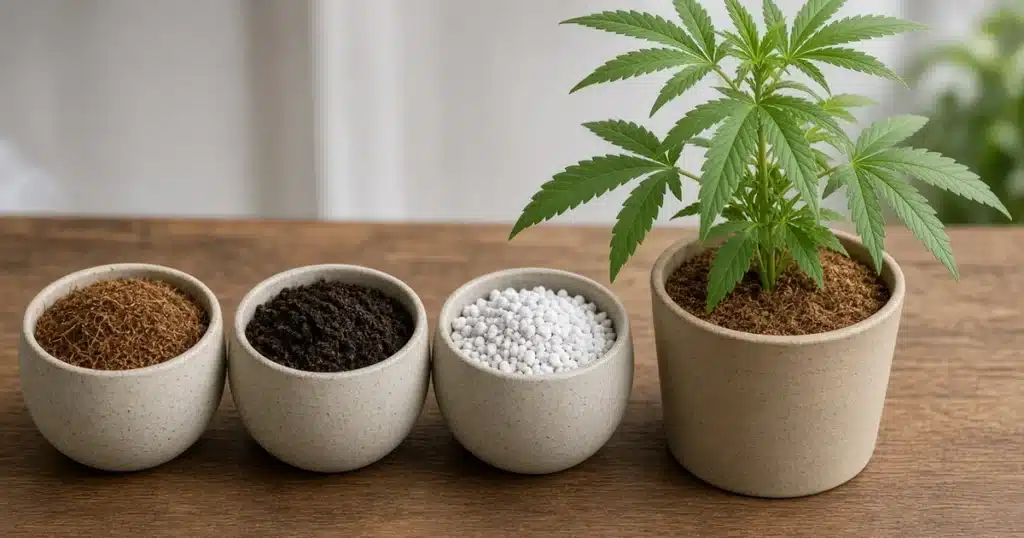
Quick answer: A peat free potting mix replaces peat moss with renewable materials such as coconut coir, compost, composted bark or wood fiber. University of Illinois Extension points out that peat builds up at roughly 1 millimeter a year while harvest removes about 22 centimeters a year, and it suggests a home blend of two parts compost, two parts coir and one part coarse sand or perlite. Iowa State horticulture staff note that coir can stand in for peat as long as it is never allowed to dry out completely. For cannabis, a coir based mix with compost and an aerating mineral gives roots the same mix of water and air that peat blends aim for.
Why Choose a Peat Free Mix?
A peat free mix eases pressure on slow forming wetlands. Peat moss forms in wetlands over thousands of years. In a news release on soilless potting mixtures, Illinois Extension notes that peat accumulates at about 1 millimeter per year, while the industry removes around 22 centimeters per year. That gap is the core sustainability concern.
Harvesting also changes the land. Ditches drain the wetland, and large vacuums lift the peat. An Illinois horticulture educator quoted in the release says the industry must reclaim harvested bogs, yet a harvested wetland can take up to 20 years to regain its earlier functions. Those wetlands support rare plants and animals, filter water and store carbon.
CSU Extension makes a similar point in a fact sheet on picking amendments, noting that peat moss forms over decades to centuries and cannot be harvested sustainably.
For many cannabis growers, a peat free mix is a simple way to cut that impact without a drop in how the mix performs. If you currently use peat, our guide to peat moss for cannabis explains what it does well, which helps when choosing replacements.
What Can Replace Peat Moss in a Potting Mix?
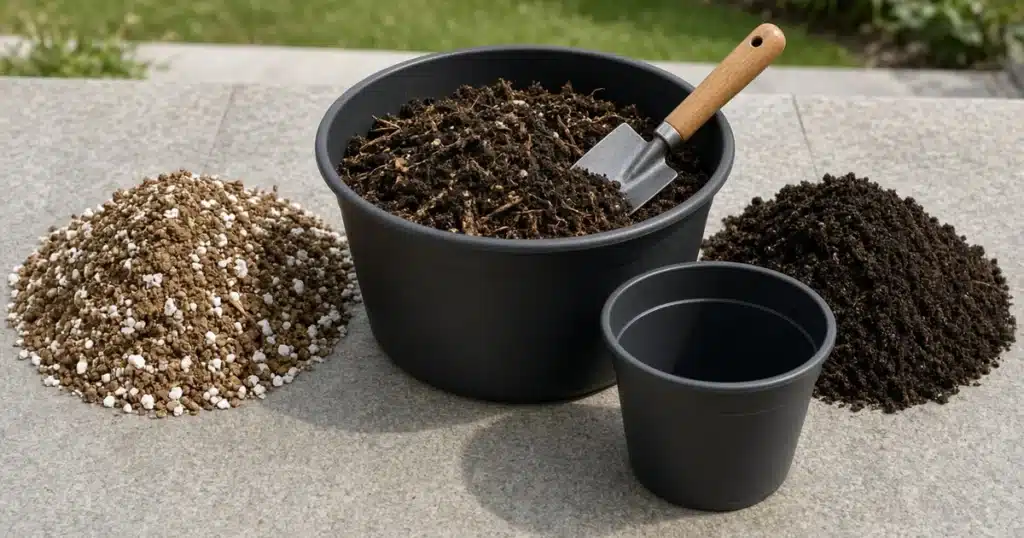
Several materials fill the role peat plays, which is mainly holding water while leaving air space.
Coconut coir. Coir comes from coconut husks. Illinois notes that it holds water and nutrients much like peat. Its salt content can run high from processing, but low salt versions are sold. Colorado State adds that coir has been used at up to 80 percent of a mix in published studies.
Compost. Illinois also lists compost made from yard and garden waste as an alternative. Iowa State says compost gives a low dose of nutrition but also varies by source and may carry weed seeds.
Composted bark. Bark adds structure and air. Iowa State notes that bark used in potting media is composted and processed to half an inch or smaller.
Wood fiber and biochar. Illinois says early research on composted wood fiber and biochar looks encouraging for soilless media.
Aerating minerals. Perlite, pumice and coarse sand open up air space. They do not replace the water holding part of peat but balance the organic portion.
Most of these ingredients condition the mix rather than feed it, as our hub page on amendments explains.
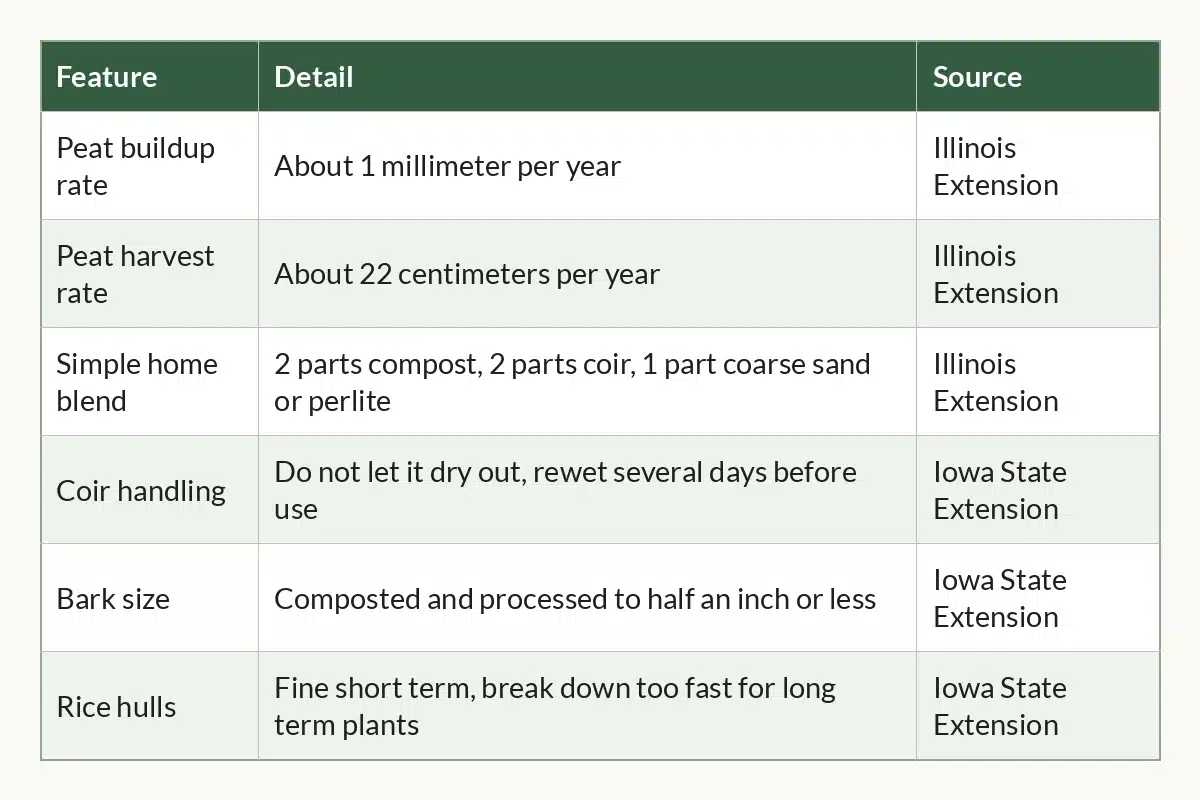
Peat Free Potting Mix at a Glance
| Feature | Detail | Source |
|---|---|---|
| Peat buildup rate | About 1 millimeter per year | Illinois Extension |
| Peat harvest rate | About 22 centimeters per year | Illinois Extension |
| Simple home blend | 2 parts compost, 2 parts coir, 1 part coarse sand or perlite | Illinois Extension |
| Coir handling | Do not let it dry out, rewet several days before use | Iowa State Extension |
| Bark size | Composted and processed to half an inch or less | Iowa State Extension |
| Rice hulls | Fine short term, break down too fast for long term plants | Iowa State Extension |
How Does Coir Compare With Peat?
Among cannabis growers, coir is the usual peat substitute. It holds water well and comes from a byproduct rather than a slow forming bog. Our article on coco coir as a grow medium covers buffering, rinsing and feeding coir.
Iowa State, in a Yard and Garden article on potting media, cautions that both peat and coir become water repellent if they dry out fully. Rewetting can be hard, so the article suggests doing it several days before mixing.
Salt is the other difference. Illinois notes that processing can leave coir high in salt and advises choosing low salt products. That is why many growers rinse coir before use.
Feeding changes too. Coir supplies little nutrition by itself, so a peat free mix still needs fertilizer or a rich compost portion.
Is a Peat Free Mix Better Than Garden Soil in Pots?
Some growers skip bagged mixes entirely and fill containers with soil from the yard. Iowa State explains why that rarely works. A good soil in the ground is roughly half pores and half solids, but quality potting media run closer to 85 percent pores. Once garden soil is dug up and packed into a container, it loses much of its air space and compacts, which leads to overwatering and poor rooting.
A peat free blend avoids that problem because coir, compost, bark and perlite are all light and open. You get the airy structure of a commercial mix without the peat. Our comparison of garden soil vs potting mix for cannabis goes deeper into why containers need a different medium than beds.
Soil and compost, Iowa State adds, can bring weed seeds and unwanted organisms into a pot. Using finished compost and keeping garden soil out of the recipe lowers that risk.
Does Container Shape Change the Mix?
It does, more than most growers expect. Iowa State describes a saturated zone at the bottom of every pot after watering. Pots filled with the same mix hold water to roughly the same height, so a tall pot has more well aerated media above that wet layer than a short, wide one.
This is where peat free blends need some care. Coir and compost hold plenty of water, so in shallow containers the wet zone can fill much of the root space. Choosing taller pots or adding more perlite helps keep roots in air rich media. Fabric pots also drain and breathe well, which suits a coir heavy mix.
Iowa State adds a warning about handling. Tapping or pressing media into a pot packs it and reduces air space, and stacking filled pots does the same. Fill loosely and brush off the excess.
How Do You Mix a Peat Free Potting Blend for Cannabis?
Illinois Extension suggests two parts compost, two parts coir and one part coarse sand or perlite for vegetables. That ratio makes a reasonable starting point for cannabis, with a few changes.
- Swap sand for perlite or pumice. Iowa State notes that sand does not aerate containers well and is mostly used for weight. Lighter minerals keep air space open.
- Use mature compost. Unfinished compost keeps breaking down and can shrink the mix.
- Add composted bark for long grows. It holds structure longer than compost alone.
- Skip rice hulls for long grows. Iowa State notes they break down too quickly for long term plants.
A practical cannabis version might be two parts rinsed coir, one and a half parts compost, half a part composted bark and one part perlite. Adjust for your watering habits.
How to Make a Peat Free Mix Step by Step
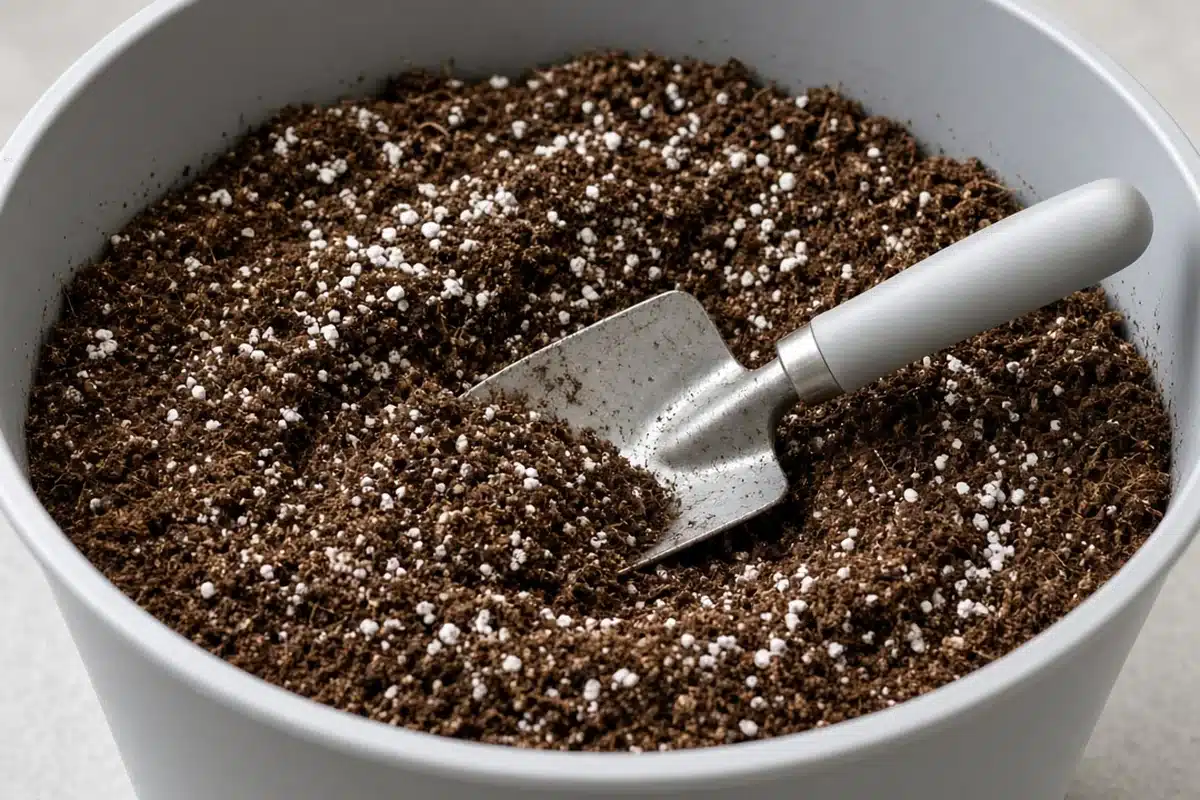
- Hydrate the coir. Soak compressed coir and rinse it if it is not labeled low salt.
- Screen the compost. Remove large chunks and check that it smells earthy.
- Measure the parts. Use a bucket so ratios stay consistent.
- Mix thoroughly. Iowa State stresses that home blended components must be evenly mixed.
- Check moisture. The mix should hold a ball when squeezed, then break apart easily.
- Fill pots without packing. Overfill, brush off the excess and avoid tapping it down.
- Feed as needed. Add a base fertilizer or plan liquid feeding, since coir adds little nutrition.
Troubleshooting Peat Free Mixes
Mix dries out fast. Increase the coir or compost share and reduce perlite.
Water sits on top. The coir may have dried. Soak the pot from below until it rewets.
Leaf tips browning early. Coir salts may be high. Rinse new batches before mixing.
Mix shrinks over the grow. Compost was not fully finished. Use mature compost next time.
Slow growth despite good structure. Peat free mixes need feeding. Add a balanced fertilizer.
Sources
- University of Illinois Extension, Save Wetlands, Use Soilless Potting Mixtures: https://extension.illinois.edu/news-releases/save-wetlands-use-soilless-potting-mixtures
- Iowa State University Extension and Outreach, Potting Media: https://yardandgarden.extension.iastate.edu/article/2025/03/potting-media-components-and-handling
- Colorado State University Extension, Choosing a Soil Amendment: https://extension.colostate.edu/resource/choosing-a-soil-amendment/
FAQ
Can cannabis grow in a peat free mix?
Yes. Coir, compost and perlite blends are widely used for cannabis.
Which material replaces peat most easily?
Coconut coir is the usual pick because it holds water much like peat.
Why avoid peat moss?
Peat forms very slowly and harvest drains wetlands, which take years to recover.
Do I need to rinse coir?
Rinse it unless it is sold as low salt, since processing can leave salts behind.
Is compost enough to feed cannabis in a peat free mix?
Usually not. Iowa State notes compost gives only a low dose of nutrition.