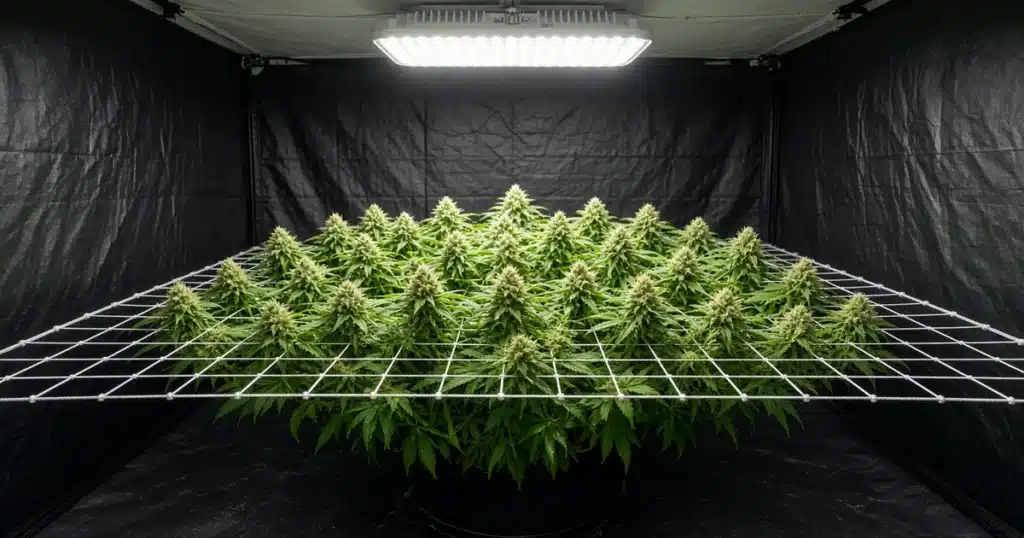
Plant Yoyos for Cannabis: Holding Up Heavy Colas
The short answer
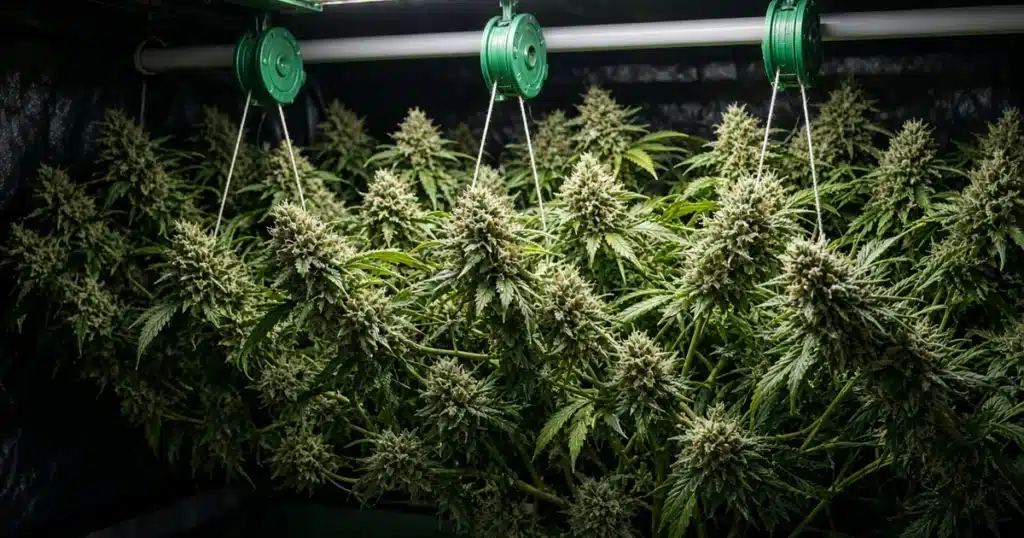
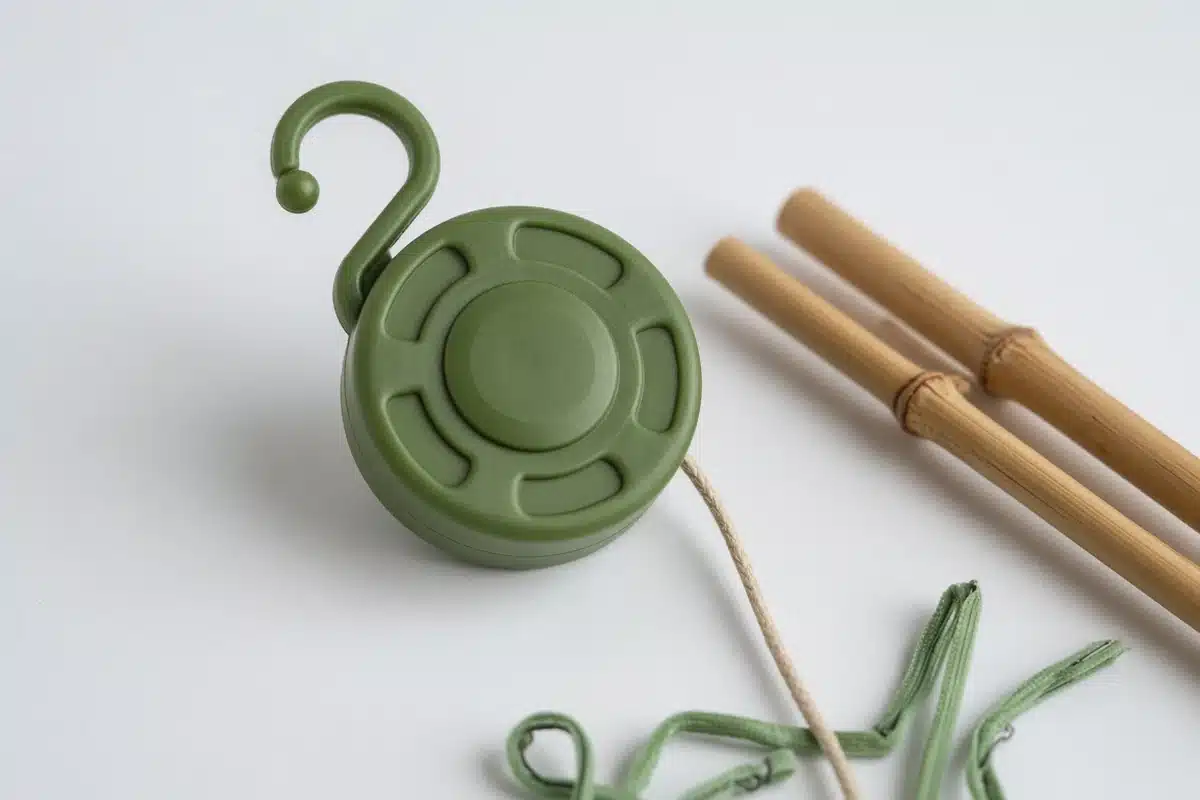
A plant yoyo is a small reel with a spring and a cord that ends in a hook. The reel hangs from a bar above the plant. The hook clips under a branch. The spring takes up slack and holds the branch up as it gets heavier.
Hang yoyos from a tent bar or trellis, hook them under a node rather than on soft tips and set them before branches start to lean. Every few days, check them and move hooks as plants grow.
Why heavy branches need support
Late in flower, buds add weight at the ends of long branches. Stems bend and some snap. Branches that lean onto each other also trap damp air.
The same problem shows up with tomatoes. University of Minnesota Extension notes that staked and caged tomato plants are easier to work with and keep fruit off the ground. UNH Extension explains that tomato plants can be trained up stakes or strings. Cannabis growers use yoyos for the same reason: to hold weight up and keep plants open.
For thicker, sturdier stems, see our guide to thick cannabis stems.
How a plant yoyo works
Each yoyo has three parts.
- A hook or loop on top to hang it.
- A reel with a spring inside and a cord wound on it.
- A plastic hook at the end of the cord.
When you pull the cord down, the spring winds up. Let go and the spring pulls gently upward. Clip the hook under a branch and it holds a steady lift. A lock on most reels keeps the cord at the length you set.
Yoyos and other supports
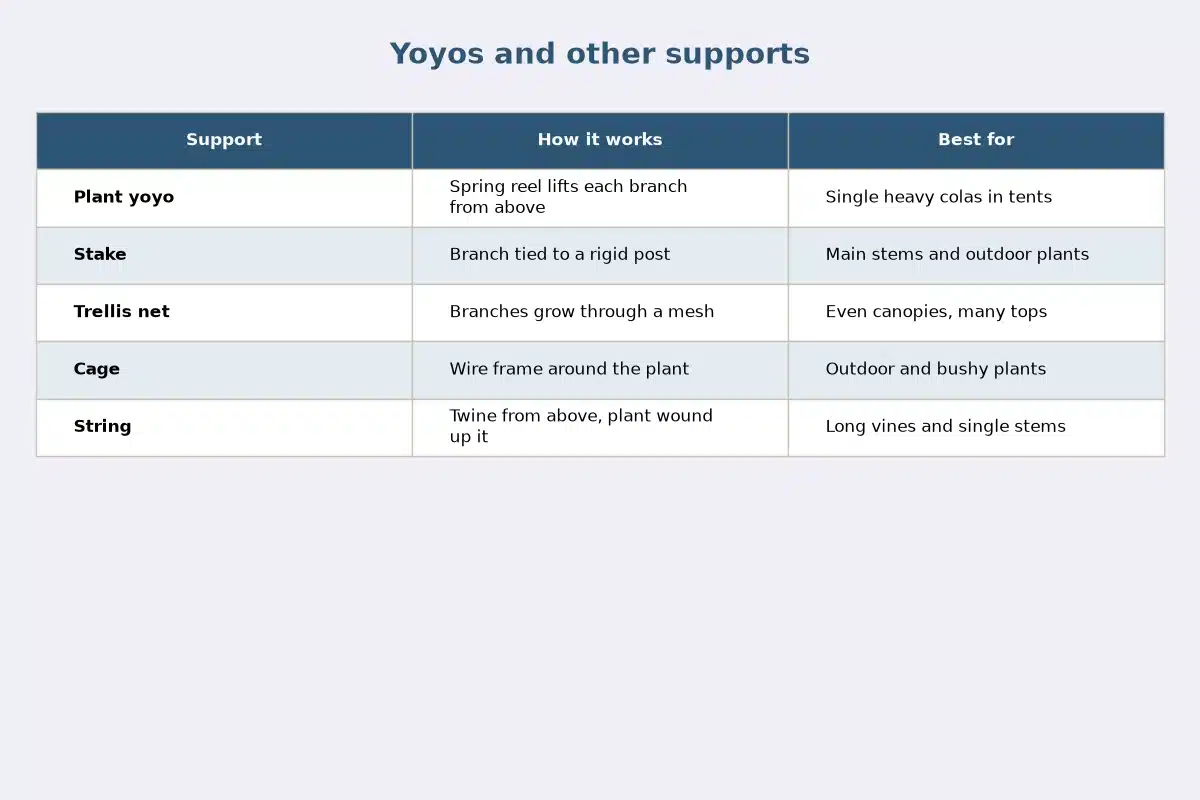
| Support | How it works | Best for |
|---|---|---|
| Plant yoyo | Spring reel lifts each branch from above | Single heavy colas in tents |
| Stake | Branch tied to a rigid post | Main stems and outdoor plants |
| Trellis net | Branches grow through a mesh | Even canopies, many tops |
| Cage | Wire frame around the plant | Outdoor and bushy plants |
| String | Twine from above, plant wound up it | Long vines and single stems |
Source: Pruning Tomato Plants, UNH Extension, training plants up stakes or overhead strings.
Where to hang yoyos
Grow tent bars
Most tents have bars across the top for lights and fans. Yoyos hang from these. Spread them out so they do not crowd the light.
Trellis or frame
In a large room or outdoors, a frame, beam or trellis line above the plants works as a hanging point.
Weight limits
Check the tent bar can hold the light plus the yoyos. Hang heavy gear near the corners where the frame is stiffest.
How to set up plant yoyos
- Count the main branches that will need support.
- Hang one yoyo above each branch from a bar or frame.
- Pull the cord down to the branch.
- Clip the hook under a node or a firm side branch joint.
- Let the spring take up slack until the branch lifts a little.
- Lock the cord if your yoyo has a lock.
- Check that the branch is upright, not pulled sideways.
How many yoyos you need
Count the main tops on each plant. In a home tent, plan on one yoyo for each heavy top. A plant with four main colas needs about four yoyos. Plants trained to many tops may do better with a trellis net and a few yoyos for the heaviest branches.
Buy a few more than you think you need. New heavy tops often show up in the second half of flower, and it helps to have spares ready.
Yoyos outdoors
Spacing matters outdoors too. UMN suggests two to three feet in all directions between vining tomato plants. Give large cannabis plants at least that much room so yoyo cords hang straight down. Crossed cords tangle and drag branches sideways. UMN also warns that wet leaves are more prone to disease. Water at the base and keep supported branches apart.
Plants grown outdoors can get far bigger than tent plants. Yoyos work outdoors if you have a frame above the plant, such as a pergola, a hoop house frame or a beam set across two posts. Wind is the main risk. A yoyo lets a branch move up and down, but hard gusts can swing branches sideways and knock hooks loose. Stake the main stem so the plant stays steady.
Outdoors, many growers mix supports. A stake holds the main stem, a cage holds side branches and yoyos lift the heaviest tops. UMN Extension notes that cages let plants grow more naturally than stakes, while stakes keep plants upright in a smaller space. Pick the mix that suits your plant size and space.
Sun and rain wear out cords faster outdoors. Check them more often and bring yoyos in after the season.
Where to hook branches
Place the hook just under a node. That is where a leaf or side shoot meets the branch. The node acts like a shelf and stops the hook sliding. Avoid soft green tips. They can bend or tear.
On thick colas, hook below the bud rather than into it. That way buds are not pressed and air can still move.
UMN Extension notes that vining tomatoes keep growing from the tip and set fruit on side branches. Those plants can reach three to five feet long or more, so they need cages, stakes or trellises. Tall cannabis plants in flower carry weight in a similar way. Much of the bud weight sits on side branches far from the main stem. That extra reach is what bends and snaps them late in the season.
When to add yoyos
Add yoyos before branches lean. Early in flower, set them loose so they just touch. As buds put on weight, adjust the cord. UMN Extension advises putting stakes in place soon after planting to avoid harming roots later. Setting yoyos early follows the same idea.
Adjusting through flower
- Check yoyos every few days.
- Move hooks up as branches stretch.
- Shorten cords as branches get heavier.
- Add more yoyos as new heavy tops form.
- Release tension if a branch pulls toward the light.
As you adjust, keep branches and buds a safe distance from the light. Check light height as plants stretch.
Yoyos and plant training
Yoyos pair well with other training. Low stress training spreads branches out, and yoyos then hold them up late in flower. A trellis net can do both jobs, but yoyos are easier to move one branch at a time.
Our guide on how to grow bigger buds covers training and canopy shape in more depth.
At harvest
Unhook yoyos one at a time before you cut. Hold each branch as you release it so it does not drop. Our guide on is your marijuana ready for harvest covers timing.
Cleaning and storage
- Wipe cords and hooks with mild soap.
- Let the reel dry before winding it fully.
- Store them dry and untangled.
- Throw out yoyos with frayed cords or weak springs.
Common mistakes
- Hanging yoyos after branches already sag.
- Hooking soft tips instead of nodes.
- Pulling branches sideways toward a bar.
- Hanging too many on one tent bar.
- Forgetting to adjust as plants stretch.
Troubleshooting
- The hook slips down the branch. Move it under a node.
- The branch still sags. Shorten the cord or add a second yoyo.
- The cord will not stay locked. Clean the reel or replace it.
- The tent bar bows. Spread the load or add a crossbar.
- Buds are pressed by the hook. Move the hook lower on the stem.
- Branches lean into each other. Spread yoyos wider across the bars.
Final thoughts
A plant yoyo is a simple way to hold heavy cannabis branches upright. Hang one above each main branch, hook under a node, set it early and adjust as buds put on weight. Kind Seed Co has more plant training guides for home growers.
Sources
- UNH Extension, Pruning Tomato Plants
- University of Minnesota Extension, Growing tomatoes in home gardens
FAQ
What is a plant yoyo?
A spring reel with a cord and hook that holds a plant branch up from above.
Where do I hook a plant yoyo?
Just under a node on the branch, not on a soft tip or into a bud.
When should I add yoyos?
Early in flower, before branches start to lean, then adjust as buds gain weight.
Can a grow tent hold plant yoyos?
Yes, on the top bars, but spread them out and check the weight with your light.
Are yoyos better than a trellis net?
They do a similar job. Yoyos are easier to move one branch at a time.