Condensate Pumps for Grow Room Dehumidifiers
The short answer
A condensate pump for dehumidifier setups collects the water your unit pulls from the air and pumps it up and away to a sink, floor drain or outside line. With it, the dehumidifier can run all day without a full bucket shutting it off.
You need one when there is no floor drain lower than the unit. Pick a pump rated for the water your unit makes, run tubing to a safe drain and keep it away from electrical cords. Clean it every few weeks.
Why grow rooms need steady drainage
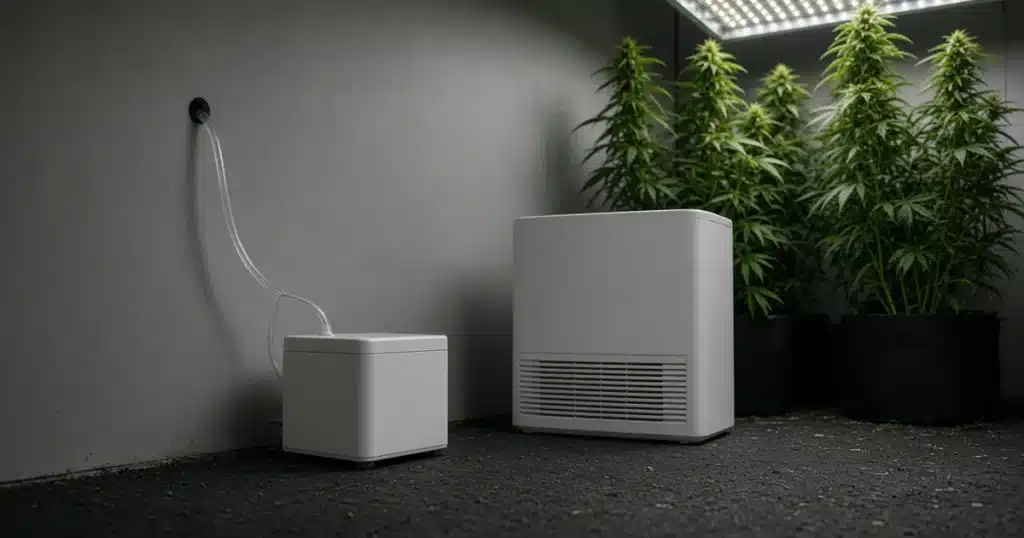
Plants release a lot of water into the air, mostly in flower. A dehumidifier pulls that water back out. In a busy grow room, the bucket in most home units fills fast.
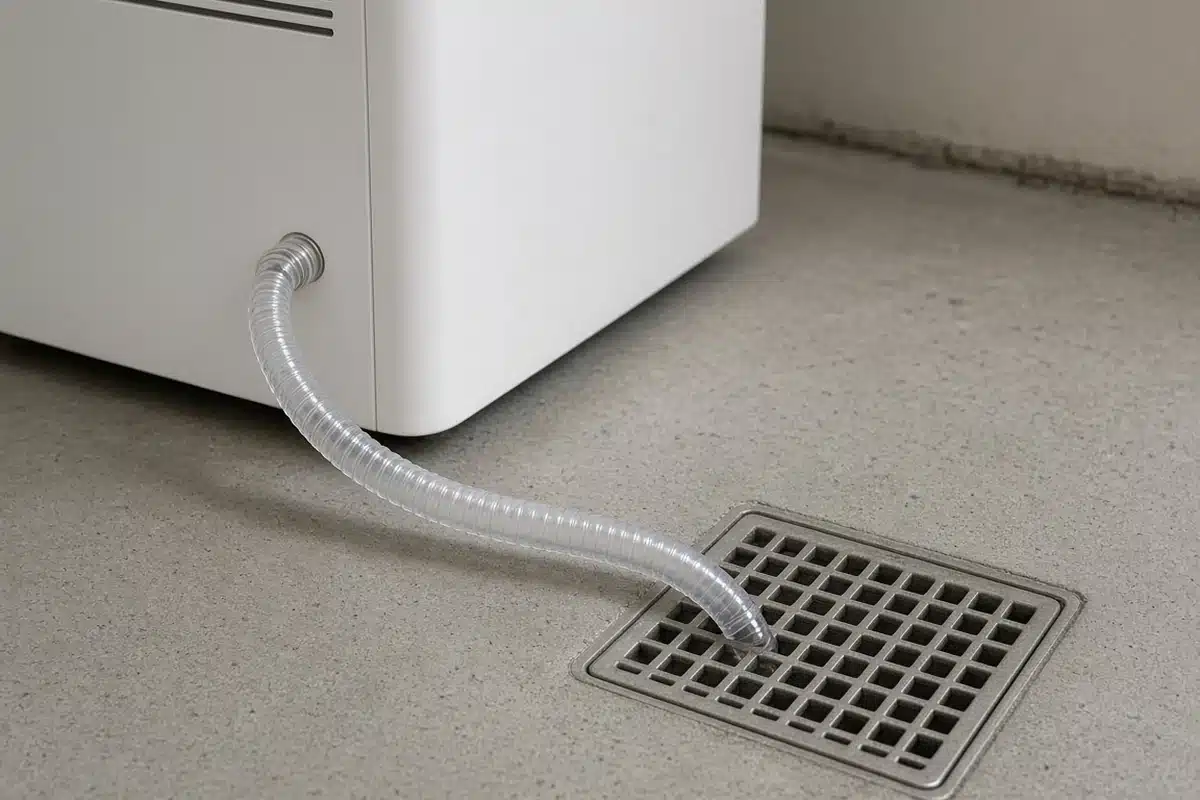
When the bucket fills, the unit stops. Then humidity climbs while you are away or asleep. ENERGY STAR notes that many dehumidifiers can drain through a hose to a floor drain or condensate pump so you do not have to empty the bucket. A pump keeps the room steady. No more daily trips with a bucket.
Our guide to dehumidifier water for cannabis covers what to do with the water itself.
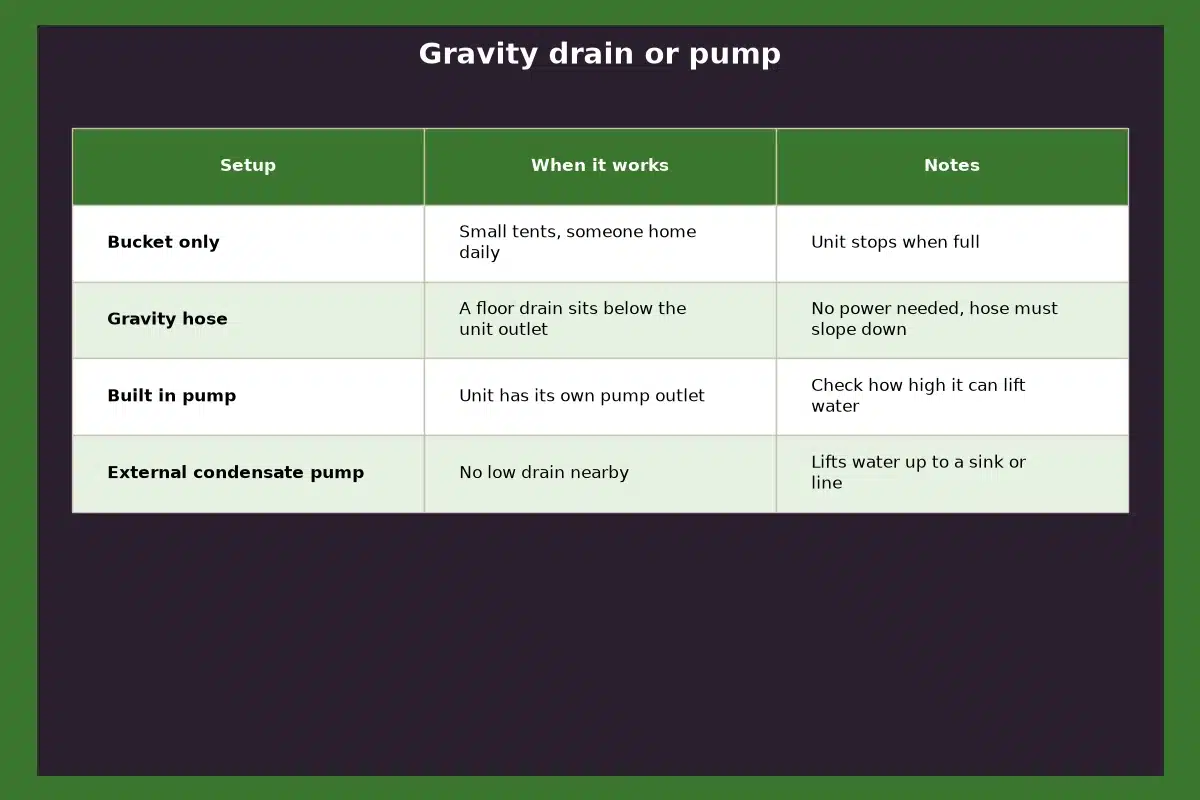
Gravity drain or pump
| Setup | When it works | Notes |
|---|---|---|
| Bucket only | Small tents, someone home daily | Unit stops when full |
| Gravity hose | A floor drain sits below the unit outlet | No power needed, hose must slope down |
| Built in pump | Unit has its own pump outlet | Check how high it can lift water |
| External condensate pump | No low drain nearby | Lifts water up to a sink or line |
Source: Dehumidifiers, ENERGY STAR, drain hose to a floor drain or condensate pump and keep hoses away from cords.
How a condensate pump works
A condensate pump is a small tank with a float and a pump. Water from the dehumidifier drains into the tank. When the water rises, the float switches the pump on. The pump pushes water through a thin tube to your drain. When the tank is low, the pump shuts off.
Many pumps also have a safety switch. If the pump fails and water keeps rising, the switch can cut power to the dehumidifier or sound an alarm. This helps stop overflow on the floor.
What to look for
Lift height
Lift is how high the pump can push water. Measure from the pump to the highest point in the tube run. That might be the rim of a sink. Pick a pump rated well above that height.
Flow and tank size
Check how much water your dehumidifier removes per day. The pump must keep up with it. A larger tank means the pump runs less often.
Safety switch
Look for an overflow switch you can wire to cut power to the dehumidifier or trigger an alarm.
Inlets
Make sure the inlet fits your dehumidifier hose. Some pumps have several inlets. You can drain an AC unit with them too.
Noise
Pumps hum when they run. If the grow is in a living space, check noise notes before you buy.
How to set up a condensate pump
- Set the dehumidifier on a level, raised spot.
- Place the pump lower than the dehumidifier drain outlet.
- Run the dehumidifier hose down into the pump inlet.
- Run the pump outlet tube to a sink, floor drain or drain line.
- Secure the tube end so it cannot pop out.
- Keep all hoses and tubes away from cords and power strips.
- Plug the pump into a grounded outlet.
- Wire the safety switch if your pump has one.
- Pour water into the pump to see that it starts and drains.
- Check the whole run for leaks after the first day.
ENERGY STAR advises keeping hoses away from electrical cords and making sure the hose is secured to the drain. Oregon State University Extension also suggests placing a dehumidifier near a drain or connecting a hose to one. That matters in a grow room where cords, timers and water share tight space.
Placement in tents and rooms
Put the pump outside the tent if you can. This keeps humid air and spills away from the pump. It also frees floor space. Run the dehumidifier hose through a port.
Place the pump in a tray to catch any drips. Our guide to drip trays and spill protection for grow rooms covers tray setups.
In a basement, a floor drain may make the pump unnecessary. Our guide to basement grow room moisture covers moisture control below ground.
Maintenance
Condensate pumps collect dust, slime and debris. A clogged pump can overflow.
- Unplug the pump before you clean it.
- Empty the tank and wipe out slime every few weeks.
- Rinse the float so it moves freely.
- Check the outlet tube for kinks and buildup.
- Clean the dehumidifier filter as the maker says.
- Check the safety switch each grow by lifting the float by hand.
Energy and sizing
ENERGY STAR certified dehumidifiers use less energy than standard models. A right sized unit with steady drainage runs more evenly. A unit that keeps stopping on a full bucket does not. Match the pump to the unit, and the unit to the room size and moisture load.
Running the tube
The tube run is where most problems start. Keep it as short and direct as you can. Every extra foot and every bend adds work for the pump.
- Use the tube size the pump maker lists.
- Avoid sharp bends that can kink.
- Clip the tube along walls so it cannot be stepped on.
- Keep the end above the water line in a sink so water cannot flow back.
- Leave a loop near the pump so you can lift it out to clean.
If you send water outside, protect the line from freezing in cold months. A frozen line will back up into the pump.
Pumps and power cuts
A pump needs power to work. If the power goes out, the dehumidifier stops too. The tank should not overflow. When power returns, check that both units restart. Some dehumidifiers need a button press after a power cut. If you are often away, pick one that restarts on its own.
The US Department of Energy sets efficiency standards for consumer dehumidifiers. A newer, efficient unit paired with a working pump is a simple way to keep grow room humidity in check.
Daily checks
Look at the pump each time you visit the grow. Listen for it running when the tank fills. Glance at the drain end of the tube to see water flowing out. A quick look takes seconds. It catches most problems early.
Troubleshooting
- Pump will not start. Check power and make sure the float moves freely.
- Pump runs but water does not move. Look for a kink or clog in the tube.
- Water on the floor. Check hose fittings and the safety switch.
- Pump runs all the time. Check for a stuck float or a tube draining back.
- Dehumidifier keeps stopping. The safety switch may be cutting power because the tank is full.
- Bad smell. Clean slime from the tank and tube.
Final thoughts
A condensate pump for a dehumidifier keeps water moving out of your grow room so the unit runs steadily. Choose one with enough lift and flow, add a safety switch, keep hoses away from cords and clean it often. Kind Seed Co has more grow equipment guides for home growers.
Sources
- ENERGY STAR, Dehumidifiers
- Oregon State University Extension, Home Moisture Problems
- US Department of Energy, Consumer Dehumidifiers
FAQ
What does a condensate pump do?
It collects water from a dehumidifier and pumps it up to a sink or drain.
Do I need a condensate pump for my dehumidifier?
You need one when there is no floor drain lower than the unit and you do not want to empty the bucket.
How do I size a condensate pump?
Check lift height to your drain and match flow to the water your unit removes each day.
Where should I put the pump in a grow tent?
Outside the tent, lower than the dehumidifier outlet, in a drip tray and away from cords.
How often should I clean a condensate pump?
Every few weeks. Unplug it, empty the tank, wipe out slime and rinse the float.