Grow Tent Viewing Windows: Checking Plants Without Opening Up

The short answer
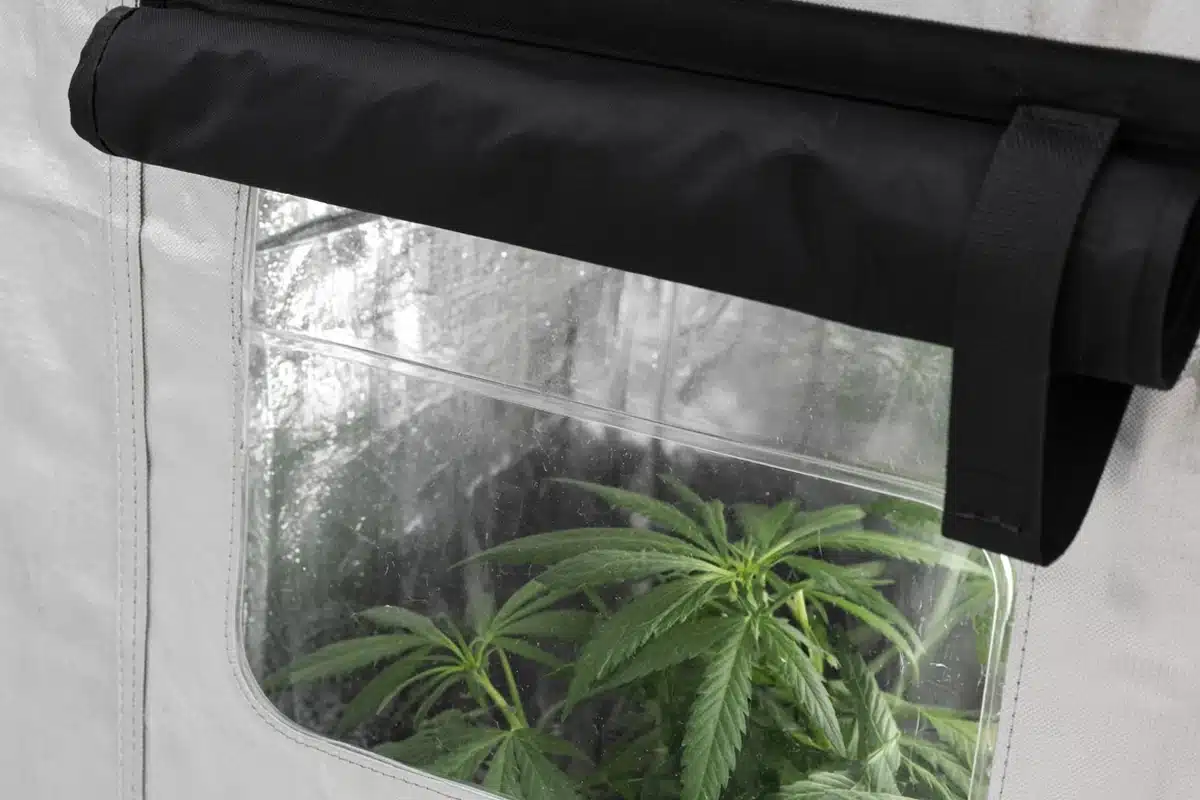
A grow tent viewing window is a clear panel in the tent wall with a blackout flap that zips or closes over it. During the light period you can look at plants, gauges and sticky cards without opening the main door.
Pick a tent with a window at plant height, a tight light proof cover and a clear panel you can wipe clean. In flower, keep the cover shut whenever the lights are off. Use it for quick checks and still open the tent for close scouting.
Why a viewing window helps
Each time the tent door opens, warm humid air rushes out. Room air rushes in. Light from the room also floods in. A viewing window lets you glance in without any of that.
- Check plant color and droop at a glance.
- Read a thermometer and humidity gauge inside.
- Look at sticky cards for new pests.
- Check light height and canopy shape.
- Keep smell inside the tent.
Viewing windows and dark periods
Light control matters most in flower. Purdue Extension explains that the length of the uninterrupted dark period controls how many plants respond to day length. A break of light at night can upset those responses.
A viewing window must be fully light proof when closed. Test it with the tent lights off and a bright room light on. If you see light around the flap from inside, it is not sealed. Only open the flap when the tent lights are on.
Source: Managing Photoperiod in the Greenhouse, Purdue Extension HO 253 W, dark period and light breaks.
Window types
| Type | How it closes | Pros | Cons |
|---|---|---|---|
| Clear panel with zip flap | Zipper around a blackout cover | Tight seal | Zippers can let light leak if worn |
| Clear panel with hook and loop flap | Fabric strips | Quick to open | Seal weakens with use |
| Mesh window with flap | Zip flap over mesh | Adds airflow | Mesh is hard to see through |
| Door with small window | Built into the main door | Wide view | Larger area to seal |
What to look for
Placement
A window at plant height lets you see the canopy. Tall tents may have two windows. Make sure no fan or filter will block the window.
Clear panel quality
Choose a panel that is thick, clear and easy to wipe. Thin plastic can cloud or crack over time.
Light seal
Look for a cover that overlaps the frame on every side. Double stitched seams and a covered zipper help block light.
Size
A window big enough to see several plants is more useful than a small peephole. Larger windows need a better seal, though.
Using the window for scouting
Oklahoma State University Extension advises inspecting plants at least weekly, and twice a week is better. It also suggests checking sticky traps and marked indicator plants daily.
A viewing window makes daily checks easy. Hang a yellow sticky card where you can see it through the panel. Look for new insects each day. Mark the first problem plant and watch it from the window.
Source: IPM Scouting and Monitoring for Pests in Commercial Greenhouses, Oklahoma State University Extension, scouting schedule and sticky traps.
Where you place the cards decides what you can read through the panel. The IPM Scouting and Decision Making fact sheet from UMass Amherst Extension suggests setting cards about 4 inches above the canopy for general monitoring. It also suggests clipping each card to a stake with a clothespin so you can move it up as plants grow. Set that stake in line with the window. Number each card and change it weekly in the same spot so the counts show a trend.
Daily check list
- Turn on the room light if you need it.
- Open the window cover while tent lights are on.
- Read the thermometer and humidity gauge.
- Look at the sticky card for new insects.
- Check leaf color, droop and canopy height.
- Look at the light height above the tops.
- Close and seal the cover.
- Write down what you saw.
When to open the tent
A window does not replace close scouting. OSU suggests using a 10X hand lens to look at pests. You need to open the tent to check under leaves, look at stems and feel soil moisture.
Plan full checks at least once a week. Use the window for quick checks in between.

Adding a window to a tent without one
Many tents have no viewing window. It is risky to cut a hole in the tent wall. A poor cut can tear, leak light and void any warranty. Using what the tent already has is the better route.
- Use a small zip port or the door corner for quick looks with the lights on.
- Place a remote thermometer and humidity sensor with a display outside the tent.
- Use a small camera inside the tent that you can view from a phone.
- Hang sticky cards near the door so you see them the moment you open it.
These options give you most of the benefit of a window without changing the tent itself.
What you can and cannot see
A window shows the outside of the canopy. You can see color, droop, stretch and bugs on cards. You cannot see the undersides of leaves, where many pests hide. Through a window you cannot feel soil moisture or smell problems like rot.
OSU suggests walking a set pattern so every area gets checked. In a tent, that means opening up and looking at every plant from each side once a week. The window covers the days in between.
Glare and grow lights
Bright grow lights make it hard to see through a window. Some growers wear tinted glasses made for grow light work. Do not stare at the light itself. If your light has a dimmer, turn it down briefly for a check.
Condensation on the window
Warm, humid air inside the tent can fog the clear panel when the room is cooler. Fog on the window is a sign humidity may be high near the wall. Our guide to grow tent condensation covers how to control it. Our guide to grow tent insulation covers keeping tent walls warmer.
Cleaning the window
- Wipe the clear panel with a soft damp cloth.
- Avoid harsh cleaners that can cloud plastic.
- Clean the zipper track so it closes fully.
- Check the cover seams for light leaks between grows.
Our guide to cleaning a grow tent covers a full clean between runs.
Keeping records
OSU stresses that scouting without records is not effective. Keep a small notebook by the tent. Write the date, temperature, humidity and any pests you see through the window. Over a few weeks you will spot patterns.
The same fact sheet suggests counting each type of insect on every card. Record the card number and the counts in your notebook. Compare counts week to week before you act. A sudden jump on one card points to the corner of the tent that needs a close look. At the end of each grow, look back over the season and note when pests first appeared.
Troubleshooting
- Light leaks around the flap. Add a strip of blackout tape over the zipper.
- The panel is foggy. Lower humidity or wipe it clean.
- You cannot see through the glare. Dim the light or use tinted glasses.
- The zipper sticks. Clean the track and run it slowly.
- The window is blocked. Move fans or filters away from it.
- You miss pests from the window. Open the tent for weekly close checks.
Final thoughts
A grow tent viewing window lets you check plants, gauges and sticky cards without breaking the climate or light seal. Make sure the cover is fully light proof. Open it only when the lights are on. Still open the tent for close checks each week. Kind Seed Co has more grow equipment guides for home growers.
Sources
- IPM Scouting and Decision Making, UMass Amherst Extension, sticky card placement and records.
- Oklahoma State University Extension, IPM Scouting and Monitoring for Pests in Commercial Greenhouses
- Purdue Extension, Managing Photoperiod in the Greenhouse
FAQ
What is a grow tent viewing window?
A clear panel in the tent wall with a blackout cover so you can look inside without opening the door.
Can I open the viewing window during the dark period?
No. Keep it closed when the lights are off so the dark period stays unbroken.
How do I check a viewing window for light leaks?
Turn the tent lights off, turn a room light on and look for light around the cover from inside.
Does a viewing window replace opening the tent?
No. Open the tent at least weekly to check under leaves and feel the soil.
Why is my viewing window foggy?
Warm, humid air inside is meeting a cooler wall. Lower humidity or add insulation.