Pond and Creek Water for Cannabis: Algae, Sediment and Testing
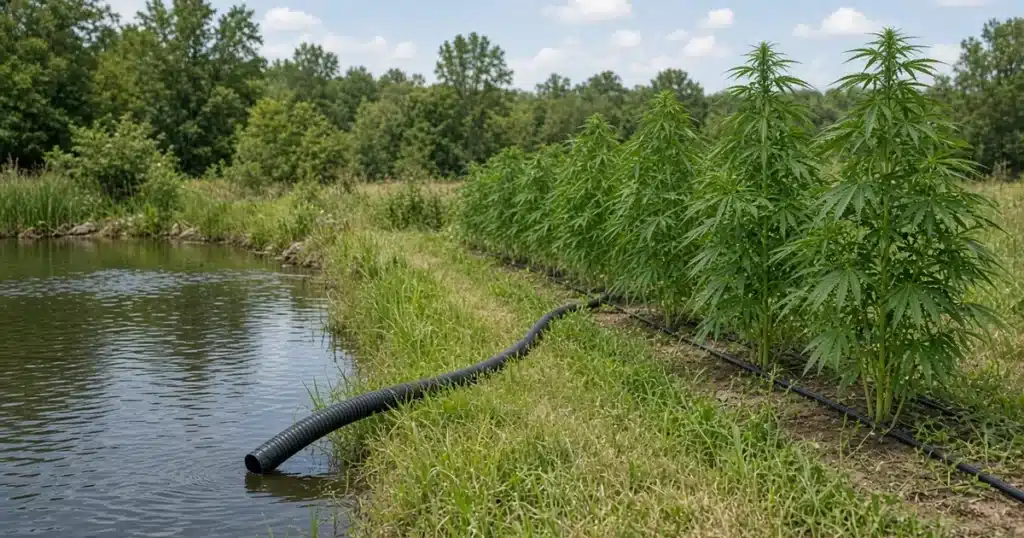
Quick answer: Ponds, creeks and rivers can water cannabis, but surface water changes quickly and needs more care than well or city water. Minnesota Extension notes that open water picks up runoff, animal waste and debris, so its quality swings widely, and it recommends testing several times a season and using drip lines to keep water off plant surfaces. Utah State Extension cautions that in Utah, blue green algae blooms can develop as early as May and last through October in warm, still, nutrient rich water, and that irrigating with bloom water can suppress crop growth. Filter out sediment, avoid water during blooms and test before and during the season.
What Makes Surface Water Different?
Ponds, creeks, streams and rivers are open to everything around them. Rain washes soil, fertilizer and animal waste in. Birds, livestock and wildlife use the water. Leaves and algae add organic matter.
Minnesota Extension writing on using ponds or streams for irrigation explains that all surface water sources are more open to contamination than groundwater, and that their quality can vary widely. It lists livestock, birds, people swimming or boating, runoff from fields and roads, dead animals and dumping among the risks.
That constant change is the main challenge for anyone pumping from open water into a garden. Water that tests fine in June may look very different after a storm in August.
How Do Algae Blooms Affect Cannabis?
Some pond and lake algae are actually cyanobacteria, often called blue green algae. The Utah State Extension article on harmful algal blooms explains that in Utah, blooms form in ponds, lakes and reservoirs from as early as May into October.
USU lists the conditions that favor blooms:
- Extra nutrients such as nitrogen and phosphorus from fertilizer, manure or septic runoff.
- Warm water that stays above about 75 degrees F.
- Still or slow moving water, where cyanobacteria can build up.
- Plenty of sunlight on clear, shallow water.
For plants, USU reports that irrigating with water from a bloom can reduce crop performance. Studies it cites found slower growth in tomatoes and lower yields in cucumbers and rice when exposed to high levels of bloom compounds. USU advises using another water source while a bloom is active.
Blooms often show up as green scum, paint like streaks or discolored water. If your pond looks like that, do not water cannabis with it. USU adds that water can look clear and still carry bloom compounds, so a water test is the surer check.
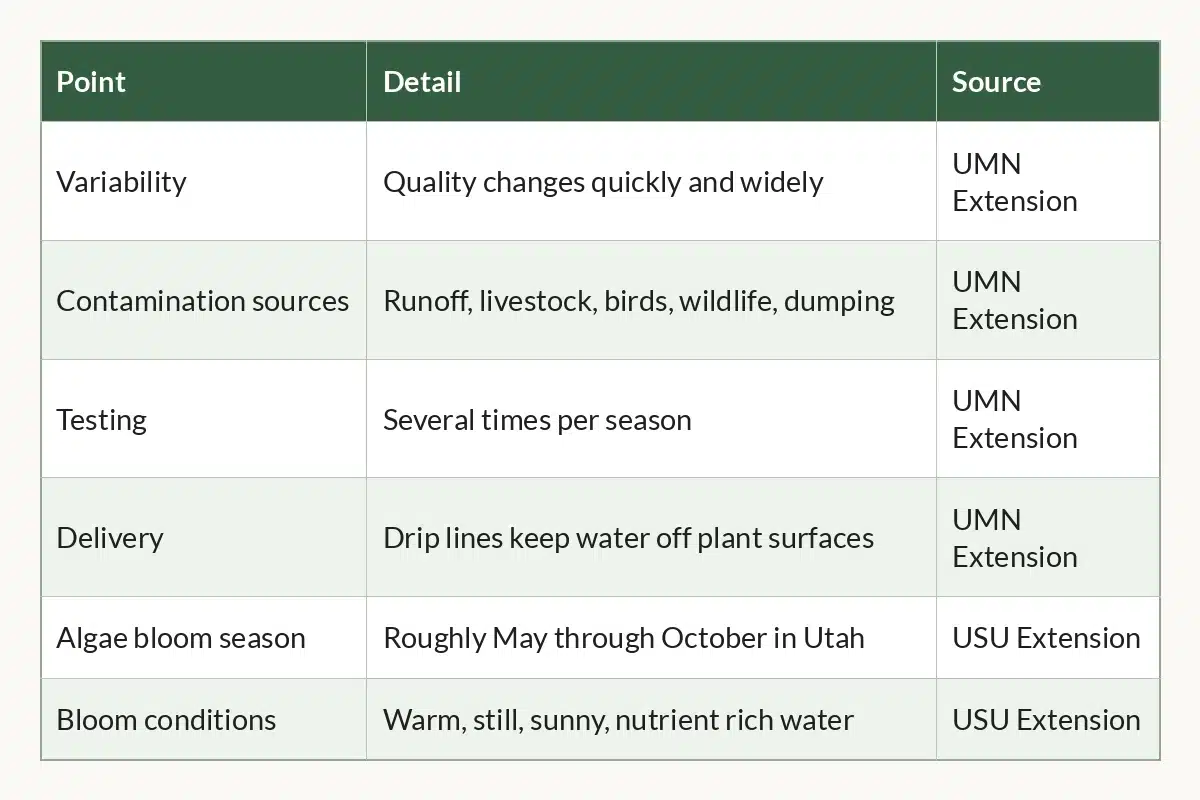
Surface Sources at a Glance
| Point | Detail | Source |
|---|---|---|
| Variability | Quality changes quickly and widely | UMN Extension |
| Contamination sources | Runoff, livestock, birds, wildlife, dumping | UMN Extension |
| Testing | Several times per season | UMN Extension |
| Delivery | Drip lines keep water off plant surfaces | UMN Extension |
| Algae bloom season | Roughly May through October in Utah | USU Extension |
| Bloom conditions | Warm, still, sunny, nutrient rich water | USU Extension |
Does Pond Water Have Nutrients for Cannabis?
Often some. Water that collects farm or lawn runoff may hold nitrogen and phosphorus, which is also what fuels algae. The amount changes with weather and season, so it is not something to plan feeding around.
A Penn State water testing guide notes that phosphorus above 5 mg/L in irrigation water may cause imbalances with other nutrients, and that higher levels often point to fertilizer or manure runoff. High iron and manganese, also common in some ponds, can clog drip emitters and stain leaves.
Plan to feed cannabis as you normally would, then adjust based on test results. If a test shows high nitrogen in late summer, ease off nitrogen in your bloom feed.
How Do You Deal With Sediment?
Creek and pond water carries silt, sand and organic debris, especially after rain. Arkansas Extension guidance on irrigation water quality notes that suspended solids such as soil particles can clog irrigation nozzles and wear equipment, and that algae and microbes can clog lines too.
A few steps help here:
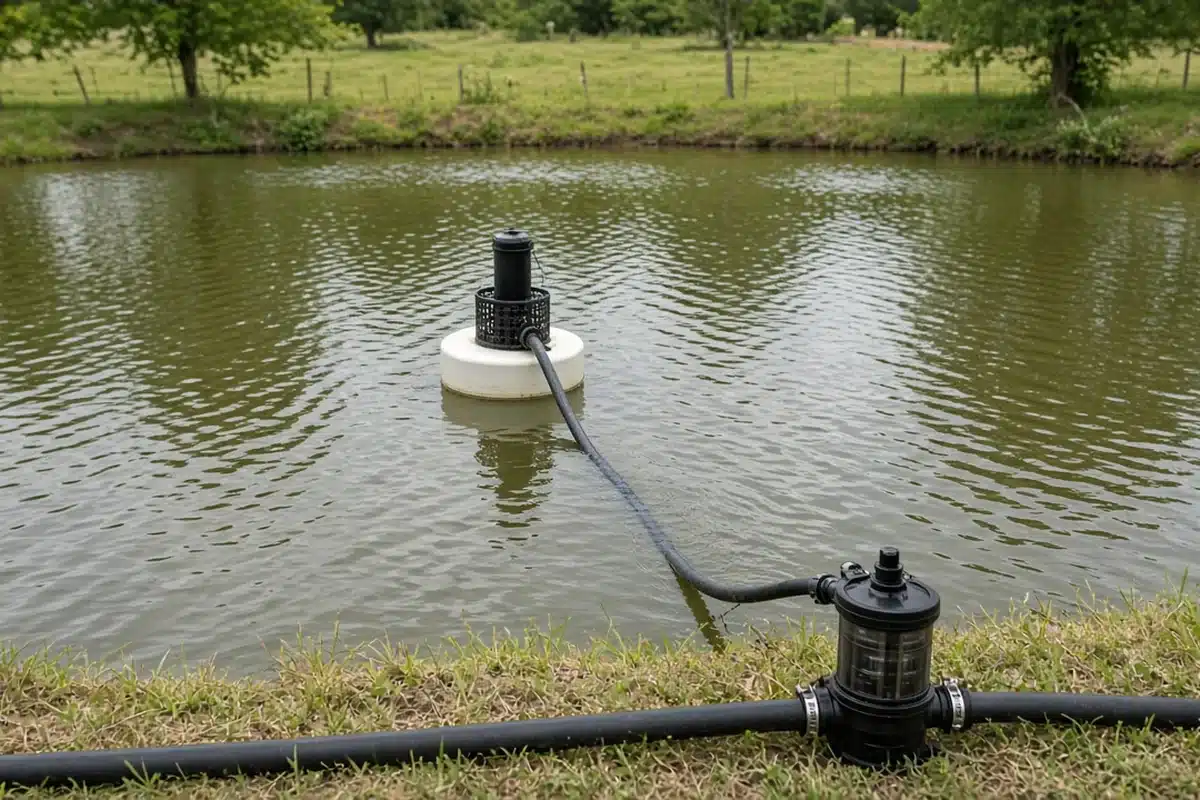
- Draw water from below the surface but above the bottom, where water is clearest.
- Use a floating intake that stays away from mud and surface scum.
- Let water settle in a tank before use.
- Install a screen or disk filter ahead of drip lines. Fine filters protect small emitters.
- Flush lines regularly to clear buildup.
Should You Use Drip or Overhead Watering?
Drip. UMN recommends drip tape, ideally under plastic mulch, to reduce contact between surface water and the crop. It notes that drip also uses much less water than overhead sprinklers and cuts plant disease and mildew that come from wetting leaves again and again.
For cannabis, keeping water off dense flowers matters for mold control, so drip is the sensible choice whatever the source.
How Often Should You Test Pond or Creek Water?
UMN advises sampling surface water three or more times a season, and as many as five. Good moments include planting time, the peak of summer watering and the weeks before harvest. It explains that results change quickly because the water is open to the environment.
For cannabis growers, a basic irrigation test is worth adding as well. Check pH, alkalinity, hardness, conductivity, sodium and chloride, along with iron and manganese if your water looks rusty or leaves stains. Our article on irrigation water alkalinity for cannabis covers why those readings matter.
UMN also offers sampling tips: collect water from as far into the source as you can, keep the sample cool and get it to the lab within the time it specifies.
Do You Need a Permit to Pump From a Creek?
Often, yes. Water rights rules differ widely by state and even by county. Some places let landowners draw small amounts for household gardens, while others require a permit or prohibit pumping from streams during low flow. Check with your state water agency or local Extension office before installing a pump on a creek or river.
Ponds on your own land usually face fewer rules, but drawing heavily in late summer can lower water levels, warm the remaining water and make algae blooms more likely.
Does Surface Water Temperature Matter?
It can. Shallow ponds warm up a lot in summer, and creek water fed by springs or snowmelt can stay quite cold. Very cold water on a hot day can shock roots, while very warm pond water often carries more algae. A holding tank lets water move toward air temperature and gives sediment time to settle before it reaches the plants.
How Does Surface Water Compare With Other Sources?
Rainwater collected from a clean roof is usually softer and more predictable than pond water. Our guide to rainwater for cannabis gives tips on gathering and storing it.
Household graywater is another reuse option with its own rules. Our article on graywater for cannabis gardens explains those.
Well and city water cost more effort or money but change far less from week to week.
How to Use Pond or Creek Water on Cannabis
- Look at the source. Skip water with scum, odd colors or a sour smell.
- Test before the season. Run a basic irrigation water test.
- Check for blooms. Watch for scum in warm months and stop using the water if it appears.
- Set a good intake. Draw from below the surface and away from the bottom.
- Filter the water. Use a screen or disk filter ahead of drip lines.
- Water with drip. Keep water off leaves and flowers.
- Retest during the season. Sample again at peak irrigation and near harvest.
- Keep a second source. Have another option ready if quality drops.
Troubleshooting Pond and Creek Water Problems
Drip emitters clog. Sediment or algae is getting through. Add a finer filter and flush lines.
Water turns green in summer. A bloom may be forming. Switch to another source.
Leaves show rusty spots. Iron may be high. Test and filter, and avoid wetting leaves.
pH keeps drifting. Surface water shifts as the weather changes. Test more often and adjust feeding.
Growth slows after a storm. Runoff may have changed water quality. Retest before watering again.
Sources
- UMN Extension, Using Ponds or Streams for Irrigation: https://blog-fruit-vegetable-ipm.extension.umn.edu/2022/08/using-ponds-or-streams-for-irrigation.html
- Utah State University Extension, Harmful Algal Blooms: Risks for Food in Utah: https://extension.usu.edu/foodsafety/research/harmful-algal-blooms-risks-for-food-in-utah
- University of Arkansas Cooperative Extension, Irrigation Water for Greenhouses and Nurseries (FSA6061): https://www.uaex.uada.edu/publications/pdf/FSA-6061.pdf
- Penn State Extension, Interpreting Irrigation Water Tests: https://extension.psu.edu/interpreting-irrigation-water-tests
FAQ
Can I water cannabis with pond water?
Yes, with filtering, drip lines and regular testing.
How often should surface water be tested?
UMN suggests three to five rounds a season.
When are algae blooms most likely?
USU notes that in Utah they can appear from about May through October in warm, still water.
Is creek water better than pond water?
Moving water is less prone to blooms, but it still carries runoff and sediment.
Does pond water replace fertilizer?
No. Its nutrient content varies too much to count on.