Public view rules for outdoor cannabis home grows by state
Growing cannabis outdoors in a legal state usually comes with two conditions beyond the plant limit: the plants must be kept out of public view, and they must be in an enclosed or locked space. The wording changes from state to state, and those small differences decide whether a backyard garden is legal. This guide compares the rules in several states and explains how growers meet them.
What public view usually means
Most states use one of three tests.
- Normal unaided vision. If someone standing in a public place can see the plants with their own eyes, the grow fails. California uses this wording.
- No optical aids. The plants must not be visible from a public place without binoculars, aircraft or other optical aids. Massachusetts, Arizona, Michigan and Alaska use versions of this test. The point is that police with a helicopter may still see your garden, but that alone does not make it a violation.
- Openly or publicly. Colorado’s constitution says cultivation cannot be conducted openly or publicly. It is less precise, so local codes often fill in details.
A public place usually means a street, sidewalk, park or other area open to the public. Maryland goes further and includes views from other private property, so a neighbor’s yard counts too.
State comparison
| State | Visibility rule | Enclosure rule |
|---|---|---|
| California | Not visible by normal unaided vision from a public place | Locked space on the grounds of a private residence |
| Massachusetts | Not visible from a public place without optical aids | Area equipped with locks or other security devices |
| Arizona | Not visible from public view without optical aids | Enclosed area with a lock |
| Michigan | Not visible from a public place without optical aids | Enclosed area equipped with locks |
| Maryland | Not visible from a public place or other private property without optical aids | Secured, locked space |
| Colorado | Not conducted openly or publicly | Enclosed, locked space |
| Vermont | Screened from public view | Enclosed and secure area |
| Alaska | Not subject to public view without optical aids | Enclosed and locked area |
These summaries are shortened. Read your state’s statute and any rules from its cannabis agency. Plant counts, household caps and medical rules differ too, so start with our legal requirements for growing weed plants in your state.
Local rules can be stricter
Cities and counties often add their own requirements. Depending on where you live, a local ordinance may:
- Ban outdoor cultivation entirely and allow indoor grows only
- Require a minimum distance from property lines, schools or parks
- Set fence heights or materials
- Limit odor that reaches neighboring properties
- Require a permit or registration
Search your city or county code for cannabis or marijuana cultivation before you plant.
Ways growers keep plants out of view
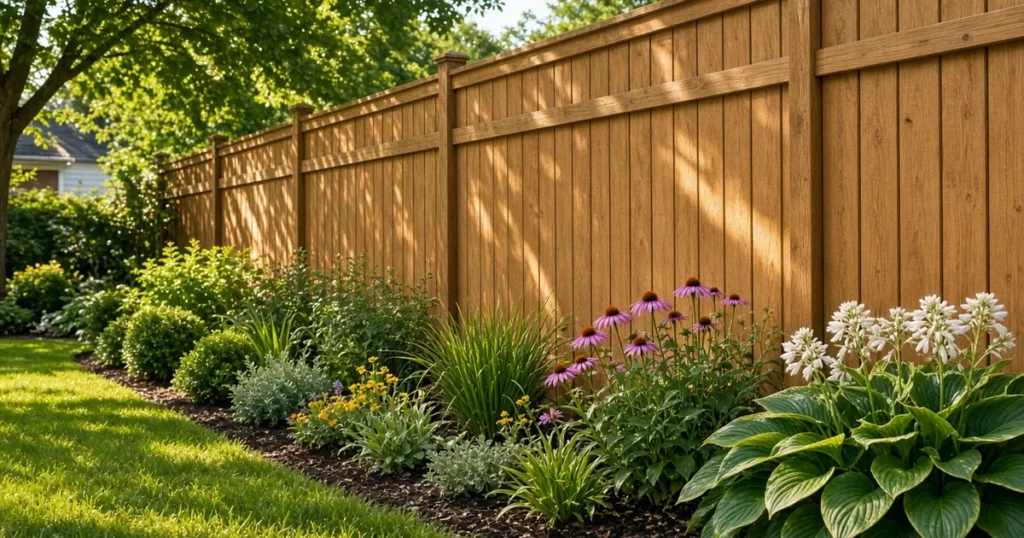
Solid fences
A solid fence is the most common answer. Height matters. Plants that grow above the fence line can become visible from the street, especially late in the season. Check your local fence height limit before building.
Living screens
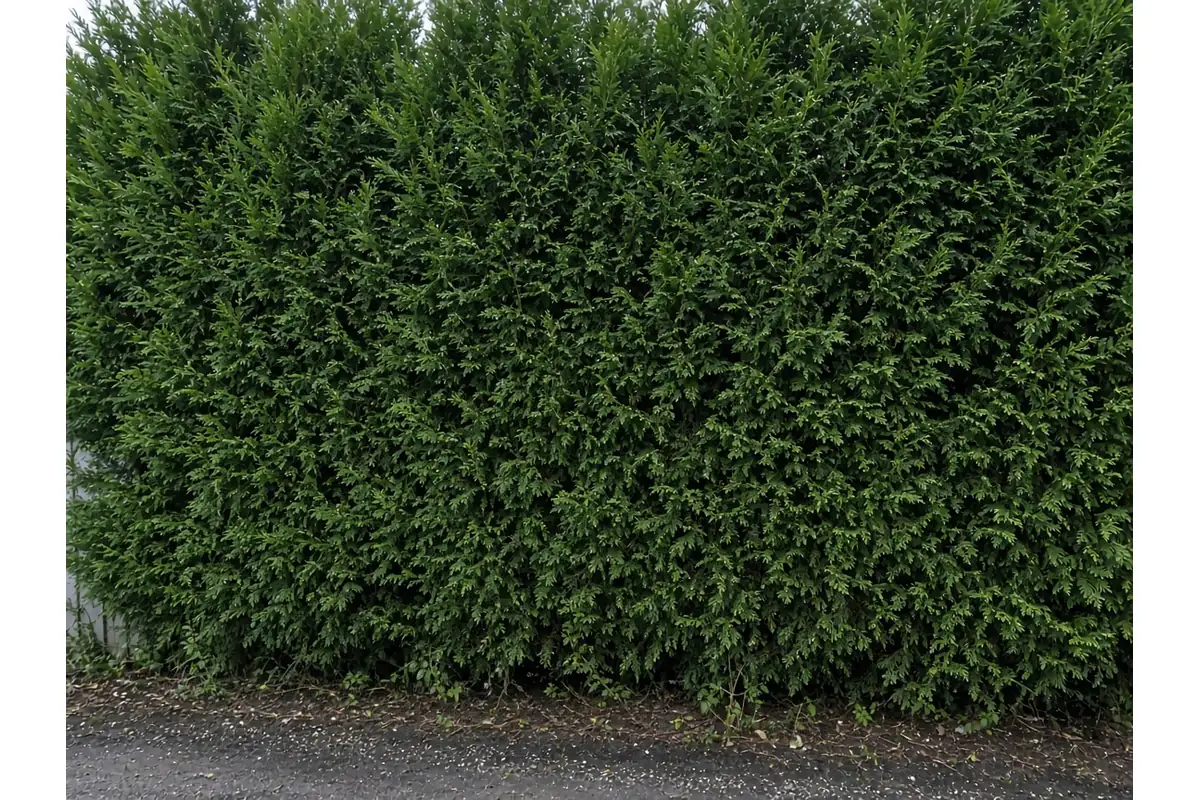
Hedges, tall shrubs and climbing vines on trellises can screen a garden and soften the look of a fence. They take time to fill in, so plan a season ahead. Our guide to privacy hedge planting guide covers plant choices.
Greenhouses and hoop houses
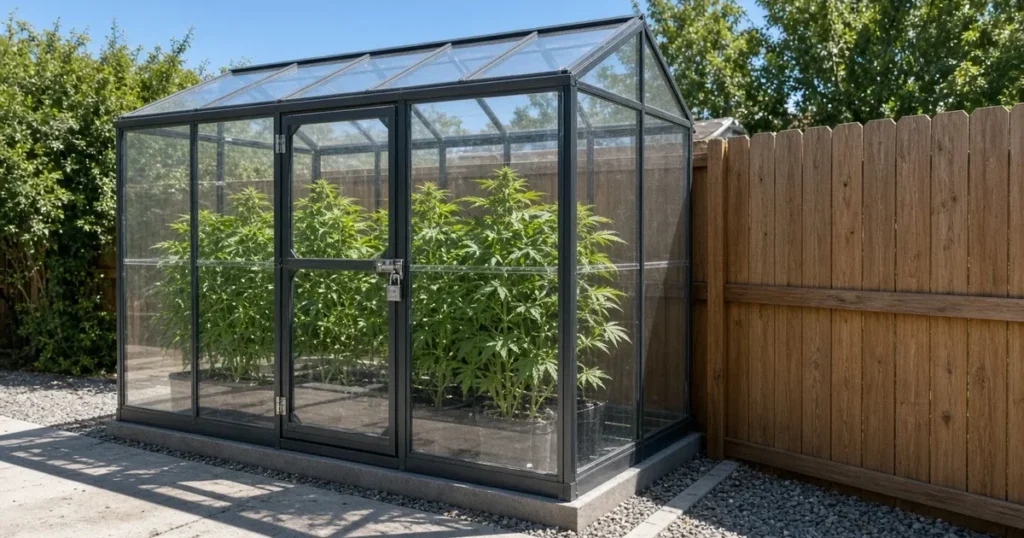
A greenhouse with opaque or frosted panels can hide plants and give you a locked structure in one step. Many HOAs and towns require approval for structures, so ask first.
Plant size and training
Compact plants are easier to hide. Low stress training, topping and bending branches keep height down. Autoflowering plants tend to stay small and finish quickly. Our when to plant cannabis seeds outdoors guide and best soil for growing marijuana outdoors guide help you plan the season.
Placement
Put plants where buildings, fences and slopes block sight lines from the street and neighbors. Walk the perimeter of your property and look from every public spot, including alleys and parks behind you.
Locking and securing the grow
Visibility is only half the rule. Most states also require locks.
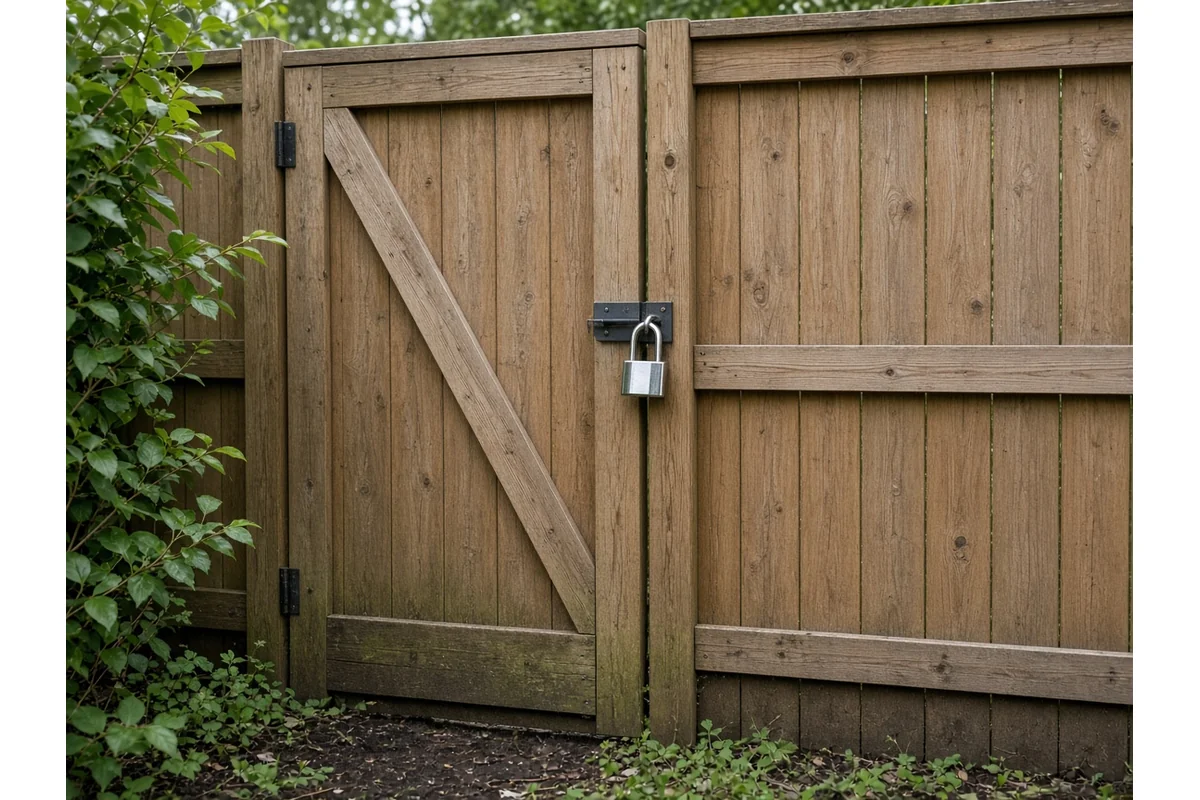
- Lock gates on fenced yards
- Lock greenhouse doors
- Keep harvested cannabis in a locked container inside the home
- Keep plants away from children and visitors
A quick checklist before planting outdoors
- Confirm your state allows home grow and how many plants you may have.
- Read the exact visibility and enclosure wording in your state law.
- Check city or county rules, plus HOA or lease rules.
- Walk the property and check sight lines from every public place, and from neighbors’ yards if you live in Maryland.
- Build or plant screens and add locks before planting.
- Choose compact plants and plan training to control height.
- Recheck visibility in late summer, when plants are tallest.
What happens if plants are visible
Penalties vary. In some states a visible grow is a civil infraction with a fine. In others it can be a misdemeanor, and it may also lead to a nuisance complaint, a code enforcement visit or trouble with a landlord or HOA. Even when the penalty is small, a visible garden can attract theft.
When outdoor is not practical
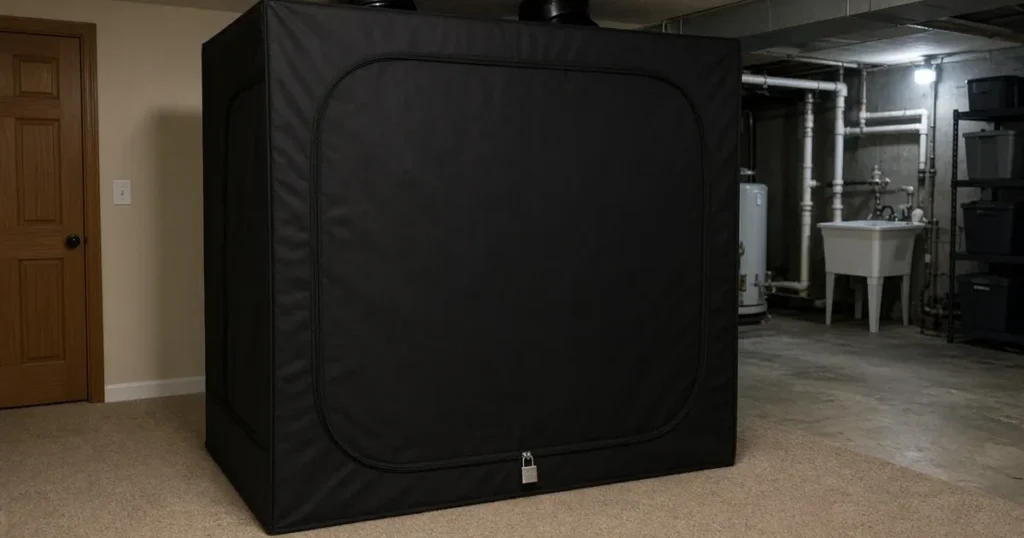
Some yards simply cannot be screened. A corner lot, a home on a hill or a small yard overlooked by apartments may leave no spot that passes the test. In that case, growing indoors in a tent, a closet or a locked spare room may be the only legal option. Indoor growing also makes it easier to control odor and keep plants secure. Our guide on DIY carbon filter build explains how to keep an indoor grow discreet.
Neighbors and odor
Out of sight does not always mean out of mind. Flowering plants can smell strong in late summer. Talk with neighbors, keep plants as far from property lines as practical and follow any local odor rules.
Grow legally and responsibly
Home cultivation is only legal in some states, and each state sets its own plant limits, locking rules and rules about whether plants can be visible from a public place. You must be 21 or older to buy seeds from Kind Seed Co, and you should grow only where your state and city allow it. Check your state rules in our guide to the legal requirements for growing weed plants in your state before you plant. Federal treatment of cannabis seeds is also changing, so read our December 11 2026 seed rule explainer before you order. Keep plants and harvested flower locked away from children, pets and visitors, and never drive after using cannabis. This article is general information. It is not legal advice and it is not medical advice.
Frequently asked questions
Does public view include aerial views?
In states that use an optical aids test, such as Massachusetts and Michigan, a view from aircraft or with binoculars generally does not count. Check your state’s wording.
Does a neighbor seeing my plants count?
In most states the test is a public place. Maryland also includes views from other private property.
Do I need a lock for an outdoor grow?
Most legal states require an enclosed, locked or secure area. A locked fence gate or greenhouse is a common way to comply.
Can my city ban outdoor grows?
In many states, yes. Local ordinances may ban outdoor cultivation or add setbacks and fence rules.
Final thoughts
Public view rules are short but strict. Know whether your state uses an unaided vision test, an optical aids test or a broader openly or publicly test, then check local rules. Use fences, hedges or a greenhouse, keep plants compact, lock the space and recheck sight lines as plants grow.
Ready to start
Browse the full range in the Kind Seed Co shop or go straight to outdoor seeds. Kind Seed Co sells only to adults 21 and older. Always follow the cannabis laws where you live.