
Privacy Hedge Planting: Spacing and Species for Screens
The short answer
Privacy hedge planting works when you space shrubs by mature size, not pot size. Iowa State Extension gives 1 to 2½ feet for sheared hedges and wider spacing for informal ones. NC State Extension suggests mixing species so one pest does not take out the whole screen. Plan, then plant in the right season.
How far apart should privacy hedge plants be?
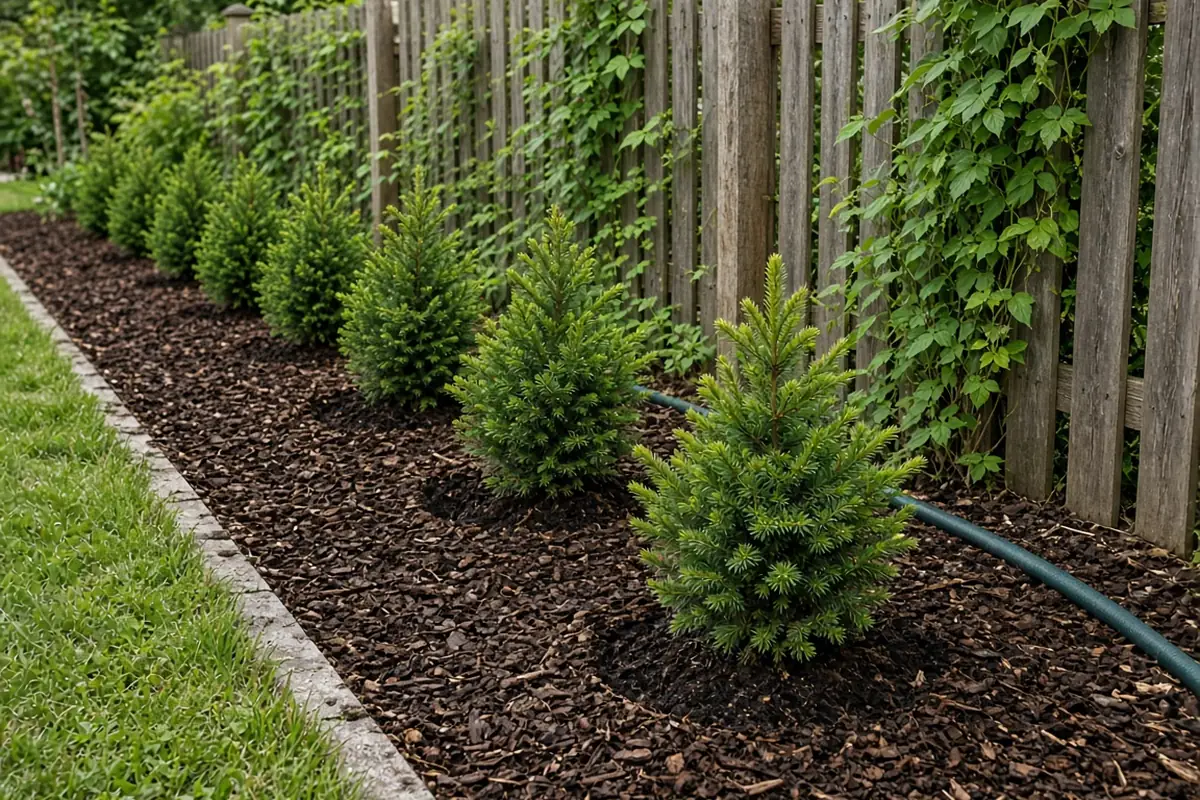
Iowa State Extension says formal hedges go 1 to 2½ feet apart. Informal medium shrubs of 6 to 8 feet go 2 to 4 feet apart, and large shrubs of 8 to 12 feet go 4 to 6 feet apart. NC State warns tight planting leads to competition later. Layout ideas are in garden microclimates for cannabis and planning an outdoor cannabis garden layout.
Which plants make good screens?
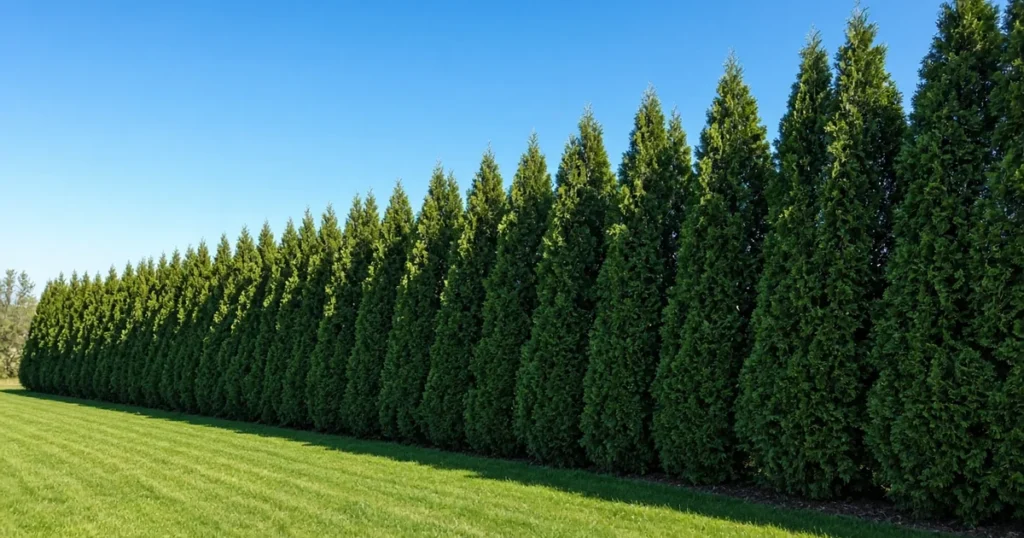
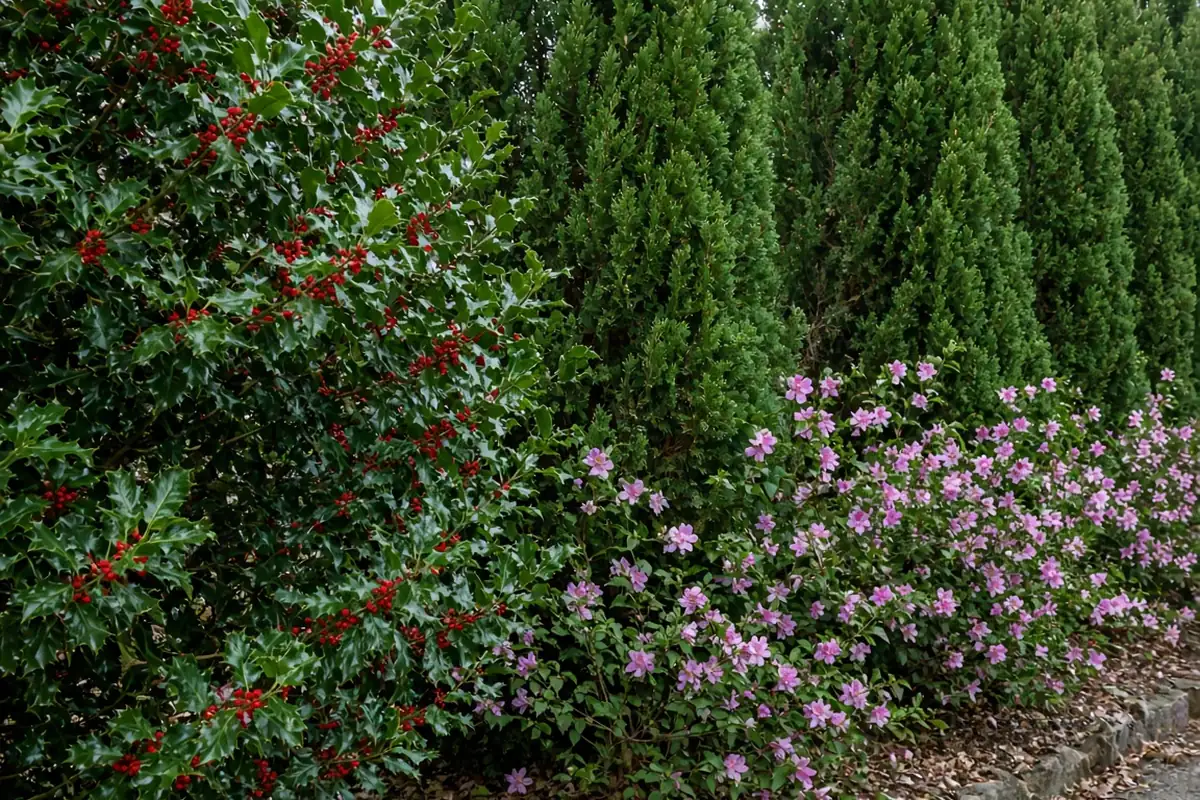
NC State Extension suggests hollies such as Nellie Stevens and lusterleaf holly, with dense evergreen foliage. It notes Leyland cypress and boxwood now face pest and disease problems. Washington State Extension says Emerald Green arborvitae grows to 15 feet tall and 3 feet wide. Iowa State notes evergreens give year round privacy.
How do you get a new hedge established?
Iowa State Extension says to plant bare root shrubs late March to mid May and container shrubs in spring or late summer to early fall. Cut bare root deciduous shrubs to 4 to 6 inches when planting for low branching. Shaping tips are in pruning marijuana plants.
Privacy hedge basics
| Factor | Guide | Source |
|---|---|---|
| Formal spacing | 1 to 2½ feet | Iowa State |
| Medium informal | 2 to 4 feet | Iowa State |
| Large informal | 4 to 6 feet | Iowa State |
| Bare root season | Late March to mid May | Iowa State |
| Mixed screens | More pest resilience | NC State |
Sources: Iowa State University Extension, NC State Extension, Washington State University Extension, USDA National Agroforestry Center.
How to: step by step
- Measure the space, height and width the hedge can fill.
- Pick shrubs suited to your site.
- Look up each shrub’s mature size.
- Space plants by that size.
- Plant in the right season for bare root or container stock.
- Cut bare root deciduous shrubs back hard at planting.
Troubleshooting
Crowded, thin plants: too close. Remove every other one.
Gaps in the hedge: plants too far apart or lost, so add fillers.
Whole screen declining: one species hit by pests. Mix in other shrubs.
A living screen pays off for years. Kind Seed Co shares more hedge notes on the blog.
Sources
- Selecting and planting hedges, Iowa State University Extension
- What can I plant for privacy?, NC State Extension
- Selecting plants for screens and hedges (EM089E), Washington State University Extension
- Windbreaks, USDA National Agroforestry Center
FAQ
What is the fastest growing privacy hedge?
The sources do not rank species by speed. NC State Extension notes Thuja 'Green Giant' is popular for rapid growth, but fast growth can make it more prone to storm damage. Matching plant size to the space matters more, per Iowa State.
Should I plant one row or two?
Extension sources do not give a rule on rows. Iowa State Extension focuses on spacing by mature size, and NC State suggests a mixed screen along the property edge for resilience.
How long until a hedge fills in?
The sources give no timeline. Iowa State Extension says cutting bare root deciduous shrubs to 4 to 6 inches at planting spurs low branching, which helps a hedge fill from the base.
Can I mix shrubs in a hedge?
Yes. NC State Extension says a mixed screen is more resilient to pests, since one problem can wipe out a single species screen. Iowa State adds that mixed hedges add interest and help wildlife.
Is Leyland cypress a good screen?
NC State Extension says Leyland cypress is troubled by bagworms, blight and canker. It suggests resistant alternatives such as hollies, including Nellie Stevens and lusterleaf holly.


