Sifting Soil and Compost for Container Mixes
The short answer
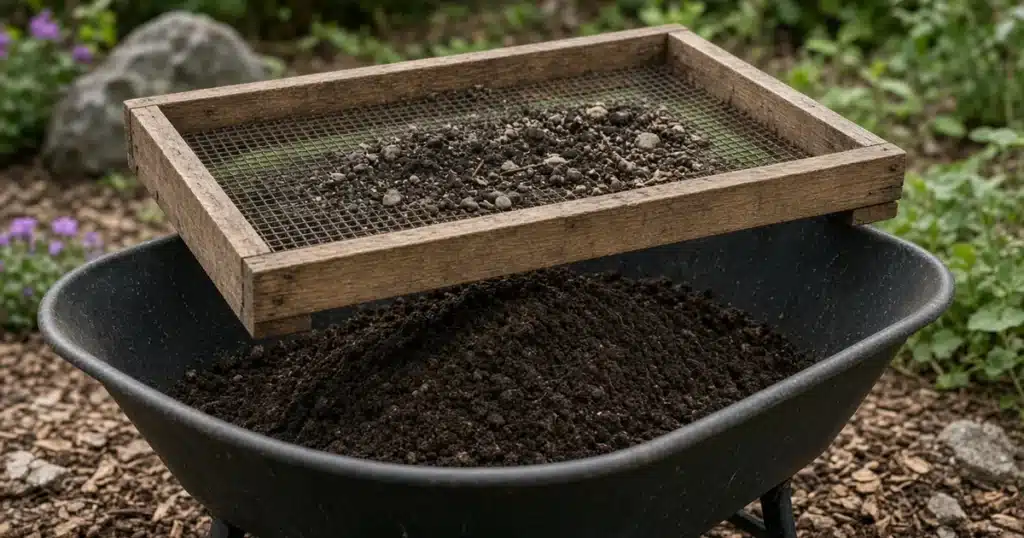
A soil sifter is a wooden frame with metal mesh stretched across it. Shovel compost or soil onto the mesh. Then shake or rub it through. The fine material drops into a wheelbarrow or bin below. Rocks, sticks, roots and big clumps stay behind on top.
For container mixes, a mesh of about 1/4 inch works well. Build the frame from 2×4 lumber sized to sit over your wheelbarrow, staple the mesh on and cover the edges with a wood strip. Slightly damp material sifts best. Wet material clogs.
Why sift for containers
Roots in a pot have little space to work with. Rocks and sticks waste room. They also leave pockets of air or water. A big clump of compost can stay wet while the rest of the pot dries. After sifting you get an even, crumbly material that blends well with other ingredients.
Ask Extension advises making a soil sifter to screen rocks out of poor existing soil before mixing it into raised beds. The same idea applies to containers, where an even texture matters even more. The NC State Extension Gardener Handbook describes a screen of 1/2 inch hardware cloth on a wood frame, with oversized material going back to the pile.
What to sift
- Homemade compost with sticks and unbroken pieces.
- Old potting soil with roots from the last grow.
- Garden soil with rocks or gravel.
- Bagged materials that have clumped in storage.
Our guide to composted bark for cannabis covers a material that often needs screening before use.
Sift only finished compost. According to the NC State handbook, compost is done when the original materials are unrecognizable and it is dark brown or black. It should smell earthy, not like ammonia or rotten eggs. The handbook suggests letting a pile finish for 6 to 12 weeks after it stops heating. Compost that still smells sour needs more time before it goes into a pot.
Mesh sizes
| Mesh opening | Best for | Notes |
|---|---|---|
| About 1/4 inch | Container mixes and seed starting | Fine result, slower to sift |
| About 5/16 inch | General compost screening | Good balance of speed and size |
| About 1/2 inch | Raised beds and rough soil | Fast, lets small stones through |
| Larger | Removing rocks only | Use as a first pass |
Source: Build a Compost Sifter, Albuquerque Bernalillo County Public Library, frame and hardware cloth guidance.
The library guide describes the classic sifter as 2×4 lumber with 1/4 inch or 5/16 inch galvanized square mesh, often called hardware cloth. It notes wider mesh works for coarser jobs.
How to build a soil sifter
Materials
- Four pieces of 2×4 lumber.
- Galvanized hardware cloth.
- Wood screws.
- Staple gun and heavy staples.
- Thin wood strips such as 1×2 or lath.
- Work gloves.
Steps
- Measure the top of your wheelbarrow or bin.
- Cut the 2x4s to make a frame a little wider than that opening.
- Screw the corners together and check that the frame is square.
- Cut the hardware cloth to the frame size with tin snips.
- Staple the mesh tight across the bottom of the frame.
- Screw wood strips over the mesh edges.
- Add rails on the bottom so the frame sits on the wheelbarrow without sliding.
The library guide notes that covering the mesh edges with a strip of lathing or 1×2 makes the sifter sturdier and protects fingers from catching on sharp wire. Wear gloves when you cut the mesh.
Sifting methods
Flat over a wheelbarrow
Set the sifter on the wheelbarrow. Add a shovel of material. Use a gloved hand or a small board to rub it across the mesh. Tip off what stays on top.
Angled screen
The library guide suggests propping a larger sifter against a support at about a 30 degree angle. Throw material at the top with a shovel. Fine material falls through as it slides down. Rocks roll off the bottom.
Hanging shaker
For large amounts, the guide describes hanging the sifter from an overhead frame by ropes or chains at each corner. You push it back and forth to sift. This takes less effort for big jobs.
Rolling drum
Some gardeners build a mesh drum that turns on a frame. As you turn it, material tumbles inside and falls through. Drums handle large amounts. They take more work to build than a flat frame.
Small hand sifter
A small sifter that fits over a bucket is handy for seed starting mixes and top dressing pots.
Two pass sifting
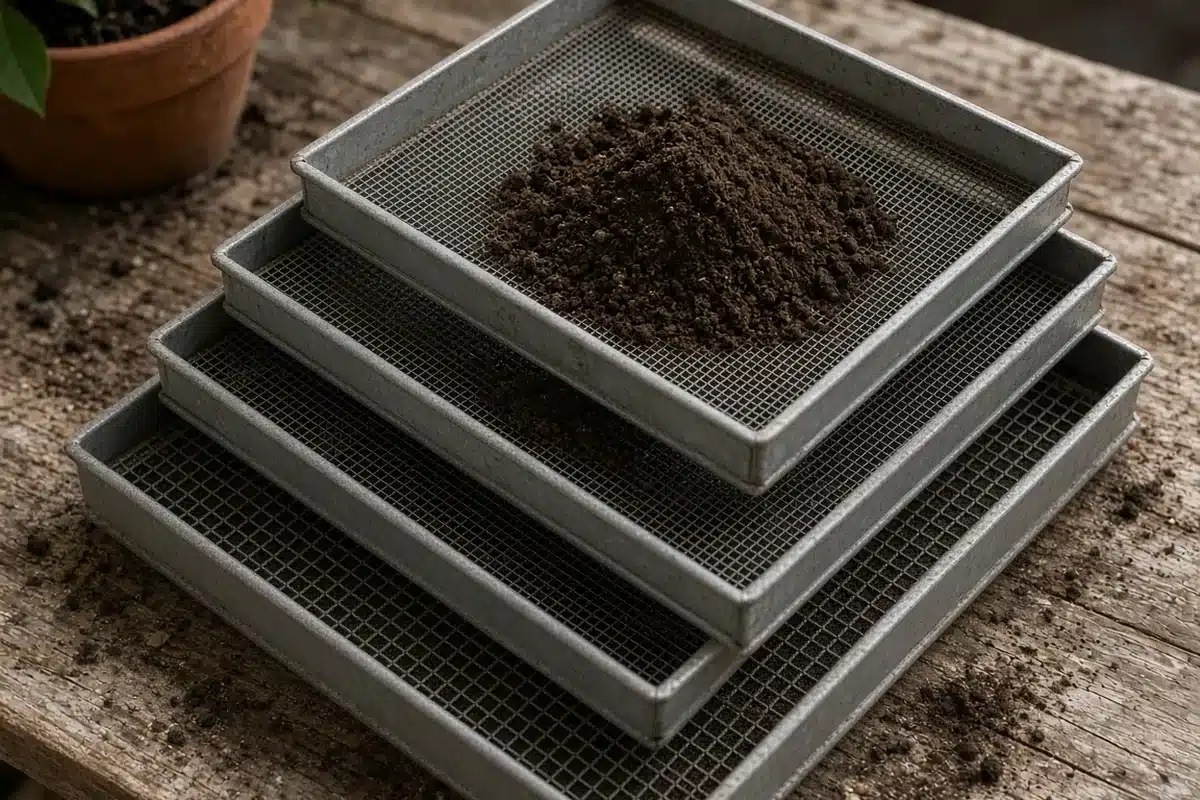
For rough material, sift twice. Use a 1/2 inch screen first to pull out rocks and sticks quickly. Then run what falls through over a 1/4 inch screen for container use. Two passes are often faster than forcing everything through a fine screen at once.
Keep two sifters that stack, or one frame with screens you can swap. Mark each frame with its mesh size so you grab the right one.
How much to sift
Plan your container mix first, then sift only what you need. Sifted compost settles and can pack down if it sits for months. Sift close to the time you mix and pot up. Store any extra in a covered bin so rain does not turn it to mud.

Safety
- Wear gloves when you handle hardware cloth.
- Wear a dust mask when sifting dry material.
- Lift shovels of soil with your legs, not your back.
- Keep fingers clear when you shake a hanging sifter.
Getting moisture right
Material sifts best when it is slightly damp. Wet compost clogs the mesh and smears. Bone dry material raises dust. If compost is very wet, spread it on a tarp to dry for a day. If it is dusty, mist it lightly.
What to do with the leftovers
- Toss sticks and unbroken pieces back on the compost pile.
- Use rocks for paths or drainage areas outside.
- Chop old roots and add them to compost.
- Break big clumps by hand and sift again.
Sifting old potting soil
After harvest, old soil is full of roots. Dump it on a tarp, pull out the root ball and sift the rest. Then add fresh compost and amendments. Our guide on how to save money by reusing old soil covers the full process.
Blending after sifting
Sifted compost blends evenly with other ingredients. Many growers mix it with an airy material to keep containers from packing down. Our guide to rice hulls for cannabis covers one light option.
Ask Extension notes that most soil mixes for raised beds contain some sifted soil, compost and peat moss. For containers, sifted compost is usually a smaller share of the mix, combined with materials that add air space.
Care and storage
- Brush the mesh clean after each use.
- Store the sifter dry and off the ground.
- Check staples and screws each season.
- Replace mesh that rusts through or tears.
A braced, well built sifter can last many years, according to the library guide.
Troubleshooting
- The mesh clogs. The material is too wet. Let it dry first.
- Sifting is slow. Use a larger mesh for a first pass, then a finer one.
- The sifter slides off the wheelbarrow. Add rails underneath.
- The mesh sags. Restaple it tighter and add a center brace.
- Dust blows everywhere. Mist the pile and sift out of the wind.
- Your arms tire fast. Try an angled screen or a hanging shaker.
Final thoughts
A soil sifter is a simple tool that gives you clean, even compost and soil for container mixes. Build a sturdy frame with 1/4 inch mesh, sift slightly damp material and keep the leftovers in use around the garden. Kind Seed Co has more soil guides for home growers.
Sources
- Albuquerque Bernalillo County Public Library, Build a Compost Sifter
- NC State Extension, Extension Gardener Handbook, Composting
- Ask Extension, Soil improvement raised beds
FAQ
What is a soil sifter?
A frame with metal mesh that separates fine soil or compost from rocks, sticks and clumps.
What mesh size is best for container mixes?
About 1/4 inch gives a fine, even result for pots.
Should I sift wet or dry compost?
Slightly damp. Wet compost clogs the mesh and dry compost gets dusty.
How do I make sifting faster?
Prop a large sifter at about a 30 degree angle or hang it from a frame and shake it.
What do I do with what stays on the screen?
Return sticks and clumps to the compost pile and use rocks elsewhere.