Top Dressing Cannabis With Amendments: A Simple Midseason Feed
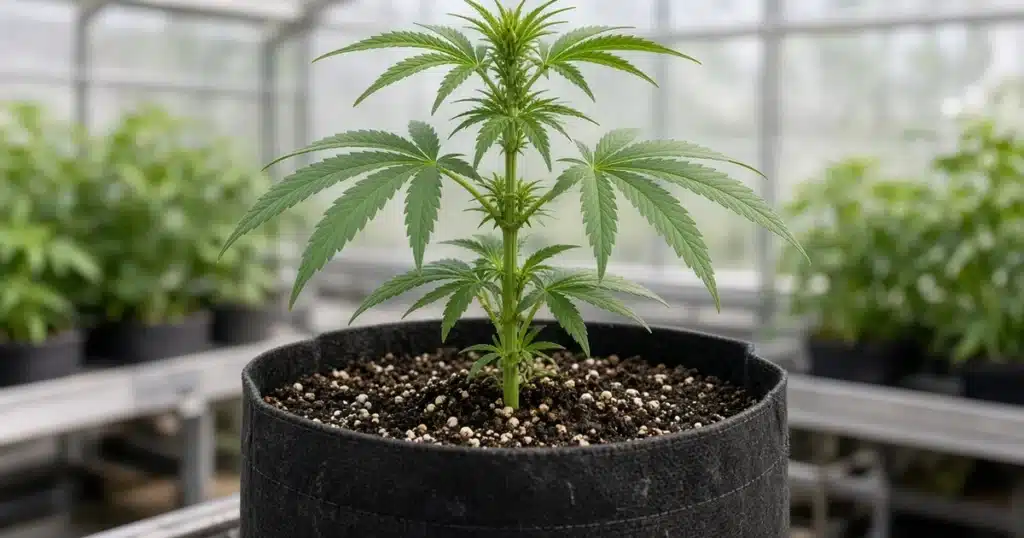
Quick answer: Top dressing cannabis means spreading dry amendments such as compost, worm castings or organic meals across the soil around a growing plant, then working them in lightly and watering. Vegetable gardeners call the same move sidedressing. University of Vermont Extension advises placing fertilizer four to six inches out from the stem, and using about a handful of compost per plant. NC State Extension suggests feeding heavy feeders about midway through their growth cycle, with two or three passes for long season crops. For cannabis, a light top dress early in veg and again before flowering keeps an organic soil supplied without liquid feeding.
What Does Top Dressing Mean for Cannabis?
Top dressing is the dry, surface version of feeding. Instead of mixing nutrients into water, you scatter amendments over the soil around the plant. Water and soil life then carry those nutrients down to the roots over the following weeks.
Cannabis growers use the term loosely. Some mean a layer of compost or worm castings. Others mean a measured blend of meals and minerals. Either counts, as long as the material sits on or just under the surface instead of being dug deep into the pot or bed.
Vegetable gardeners have done this for generations under another name. The UVM Extension sidedressing article describes sidedressing as feeding next to a crop row or in a ring around one plant. The technique carries over to cannabis almost unchanged.
Top dressing pairs naturally with a soil that already holds a good organic base. If you built your mix from scratch, our walkthrough of how to make super soil covers the starting blend that top dressing later refreshes.
Why Top Dress Instead of Liquid Feeding?
Liquid feeding delivers nutrients quickly but needs frequent mixing and careful dilution. Top dressing is slower and needs far less babysitting.
Organic amendments break down gradually as microbes digest them. Each watering moves a small amount of dissolved nutrient downward. What the roots get is a steady trickle, not a spike.
CSU Extension, in a page on vegetable garden soil management and fertilization, stresses that compost and manure release their nutrients slowly, over years rather than weeks. Its figures put first year nitrogen release from composted material at only 5 to 25 percent. That slow pace is the point of top dressing, yet it also means compost alone rarely feeds a hungry plant.
Many growers combine both. They top dress with organic material for a baseline and use an occasional liquid feed when plants need a quicker lift. Our soil feeding schedule for cannabis shows how liquid feeds can fit around a dry amendment plan.
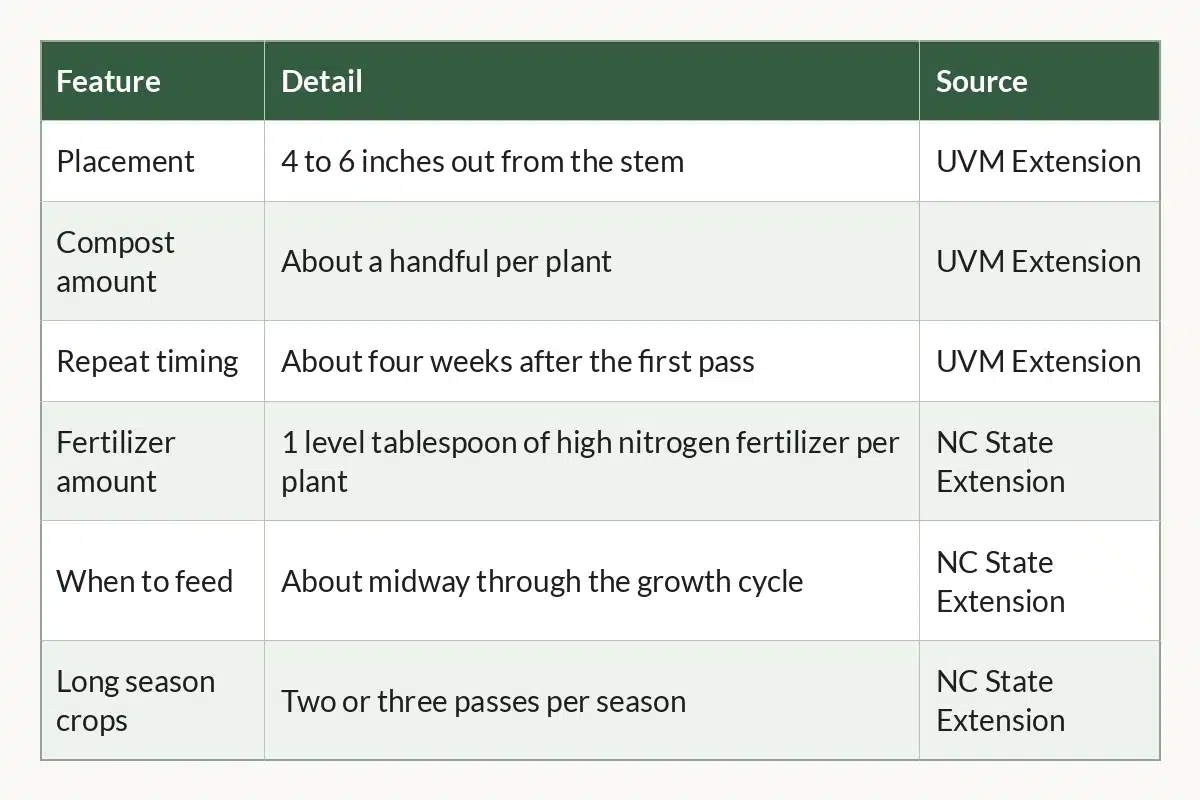
Top Dressing at a Glance
| Feature | Detail | Source |
|---|---|---|
| Placement | 4 to 6 inches out from the stem | UVM Extension |
| Compost amount | About a handful per plant | UVM Extension |
| Repeat timing | About four weeks after the first pass | UVM Extension |
| Fertilizer amount | 1 level tablespoon of high nitrogen fertilizer per plant | NC State Extension |
| When to feed | About midway through the growth cycle | NC State Extension |
| Long season crops | Two or three passes per season | NC State Extension |
What Amendments Work Best for Top Dressing?
Pick a material that breaks down at a pace to match the time left in the grow.
Compost. Finished compost adds organic matter and a modest amount of nutrients. UVM Extension notes that a handful per plant is generally enough as a sidedressing.
Worm castings. Castings are fine textured and gentle, which makes them a popular cannabis top dress. Our guide to worm castings for cannabis gives amounts for pots and beds.
Organic meals. Seed meals, feather meal and similar products supply more nitrogen than compost. Use them sparingly, since they are concentrated.
Balanced fertilizer. UVM suggests a balanced product such as 5 5 5 rather than a high nitrogen feed in midseason, because a surge of nitrogen pushes leafy growth at the expense of flowers or fruit. That advice matters for cannabis entering bloom.
Avoid raw manure. UVM recommends using manure only when it is fully composted. Colorado State adds that manure based compost can carry high salt levels and advises no more than one inch per season without a soil test.
Before you choose, it helps to know how amendments and fertilizers differ.
Where Should You Place a Top Dressing?
Placement protects the stem and puts nutrients where feeder roots are active. UVM advises a gap of four to six inches between the fertilizer and the stem. Granules or undiluted product placed too close can cause damage.
NC State Extension, in the vegetable chapter of its gardener handbook, recommends banding fertilizer about six inches from the base of widely spaced plants. In a large cannabis bed, think of a ring around each plant at that distance. In a pot, spread the material evenly across the surface while keeping a clear circle around the stem.
UVM also suggests weeding and lightly loosening the soil before applying. Gently scratching the surface helps the material settle and reduces runoff when you water. Pull back any mulch first, then replace it after the amendment is in place.
Does Top Dressing Differ in Pots and Beds?
The idea is the same, but the scale changes. A raised bed or garden row holds a large volume of soil with an active population of microbes, so amendments spread in a ring around each plant break down steadily and any excess is diluted. Outdoor beds also benefit from rain, which carries dissolved nutrients downward without extra effort.
A pot is a closed system. Everything you add stays in a small volume, and there is little room for error. Use smaller amounts in containers and spread them across the whole surface rather than in a band. Fabric pots dry out quickly, so check moisture more often after a top dress, since dry amendment sitting on dry soil does almost nothing.
Leave an inch or two of space below the rim when you first fill a pot. That gap gives room for later layers of compost or castings without soil washing over the edge.
When Should You Top Dress Cannabis?
Timing follows the growth cycle. NC State suggests feeding vegetables about midway through their maturity cycle and notes that long season crops such as tomatoes need two or three passes. UVM suggests waiting until tomatoes and peppers flower, then repeating about four weeks later.
Cannabis behaves like a long season crop. In practice, the schedule might look like this:
- A light pass in early vegetative growth, once the plant has several sets of leaves.
- A second pass shortly before the switch to flowering.
- An optional small pass of a low nitrogen material in early bloom.
Sandy soil and heavy rain wash nutrients away faster. That same NC State chapter says these conditions call for more frequent feeding. Outdoor growers in sandy ground may need an extra light pass.
How to Top Dress Cannabis Step by Step
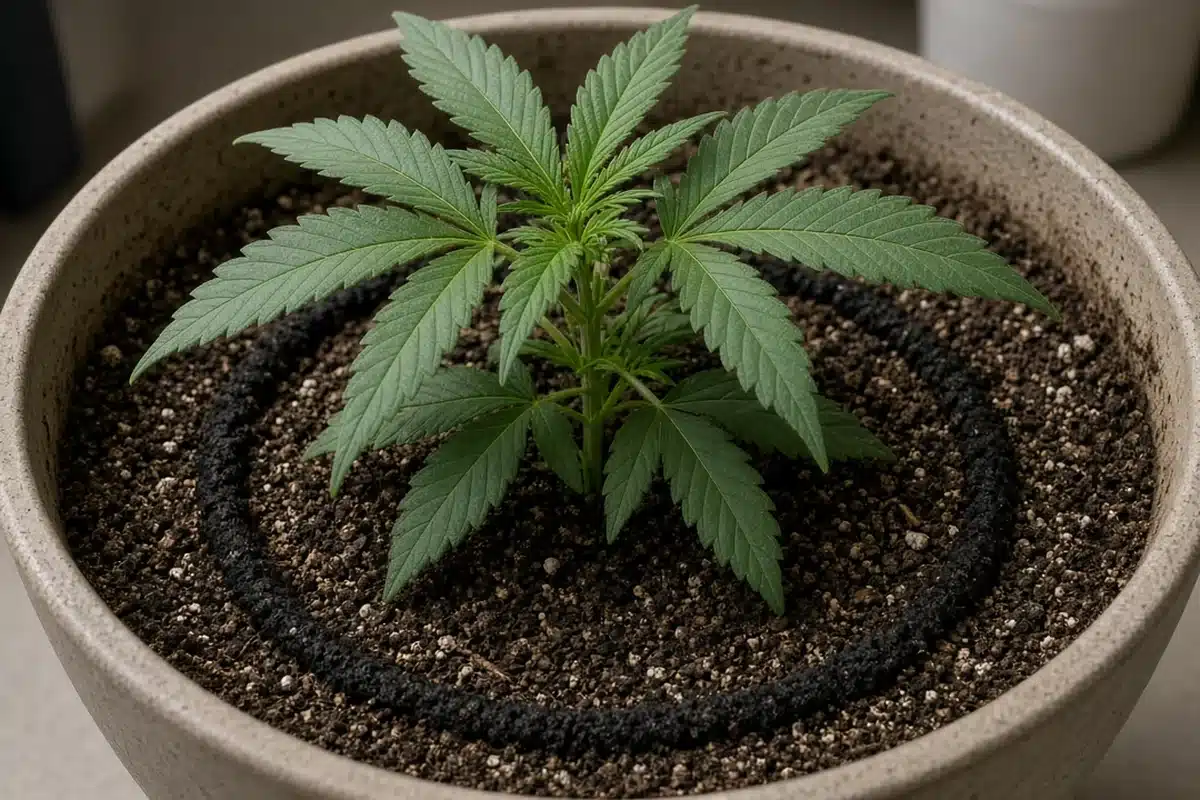
- Check the plant. Look for pale lower leaves or slowing growth as a sign it needs feeding.
- Choose the material. Use compost or castings for a gentle feed and a meal or balanced blend for more nitrogen.
- Clear the surface. Pull weeds and move any mulch aside.
- Loosen the soil lightly. Scratch the surface with your fingers or a hand tool without disturbing roots.
- Spread the amendment. Keep it four to six inches from the stem in beds and evenly across the surface in pots.
- Work it in gently. Mix it into the upper inch or so of soil.
- Water thoroughly. Moisture starts breakdown and moves nutrients downward. Replace the mulch afterward.
Troubleshooting Top Dressing Problems
No visible response. Organic material releases slowly. Allow two to three weeks before judging, and water whenever the top inch feels dry.
Leaf tips curling or darkening. The dose may be too strong. Skip the next pass and water normally.
Fungus gnats on the surface. Damp organic material attracts them. Let the top layer dry between waterings and add a light cover of dry mulch.
Mold on the amendment. Material left in a thick layer can mold. Mix it in and spread it thinner next time.
Dark green leaves late in flower. Too much nitrogen was added. Switch to compost only until harvest.
Sources
- University of Vermont Extension, Give Your Vegetables a Mid Season Boost: https://www.uvm.edu/extension/news/give-your-vegetables-mid-season-boost
- NC State Extension, Extension Gardener Handbook, Vegetable Gardening: https://content.ces.ncsu.edu/extension-gardener-handbook/16-vegetable-gardening
- Colorado State University Extension, Vegetable Gardens: https://extension.colostate.edu/resource/vegetable-gardens-soil-management-and-fertilization/
FAQ
Which top dressing suits cannabis best?
Compost and worm castings are gentle choices, while organic meals add more nitrogen.
How many times per grow do you top dress cannabis?
Two or three times per grow is typical, often in early veg, before flowering and lightly in early bloom.
Can I top dress during flowering?
Yes, but use low nitrogen materials and smaller amounts.
How far from the stem should I place amendments?
UVM Extension suggests a gap of four to six inches from the stem.
Is top dressing the same as sidedressing?
Yes. Both mean adding nutrients alongside a growing plant rather than mixing them in before planting.