Cottonseed Meal for Cannabis: Slow Nitrogen With a Mild Acid Effect
Quick answer: Cottonseed meal is the ground residue left after oil is pressed from cotton seeds. Mississippi State University Extension lists it at 7 2 2 with a slow reaction and an acid effect on soil pH. The UC Master Gardener program on the Central Coast calls it a slow feed suited to acid loving plants that lasts six to twelve months. For cannabis, cottonseed meal is a steady base source of nitrogen, best in neutral to alkaline soils where a mild acid push helps. In soil that is already acidic, choose a different meal.
What Is Cottonseed Meal?
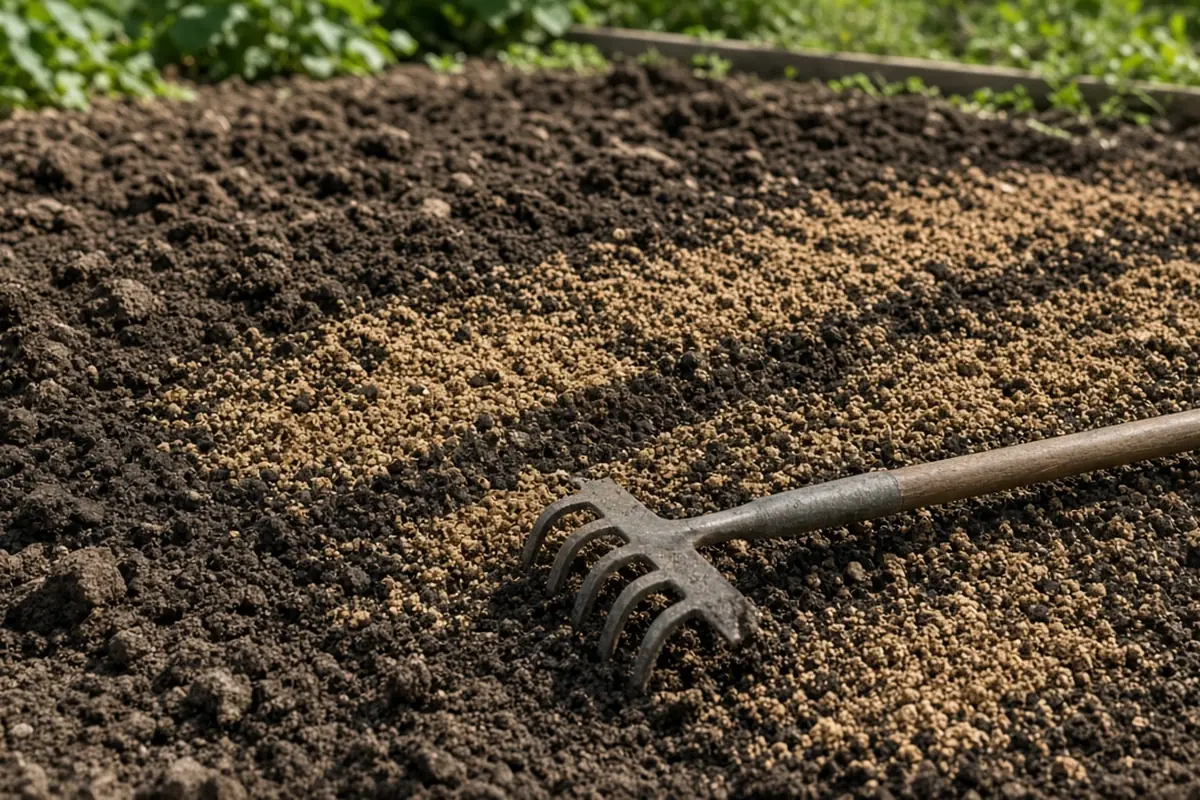
Cotton gins separate fiber from seed, and oil mills press the seed for cottonseed oil. The remaining cake is ground into a brown, slightly coarse meal. Most of it goes into cattle feed, and gardeners buy the rest as an organic fertilizer. Southern states where cotton grows, such as Texas, Georgia and Mississippi, have the largest supply.
Colorado State, in a page on organic fertilizers, calls cottonseed meal a rich source of nitrogen with a typical analysis of 6 0.4 1.5 and a release time of one to four months. It flags a concern worth knowing. Cotton crops receive many chemical sprays, and residues tend to remain in the seed. The page notes that residue free meal is available and that most cottonseed comes from genetically modified plants.
For growers who want a plant based fertilizer without those concerns, soybean or alfalfa meal may be a better fit.
It belongs on the fertilizer side of the split described in our amendment vs fertilizer guide.
How Much Nitrogen Does Cottonseed Meal Contain?
Charts place cottonseed meal between 6 and 7 percent nitrogen. Mississippi State lists 7 2 2 in its publication on soil pH and fertilizers. The UC Master Gardener fertilizer guide gives 6 2 1. A UNH organic fertilizer table shows 6 to 7 percent nitrogen with about 2 percent each of phosphorus and potassium. An Iowa State yard guide to organic feeds also lists 6 2 1, and like Colorado State it warns that the meal may carry residues from crop sprays.
That puts cottonseed meal in the same range as soybean meal and below feather or blood meal. Its phosphorus and potassium are modest, so it works mainly as a nitrogen source.
For cannabis, nitrogen fuels the leafy growth of the vegetative stage. A slow, steady supply keeps plants green without the sudden spikes that come from soluble salts. Our nitrogen primer for cannabis growers covers how demand changes through the life cycle.
How Does Cottonseed Meal Compare With Other Meals?
The New Hampshire table is handy for side by side comparison. It gives feather meal 12 to 15 percent nitrogen with a slow to medium release, soybean meal about 7 percent with medium release and alfalfa meal around 2.5 percent nitrogen plus 2 percent potassium. Cottonseed meal lands near soybean meal on nitrogen and adds a little more potassium.
What sets cottonseed apart is its acid lean. Mississippi State is the source that rates pH effect, and among the organic materials it lists, cottonseed and dried blood both carry the acid label. For soils that are already slightly acidic, a meal without that label is the better choice. Alfalfa meal brings far less nitrogen but more organic matter, which is why Colorado State describes it as used mostly to build soil.
Pick cottonseed when the soil test shows high pH, soybean when pH is fine and feather meal when you want more nitrogen per pound.
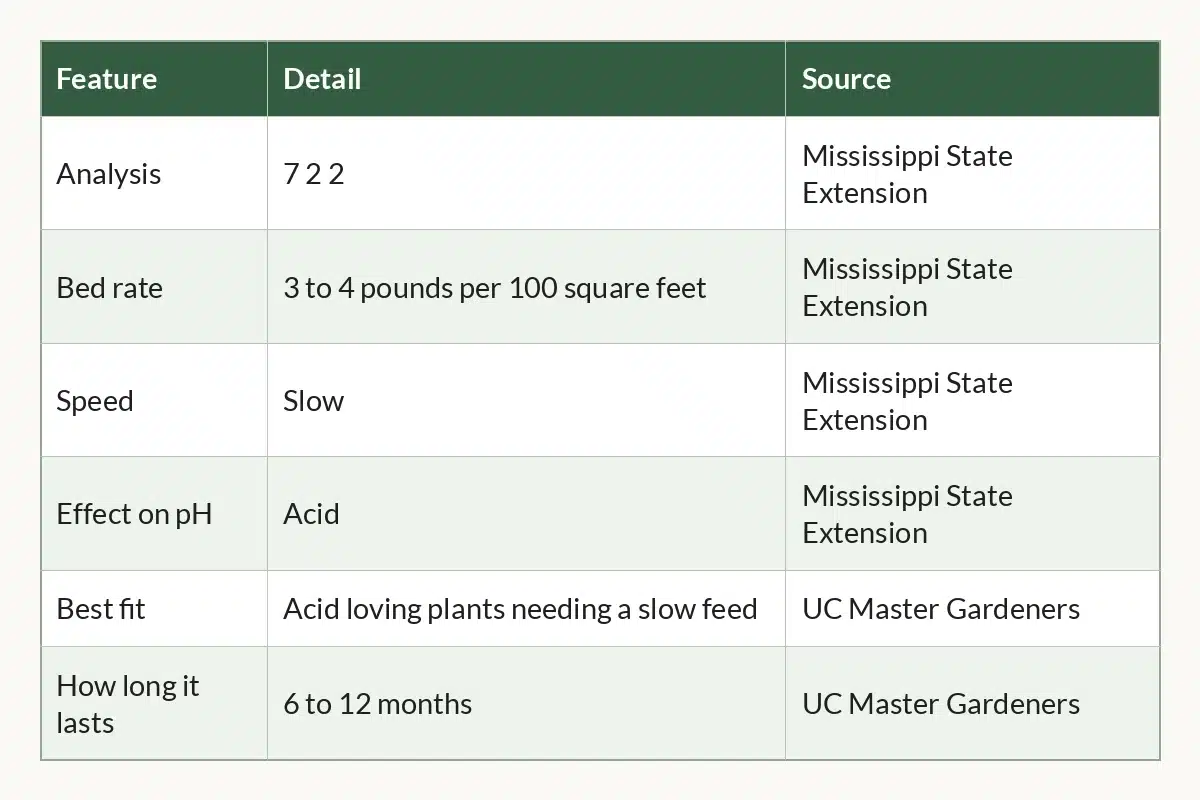
Cottonseed Meal Facts at a Glance
| Feature | Detail | Source |
|---|---|---|
| Analysis | 7 2 2 | Mississippi State Extension |
| Bed rate | 3 to 4 pounds per 100 square feet | Mississippi State Extension |
| Speed | Slow | Mississippi State Extension |
| Effect on pH | Acid | Mississippi State Extension |
| Best fit | Acid loving plants needing a slow feed | UC Master Gardeners |
| How long it lasts | 6 to 12 months | UC Master Gardeners |
Does Cottonseed Meal Lower Soil pH?
Yes, slightly. Mississippi State lists the effect of cottonseed meal on pH as acid, the same label it gives dried blood and ammonium nitrate. As microbes break down the protein, the nitrogen they release goes through steps that leave acidity behind in the soil. The effect is gradual and mild compared with materials sold specifically to lower pH.
That is why gardeners use it around azaleas, blueberries and other acid loving plants, as the San Luis Obispo guide notes. For cannabis, which grows best in slightly acidic to near neutral soil, the acid effect can be helpful or harmful depending on where pH starts.
In alkaline soils common across much of the arid West, cottonseed meal nudges pH in a useful direction while feeding the plant. In already acidic soils of the East and Pacific Northwest, repeated use can push pH lower than cannabis likes. Our guide to lowering soil pH for cannabis walks through measuring pH and choosing the right adjustment.
Do not rely on cottonseed meal as your main tool for lowering pH. It works too slowly and weakly for that job. Use it as a feed that happens to lean acidic.
How Fast Does Cottonseed Meal Release Nitrogen?
Sources agree it is slow. Mississippi State calls its reaction slow. New Hampshire rates it slow to medium for a season long supply. San Luis Obispo says it lasts six to twelve months. Colorado State gives one to four months.
That spread says more about soil temperature and moisture than about the meal itself. Warm, damp soil speeds microbial activity. Cold or dry soil slows it.
In practice, cottonseed meal works best mixed into beds or potting soil before planting. It feeds through vegetative growth and tapers by flowering. If a plant is nitrogen hungry right now, reach for something faster.
To see where a slow meal fits among other feeds across the season, our soil feeding schedule for cannabis maps out each stage.
How Much Cottonseed Meal Should You Use?
Mississippi State suggests 3 to 4 pounds per 100 square feet for dry application. Colorado State lists 10 pounds per 100 square feet tilled in. Iowa State scales its rate to existing fertility, from 35 pounds per thousand square feet on poor soil down to 10 where fertility is already adequate.
The spread shows why a soil test matters. Mississippi State says plainly that its chart is only a reference and that a soil test should guide the final amount. For containers, begin with a small scoop blended evenly into each pot.
How to Use Cottonseed Meal on Cannabis
- Test soil pH. Use cottonseed meal where pH is neutral or alkaline.
- Choose residue free meal if possible. Ask your supplier about spray residues.
- Measure a modest rate. Start near the low end of published rates.
- Mix it in before planting. Blend it through the bed or potting mix so microbes can reach it.
- Water to start breakdown. Keep the soil evenly moist after mixing.
- Side dress lightly in veg if needed. Scratch a little into the surface around established plants.
- Recheck pH each season. Watch for a downward drift with repeated use.
Troubleshooting Cottonseed Meal Problems
pH falls too low. Repeated doses add up. Switch to a neutral nitrogen source and test before adding lime.
Slow green up. Cold soil slows release. Wait for warmth or use a quicker feed for now.
Mold on the surface. Meal left on top can mold. Work it in and let the surface dry.
Animals digging. The scent attracts pets and wildlife. Bury the meal and add mulch. A light layer of straw or shredded leaves hides the smell well.
Lower leaves pale in late veg. The meal may be spent, especially in a warm summer. Scratch a small extra amount into the surface or switch to a faster feed until plants recover their color.
Too much nitrogen in flower. Plants stay dark green and leafy late. Stop adding meal after early veg.
Sources
- Mississippi State University Extension, Soil pH and Fertilizers (IS0372): https://cto.extension.msstate.edu/sites/default/files/publications/is0372.pdf
- UC Master Gardeners of San Luis Obispo County, Fertilizers and Amendments: https://ucanr.edu/site/uc-master-gardeners-san-luis-obispo-county/fertilizers-and-amendments
- Colorado State University Extension, Organic Fertilizers: https://extension.colostate.edu/resource/organic-fertilizers/
- University of New Hampshire Extension, Organic and Natural Fertilizers for the Home Ground and Garden: https://extension.unh.edu/sites/default/files/migrated_unmanaged_files/Resource003737_Rep5330.pdf
- Iowa State University Extension and Outreach, Selecting and Using Organic Fertilizers: https://yardandgarden.extension.iastate.edu/how-to/selecting-and-using-organic-fertilizers
FAQ
Should cannabis growers use cottonseed meal?
It can be, especially in neutral or alkaline soil, as a slow organic nitrogen source.
Does cottonseed meal make soil acidic?
Mississippi State lists its effect on pH as acid. The shift is gradual and mild.
How long does cottonseed meal last in soil?
Estimates range from one to twelve months depending on the source and soil conditions.
Are there concerns about residues?
Colorado State notes that residues from crop sprays can remain in cottonseed. Residue free meal is available.
Can I use cottonseed meal in pots?
Yes, in small amounts mixed into the potting mix before planting.