Can you transplant autoflowers
Yes, you can transplant autoflowers, but you should do it once at most, early and gently. Autoflowers have a fixed life cycle of roughly 9 to 12 weeks, so any stress that slows growth costs them time they cannot get back. The safest plan for most growers is to plant autoflower seeds straight into their final container. If you do start in a small pot, move the seedling within the first two to three weeks, before it starts to flower. This guide explains when transplanting makes sense, how to do it and what to avoid. It is for adults 21 and older where home growing is legal.
Why transplanting autoflowers is different
Photoperiod plants can recover from transplant shock because you can simply extend the vegetative stage. Autoflowers cannot wait. They begin flowering based on age, often around week three to five. If a transplant stalls a plant for a week during that window, the plant may flower small and finish with fewer bud sites. That is why many experienced growers skip transplanting entirely.
For a general look at the topic, see our guides to transplanting marijuana plants and transplant shock.
When transplanting makes sense
- Germinating indoors before an outdoor move. You may start seeds inside to protect them from cold or pests, then move them out.
- Saving water and space early. A small pot dries out faster, which helps prevent overwatering a tiny seedling in a huge pot.
- Using a seedling station. Some growers start many seeds under one light and choose the strongest before moving them.
In each case, plan exactly one move into the final container.
When to transplant
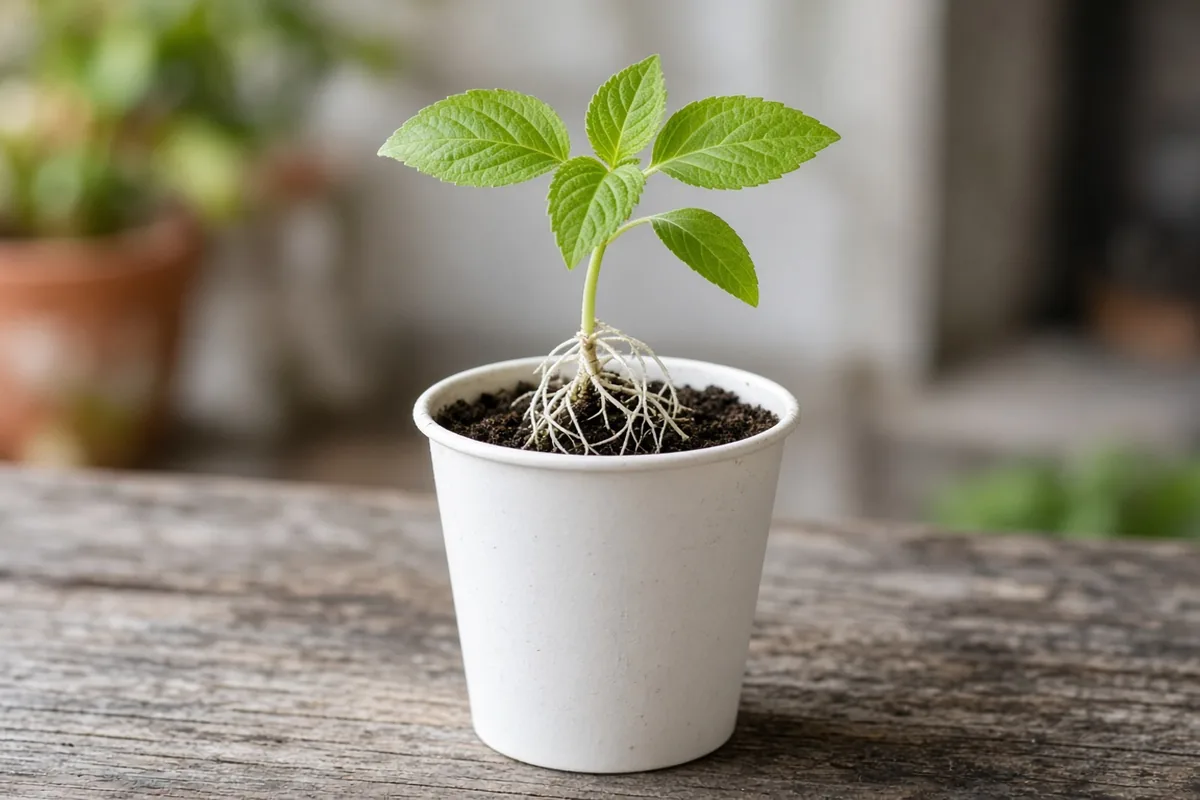
The best window is when the seedling has two or three sets of true leaves and roots are just reaching the edge of the starter container, usually 10 to 18 days after sprouting. Do not wait until roots circle the pot or until you see the first pistils. If you see small white hairs at the nodes, the plant has started flowering and is best left alone.
Best starter containers
- Biodegradable pots or plugs. Peat pots, coco pots and rapid rooter style plugs go straight into the final container, so roots are not disturbed. Make sure the pot wall breaks down or tear it open first.
- Solo cups with drainage holes. Easy to slide out whole, and you can see roots through clear cups.
- Small fabric pots. Easy to cut open around the root ball.
Avoid starting autoflowers in large, deep pots and then moving them, because the root ball falls apart more easily.
How to transplant an autoflower step by step
- Prepare the final pot first. Fill it with the same or a similar mix and make a hole the size of the starter container.
- Water lightly a few hours before. A slightly moist root ball holds together. Soaking wet or bone dry soil falls apart.
- Move at lights off or in shade. Lower light reduces stress.
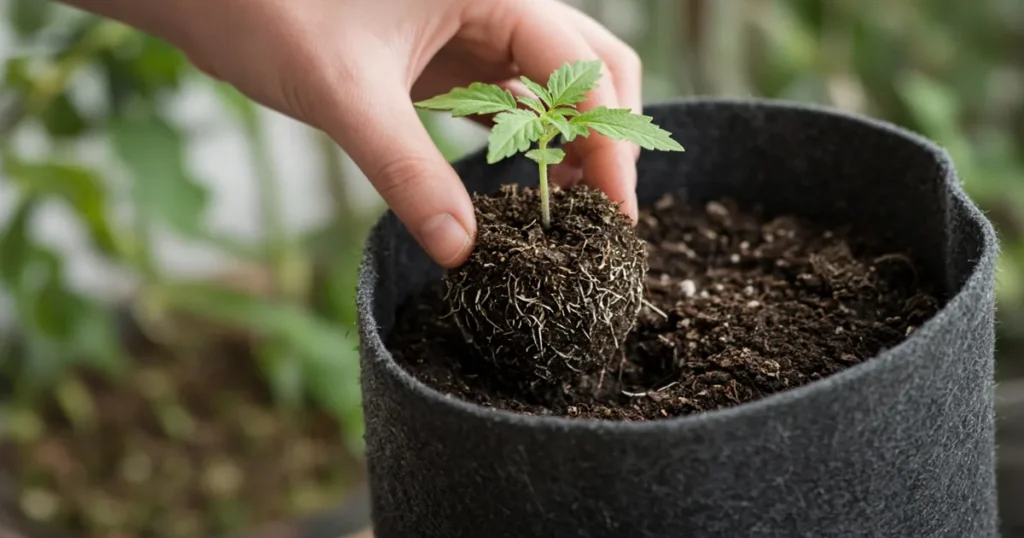
- Tip and slide. Turn the starter pot upside down with the stem between your fingers and tap the bottom so the root ball slides out in one piece.
- Place, do not press. Set the root ball in the hole at the same depth, fill around it and firm gently.
- Water in gently. Give a light watering around the root ball to settle the soil.
- Go easy for a few days. Keep light slightly further away or a little lower, and hold back on strong feeding.
Choosing the final pot size
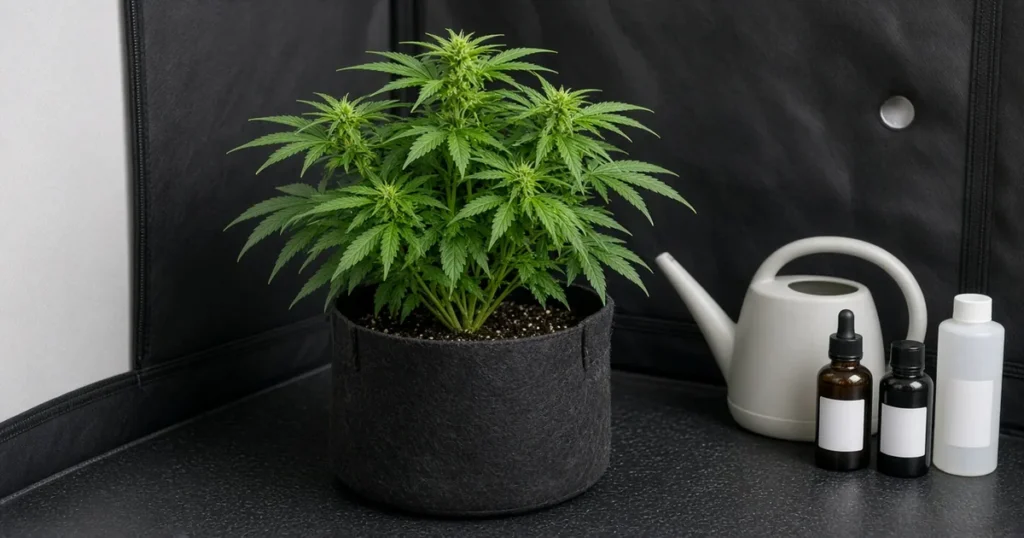
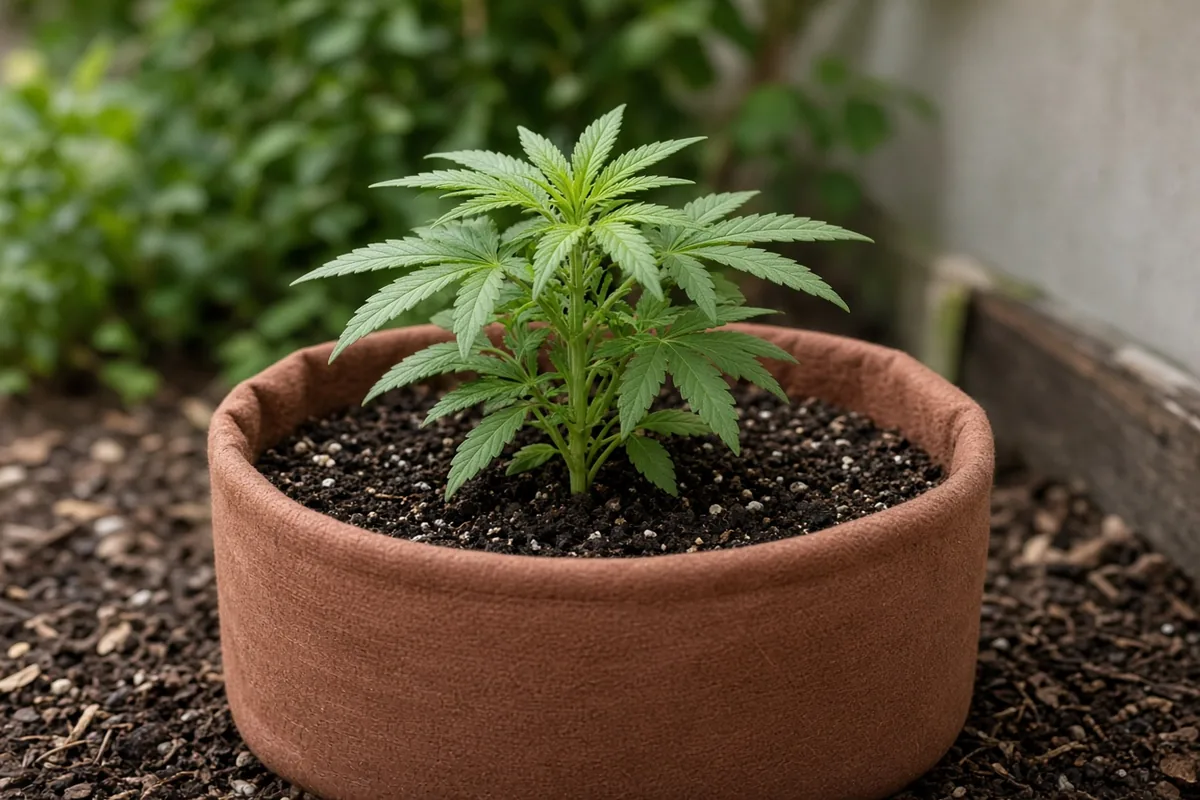
For most indoor autoflowers, a 3 to 5 gallon fabric pot is a good final size. Smaller pots keep plants compact but dry out quickly. Larger pots can help outdoor plants but take longer to dry between waterings. Pick the size before you germinate so you are not tempted into a second move.
Signs of transplant shock
Mild drooping for a day is normal. Signs of real shock include leaves that stay limp for several days, yellowing new growth or growth that stops. If you see that:
- Keep the root zone moist but not soggy.
- Hold the light at a gentle distance.
- Keep temperature and humidity stable.
- Skip extra feeding until new growth appears.
Most plants recover within a few days if the root ball stayed intact.
Why direct sowing is often best
Planting the germinated seed straight into the final pot avoids shock completely. The trick is watering. Water only a small circle around the seedling for the first couple of weeks, then gradually widen it as roots spread. This keeps the rest of the pot from staying wet and lets roots chase moisture outward.
Common mistakes
- Moving twice. Each move costs time.
- Moving late. Once flowering starts, leave it.
- Breaking the root ball. Handle the plant by the soil, not the stem.
- Changing mediums dramatically. Moving from a light seed mix into dense, hot soil can shock young roots.
- Feeding hard right after the move. Let roots settle first.
Grow legally and responsibly
Home cultivation is only legal in some states, and each state sets its own plant limits, locking rules and rules about whether plants can be visible from a public place. You must be 21 or older to buy seeds from Kind Seed Co, and you should grow only where your state and city allow it. Check your state rules in our guide to the legal requirements for growing weed plants in your state before you plant. Federal treatment of cannabis seeds is also changing, so read our December 11 2026 seed rule explainer before you order. Keep plants and harvested flower locked away from children, pets and visitors, and never drive after using cannabis. This article is general information about gardening. It is not legal advice and it is not medical advice.
Frequently asked questions
Can you transplant autoflowers?
Yes, once and early. Move the seedling within the first two to three weeks, before flowering begins, and keep the root ball intact.
When is it too late to transplant an autoflower?
When the plant shows pistils or roots have circled the starter pot. At that point it is usually better to leave it.
Is it better to plant autoflowers straight in the final pot?
For most growers, yes. It avoids transplant shock. Water a small area around the seedling at first to avoid overwatering.
What size final pot is best for an autoflower?
Indoors, a 3 to 5 gallon fabric pot suits most autoflowers. Choose before you germinate.
Can I transplant an autoflower outdoors?
Yes, if you start it indoors and move it out within the first two to three weeks. Harden it off for a few days first by giving it a little more outdoor time each day, and move it on a calm, cloudy day if you can.
Do autoflowers recover from transplant shock?
Most recover within a few days if the root ball stays intact and conditions stay stable. A plant that stalls for a week or more may finish smaller, because its flowering clock keeps running.
Ready to start
Browse the full range in the Kind Seed Co shop or go straight to autoflower seeds. Kind Seed Co sells only to adults 21 and older. Always follow the home grow laws where you live.