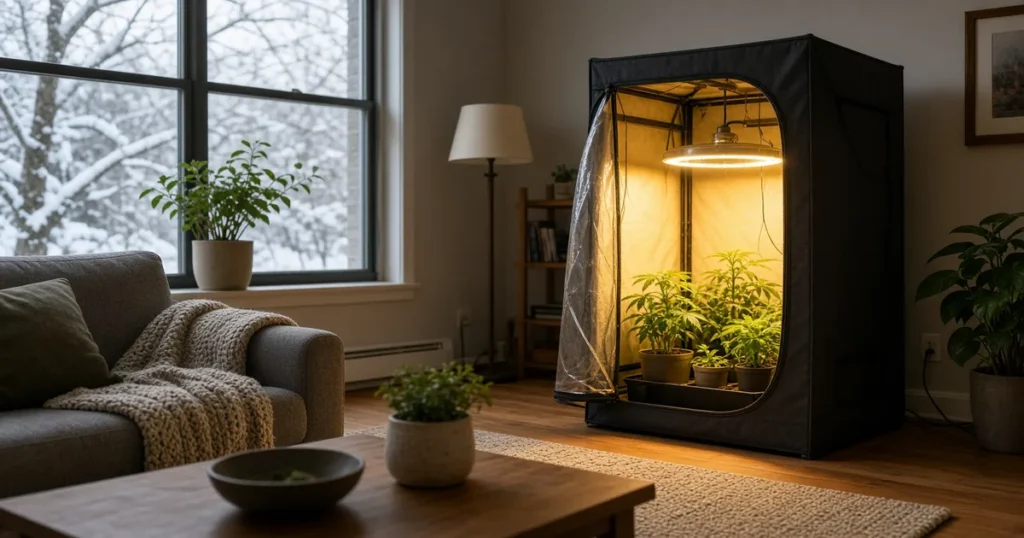
Cannabis grow calendar for indoor growers
Indoors, you set the seasons. Your light timer decides when plants grow and when they flower, so an indoor grow follows a calendar you control instead of the weather. That freedom is great, but it also means you need a plan. This calendar walks through a typical indoor grow week by week, for both photoperiod plants and autoflowers, with the main tasks for each stage. It is written for adults 21 and older growing where home cultivation is legal.
How long an indoor grow takes
A photoperiod grow from seed to jar often takes about four to six months. Veg time is up to you, flowering often runs eight to ten weeks and drying and curing add several more. Autoflowers move faster, often finishing in about ten to fourteen weeks from seed, plus drying and curing. Strain and conditions change these numbers, so treat them as ranges.
Photoperiod calendar at a glance
| Week | Stage | Main tasks |
|---|---|---|
| 0 | Prep | Clean tent, test gear, set timer |
| 1 | Germination and seedling | Germinate, gentle light |
| 2 to 3 | Seedling | Light feeding begins |
| 4 to 8 | Veg | Train, transplant, build size |
| 9 | Flip | Switch to 12 hours of light |
| 10 to 12 | Early flower | Stretch, final training |
| 13 to 16 | Mid flower | Bud building, steady care |
| 17 to 18 | Late flower | Watch trichomes, harvest |
| 19 to 20 | Dry | Hang in a dark room |
| 21 and on | Cure | Jar and burp |
Week 0. Prep
Clean the tent and wipe down surfaces. Test the light, fans and timer for a full day before seeds go in. Set up your inline fan and carbon filter. Our complete grow tent setup guide covers the basics. Check that temperature and humidity hold steady with the light on and off.
Week 1. Germination
Germinate seeds using your preferred method. Our guide on how to germinate cannabis seeds walks through the steps. Plant sprouted seeds in small pots or straight into final pots. Run the light on 18 hours on and 6 hours off, at low power. Our seedling light schedule guide has more detail.
Weeks 2 and 3. Seedlings
Seedlings grow their first true leaves. Water lightly around the stem. Keep humidity fairly high, often around 60 to 70 percent. Start light feeding when seedlings have a few sets of true leaves. Our guide on when to start feeding seedlings explains timing.
Weeks 4 to 8. Vegetative growth
This is when plants build size and structure. Transplant into final pots if you started small. Begin training with low stress training or topping. Raise light intensity as plants grow. Bring humidity down a little, often to around 50 to 60 percent. Check pH of water and feed. Our guide to pH explains why it matters.
How long you veg is up to you. Many tent growers flip when plants fill about half to two thirds of the space, since plants often double in height during early flower.
Week 9. Flip to flower
Change the timer to 12 hours on and 12 hours off. Make sure the dark period is truly dark. Light leaks can stress plants. Switch to a bloom feeding plan.
Weeks 10 to 12. Early flower
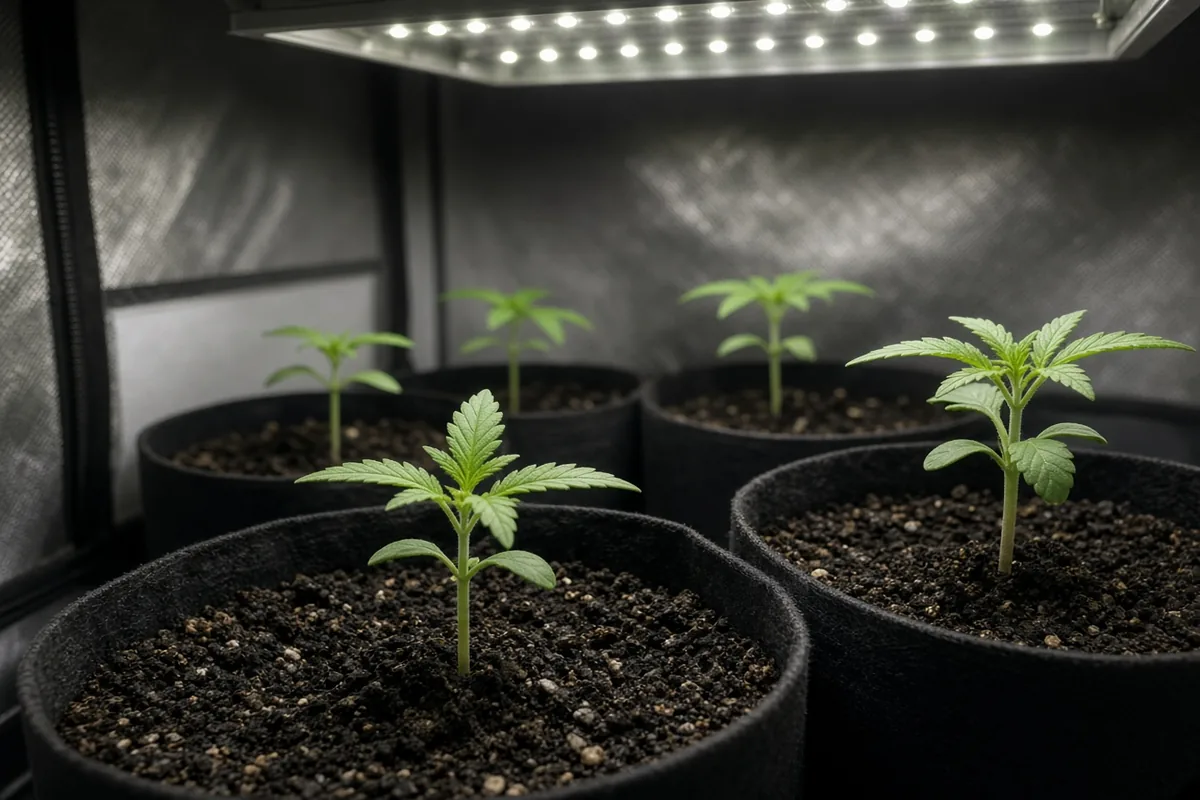
Plants stretch and set bud sites. Finish any training in the first week or two. Add a trellis net if needed. Remove a few large fan leaves that shade bud sites. Our light cycle guide on the cannabis light cycle explains the switch.
Weeks 13 to 16. Mid flower
Buds bulk up. Keep conditions steady. Lower humidity to around 40 to 50 percent to cut mold risk. Raise light if plants look healthy. Watch for pests and nutrient problems.
Weeks 17 and 18. Late flower and harvest
Pistils darken and trichomes turn from clear to cloudy, with some amber. Check them with a magnifier. Some growers reduce feeding in the last week or two. Harvest when trichomes match your goal.
Weeks 19 and 20. Drying
Hang branches in a dark space with gentle airflow. Many growers aim for around 60 degrees and 60 percent humidity. Our drying temperature and humidity guide gives detail. Drying often takes about a week to two weeks.
Week 21 and on. Curing
Trim buds and place them in airtight jars. Open jars briefly each day for the first week or two, then less often. Curing often runs several weeks.
Autoflower calendar at a glance
| Week | Stage | Main tasks |
|---|---|---|
| 1 | Germination | Plant in final pot |
| 2 to 4 | Seedling and early veg | Gentle LST, light feeding |
| 4 to 6 | Preflower | Finish training |
| 6 to 10 | Flower | Steady light, bloom feeding |
| 10 to 12 | Ripening | Watch trichomes |
| 12 to 14 | Harvest and dry | Hang and dry |
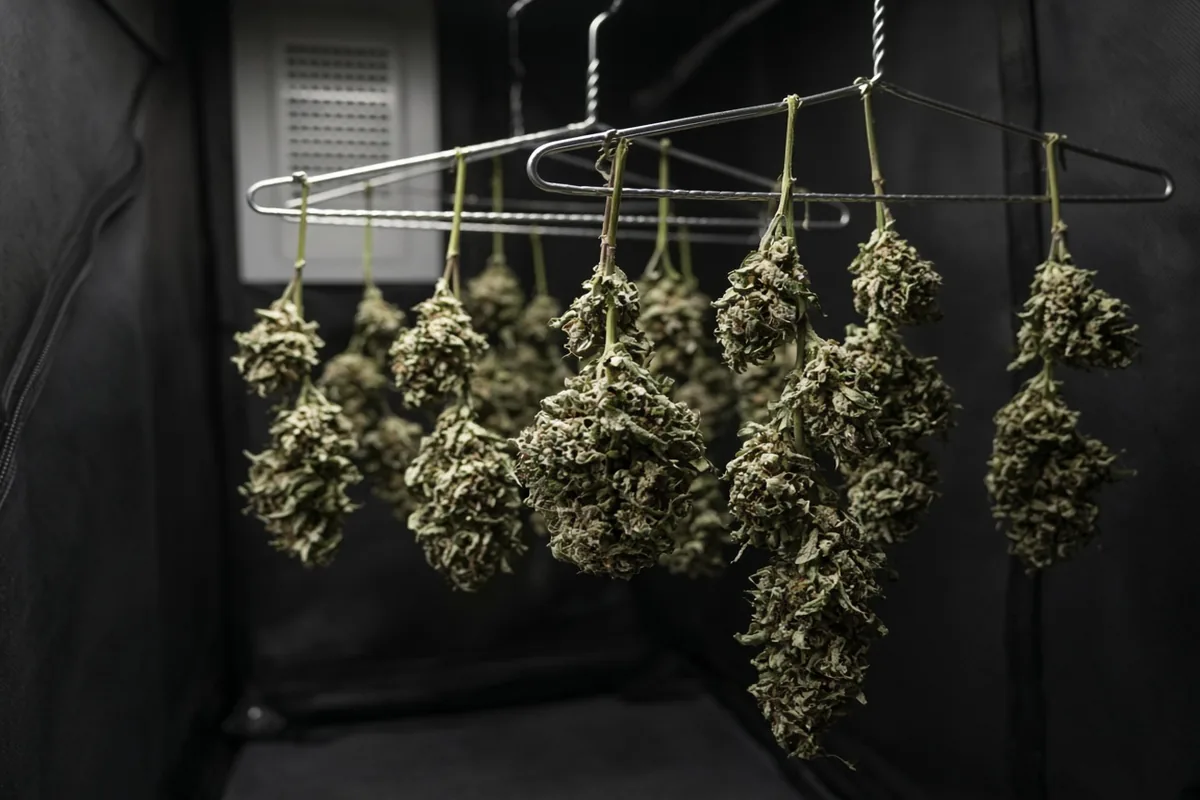
Autoflowers do not need a light change to flower. Many growers keep them on 18 or 20 hours of light the whole time. Plant them straight into their final pot to avoid transplant stress, and train them gently. Our autoflower seeds suit growers who want this faster calendar.
Running a perpetual calendar
Some growers keep two tents, one for veg and one for flower. When a flower tent is harvested, plants from veg move in, and new seedlings start. This gives a harvest every two to three months. A single tent of autoflowers can also run perpetual, with a new seed started every few weeks.
Common calendar mistakes
A few timing mistakes come up again and again. Flipping too late leaves plants pressed against the light after the stretch. Starting training too late in flower stresses plants when they should be building buds. Rushing the dry by turning up heat leaves harsh, grassy buds. Skipping the prep week means you find a broken fan or timer after seeds are already in soil. Plan a buffer of a few days around each change, and do not be afraid to adjust the calendar when your plants tell you they need more time.
Keep a grow journal
Write down dates, feeding, light settings, temperature, humidity and any problems. Photos each week help you compare. Your notes turn a general calendar into a calendar built for your space.
Final thoughts
An indoor grow calendar keeps you ahead of each stage instead of reacting late. Prep your space, give seedlings a gentle start, build size in veg, flip when the canopy fills, keep flower steady and dry and cure with patience. Browse our indoor seeds to pick genetics that fit your timeline.
Grow legally and responsibly
Home cultivation is only legal in some states, and each state sets its own plant limits, locking rules and rules about whether plants can be visible from a public place. You must be 21 or older to buy seeds from Kind Seed Co, and you should grow only where your state and city allow it. Check your state rules in our guide to the legal requirements for growing weed plants in your state before you plant. Federal treatment of cannabis seeds is also changing, so read our December 11 2026 seed rule explainer before you order. Keep plants and harvested flower locked away from children, pets and visitors, and never drive after using cannabis. This article is general information about gardening. It is not legal advice and it is not medical advice.
Frequently asked questions
How long does an indoor cannabis grow take?
A photoperiod grow often takes about four to six months from seed to cured buds. Autoflowers are often faster.
When should I flip to flower indoors?
Many growers flip when the canopy fills about half to two thirds of the tent, since plants stretch in early flower.
Do autoflowers need a light change?
No. They flower by age, and many growers keep them on 18 or 20 hours of light the whole time.
What light schedule is used in veg?
Many growers use 18 hours on and 6 hours off for photoperiod plants in veg.
Ready to start
Browse the full range in the Kind Seed Co shop or go straight to indoor seeds. Kind Seed Co sells only to adults 21 and older. Always follow the home grow laws where you live.