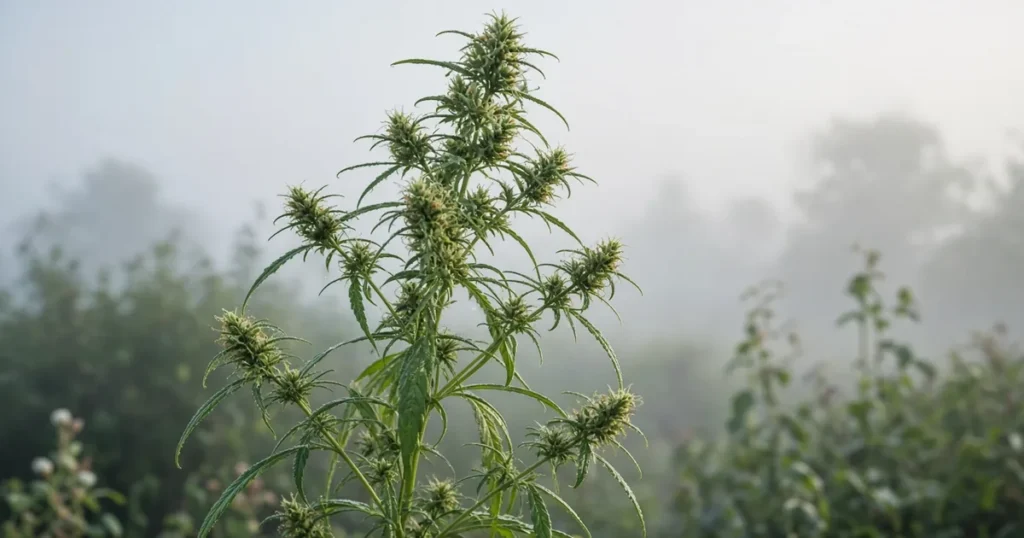
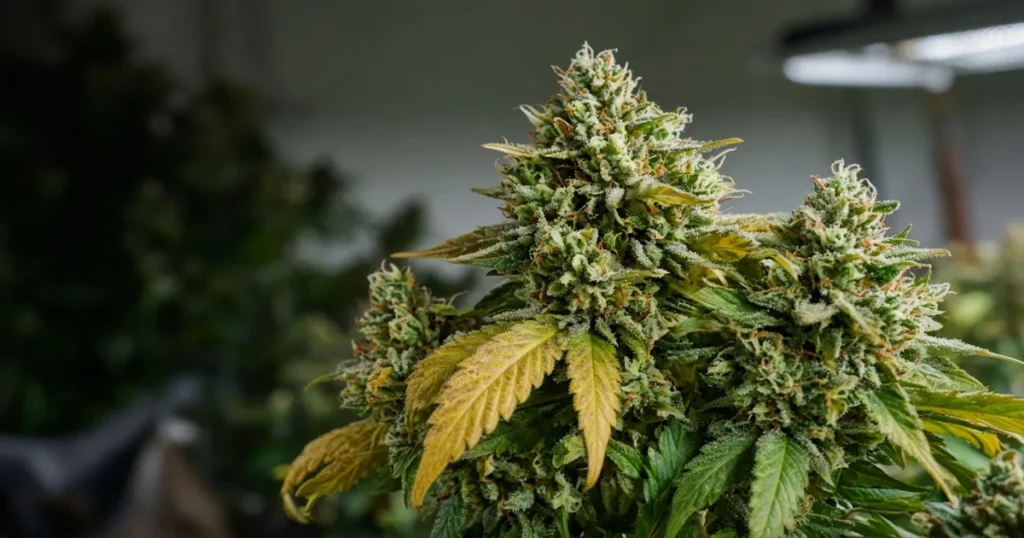
Cannabis leaves tacoing
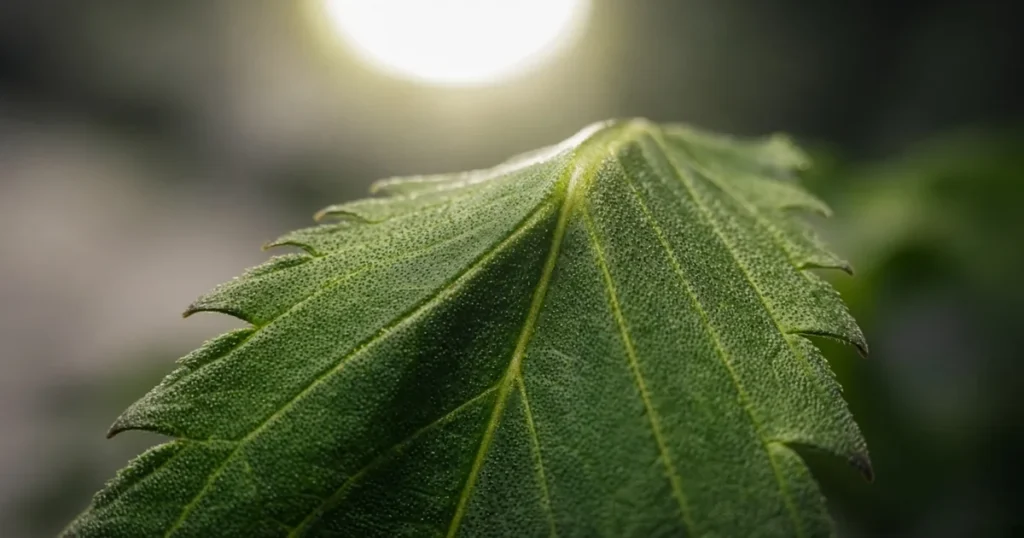
Tacoing is one of the easiest cannabis leaf problems to spot. The leaf blades fold upward along the center vein, so each leaflet looks like a taco shell. It usually shows on the top of the plant, closest to the light, and it is the plant telling you something in the environment is off. The good news is that tacoing is usually easy to fix once you find the cause. This guide explains what tacoing means, the common causes, how to tell it apart from look alike symptoms and what to change. It is for adults 21 and older growing where home cultivation is legal.
What tacoing looks like
Picture a healthy leaflet lying flat or slightly drooped. Now imagine both edges lifting up toward the light so the leaflet forms a U or V shape. That is tacoing. The leaf usually stays green and firm. In stronger cases the edges may also turn crispy or brown. Tacoing is different from clawing, where the tips bend down like a hook. We cover that in our claw leaves post.
Why plants taco
When a leaf gets too much heat or light, it folds to reduce the surface exposed. That cuts water loss and protects the leaf. Think of it as the plant squinting. Most causes come back to heat, light, airflow or water.
1. Heat
High temperatures at the canopy are the top cause. If your tent thermometer sits low but the top of the plant is close to a hot light, the canopy can be much warmer than you think.
What to do: Measure temperature at canopy height. Improve exhaust, add a fan across the canopy and run lights during the cooler part of the day. Our heat stress guide guide covers targets.
2. Light intensity
Modern LED lights can be strong enough to stress leaves even without much heat. Leaves right under the center of the light taco first.
What to do: Raise the light or dim it, then watch the newest leaves over a few days. Our guide on grow light heat management explains spacing.
3. Low humidity
Dry air makes leaves lose water fast. Combined with heat, it pushes leaves to fold.
What to do: Keep humidity in a comfortable range for the stage you are in, and avoid big swings. A small humidifier helps in veg.
4. Underwatering or root problems
A plant that cannot pull enough water will curl and taco to save moisture. Root rot or a root bound pot can cause the same thing even when you water often.
What to do: Check the pot weight and roots. Water fully when the medium is dry, and give roots room. If roots are wet all the time, read our overwatering guide guide.
5. Nutrient imbalance
Less often, tacoing comes with nutrient problems, mainly too much nitrogen or a potassium or magnesium issue. In these cases you usually see other signs too, such as dark leaves, burnt tips or spots.
What to do: Check feed strength and pH. Our post on how to spot 8 common deficiencies by leaf symptoms helps match patterns.
Tacoing, clawing and curling compared
| Symptom | What you see | Usual cause |
|---|---|---|
| Tacoing | Edges fold up along midrib | Heat, light, dry air |
| Clawing | Tips bend down like a hook | Excess nitrogen or overwatering |
| Light burn | Top leaves bleach or yellow | Light too strong |
| Nutrient burn | Brown crispy tips | Feed too strong |
For the burn symptoms, see our nute burn vs light burn post.
A quick troubleshooting order
- Measure canopy temperature and humidity.
- Check light distance or dimmer setting.
- Feel the pot and check roots.
- Review feed strength and pH.
- Change one thing at a time and give it two or three days.
Will tacoed leaves recover?
Mildly tacoed leaves often flatten again within a day or two once the cause is fixed. Leaves with crispy or burnt edges will not heal, but new growth should come in normal. Do not strip damaged leaves unless they are dead, because they still help feed the plant.
A real world example
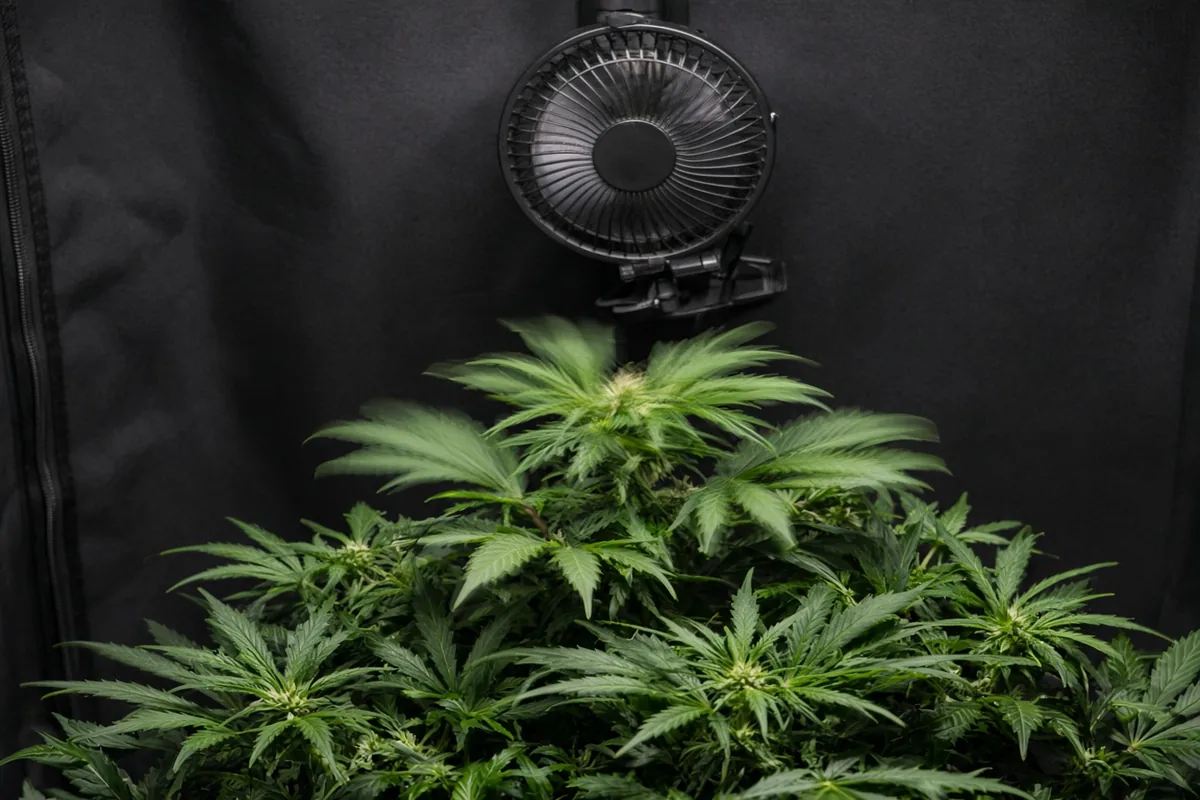
A grower moves a seedling tent setup into flower and installs a new, stronger LED. Within three days the top leaves are folding upward, while lower leaves look fine. The tent thermometer on the side wall reads comfortable, so the grower assumes heat is not the issue. A second thermometer placed at the top of the canopy shows it is several degrees warmer than the wall reading. The grower raises the light, dims it slightly and adds a clip fan above the canopy. By the next week the new leaves are flat and the old ones have mostly relaxed. The lesson is simple: measure where the leaves are, not where it is convenient.
Outdoor tacoing
Outdoors, tacoing usually shows during heat waves or dry wind. Shade cloth during the hottest hours, deep watering in the morning and mulch around the base all help. Plants grown outside often recover overnight when temperatures fall.
Preventing it next time
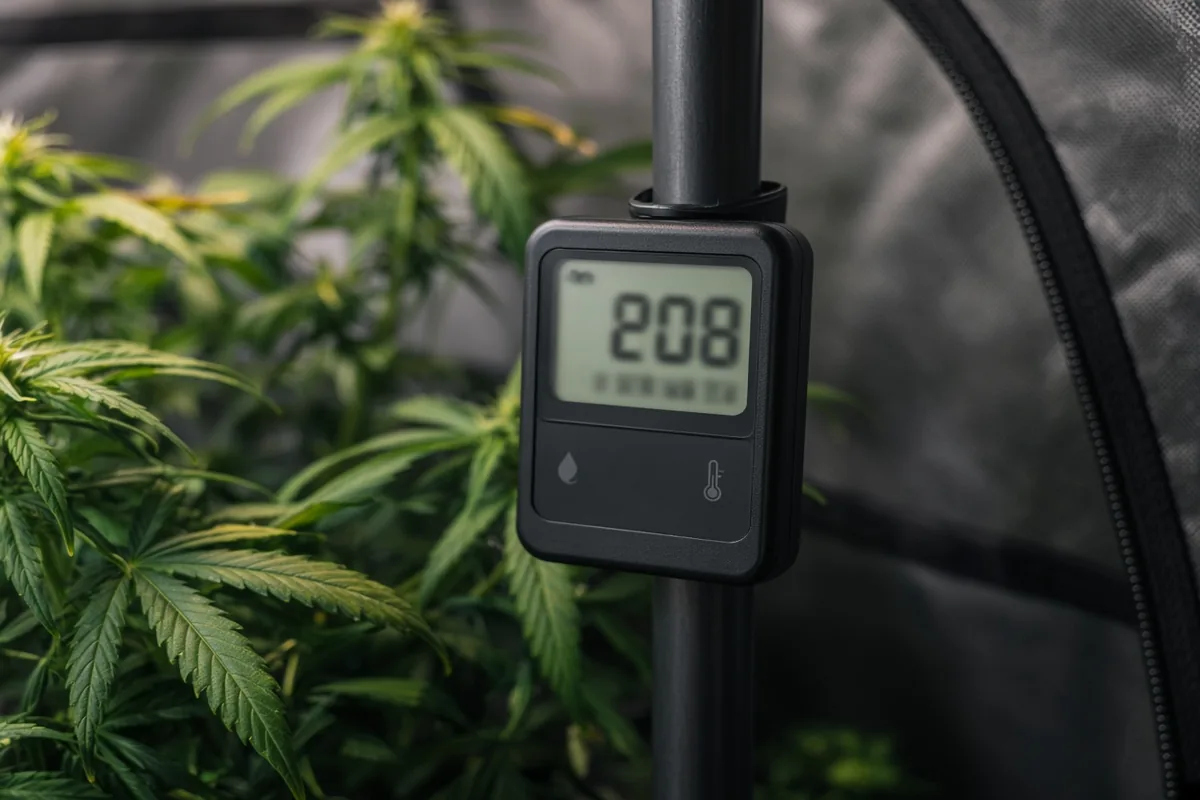
- Hang a thermometer at canopy height, not on the tent wall.
- Start new lights at a lower intensity and raise power slowly.
- Keep airflow moving across and under the canopy.
- Water deeply and on a consistent schedule.
- Pick genetics that handle your climate.
- Recheck conditions after any equipment change, since new lights and fans shift the whole environment.
For more diagnosis help, check our Fix My Plant page. A good plan, steady conditions and healthy genetics make tacoing rare.
Grow legally and responsibly
Home cultivation is only legal in some states, and each state sets its own plant limits, locking rules and rules about whether plants can be visible from a public place. You must be 21 or older to buy seeds from Kind Seed Co, and you should grow only where your state and city allow it. Check your state rules in our guide to the legal requirements for growing weed plants in your state before you plant. Federal treatment of cannabis seeds is also changing, so read our December 11 2026 seed rule explainer before you order. Keep plants and harvested flower locked away from children, pets and visitors, and never drive after using cannabis. This article is general information. It is not legal advice and it is not medical advice.
Frequently asked questions
What causes cannabis leaves to taco?
Most often heat or strong light at the canopy, sometimes combined with low humidity or water stress.
Is tacoing the same as clawing?
No. Tacoing folds the leaf edges up. Clawing bends the tips down and is usually linked to excess nitrogen or overwatering.
Will tacoed leaves flatten again?
Mild cases often do within a day or two after the cause is fixed. Burnt edges will not heal, but new growth should be normal.
Can LED lights cause tacoing?
Yes. Even cool running LEDs can be too intense if they are too close or set too high.
Final thoughts
Tacoing is the plant protecting itself from heat, light or dry air. Measure conditions at the canopy, adjust the light and airflow, water properly and change one thing at a time. Most plants respond within days.
Ready to start
Browse the full range in the Kind Seed Co shop or go straight to fix my plant. Kind Seed Co sells only to adults 21 and older. Always follow the cannabis laws where you live.