Cannabis leaves turning purple
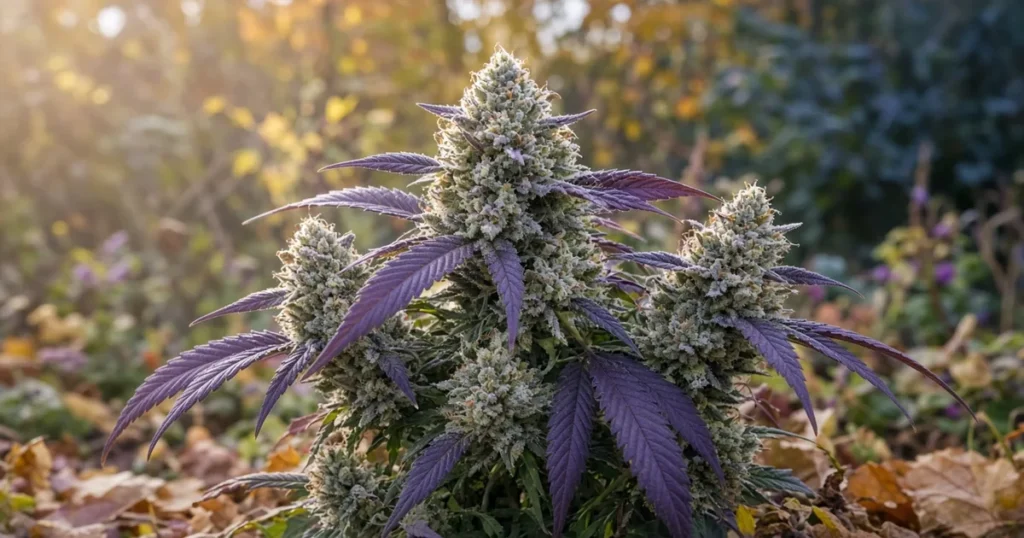
Purple cannabis leaves can be beautiful or a warning sign. Some plants are bred to turn deep violet as they ripen, and growers prize them. Others turn purple because they are cold, hungry for phosphorus or stressed. Before you change anything, it pays to figure out which kind of purple you are looking at. This guide breaks down the causes, gives you a few quick checks and explains when to relax and when to act. It is for adults 21 and older growing where home cultivation is legal.
Where the purple comes from
The color comes from pigments called anthocyanins. Many plants make them, from blueberries to red cabbage. Cannabis leaves usually hide anthocyanins under green chlorophyll. When chlorophyll drops or anthocyanin production rises, purple shows through. Genetics, temperature, light and nutrients can all push the balance.
Cause 1. Genetics
Some strains naturally turn purple, especially in flower. You will often see even color across leaves and buds, healthy growth and no spots or crispy edges. The purple may start in sugar leaves and buds and spread to fans late in the run.
What to do: Nothing. If the plant is healthy and the strain is known for color, enjoy it.
Cause 2. Cold temperatures
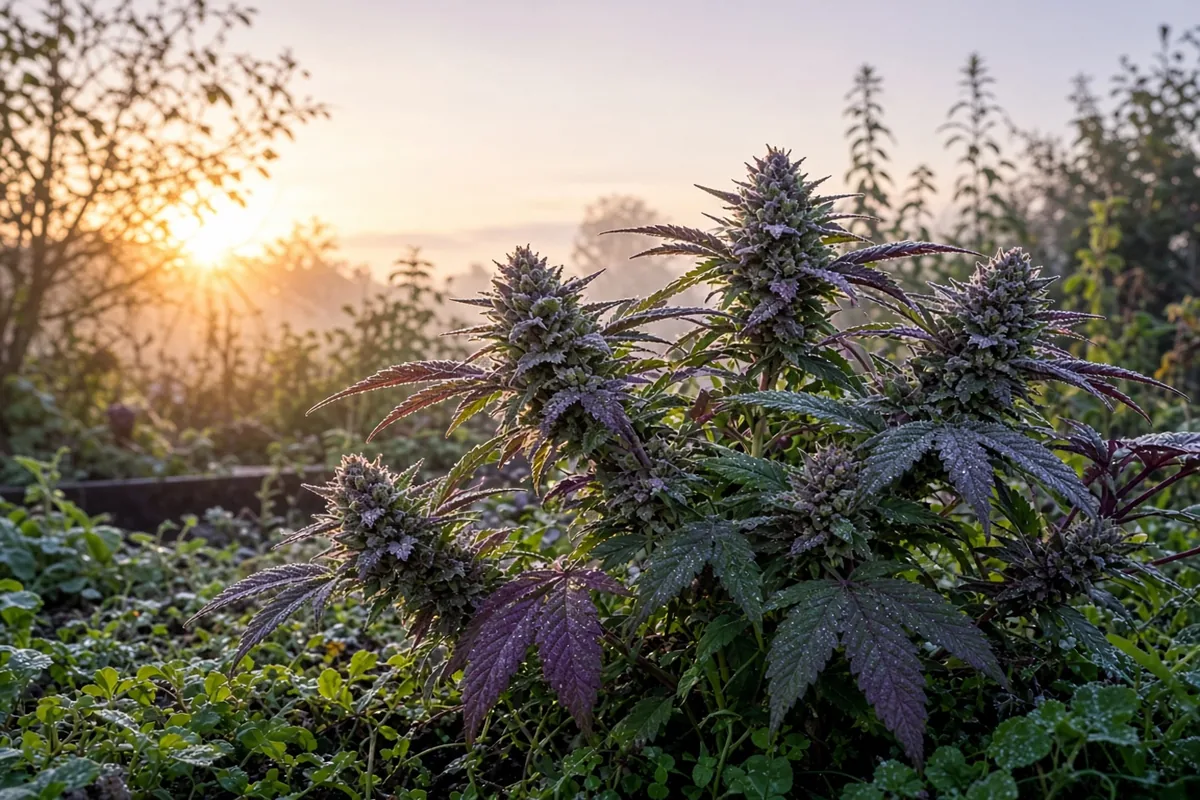
Cool nights trigger anthocyanin production in many strains. Outdoor plants in autumn often turn purple when night temperatures fall. Indoors, a large drop between lights on and lights off can do the same.
What to do: If the plant is otherwise healthy and in late flower, mild cold color is usually harmless. Protect plants from frost, since freezing damages tissue. Our frost damage guide explains warning signs. In veg, keep nights warmer so growth is not slowed.
Cause 3. Phosphorus deficiency
Phosphorus problems often show as dark or purple leaves with brown or bronze spots, usually on older leaves first. Leaves may feel stiff, and growth slows. Cold roots make it worse, because roots take up phosphorus poorly in cold media.
What to do: Check pH first, since phosphorus uptake drops when pH is off. Make sure your feed includes enough phosphorus for the stage, and warm the root zone if it is cold. Our phosphorus deficiency guide goes into detail.
Cause 4. Light stress
Very intense light can push some plants to produce protective pigments, which show as purple or red on upper leaves. You will often see bleaching or tacoing at the same time.
What to do: Raise or dim the light. Our tacoing post covers light stress signs.
Cause 5. Other nutrient issues
Magnesium or potassium problems sometimes bring purple tints, usually with other patterns such as yellow between veins or burnt edges. Our post on how to spot 8 common deficiencies by leaf symptoms helps match the full pattern.
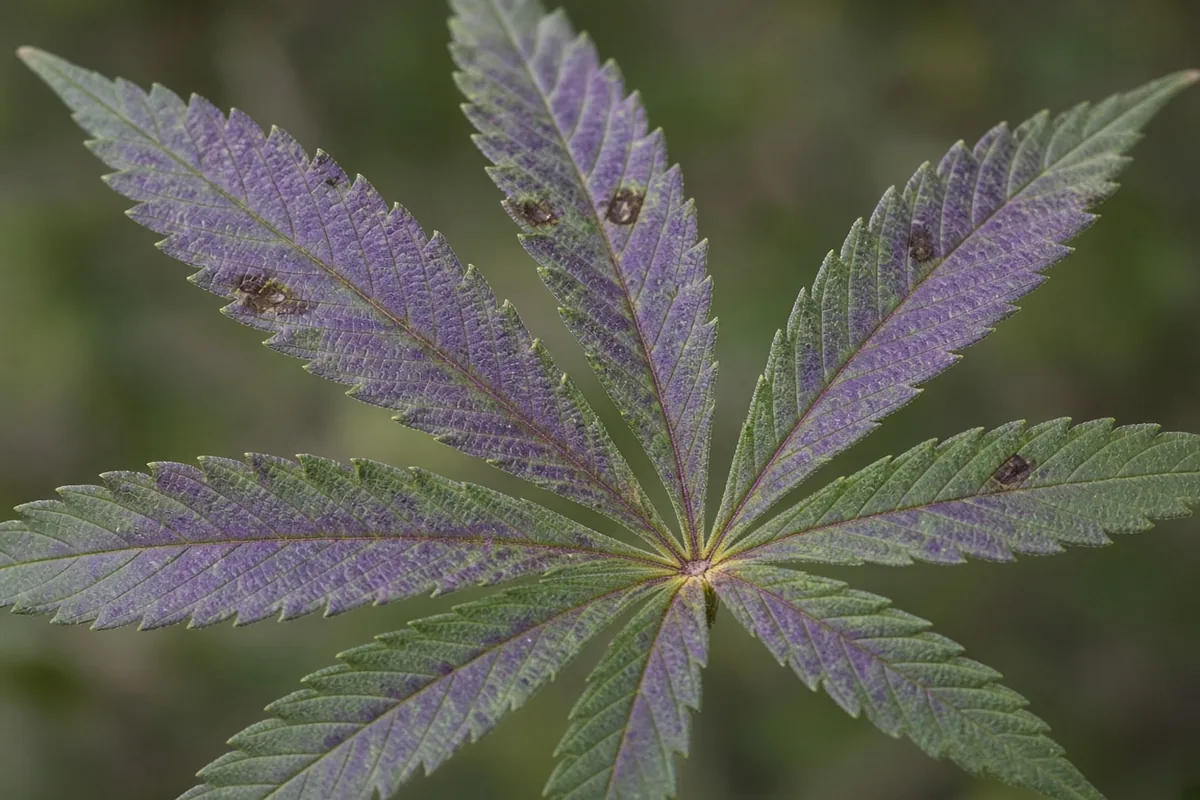
Is it leaves or stems?
Purple stems are a separate topic with their own causes. Many healthy plants have purple or red stems. If only stems are colored and leaves are green, read our purple stems guide and purple or red stems guides.
Quick checklist
| What you see | Most likely cause |
|---|---|
| Even purple on healthy plant, strain known for color | Genetics |
| Purple after cold nights, late flower | Cold |
| Dark purple with brown spots, old leaves, slow growth | Phosphorus |
| Purple top leaves with bleaching | Light stress |
| Purple plus yellow or burnt patterns | Other nutrients or pH |
Can you make plants purple on purpose?
Some growers lower night temperatures in the last couple of weeks to bring out color in strains that carry the genes. This only works on genetics that can turn purple. Pushing temperatures too low risks slow growth, mold from condensation and lower yields. Color does not equal quality, so do not sacrifice plant health for looks.
Purple in late flower
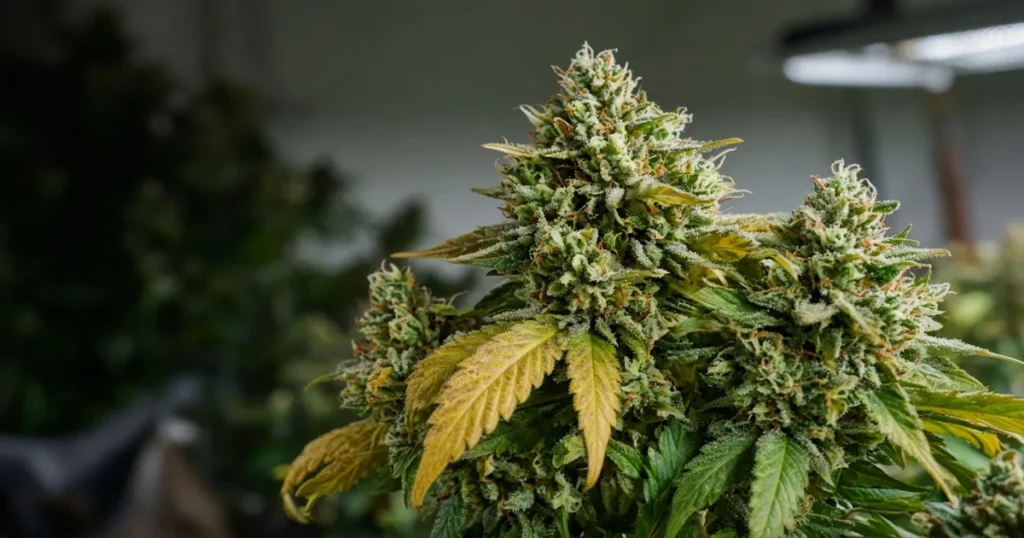
In the final weeks, purple fan leaves often mix with the yellow of the natural fade. That is usually fine. Our yellow leaves in flowering post explains the late fade.
Indoor versus outdoor purple
Indoor and outdoor growers see purple for different reasons. Outdoors, cold autumn nights are the most common trigger, and the timing often lines up with late flower, so it is usually harmless. Indoors, temperatures are more stable, which means purple is more likely to come from genetics, light intensity or a nutrient issue. If you grow indoors and see sudden purple in veg, start with the root zone and pH rather than assuming cold.
Photos help
Take a photo of the same leaves every couple of days in the same light. Purple can look very different under grow lights than in daylight, and a series of photos makes it much easier to see whether color is spreading, stable or fading on new growth. Turn the grow light off or use a white flashlight when you check.
When to worry
Act quickly if purple comes with:
- Brown or black spots
- Crispy or curling leaves
- Slow or stunted new growth
- Purple in young seedlings or early veg
Those signs point to a deficiency or stress that will cut yield if ignored.
A simple recovery plan
- Test input and runoff pH.
- Check root zone temperature.
- Confirm your feed matches the growth stage.
- Reduce light stress if top leaves are affected.
- Watch new growth for a week. Old leaves will not turn green again, but new ones should come in healthy.
For more diagnosis tools, use our Fix My Plant page. If you love purple plants, start with genetics bred for color so you can get the look without stressing the plant.
Grow legally and responsibly
Home cultivation is only legal in some states, and each state sets its own plant limits, locking rules and rules about whether plants can be visible from a public place. You must be 21 or older to buy seeds from Kind Seed Co, and you should grow only where your state and city allow it. Check your state rules in our guide to the legal requirements for growing weed plants in your state before you plant. Federal treatment of cannabis seeds is also changing, so read our December 11 2026 seed rule explainer before you order. Keep plants and harvested flower locked away from children, pets and visitors, and never drive after using cannabis. This article is general information. It is not legal advice and it is not medical advice.
Frequently asked questions
Why are my cannabis leaves turning purple?
Common causes are genetics, cold temperatures, phosphorus deficiency and light stress. Check plant health and timing to narrow it down.
Is purple cannabis bad?
Not always. Purple from genetics or late season cold is harmless. Purple with spots or slow growth is a warning sign.
Does phosphorus deficiency cause purple leaves?
Yes. It often shows as dark purple leaves with brown spots on older growth, made worse by cold roots or off pH.
Can I make my plants purple?
Only strains with purple genetics will color up, often with cooler nights near harvest. Do not stress plants just for color.
Final thoughts
Purple leaves are a signal to look closer, not to panic. Genetics and cold often cause harmless color, while phosphorus problems and light stress need action. Check pH and temperature first, fix one thing at a time and watch new growth.
Ready to start
Browse the full range in the Kind Seed Co shop or go straight to fix my plant. Kind Seed Co sells only to adults 21 and older. Always follow the cannabis laws where you live.