
When Is Soil Ready to Work? Tests for Cannabis Beds
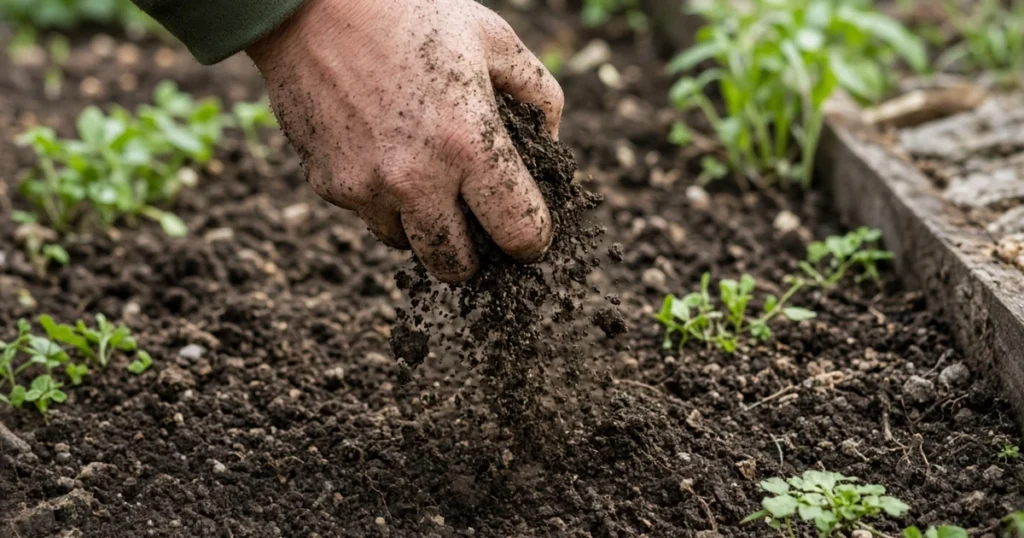
On the first warm days of spring, you may feel the pull to get into the garden and start digging cannabis beds. Purdue University Extension says many gardeners get that itch to work up their soil while it is still soggy from snowmelt and rain. Its advice is clear. For your garden’s long-term health, resist the urge to work soil while it is still wet. Its test is simple. Soil that crumbles through your fingers when squeezed is ready, and soil that forms a muddy ball needs another few days to dry. Oregon State University Extension agrees, saying the importance of not cultivating a wet soil cannot be overemphasized. Here you will learn why working wet soil damages it, how to tell when soil is ready using simple hand tests, why waiting after rain pays off and what damage looks like.
Why working wet soil causes damage
To see why timing matters, it helps to know what soil is made of. Oregon State Extension explains that soils are made of mineral particles of sand, silt and clay, with pore spaces between them. Those pores hold a changing balance of air and water, and both are needed for plant roots and soil life.
Oregon State calls soil compaction the most serious threat to wet soils. As pore space fills with water, pressure and weight on the soil surface force the particles together. Pore space shrinks and becomes plugged with finer soil particles. Oregon State notes that a soil does not have to be completely saturated to be at risk.
Purdue Extension describes the same damage from a gardener’s point of view. Whether you use a tiller, a plow or just a garden spade, working wet soil can badly compact it, and the negative effects can last for many years. Purdue explains that working wet soil:
- Packs soil particles tightly, leaving less room for water and air to move through.
- Makes it harder for plant roots and garden tools to move through the soil.
- Forms tight clumps that dry as hard as rocks and are difficult to break up.
- Leaves soil that drains more slowly, which in turn delays when you can work it after the next rain.
Oregon State adds that compaction, which it calls plugging, reduces a soil’s water-holding capacity and drainage rate. It also cuts the movement and availability of oxygen and nutrients to plant roots and soil microbes. Oregon State notes that compaction reduces yields because of its effects on root growth.
Which soils are most at risk
The type of soil changes how long you need to wait. Oregon State Extension explains:
- Finer soils with more clay hold more water, but they can drain slowly, which leaves more water at the surface.
- Coarse, sandier soils hold less water, so they drain more quickly and stay saturated for shorter periods.
- Compacted soils have less pore space and drain more slowly, so they have more ponding and runoff than looser soils.
Oregon State says clay soils are more vulnerable to compaction, but sandy soils can also be susceptible when they are managed poorly.
The squeeze test
The simplest check needs only a trowel and your hand. Purdue Extension describes it:
- Dig a trowel full of soil from the bed.
- Squeeze it in your hand.
- If the soil crumbles through your fingers, it is ready to work.
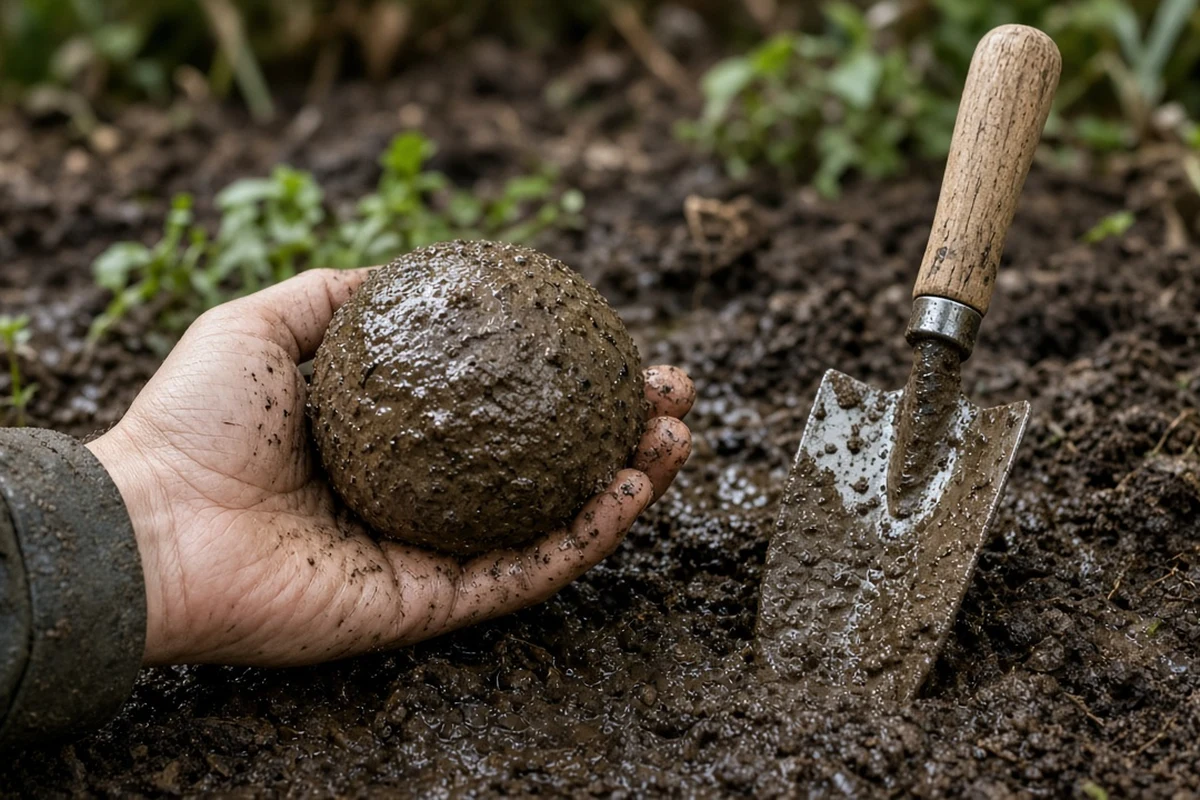
- Should it form a muddy ball, give the soil another few days to dry, then test again.
Oregon State notes that observations after rain can reveal differences in soil type and condition across a site, which is a reason to check more than one spot.
The ball and ribbon tests
Oregon State Extension describes two related checks. It says that, as a general rule, soil is too moist to cultivate if it fails either one.
- Ribbon test. Push the soil out between your thumb and forefinger to form a ribbon. If the ribbon breaks before it reaches 1 to 2 inches, there is less risk of compaction. If the ribbon extends 4 to 5 inches, the soil is too wet to cultivate.
- Ball test. Form the soil into a 2-inch ball and toss it into the air. If the ball holds together, the soil is too moist to cultivate.
Oregon State notes that judging soil moisture by feel is more of an art than a science. It adds that soil moisture probes are also available to help tell when the soil water content is too high to work. When in doubt, it advises waiting a day or two to reduce the risk of damaging your soil’s structure.
Waiting after rain
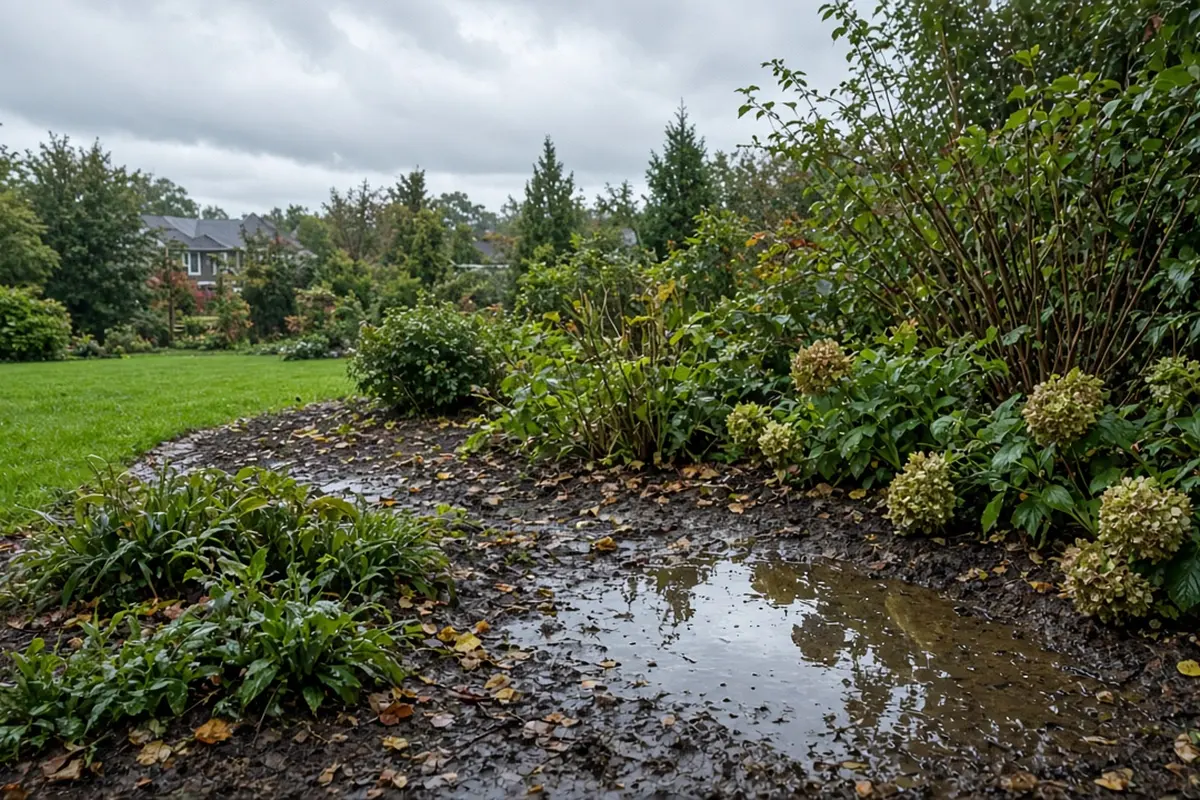
Heavy rain can fill soil pores quickly. Oregon State Extension explains that large amounts of rain or irrigation water over a short time can fill pore spaces and exceed the soil’s water-holding capacity. Excess water then cannot enter the soil, so it runs off the surface. Runoff from high spots can cause erosion on bare soil, and water can pond in low areas.
Watching water move through your garden during and after a heavy rain can teach you a lot. Oregon State says these observations can reveal differences in soil type and condition across a site. Ponded areas may point to management problems that lead to compaction, or they may simply show areas to avoid for longer after rain.
For a bed that holds water, the safest plan is patience. Purdue notes that compacted soils drain more slowly, which delays the next chance to work them, so working a bed too early can push back the date you can work it again.
Staying off wet beds
Digging is not the only way to compact wet soil. Oregon State Extension names heavy machinery and tillage tools as the most obvious causes of compaction, and it explains that pressure and weight on a wet surface force soil particles together. It notes that when soil is moist, the effects of these practices on compaction are even more pronounced.
If your beds already show signs of compaction, the post on soil compaction in cannabis beds goes through the causes and fixes in more detail.
Signs of damage and recovery
How do you know if a bed was worked too wet? Purdue Extension describes clumps that turn hard as rocks when they dry, soil that is hard for roots and tools to move through and beds that drain more slowly than before. Oregon State adds more ponding and runoff on compacted ground.
Recovery takes time. Purdue says that once soil is compacted, it can take many years to rebuild a healthy soil structure. Oregon State notes that the effects of compaction can be reduced by some management techniques, but that compaction is difficult to reverse. That is why both sources stress prevention. Purdue calls preventing compaction in the first place the best course of action.
While you wait, Purdue suggests easing the gardening itch by sketching garden plans and making a shopping list, so you are ready when the soil dries enough to work. Moisture is not the only factor in spring timing. The other side of the question is explained in Kind Seed Co’s post on soil temperature for planting cannabis.
Troubleshooting
The soil forms a muddy ball when squeezed. It is too wet. Purdue says to give it another few days to dry and test again.
Clods dry as hard as rocks. The bed was likely worked while wet. Purdue describes this as a classic sign of compaction from working wet soil.
One corner always stays wet. Oregon State says ponded areas can reveal compaction or simply mark spots to avoid for longer after rain.
The soil ribbons 4 to 5 inches. Oregon State says that soil is too wet to cultivate. Wait a day or two and test again.
A sandy bed still compacted. Oregon State notes that sandy soils can also compact under poor management, even though clay soils are more vulnerable.
Sources
- Purdue University Extension, Indiana Yard and Garden. Resist the urge to work wet soil. https://www.purdue.edu/hla/sites/yardandgarden/resist-the-urge-to-work-wet-soil/
- Oregon State University Extension Service. Ponding, plugging and pugging: how to care for wet spring soils (EM 9694). https://extension.oregonstate.edu/catalog/em-9694-ponding-plugging-pugging-how-care-wet-spring-soils
FAQ
How do I know when soil is ready to work?
Use the squeeze test. Purdue University Extension says to dig a trowel full of soil and squeeze it in your hand. Soil that crumbles through your fingers is ready to work. If it forms a muddy ball, give it another few days to dry and test again before digging.
Why is working wet soil bad?
Purdue Extension says working wet soil packs particles tightly, leaving less room for water and air, and forms clumps that dry as hard as rocks. Oregon State University Extension adds that compaction reduces water-holding capacity, drainage and oxygen for roots, and that it is difficult to reverse.
What is the ribbon test for soil moisture?
Oregon State Extension says to push soil between your thumb and forefinger. If the ribbon breaks before 1 to 2 inches, there is less risk of compaction. If it extends 4 to 5 inches, the soil is too wet to cultivate. When in doubt, wait a day or two.
How long does compaction from working wet soil last?
A long time. Purdue Extension says the negative effects of working wet soil can last for many years, and that rebuilding a healthy soil structure can take years. Oregon State Extension notes that compaction is difficult to reverse, which is why both sources stress preventing it in the first place.


