CMH vs LED for cannabis
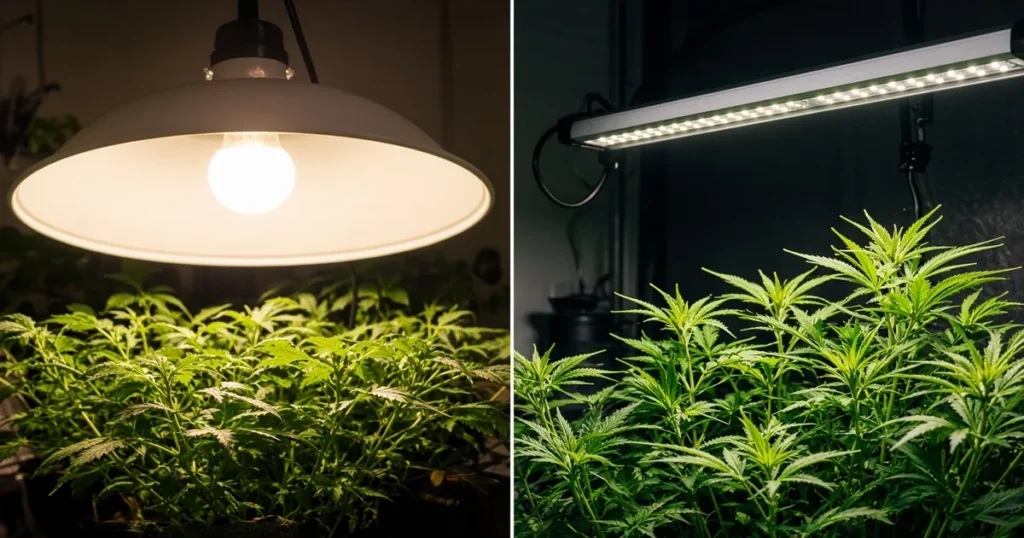
Ceramic metal halide, or CMH, and LED are the two lighting options most home cannabis growers weigh today. A few years ago, CMH was the upgrade from old high pressure sodium lamps, prized for its natural looking spectrum. Since then, LED fixtures have improved fast and dropped in price. So which one makes more sense for your tent right now? This guide compares the two on efficiency, heat, spectrum, cost and ease of use, for adults 21 and older growing where it is legal.
What CMH is
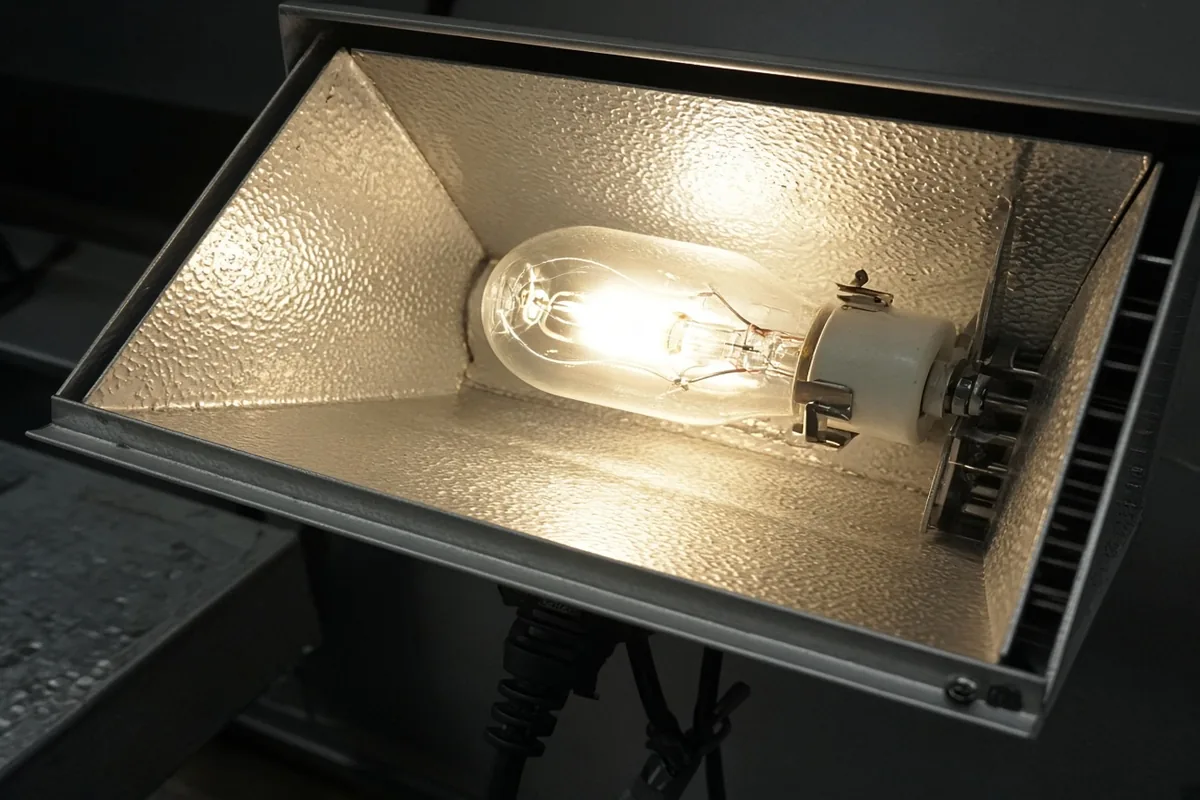
CMH lights are a type of high intensity discharge lamp. They use a ceramic arc tube instead of quartz, which lets them run hotter and produce a fuller, more natural looking spectrum than older metal halide or sodium lamps. Common home grow sizes are 315 watts and 630 watts (often two 315 bulbs). CMH needs a matching ballast and usually a reflector hood.
Growers liked CMH because it produced good results in both veg and flower with one bulb, gave plants a sunlight like spectrum and included some UV output.
What LED is
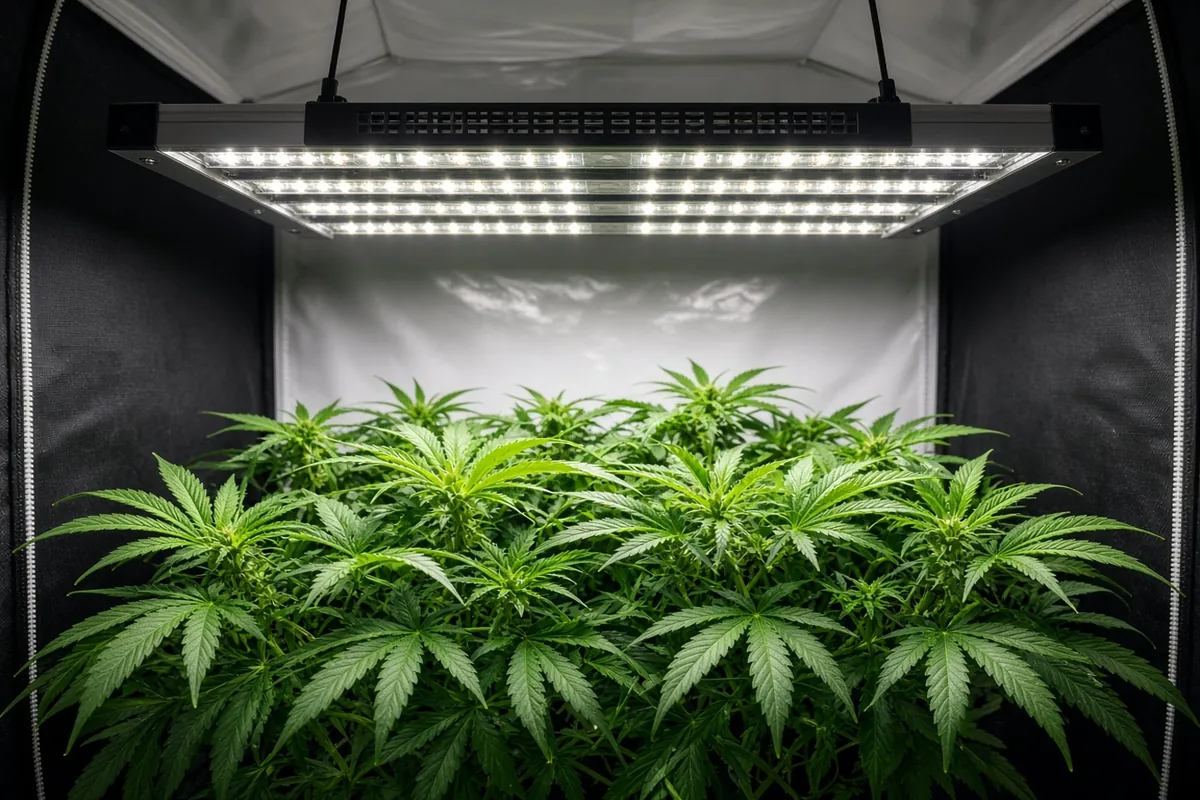
LED fixtures use many light emitting diodes mounted on boards or bars. Modern grow LEDs usually use white diodes with added red, and sometimes far red or UV. They come in many shapes, from small panels for a 2×2 tent to large bar fixtures for 5×5 spaces and beyond. Most plug straight into the wall and include a built in driver and dimmer. Our guide on choosing the right LED lights for your cannabis grow covers buying tips.
Head to head comparison
| Factor | CMH | LED |
|---|---|---|
| Efficiency | Good, better than HPS | Typically higher in quality fixtures |
| Heat at the canopy | More radiant heat | Less radiant heat |
| Spectrum | Full, sunlight like, some UV | Full spectrum white, often with red, UV varies |
| Upfront cost | Often lower | Often higher, prices have dropped |
| Running cost | Higher power and cooling | Lower power and cooling |
| Bulb replacement | Bulb needs replacing every year or two | No bulbs, diodes last many years |
| Light spread | Single point source, uneven edges | Bars spread light more evenly |
| Dimming | Limited on many ballasts | Usually built in |
Efficiency
Efficiency is how much useful light a fixture produces for each watt of power. Quality LED fixtures generally produce more usable light per watt than CMH. In practice, that means you can light the same tent with less power and less heat. Exact numbers vary widely by fixture, so compare manufacturer data and independent reviews rather than marketing claims.
Heat
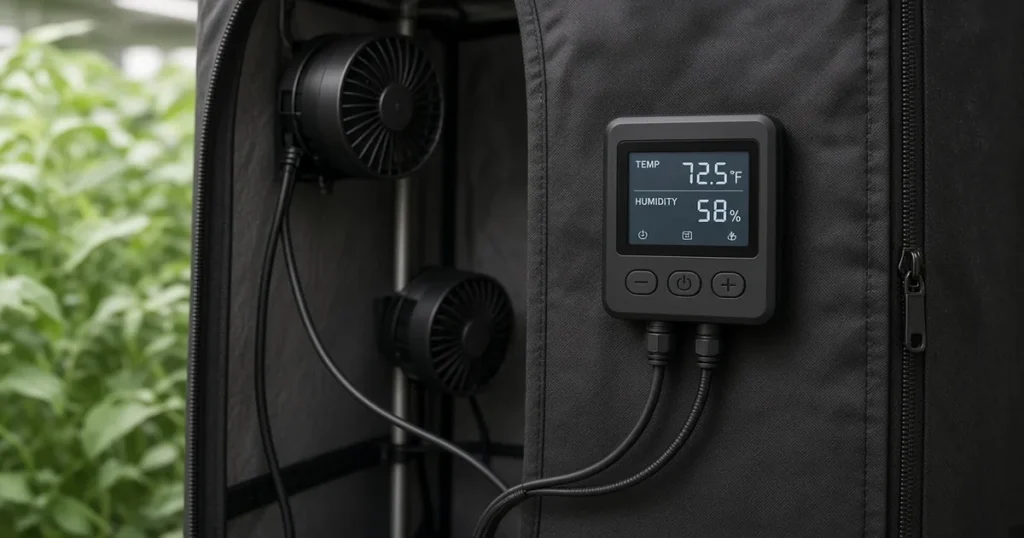
CMH bulbs run hot and throw radiant heat onto the canopy. That can be a plus in a cold basement, but in most homes it means more ventilation and sometimes air conditioning. LEDs still produce heat, mostly through their heat sinks, but they send less radiant heat at the plants. That often makes temperature control easier in small tents. Good airflow still matters with either option. See inline fan CFM for a grow tent.
Spectrum and UV
CMH earned its reputation for spectrum. Plants under CMH often look natural to the eye, which makes it easier to spot problems. Modern white LEDs also offer full spectrum light and natural looking color. CMH typically gives off some UV, while many LEDs include little or none unless they add UV diodes. Research on UV’s effect on cannabis quality is mixed, so do not treat it as a must have.
Cost
CMH kits can cost less up front. But you will pay more over time in electricity, cooling and replacement bulbs. LED fixtures cost more up front, though prices have fallen a lot. For a grow that runs year round, LED usually comes out cheaper over a few years. For an occasional grower who already owns a CMH kit, keeping it may make sense until it wears out.
Light distance and coverage
CMH is a single point of light, so the center of the canopy gets more intensity than the edges. Bar style LEDs spread light more evenly across the tent. Light distance also differs. CMH usually hangs farther from plants because of heat. LED distance depends on fixture power. See LED light distance for cannabis.
Which should you choose?
Choose LED if: you are buying new, want lower running costs, grow in a small or warm space or want easy dimming.
Choose CMH if: you already own a good kit, grow in a cold space where extra heat helps or are on a tight upfront budget.
Combine them if: you have room and want to experiment. Some growers run CMH alongside LED to add heat and UV in a cool room.
Safety tips
Never look directly at either light without eye protection designed for grow lights. CMH bulbs get very hot, so keep them away from tent walls and fabric. Use properly rated cords and timers, and avoid overloading circuits.
Matching the light to your tent
As a rough guide, many growers pair a single 315 watt CMH with a 3×3 or small 4×4 space and a 630 watt CMH setup with a 4×4 or 5×5. With LED, fixture size is usually listed by coverage area, and dimmers let you match intensity to the stage of growth. In seedling and early veg, plants need far less light than in flower, so start dimmer or higher and increase over a few weeks.
Whatever you choose, watch the plants. Leaves that taco upward, bleach at the top or look crispy close to the light usually mean too much intensity or heat. Stretchy, pale plants reaching upward usually mean too little.
Upgrading from CMH to LED
If you switch, expect your tent to run cooler and your plants to need slightly different care. Many growers find they need to raise temperature a little, since LED canopies lack the radiant heat of CMH. Plants may also drink less water. Adjust gradually and keep notes so you can compare harvests.
Grow legally and responsibly
Home cultivation is only legal in some states, and each state sets its own plant limits, locking rules and rules about whether plants can be visible from a public place. You must be 21 or older to buy seeds from Kind Seed Co, and you should grow only where your state and city allow it. Check your state rules in our guide to the legal requirements for growing weed plants in your state before you plant. Federal treatment of cannabis seeds is also changing, so read our December 11 2026 seed rule explainer before you order. Keep plants and harvested flower locked away from children, pets and visitors, and never drive after using cannabis. This article is general information. It is not legal advice and it is not medical advice.
Frequently asked questions
Is CMH or LED better for cannabis?
Both can grow great cannabis. LED usually wins on efficiency, heat and running cost, while CMH can be cheaper up front and adds radiant heat and some UV.
Does CMH produce UV?
CMH typically emits some UV. Many LEDs emit little unless they include UV diodes. Research on UV benefits for cannabis is mixed.
Can I use CMH for veg and flower?
Yes. CMH works for both stages, which is one reason growers liked it.
How often do CMH bulbs need replacing?
Many growers replace bulbs about every year or two, since output drops over time.
Final thoughts
CMH and LED can both grow quality cannabis. CMH offers a natural spectrum, some UV and lower upfront cost, but more heat and higher running costs. LED is more efficient, cooler and easier to control, and has become the default for most new grows. Choose based on your space, budget and climate.
Ready to start
Browse the full range in the Kind Seed Co shop or go straight to indoor seeds. Kind Seed Co sells only to adults 21 and older. Always follow the cannabis laws where you live.