
Brown spots on cannabis leaves
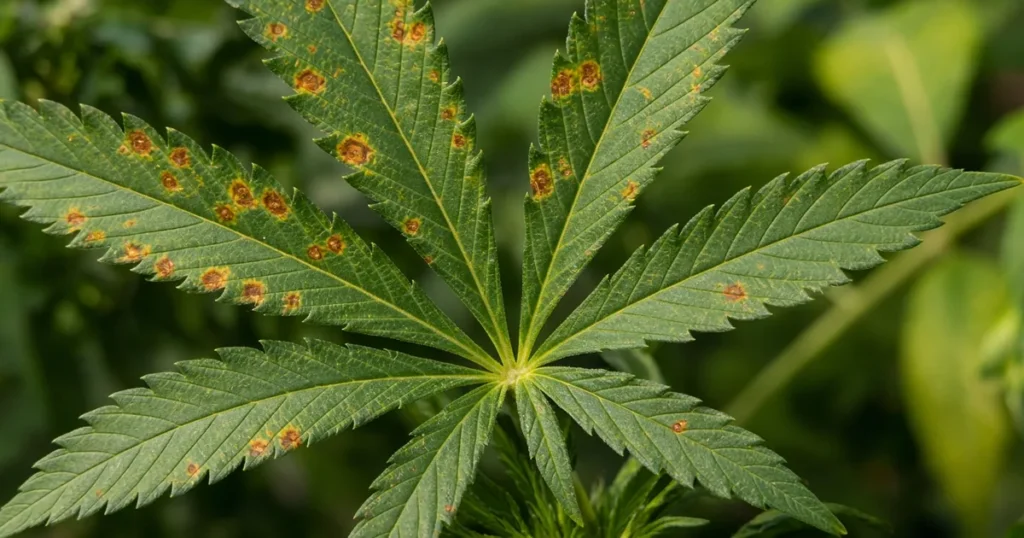
Brown spots on cannabis leaves are one of the most common problems growers see, and one of the most confusing. The same rusty speckles can come from a calcium shortage, a pH problem, light burn, a fungus, pests or even splashes of water under strong light. The good news is that the pattern of the spots usually points to the cause. Where they appear, what they look like and how fast they spread are your best clues. This guide walks through the most likely causes and how to tell them apart, for adults 21 and older growing where it is legal.
Start with three questions
Before you change anything, look closely and answer these:
1. Where are the spots? On new growth at the top, on older leaves at the bottom or everywhere?
2. What do they look like? Small rust colored dots, larger blotches with yellow halos, crispy edges or bleached patches?
3. Are they spreading? Slowly over weeks, or quickly from leaf to leaf?
Older leaves showing problems often point to mobile nutrients the plant moves away from old growth. New growth problems often point to immobile nutrients or environmental stress. Spots with yellow halos that spread quickly can point to fungus.
Common causes at a glance
| Cause | Where | What it looks like |
|---|---|---|
| Calcium deficiency | Newer and middle leaves | Irregular brown spots, sometimes crinkled leaves |
| Magnesium deficiency | Older leaves | Yellowing between veins, then brown spots |
| Potassium deficiency | Older leaves | Brown, crispy edges and tips with some spotting |
| pH problems | Anywhere | Mixed deficiency signs in many places |
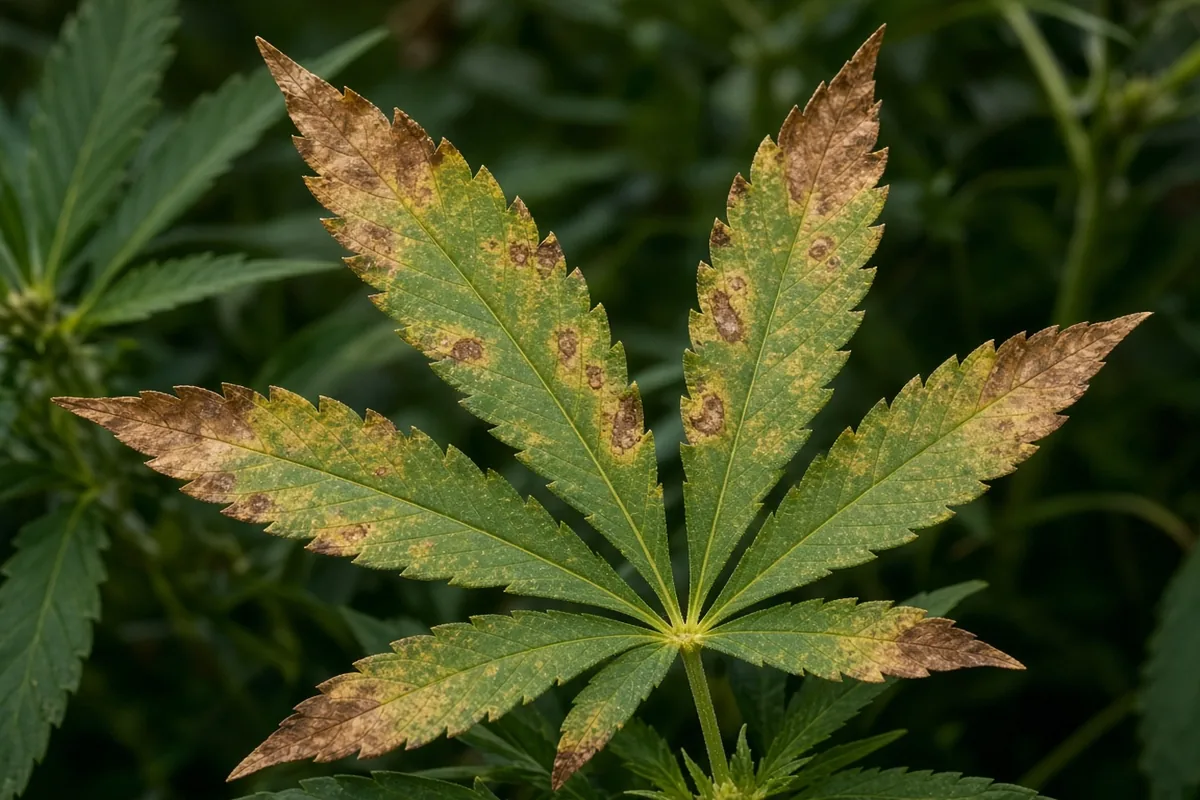
| Light or heat stress | Top leaves closest to light | Bleaching, brown crispy patches |
| Leaf spot fungus | Lower leaves first | Spots with yellow halos that spread |
| Pests | Anywhere | Tiny dots, stippling, webbing or bugs on undersides |
| Water spots | Leaves misted under lights | Small burn marks where droplets sat |
Calcium deficiency
Calcium is one of the most common reasons for brown spots, especially in coco and hydro grows. Spots tend to appear on newer and middle leaves and may look irregular, brown or bronze. Leaves can also crinkle or twist. Causes include low calcium in the feed, soft or RO water and pH out of range. See calcium and cannabis plants and how to fix calcium deficiency in cannabis plants.
Magnesium deficiency
Magnesium shortages usually start on older, lower leaves. Leaves yellow between the veins while the veins stay green, and brown spots can follow. It often shows up alongside calcium issues.
Potassium deficiency
Potassium problems tend to show as brown, burnt looking edges and tips on older leaves, sometimes with spotting. Leaves may look scorched. Read potassium deficiency in cannabis plants for more.
pH problems
If you see spots plus several different deficiency signs at once, pH is often the real cause. When pH drifts out of range, roots cannot take up nutrients even if they are present. Check your input and runoff pH before adding more nutrients. Our guide on guide to pH for cannabis explains the ranges.
Light and heat stress
Spots and bleached or crispy patches on the leaves closest to the light often mean the light is too close or the canopy is too hot. Check your light distance against the manufacturer guide and our guide on LED light distance for cannabis.
Fungal leaf spot
Some fungi cause round brown spots with yellow halos, often starting low on the plant where humidity is higher and airflow is weak. Spots may grow and merge. Remove affected leaves, improve airflow, lower humidity and avoid wetting leaves. Do not compost infected leaves near your grow.
Pests
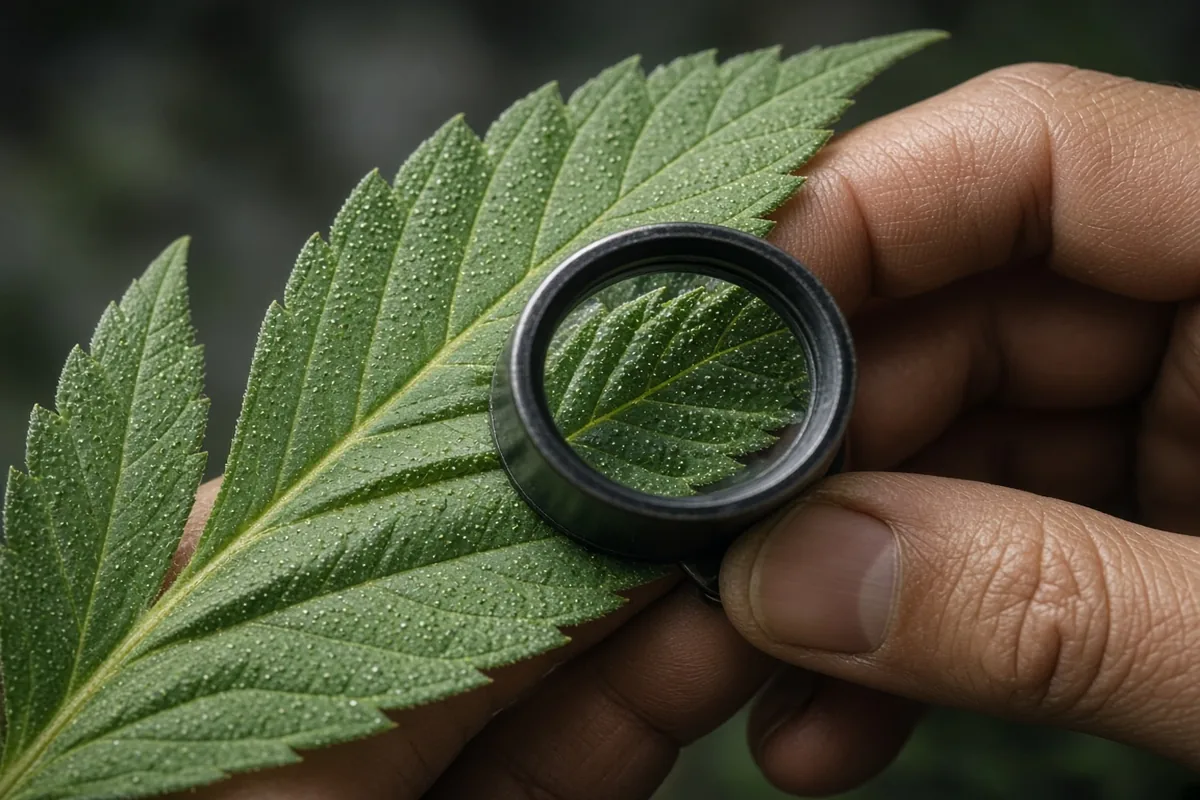
Spider mites leave tiny pale or brown speckles called stippling. Thrips can leave silvery patches with small dark dots. Always flip leaves and check undersides with a loupe. Catching pests early makes them much easier to control.
Water spots
Misting leaves under strong lights can leave small burn spots where droplets sat. Avoid spraying leaves when lights are on.
How to fix brown spots step by step
- Check the environment first. Temperature, humidity, light distance and airflow.
- Check pH and EC. Measure input and runoff.
- Inspect for pests. Look under leaves.
- Match the pattern. Use the table above to narrow the cause.
- Make one change at a time. Then watch new growth for a week.
Damaged leaves will not heal. Judge recovery by new growth, not old spots. For a broader troubleshooting guide, see common cannabis growing problems.
Prevention
- Keep pH in range for your medium
- Use a complete nutrient line with calcium and magnesium
- Maintain steady temperature and humidity
- Keep good airflow through the canopy
- Inspect plants weekly, including leaf undersides
- Start with healthy genetics and clean clones or seeds
Brown spots in late flower
Some spotting and yellowing in the last weeks of flower is normal. As harvest nears, many plants pull nutrients from their fan leaves, and older leaves fade, yellow and sometimes show brown spots. If the buds look healthy and the change started late in flower, this is usually natural senescence rather than a problem. Avoid big nutrient changes at this stage.
What is not normal in late flower is brown, mushy spots on the buds themselves or gray fuzz inside dense colas. That points to bud rot, which can spread quickly. Remove affected material carefully, lower humidity and increase airflow right away.
When to worry
Act quickly if spots:
- Spread to new leaves within a few days
- Appear with webbing or visible insects
- Show up on buds or stems
- Come with wilting even when the medium is moist
Slow spotting on a few older leaves is rarely an emergency. Fast spreading spots, pests or rot need attention the same day. If a plant looks badly stressed, our guide on how to revive sick cannabis plants walks through recovery steps.
Grow legally and responsibly
Home cultivation is only legal in some states, and each state sets its own plant limits, locking rules and rules about whether plants can be visible from a public place. You must be 21 or older to buy seeds from Kind Seed Co, and you should grow only where your state and city allow it. Check your state rules in our guide to the legal requirements for growing weed plants in your state before you plant. Federal treatment of cannabis seeds is also changing, so read our December 11 2026 seed rule explainer before you order. Keep plants and harvested flower locked away from children, pets and visitors, and never drive after using cannabis. This article is general information. It is not legal advice and it is not medical advice.
Frequently asked questions
What causes brown spots on cannabis leaves?
Common causes include calcium or magnesium deficiency, pH problems, light or heat stress, fungal leaf spot, pests and water spots under strong lights.
Will brown spots go away?
No, damaged leaves do not recover. Fix the cause and judge progress by healthy new growth.
Should I remove leaves with brown spots?
Remove leaves with fungal spots or heavy damage. Mildly spotted leaves can stay if the cause is fixed.
Can pH cause brown spots?
Yes. When pH is out of range, the plant cannot absorb certain nutrients, which leads to spots and other deficiency signs.
Final thoughts
Brown spots on cannabis leaves are a symptom, not a diagnosis. Look at where the spots appear, what they look like and how fast they spread. Check environment, pH and pests before adding nutrients, change one thing at a time and judge progress by new growth. Most causes are easy to fix once you find them.
Ready to start
Browse the full range in the Kind Seed Co shop or go straight to fix my plant. Kind Seed Co sells only to adults 21 and older. Always follow the cannabis laws where you live.