Dehumidifier Water for Cannabis: Is It Worth Saving?
Quick answer: Dehumidifier water is condensed moisture pulled from the air, so it starts out nearly free of minerals. Maryland Extension describes the water in a dehumidifier pan as distilled and suggests it as a mineral free choice for container plants. Utah State Extension finds that air conditioner condensate, made the same way, is neutral in pH with very low dissolved salts and calls it an excellent irrigation source. The catch is the trip from coil to bucket, where dust, metal traces and microbes can enter. Use it on cannabis by watering the soil, keep the bucket clean and add nutrients, since it carries almost none.
What Is Dehumidifier Water?
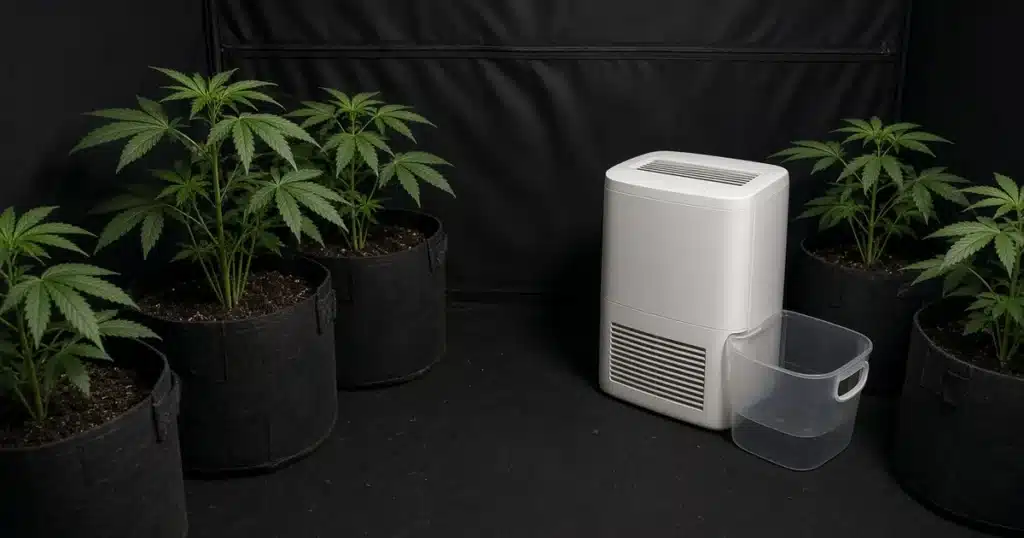
A dehumidifier pulls room air across a cold coil. Moisture in the air condenses on the coil, drips into a pan or bucket and the drier air goes back into the room. In a tent or closed growing space, that adds up to several quarts or more every day.
Because the water forms from vapor, it starts out much like distilled water. The UMD Extension page on watering indoor plants suggests using the water in a dehumidifier drain pan on plants, calling it distilled water and a way to avoid mineral buildup in pots.
The machine itself is covered in our dehumidifier for grow room article. This article covers what to do with the water it collects.
How Clean Is Dehumidifier Water?
Right when it forms, it is very clean. The Utah State Extension article on non traditional water sources describes condensate from air conditioners, which work on the same principle. USU found that the water sits near neutral pH and carries only about 15 to 100 ppm of dissolved material, with very low conductivity. USU calls it an excellent irrigation source and possibly better quality than some household water.
The water does not stay that pure, though. An Ask Extension answer from a Tennessee expert on air conditioner condensate explains that the water runs over metal coils, which may be joined with lead based solder, into a pan where dust and bacteria can collect. Because the water holds almost nothing dissolved, it readily picks up whatever it touches.
That expert found no documentation that condensate is necessarily contaminated with metals. Still, they suggested using it on ornamental plants and landscapes rather than food crops, as a sensible precaution.
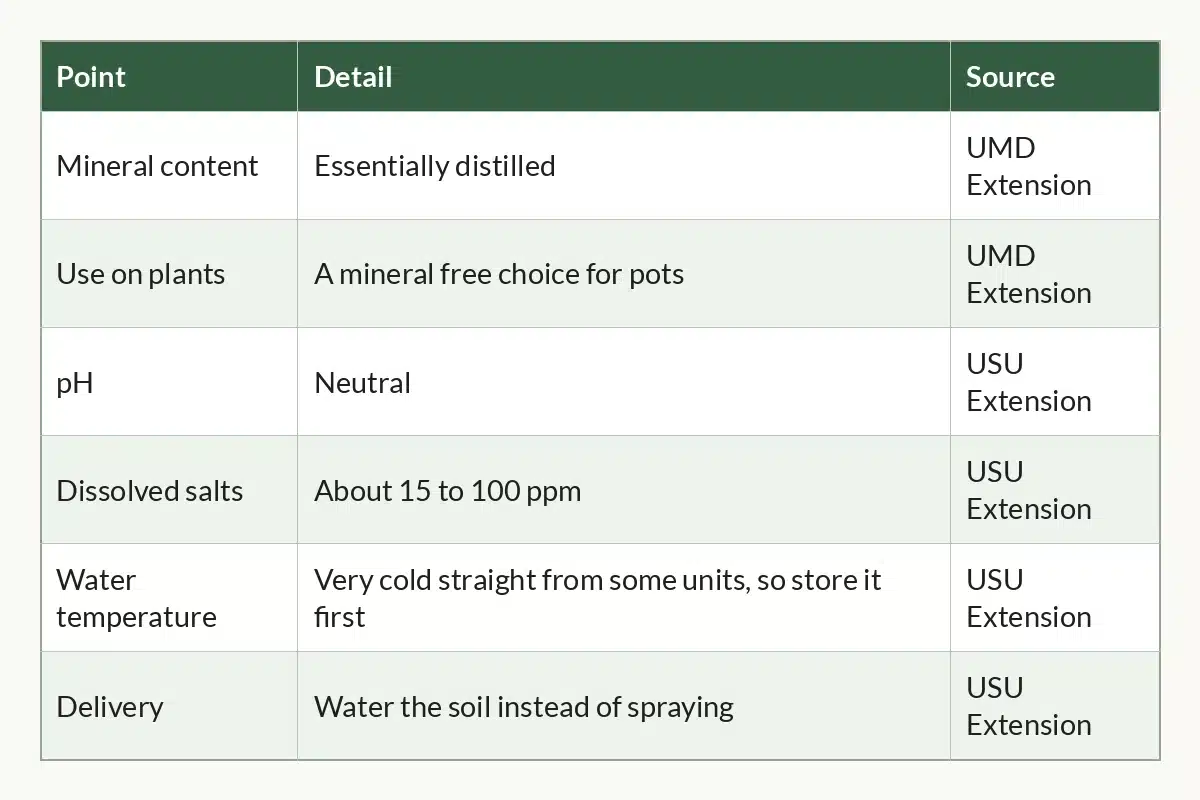
Dehumidifier Condensate at a Glance
| Point | Detail | Source |
|---|---|---|
| Mineral content | Essentially distilled | UMD Extension |
| Use on plants | A mineral free choice for pots | UMD Extension |
| pH | Neutral | USU Extension |
| Dissolved salts | About 15 to 100 ppm | USU Extension |
| Water temperature | Very cold straight from some units, so store it first | USU Extension |
| Delivery | Water the soil instead of spraying | USU Extension |
Should Cannabis Get Dehumidifier Water?
It works well for watering soil or potting mix. It adds almost no minerals, so it will not leave salt crusts the way hard tap water can. It puts water to use that would otherwise go down the drain, and it costs nothing.
Like distilled water, though, it brings no nutrients. Cannabis needs calcium and magnesium along with major nutrients, and some of that normally comes from tap water. If you switch to dehumidifier water, make sure your fertilizer supplies everything. Mixing it half and half with tap water is another option, since the tap portion brings back some calcium and magnesium while the condensate keeps overall mineral levels low. Our cal mag for cannabis page shows how growers fill that gap with purified water.
Because the water picks things up on its way to the bucket, soil watering suits it better than misting leaves.
What Can Get Into Dehumidifier Water?
Several things can enter between the coil and your watering can:
- Dust and debris pulled in with room air.
- Metal traces from coils and fittings, which the Tennessee Ask Extension answer raised as a possible concern.
- Microbes and slime that grow in a pan or bucket left sitting.
- Mold spores from the grow room air, especially in damp spaces.
USU adds a related caution about air conditioner condensate: in rare cases it can carry bacteria that spread in fine spray. It recommends drip irrigation over sprinklers for that reason, and notes the issue goes away once water is in the soil. Applying dehumidifier water to the soil, rather than spraying it, follows the same logic.
How Do You Collect and Store It?
How you collect it makes a big difference.
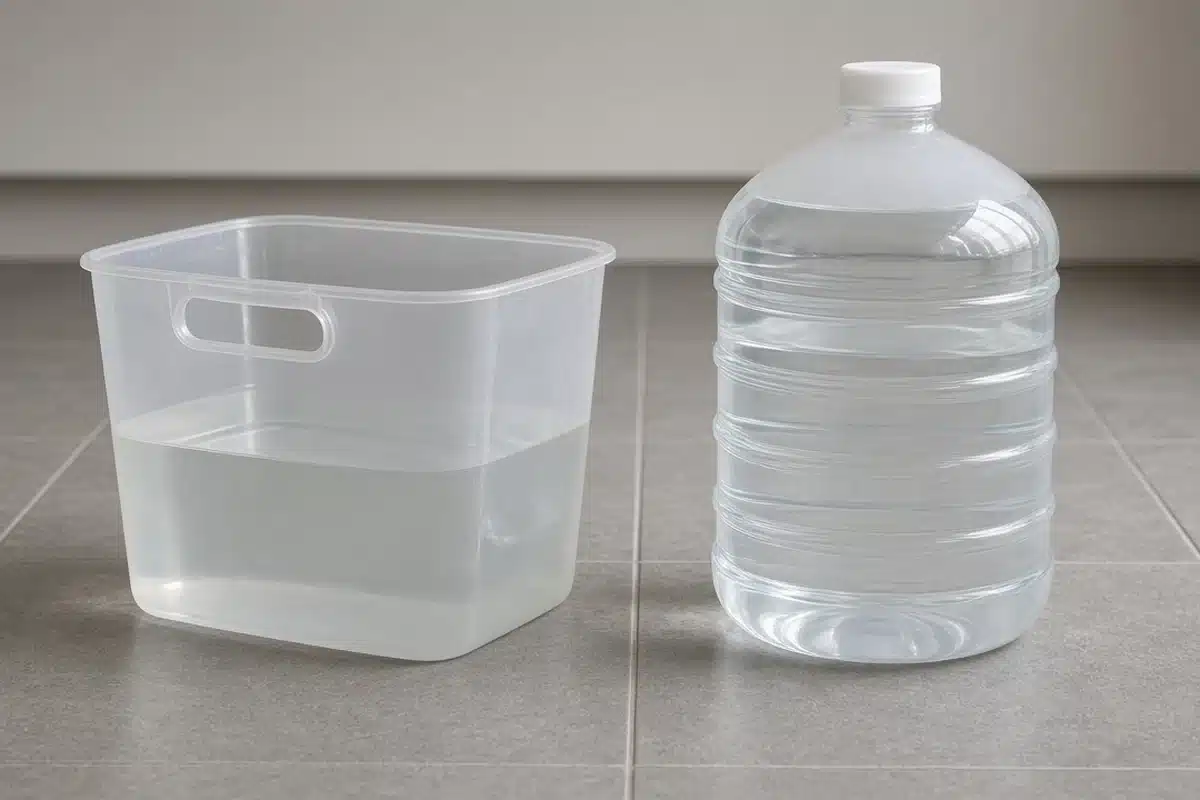
- Empty the bucket often. Water that sits for days grows slime.
- Wash the bucket regularly with soap and water, then rinse well.
- Use a clean, covered container for storage, ideally plastic.
- Let cold water warm up. USU notes that water straight from some condensers is very cold, so storing it first brings it closer to room temperature.
- Use plastic fittings. USU points out that very pure water can slowly corrode metal, so it suggests plastic pipes for collection.
A unit that drains through a hose can feed straight into a covered jug instead of a floor drain.
How Much Water Does a Dehumidifier Produce?
Output depends on the size of the unit, the room temperature and how humid the air is. How much you collect depends on the room, and a humid tent full of plants gives far more than a dry room. USU gives a sense of scale for air conditioners, noting that a 2 ton unit can produce 20 to 25 gallons a day in summer.
For most home growers, dehumidifier output covers only part of the watering needs. Plants themselves release much of that moisture through their leaves, so in a sense you are capturing water they already used. See it as a useful supplement alongside your main water source.
Does Running a Dehumidifier Change the Water Quality?
The longer water sits in a warm pan, the more chance microbes have to grow. Units with a continuous drain hose move water out quickly, which keeps it fresher. Units with a bucket hold water until you empty them, sometimes for a day or more.
Filters matter too. A clogged air filter lets more dust reach the coil, and some of that dust ends up in the water. Clean or replace the filter on the schedule the maker recommends, and wipe the coil area during routine cleaning.
How Does It Compare With Other Water Sources?
Dehumidifier water sits close to distilled and reverse osmosis water in mineral content. It shares their main limit, which is the lack of nutrients, and adds a small risk from the collection path.
Compared with tap water, it avoids mineral buildup but loses the background calcium and magnesium many tap supplies provide. Our article on graywater for cannabis gardens covers another way to reuse household water, with its own set of rules.
How to Use Dehumidifier Water on Cannabis
- Collect it fresh. Empty the bucket daily during heavy use, since warm standing water grows slime quickly.
- Keep everything clean. Wash the bucket and storage jugs often.
- Cover stored water. Keep out dust and light.
- Bring it to room temperature. Let cold water sit before use.
- Add nutrients. Mix in a complete fertilizer that includes calcium and magnesium.
- Water the soil. Avoid misting leaves with it.
- Check runoff now and then. Watch for pH drift in containers.
- Discard slimy water. If it smells or looks cloudy, pour it out.
Troubleshooting Dehumidifier Water Problems
Water smells musty. It sat too long. Empty and wash the bucket more often.
Slime forms in the bucket. Microbes are growing in it. Clean it with soap and rinse well.
Plants look pale after switching. The water is missing minerals. Add calcium and magnesium.
Pots stay cold after watering. Water came straight from the unit. Store it first.
Bucket fills too fast to keep up. Route the drain hose to a covered container.
Sources
- UMD Extension, Watering Indoor Plants: https://www.extension.umd.edu/resource/watering-indoor-plants
- Utah State University Extension, Using Non traditional Water Sources in the Landscape: https://extension.usu.edu/laep/research/nontraditional
- Ask Extension, AC Condensation: Is It Okay to Water With? (#291623): https://ask.extension.org/kb/faq.php?id=291623
FAQ
Is dehumidifier water the same as distilled water?
UMD describes it as distilled, though it can pick up dust and microbes in the bucket.
Can I use dehumidifier water on cannabis?
Yes, on the soil, as long as you add nutrients and keep the bucket clean.
Does it need pH adjustment?
USU reports condensate is neutral, so check after adding fertilizer.
Should I spray leaves with it?
No. Watering the soil is the cleaner choice.
How long can I store it?
Use it within a few days and keep it covered.