
Growing Cannabis In Straw Bales: Setup And Conditioning
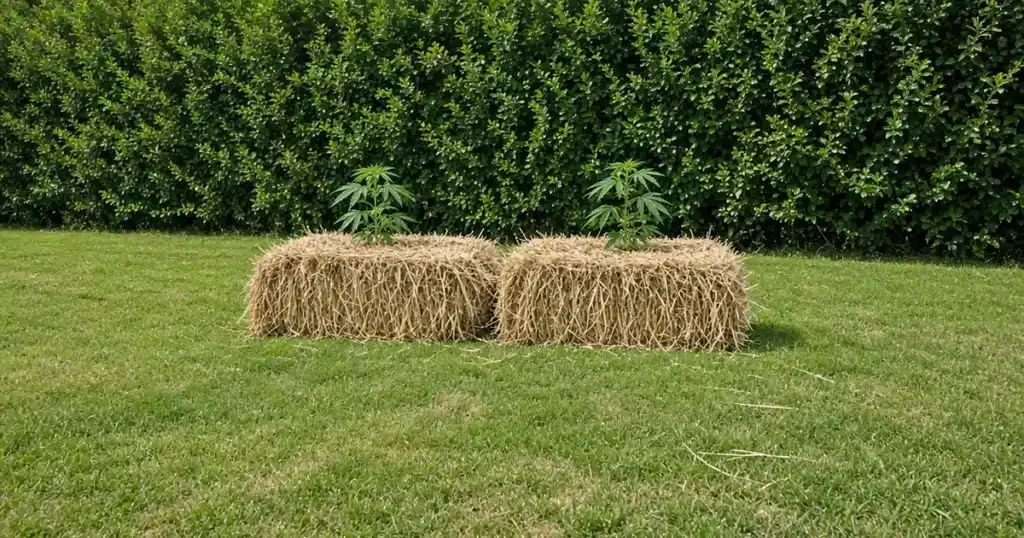
Quick answer: When growing cannabis in straw bales, each conditioned bale works as a raised planter outdoors. Condition each bale for about 12 days with daily water and a nitrogen source so the inside starts to break down. Then open a planting pocket, add a little growing mix, set the plant in and keep the bale evenly moist all season. Ask the supplier how the field was treated.
What Is Straw Bale Gardening?
Straw bale gardening uses a conditioned bale as a raised planter. University of Missouri Extension describes it as a mix of container gardening and raised-bed gardening for sites with poor soil or little ground space.
The method suits rented yards, rocky ground and driveways where you cannot dig a bed. You still need a hose or cans within reach, because straw will not forgive a missed watering in July.
Expect the bale to shrink and soften as microbes work. Plan stakes and ties early so a leaning plant does not pull a soft corner apart.
One season is the normal life. Trying to squeeze a second full outdoor run from a collapsed bale usually ends in uneven moisture and tippy plants.
Straw vs Hay Bales
Choose straw, not hay. Straw is the hollow stalks left after grain harvest. Hay is cut forage and often carries grass and weedy plant seeds that sprout once the bale stays wet. Twine should run along the sides with the cut ends of the stems facing up.
If you cannot tell straw from hay, do not use the bales. Seed heads and leafy forage in the bale are the usual giveaway that you are holding hay.
Ask for straw from a grain crop. If the only bales available are mixed or unknown, keep looking. A clean start saves weeks of pulling sprouts from the planter walls.
Ask the supplier how the field was treated. That one question helps keep residual field chemistry off your plants.
Placing and Setting Up Bales
Set bales where they will stay for the season. Once wet, they are heavy and hard to move. Give them full sun and room to walk a hose between rows.
Leave the twine on. It holds the bale together while the inside softens.
Line bales so twine faces the sides and the cut stems face the sky. That orientation wets more evenly and gives planting pockets a flatter top. Leave walk space for a hose without crushing wet corners.
On soil, University of Missouri Extension suggests a base of thick layers of newspaper to control weeds.
Orient rows for your hose path and for sun. Tall plants on the south side of a short row will shade everything behind them by midsummer.
How to Condition Straw Bales

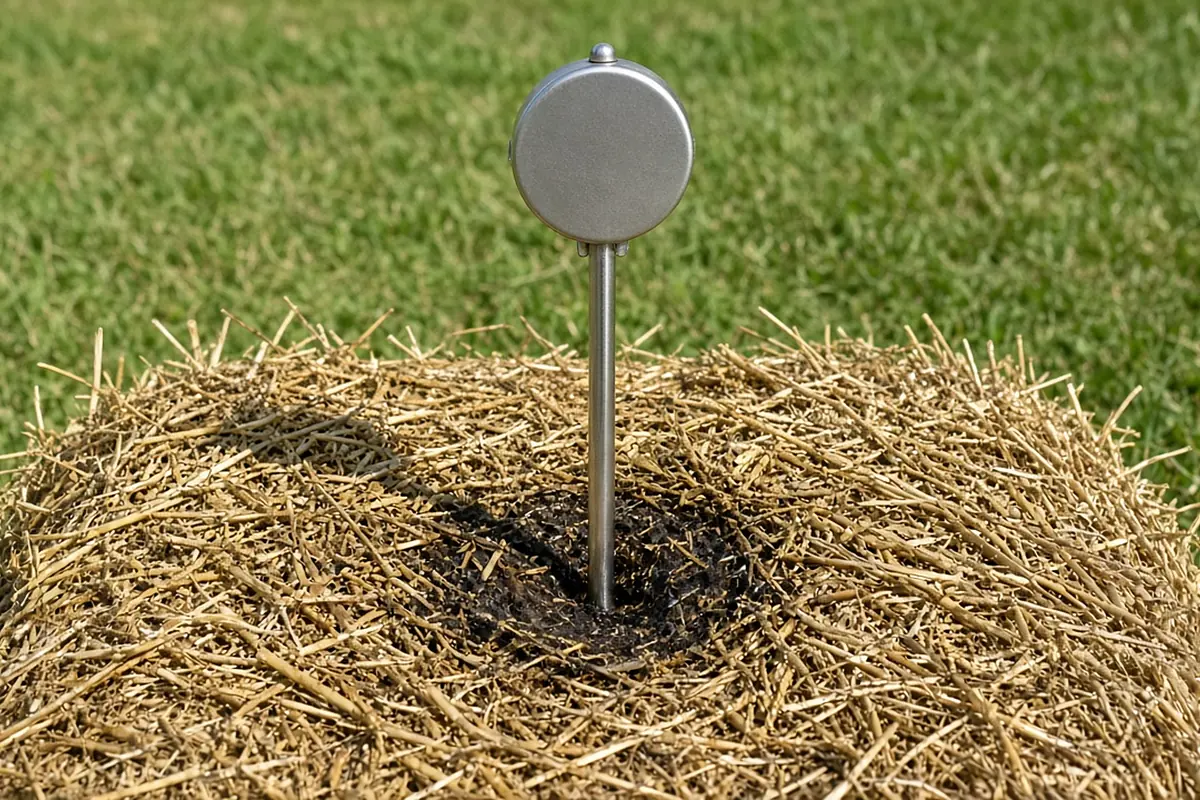
Conditioning means daily water plus nitrogen so microbes start breaking the straw down before you plant. University of Missouri Extension outlines about 12 days of daily soaking. On days 1, 3 and 5, add 1/2 cup of a high-nitrogen fertilizer such as urea or ammonium nitrate to each bale. On days 7 and 9, add 1/4 cup. On day 11, add 1 cup of a general-purpose fertilizer such as a 12-12-12 mix.
Water thoroughly after each feeding so moisture reaches the core. A long-stem thermometer pushed into the bale should show a heat rise, then a cool-down toward outdoor temperature before planting. Amounts above are per bale.
Watch the thermometer as much as the calendar. A bale that never heats may be too dry or short on nitrogen. A bale that is still hot in the core is not ready for roots. University of Missouri Extension says to plant once the bale is cool to the touch after day 12.
If you use an organic nitrogen source, follow a Cooperative Extension organic schedule for amounts. Do not guess cup-for-cup swaps from a synthetic plan.
Steam or a sour smell can rise from a hot bale. That is the microbial flush. Wait for the cool-down before roots go in.
If daytime highs stay cold, conditioning can run longer than two weeks. Judge readiness by a cooled core and a bale that has started to soften, not by the calendar alone.
Planting Cannabis in a Straw Bale
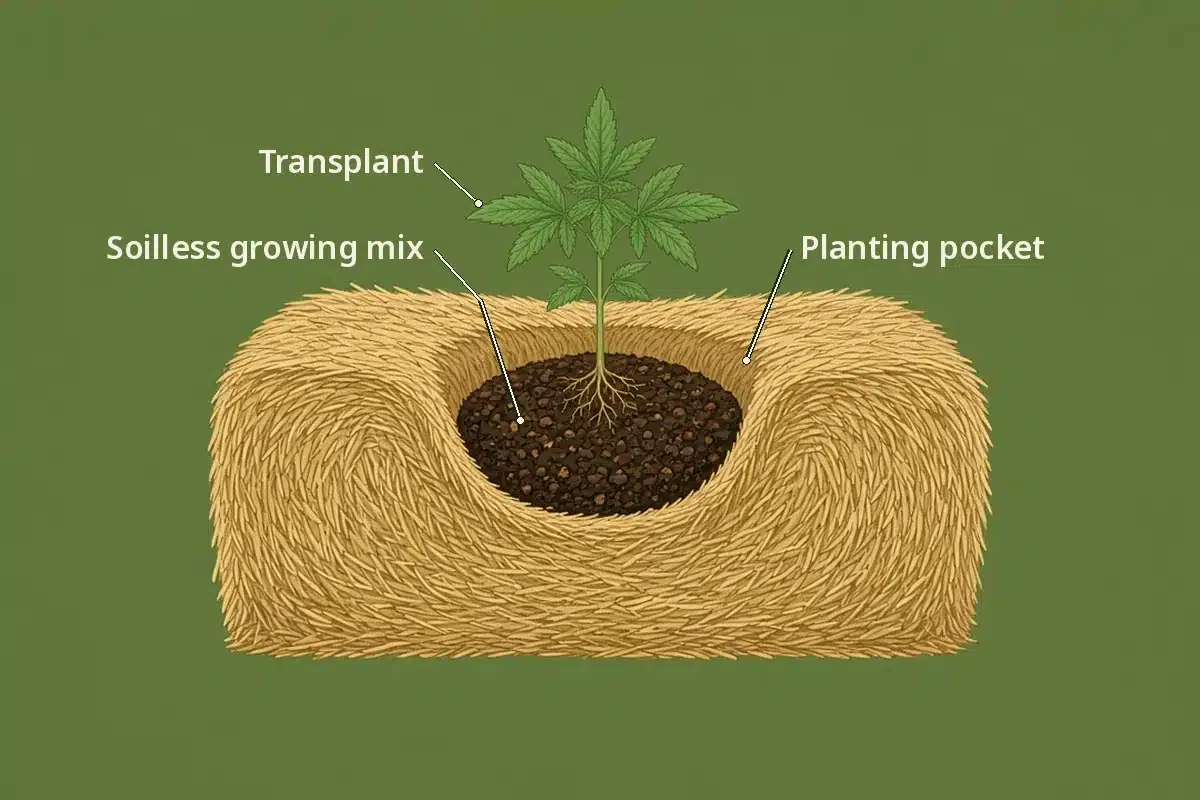
When the bale has cooled, open a planting pocket in the top, fill it with a soilless growing mix as University of Missouri Extension describes and set the transplant so roots contact the damp straw. Keep garden soil out of the pocket.
University of Missouri Extension advises against crowding plants in a bale and suggests spacing them as you would in soil. Use another bale instead of packing plants tight.
Firm the growing mix around the root ball so air gaps do not dry the roots on day one. Water in gently until moisture shows below the pocket. Stake tall plants early, because straw offers less anchorage than soil.
Fill cracks that open in the top with more straw or sterile mix so pockets do not dry into caves. Keep garden soil out of those cracks.
If a transplant sits high after the bale settles, add mix around the collar rather than burying new stem deep in raw straw.
Watering and Feeding Through the Season
Straw drains fast. Check moisture daily in hot weather and water until moisture shows at the bottom. University of Missouri Extension notes that nitrogen deficiency is common in straw bales because microbes use nitrogen as they break down the straw, so yellowing leaves may need more nitrogen during the season. Do not overdo nitrogen or you push leafy growth at the expense of flowers.
In heat waves, morning checks catch dry bales before midday wilt. Evening checks catch bales that drained all afternoon. Keep a watering can dedicated to the row so you are not guessing from the house.
Mulching the top of the bale lightly with finished compost can slow surface drying without turning the planter into a soil bed. Keep the collar of the plant clear. For mulch around plants in the ground, read about mulch for cannabis.
In windy sites, check the upwind face of each bale. That face dries first and fools you if you only probe the sheltered side.
Pros and Cons of Growing Cannabis in Straw Bales
| Pros | Cons |
|---|---|
| Works over poor or paved ground | Needs about two weeks of conditioning first |
| Raised height eases tending | Dries faster than a soil bed |
| Bale becomes mulch or compost later | Lasts mainly one season |
Sources
FAQ
Can You Grow Cannabis in Straw Bales?
Yes. A conditioned straw bale acts like a raised planter with its own growing medium. You still need full sun, steady water and a finished conditioning period before the plant goes in. Ask the supplier how the field was treated.
How Long Do You Condition a Straw Bale Before Planting?
University of Missouri Extension describes a 12-day schedule of daily watering with nitrogen on selected days, then a general-purpose feeding near the end. Watch for a heat rise in the core, then plant once the bale is cool to the touch.
Can I Use Hay Bales Instead of Straw Bales?
Straw is the better choice. Hay is cut forage and often holds grass and weedy plant seeds that sprout in the bale. Straw is the leftover stalks after grain harvest and starts cleaner for a planter. If you cannot tell straw from hay, do not use the bales.
How Much Room Does One Cannabis Plant Need in a Bale?
University of Missouri Extension advises against crowding plants in a bale and suggests spacing them as you would in soil. Give each cannabis plant enough root room and airflow for its expected size, and use a second bale rather than packing plants tight.


