
Cucumber Leaves White Spots: Powdery Mildew or Mites?
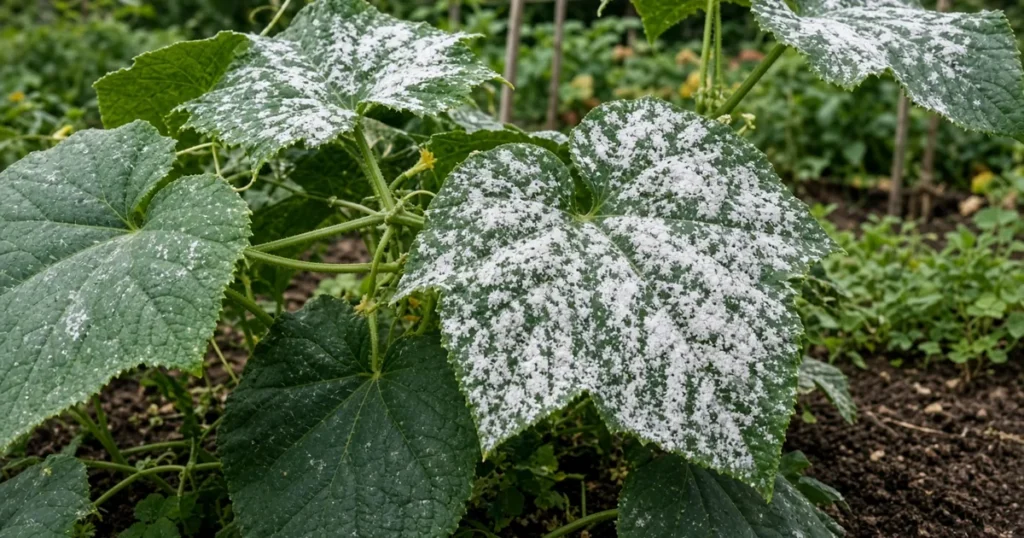
Cucumber leaves white spots usually mean powdery mildew or twospotted spider mites. University of Minnesota Extension notes powdery mildew forms white to gray powdery felt, while spider mite feeding leaves pale stippled leaves with webbing underneath. Rub a spot plus turn the leaf over to tell them apart.
The short answer
White powder that rubs off points to powdery mildew. Fine pale specks with tiny moving dots plus webbing under the leaf point to spider mites. University of Maryland Extension advises resistant varieties plus spacing for air circulation. University of Minnesota Extension advises a hard water spray to knock mites off.
What does powdery mildew look like on cucumbers?
University of Minnesota Extension notes pale yellow spots form first on the oldest leaves, then white to gray powdery felt covers spots or whole leaves. Shaded leaves are often hit first. University of Maryland Extension notes the growth can cover both leaf surfaces plus stems, plus infected leaves may wither.
| Sign | Powdery mildew | Spider mites | Source |
|---|---|---|---|
| Leaf look | White to gray powder | Fine pale stippling | University of Minnesota Extension |
| Where first | Oldest plus shaded leaves | Leaf undersides | University of Minnesota Extension |
| Extra sign | Powder rubs off | Webbing in heavy cases | University of Minnesota Extension |
| Weather | 50F to 90F | Hot plus dry | University of Minnesota Extension |
Source: University of Minnesota Extension.
How do spider mites mark cucumber leaves?
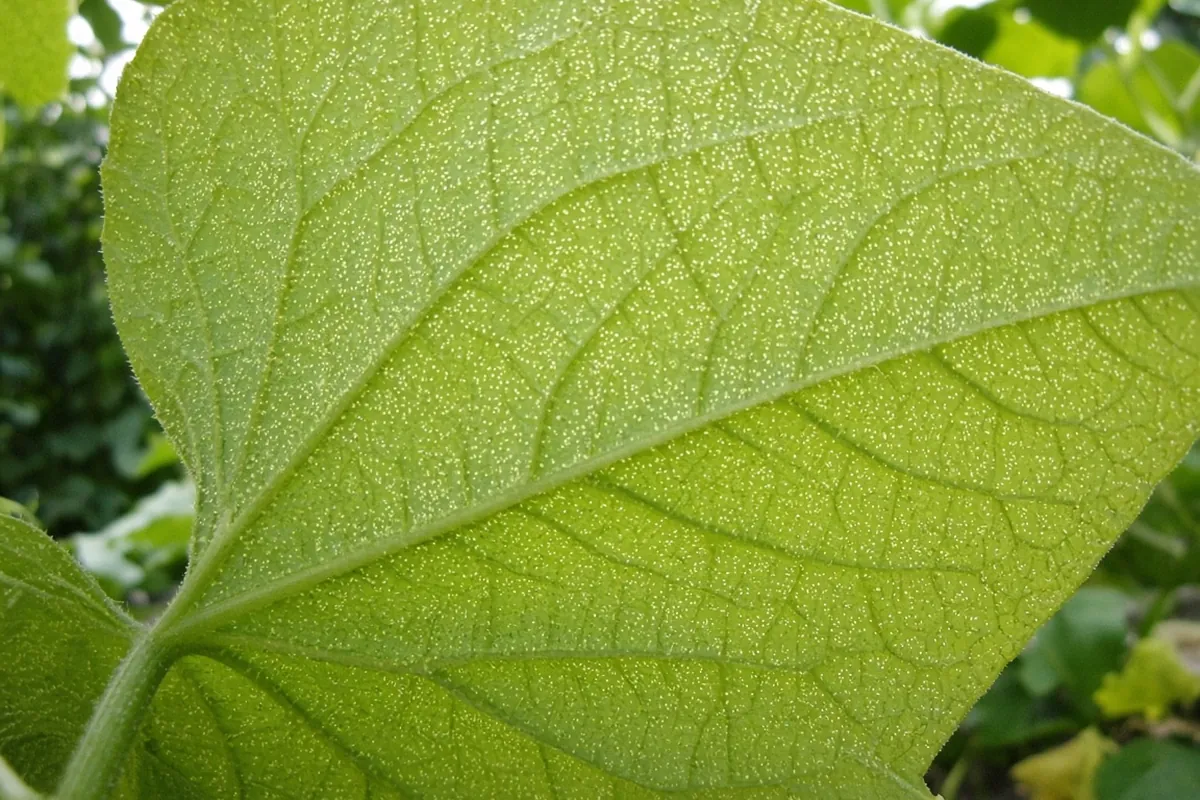
University of Minnesota Extension notes mites feed on sap under the leaf, leaving tiny white or yellow spots that give a stippled look. Heavy infestations add webbing. University of Maryland Extension notes spots can merge into yellow patches plus the undersides may look dirty. Mites are about 1/50 inch long.
What weather favors each problem?
Clemson Cooperative Extension notes powdery mildew infects between 50F plus 90F during dry weather with high relative humidity. University of Minnesota Extension notes spider mites usually appear in late June plus August plus are more common in hot dry weather. A hot dry spell can bring both at once.
How to: step by step
- Scan upper leaf surfaces for white powder.
- Turn leaves over plus look for tiny mites plus webbing.
- Tap a leaf over white paper to spot falling mites.
- Pull badly affected leaves.
- Spray mites off leaf undersides with a hard stream of water.
- Water one inch weekly in dry spells.
Troubleshooting
White flour like patches: powdery mildew. Strip leaves plus boost airflow.
Fine pale specks with webbing: spider mites. Hose off plus water evenly.
Yellow angular spots: another disease. Contact your local Extension office.
For related reading see how to prevent detect and fight mildew on your weed plants, strategies for preventing plus controlling spider mites plus the effects of environmental stresses on weed plants. Kind Seed Co also stocks cannabis seeds.
Sources
- Key to common problems of cucumbers, University of Maryland Extension
- Cucumber, discolored leaves (diagnostic), University of Minnesota Extension
- Twospotted spider mites in home gardens, University of Minnesota Extension
- Cucumber, squash, melon and other cucurbit diseases, Clemson Cooperative Extension HGIC
FAQ
Does powdery mildew affect cucumber fruit?
It can change how fruit looks. University of Minnesota Extension notes fruit may be blotchy or have sunscald on plants with powdery mildew, since leaves wither plus expose fruit. Severe infection can make leaves plus vines wither plus die. Remove badly affected leaves early plus give plants room for airflow.
Do spider mites like hot weather?
Yes. University of Minnesota Extension notes spider mites are more common in hot dry weather plus thrive on plants under stress. It advises checking garden plants every 3 to 5 days in drought, about one inch of water a week plus mulch to hold moisture. Avoid feeding plants during drought.
Are there mildew resistant cucumbers?
Yes. Clemson Cooperative Extension notes powdery mildew resistant varieties are available for most cucurbits. University of Maryland Extension advises growing disease resistant cucumber varieties plus giving plants room in a sunny spot for air circulation. Check seed packets or catalogs for resistance codes when buying seed.
Can white spots spread to squash?
They can. Clemson Cooperative Extension covers powdery mildew across cucumber, squash, melon plus other cucurbits. University of Maryland Extension notes the spores spread by wind. University of Minnesota Extension notes twospotted spider mites feed on over 200 kinds of plants, so nearby squash may host them too.
How can I check for spider mites?
University of Minnesota Extension advises looking for stippling or webbing, then using a hand lens on the underside of discolored leaves. Another way is holding white paper under a leaf plus shaking it to see mites fall. Adults are yellow orange to dark crimson with two dark spots.



