
Potato Plants Falling Over? Normal Dieback or Stress
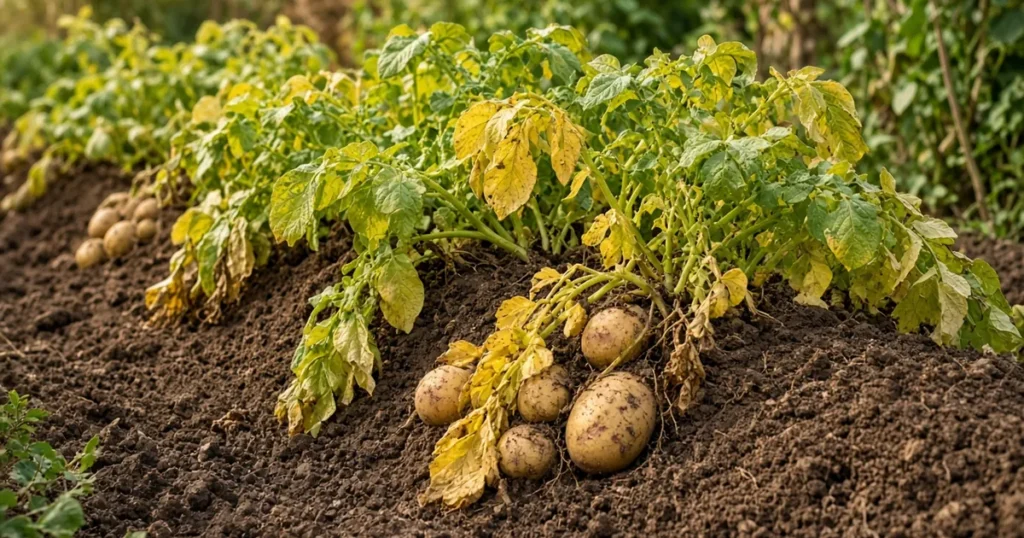
Potato plants falling over late in the season are usually maturing, since the vines die back once tubers finish growing. NC State Extension notes leaves die back after tubers mature. Plants that flop while still green plus early in summer point to dry soil, pests or disease. Check plant age plus leaf color first.
The short answer
Yellowing vines that fall over three to four months after planting are normal. NC State Extension notes mature potatoes take 3 to 4 months. Green plants that flop early point to stress. Nebraska Extension advises waiting until vines have been dead about two weeks before digging storage potatoes.
Why do potato vines fall over at the end of the season?
NC State Extension notes the leaves die back after the tubers have finished maturing plus mature potatoes take 3 to 4 months. Iowa State University Extension notes storage potatoes are dug after the vines die plus the crop is mature. Falling yellow vines late in summer are part of that process.
| Stage | Timing | Source |
|---|---|---|
| New potatoes | About 7 to 8 weeks after planting | Nebraska Extension |
| Mature crop | 3 to 4 months | NC State Extension |
| Dig storage potatoes | Vines dead about two weeks | Nebraska Extension |
| Skin setting | 50 to 60F for 2 weeks | Iowa State University Extension |
Source: NC State Extension, Nebraska Extension plus Iowa State University Extension.
What causes potato plants to flop early?
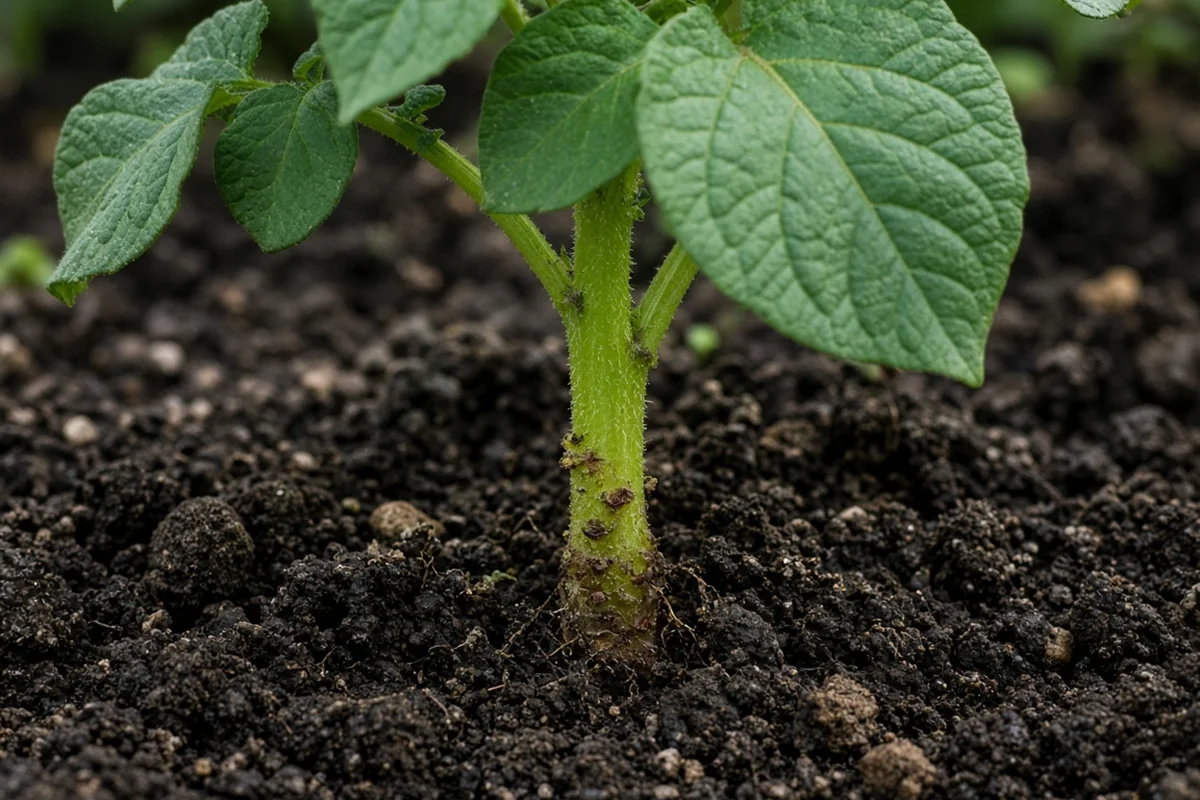
Early flopping on green plants points to stress. NC State Extension notes light soil that stays consistently moist grows even tubers, plus poorly drained soil can rot them. It lists Colorado potato beetles, flea beetles, wireworms plus leafhoppers as pests, with beetle larvae able to defoliate plants. Late blight also rots tubers.
When should potatoes be dug?
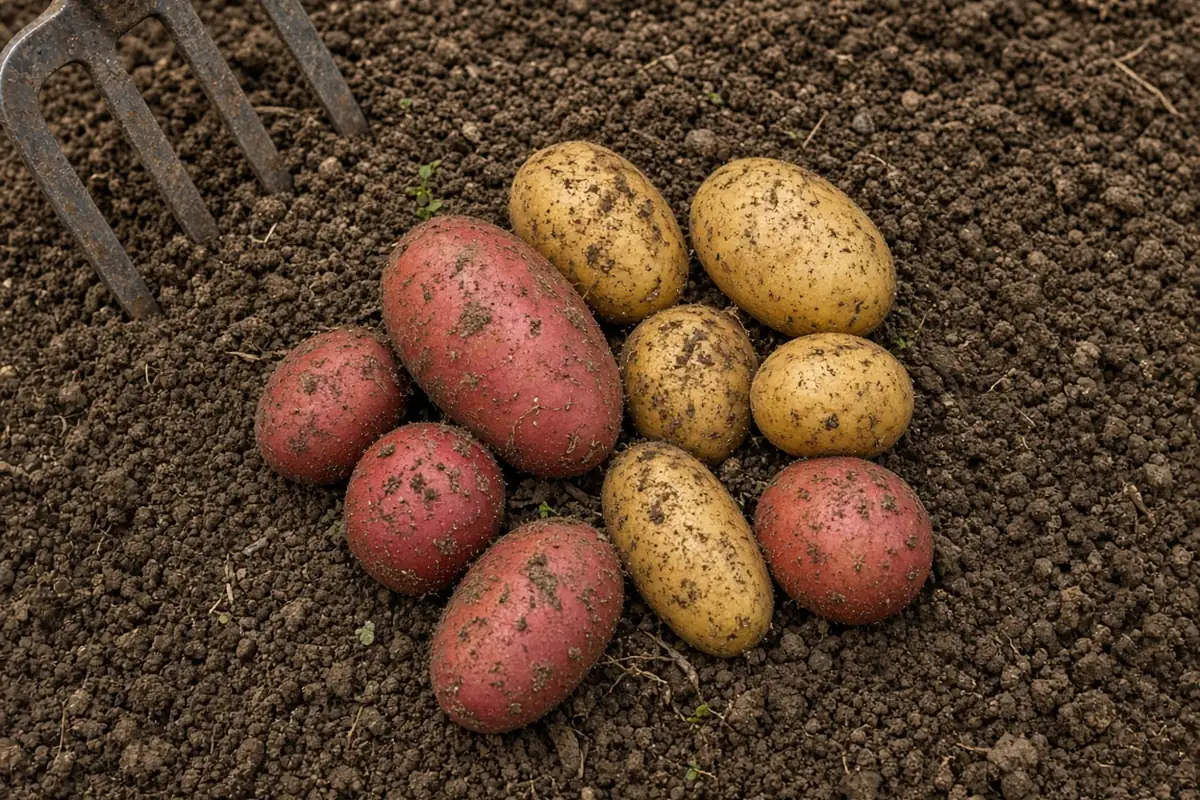
Nebraska Extension advises digging storage potatoes once vines have died back naturally plus been dead about two weeks. Dig one or two sample hills. Iowa State University Extension notes thin skins that rub off easily mean the crop is not mature, so wait several more days. Pick a warm dry day.
How to: step by step
- Note when the potatoes went in.
- Check whether leaves are yellowing or still green plus wilting.
- Feel for moisture several inches down.
- Look for beetles or larvae on the leaves.
- Dig one or two hills to check skin set.
- Let skins set before storing tubers.
Troubleshooting
Yellow vines fall late in summer: normal maturity. Get ready to harvest.
Green vines wilt in dry weather: dry soil. Water to hold even moisture.
Rotting tubers or stems: disease. Pull affected plants.
For related reading see the effects of environmental stresses on weed plants, underwatering cannabis plus watering cannabis during drought. Kind Seed Co also stocks cannabis seeds.
Sources
- When should I harvest potatoes?, Iowa State University Extension and Outreach
- Potatoes: harvesting and storage, Nebraska Extension in Lancaster County
- Solanum tuberosum (potato), NC State Extension Gardener Plant Toolbox
FAQ
Should potato plants be staked?
Staking is not part of standard care. NC State Extension describes hilling, where soil is mounded along the stem, which grows more tubers along the buried stem. Potatoes may also grow in trenches to make hilling easier. Flopping late in the season is normal as the vines mature plus die back.
How long after vines die should potatoes be dug?
Nebraska Extension advises waiting until vines have been dead about two weeks before digging storage potatoes. Dig one or two sample hills first. Mature skins stay firmly attached when rubbed with a finger. If skins rub off easily, the crop is not fully mature plus will not store well.
Can potatoes be harvested before vines die?
Yes, as new potatoes. Iowa State University Extension notes new potatoes are dug while plants are still green plus tubers are over 1 inch across. Nebraska Extension notes they reach a good size about 7 to 8 weeks after planting. New potatoes do not store well, so use them soon.
Does hilling stop potatoes from flopping?
Hilling is mainly about tubers. NC State Extension notes mounding soil along the stem encourages more tubers along the buried parts of the stem. It does not stop the natural dieback that comes once tubers finish maturing. Late season flopping on yellow vines is a sign the crop is close to ready.
How should potatoes be stored after digging?
Iowa State University Extension advises holding tubers at 50 to 60F with high relative humidity of 85 to 90 percent for 2 weeks first. That period lets minor cuts plus bruises mend plus thickens the skin. Nebraska Extension notes washing shortens storage life, plus damaged potatoes are likely to rot in storage.



