
Earthworms in Garden Soil: What They Do for Cannabis Beds
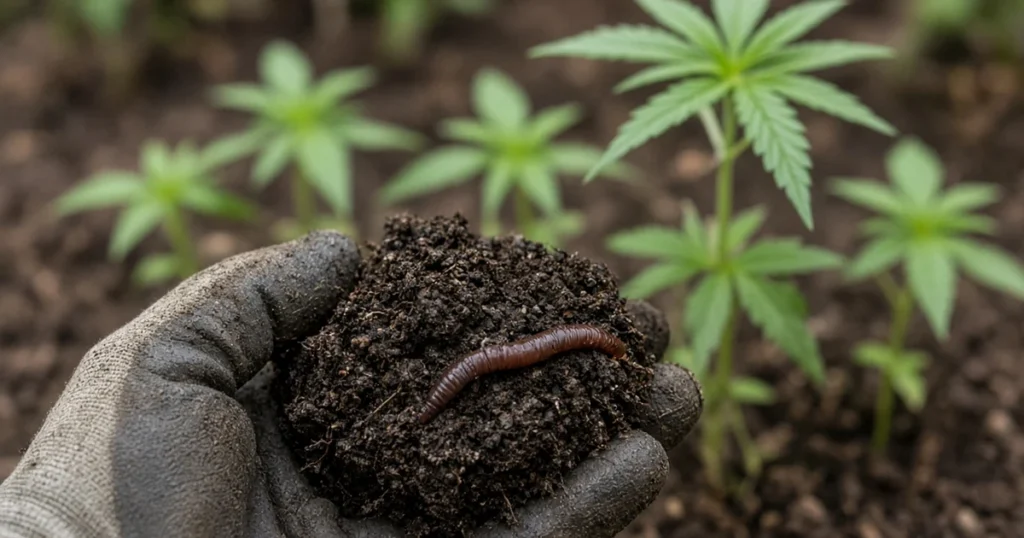
Earthworms are a familiar sight in outdoor cannabis beds, and University of New Hampshire Extension notes that if you have good garden soil, earthworms will probably show up on their own. Colorado State University Extension says earthworms aid soil fertility and structure and contribute to overall plant health. UNH Extension also notes that studies have found earthworm burrows can improve water infiltration and soil aeration, and that earthworm activity can relieve compaction. Here you will learn what earthworms do in garden beds, the kinds you are likely to see, the conditions that keep them active, the practices that harm them and how to check your beds for them.
The earthworms you find in garden beds
Colorado State Extension describes three types of earthworms:
- Anecic worms, whose name is Greek for up from the earth. They can burrow to depths of six feet and build permanent burrows into the deeper soil. They drag organic matter from the surface down into their burrows for food. The familiar nightcrawler is one of them.
- Endogeic worms, Greek for within the earth. They build extensive, non-permanent burrows in the upper soil and feed on the organic matter there. They live entirely in the soil and are usually noticed only after heavy rain brings them to the surface.
- Epigeic worms, Greek for upon the earth. They live on the soil surface, form no permanent burrows and feed on decaying organic matter. Common names include red worm and red wiggler.
According to Colorado State, anecic and endogeic worms are the types most often noticed in its region’s soils, and that anecic worms are larger than endogeic ones.
What earthworms do for soil
Colorado State Extension describes several ways earthworms improve garden soil:
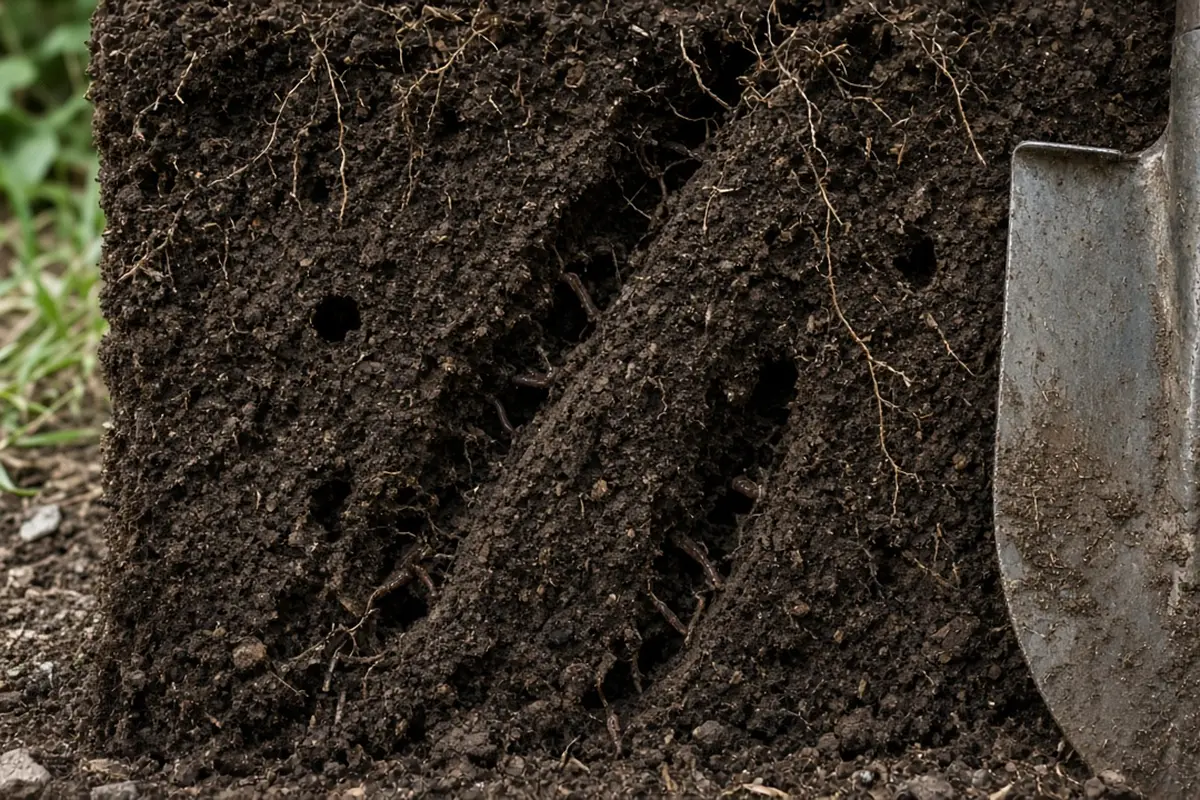
- Passages for air, water and roots. The deep burrows of anecic worms create channels that let soil gases exchange with the air.
- Better water movement in clay. Colorado State notes that clay soils with extensive earthworm burrows let water soak in and drain through more readily than clay soils without them.
- Deeper roots. With those channels, plants can root deeper and lower soil layers can take in air more quickly.
- Better tilth. Endogeic burrows tie together many of the large pore spaces in the soil and increase porosity.
- Crumb structure. Mucus from earthworm skin helps form soil aggregates, which make up the crumb of good soil structure.
- Water-holding capacity. By increasing organic matter, porosity and aggregation, earthworms can greatly increase how much water a soil holds.
UNH Extension adds that earthworm activity can relieve compaction and make nutrients available to plants. If your beds are packed hard, soil compaction in cannabis beds goes over other causes and fixes.
Colorado State also notes that earthworms are part of a host of organisms that break down organic matter in the soil, and that their casts are richer than the surrounding soil. The focus here is the worms living in your beds. Worm castings sold as a garden product are a separate topic, handled in Kind Seed Co’s worm castings for cannabis.
What earthworms need to stay active
Earthworms are sensitive to their surroundings. Colorado State Extension explains that they breathe through their skin and need an environment with at least 40 percent moisture, about as damp as a wrung-out sponge. If their skin dries out, they cannot breathe and will die. It also notes that earthworms prefer a near-neutral soil pH.
Temperature and water both matter:
- Temperature. Colorado State says soil temperatures above 70 degrees F or below 40 degrees F discourage earthworm activity.
- Waterlogging. When soil becomes waterlogged, oxygen is driven out of the large pore spaces and earthworms cannot breathe.
- Drying. When soil dries beyond half of field capacity, earthworm skin dries out in the soil.
The good news is that worm needs line up with plant needs. Colorado State notes that keeping moisture at levels ideal for plant growth in a garden will also be ideal for earthworm activity.
UNH Extension adds that earthworm populations are usually highest in moist, loamy soil. It notes that worms often are not present in sandy soils, because sandy soil dries out quickly and forces worms deeper or into a resting state until conditions improve. UNH also notes that worms are more likely to live in soils that are slightly acidic to neutral.
Practices that harm earthworms
Colorado State Extension names several practices that reduce earthworm numbers:
- Tillage. It destroys permanent burrows and can cut and kill worms. Colorado State notes that fall tillage can be especially destructive, and that deep and frequent tillage can reduce earthworm populations by as much as 90 percent.
- Salty soil. Earthworms are hindered by salty conditions.
- Some garden chemicals. Colorado State notes that some chemicals are toxic to earthworms, with some insecticides causing severe reductions in its table.
UNH Extension agrees that reducing tillage can improve earthworm habitat. The Minnesota Office for Soil Health at the University of Minnesota notes that earthworm numbers respond to management, especially physical disturbance, which destroys worms and their habitat.
You do not need to buy earthworms
It is natural to wonder whether to add worms to a bed. UNH Extension answers clearly. If you have good garden soil, earthworms will probably show up on their own. It says buying worms to add to the soil is not necessary, nor is moving them from one place to another, and such actions can end up causing more harm than good.
UNH also notes that it is possible to have healthy soil without earthworms. If worms do not show up, it says your plants will likely thrive anyway.
There is a wider reason for caution. UNH Extension explains that while earthworms can benefit vegetable beds, they can seriously damage natural forest ecosystems by consuming large amounts of leaf litter and changing the soil. It adds that red wigglers sold for indoor composting have the potential to escape into forests and should not be used in outdoor piles.
Watch for jumping worms
Not every worm in a bed is welcome. UNH Extension warns that Asian jumping worms are especially damaging to natural ecosystems and should not be moved. Colorado State Extension describes them as an invasive worm spreading through the United States. It notes they can be carried on footwear, recommends washing footwear after visiting areas where they are found and advises never buying them for gardening. How to recognize them is shown in jumping worms in cannabis gardens.
How to check your beds for earthworms
You can get a rough picture of earthworm activity with a shovel. The Minnesota Office for Soil Health describes earthworms as a good indicator of earthworm habitat and food supply. It says they are measured by digging out a known volume of soil, such as one cubic foot, and counting the worms. It notes you can also look for earthworm casts.
A simple way to do it:
- Choose a day when the soil is moist, since Colorado State notes worms avoid soil that is too dry, too wet, too hot or too cold.
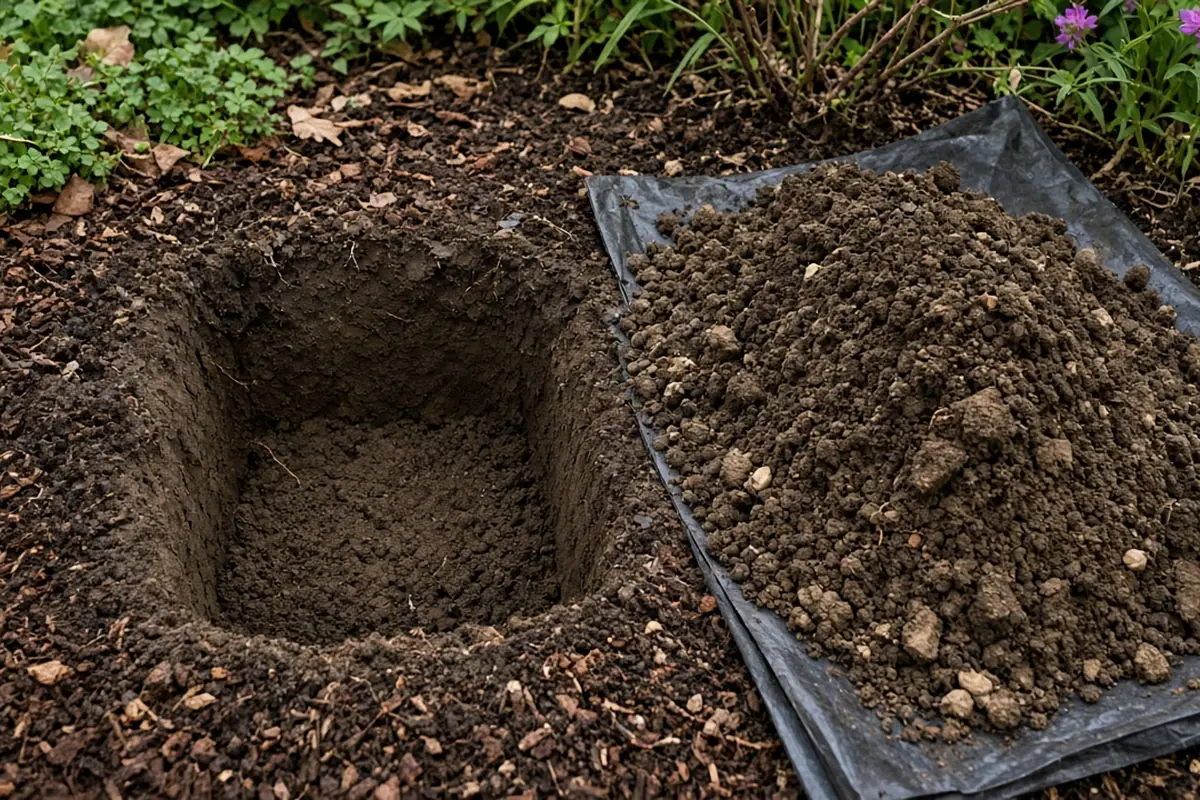
- Mark a square one foot on each side and dig it out one foot deep.
- Tip the soil onto a tarp and sort through it by hand, counting the worms.
- Return the soil and worms to the hole.
- Repeat the count in later seasons. The Minnesota Office for Soil Health notes that earthworm numbers respond to management.
Treat the result as one clue, not a verdict. UNH Extension reminds growers that healthy soil is possible without earthworms.
Troubleshooting
You find no worms in a sandy bed. That is common. UNH Extension notes worms often are not present in sandy soils, which dry out quickly. Plants can still thrive without them. UNH also notes that mulching and reducing tillage can improve earthworm habitat.
Worms vanish in midsummer. The soil may be too hot or too dry. Colorado State says soil above 70 degrees F discourages activity and dry soil dries out worm skin.
Worms crowd the surface after heavy rain. Waterlogged soil drives out oxygen, Colorado State explains.
Worm numbers drop after you till. Colorado State notes tillage destroys burrows and kills worms, with fall tillage especially harmful.
Sources
- Colorado State University Extension. Earthworms (GardenNotes #218). https://extension.colostate.edu/resource/earthworms/
- University of New Hampshire Extension. Should I put earthworms in my garden? https://extension.unh.edu/blog/2020/12/should-i-put-earthworms-my-garden
- University of Minnesota, Minnesota Office for Soil Health. Indicators of soil health. https://mosh.umn.edu/indicators
FAQ
Are earthworms good for garden soil?
Yes. Colorado State Extension says earthworms aid soil fertility and structure and contribute to plant health. Their burrows create passages for air, water and roots, help water soak into clay and increase water-holding capacity. UNH Extension adds that earthworm activity can relieve compaction and make nutrients available to plants.
Should I buy earthworms for my cannabis beds?
No. UNH Extension says that if you have good garden soil, earthworms will probably show up on their own. It says buying or moving worms is not necessary and can cause more harm than good, especially to nearby forests. UNH also notes healthy soil is possible without earthworms, and plants will likely thrive anyway.
Why are there no earthworms in my garden?
Conditions may not suit them. UNH Extension notes worms are often absent from sandy soils that dry out quickly. Colorado State Extension says soil above 70 or below 40 degrees F, waterlogged or very dry soil, salty soil and deep or frequent tillage all discourage or reduce earthworm populations.
Does tilling hurt earthworms?
Yes. Colorado State Extension says tillage destroys permanent burrows and can cut and kill worms. It notes fall tillage can be especially destructive and that deep and frequent tillage can cut earthworm populations by as much as 90 percent. UNH Extension agrees that reducing tillage can improve earthworm habitat.


