
Winterize Drip Irrigation in Your Cannabis Garden
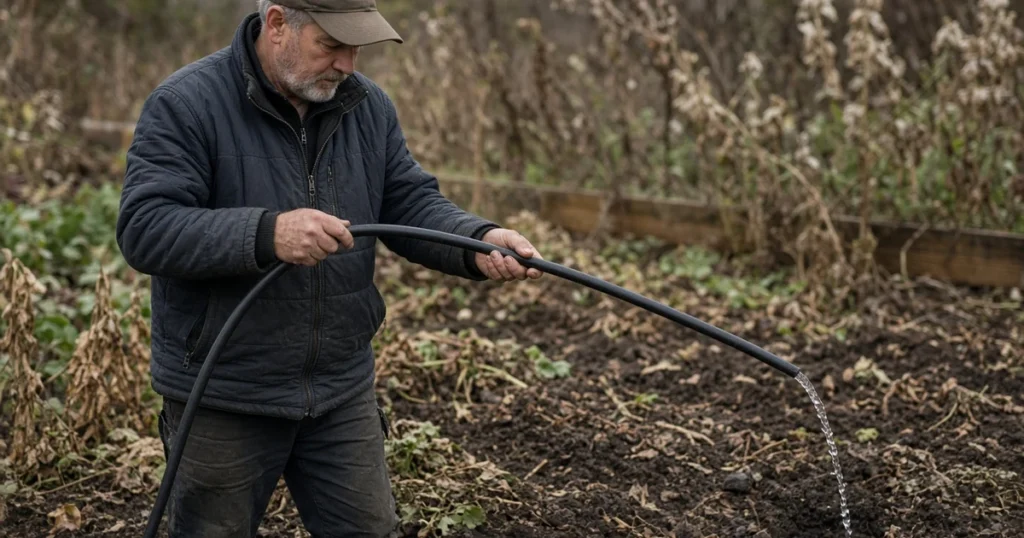
When the outdoor cannabis harvest is done, the drip lines, soaker hoses and spigots that watered the garden all summer still need attention. University of Illinois Extension calls winterizing irrigation lines, hoses and spigots its final garden task before winter settles in. Iowa State University Extension and Outreach explains that drip systems and soaker hoses should be drained before winter to prevent water from freezing and breaking hoses, emitters and pipes. Here you will learn why freezing water does damage, which parts to remove and store, how to drain drip lines and soaker hoses, and how to protect outdoor spigots.
Why irrigation parts need winter care
The problem is simple physics. Illinois Extension points out that water expands as it freezes, and that this expansion works against the rigid nature of hoses and piping.
The Illinois Extension author shares a hard lesson from his own garden. One year he assumed his rigid plastic fittings would be safe from water left in the drip lines. The next spring, when he turned the system back on, fountains of water erupted all over the garden. Since then, even after draining and blowing out his lines, he removes all the rigid plastic fittings from his drip system before winter.
Iowa State names the parts at risk as hoses, emitters and pipes. Iowa State describes emitters as the devices in a drip system that drip water, and notes their small openings need care.
Remove the parts that freeze easily
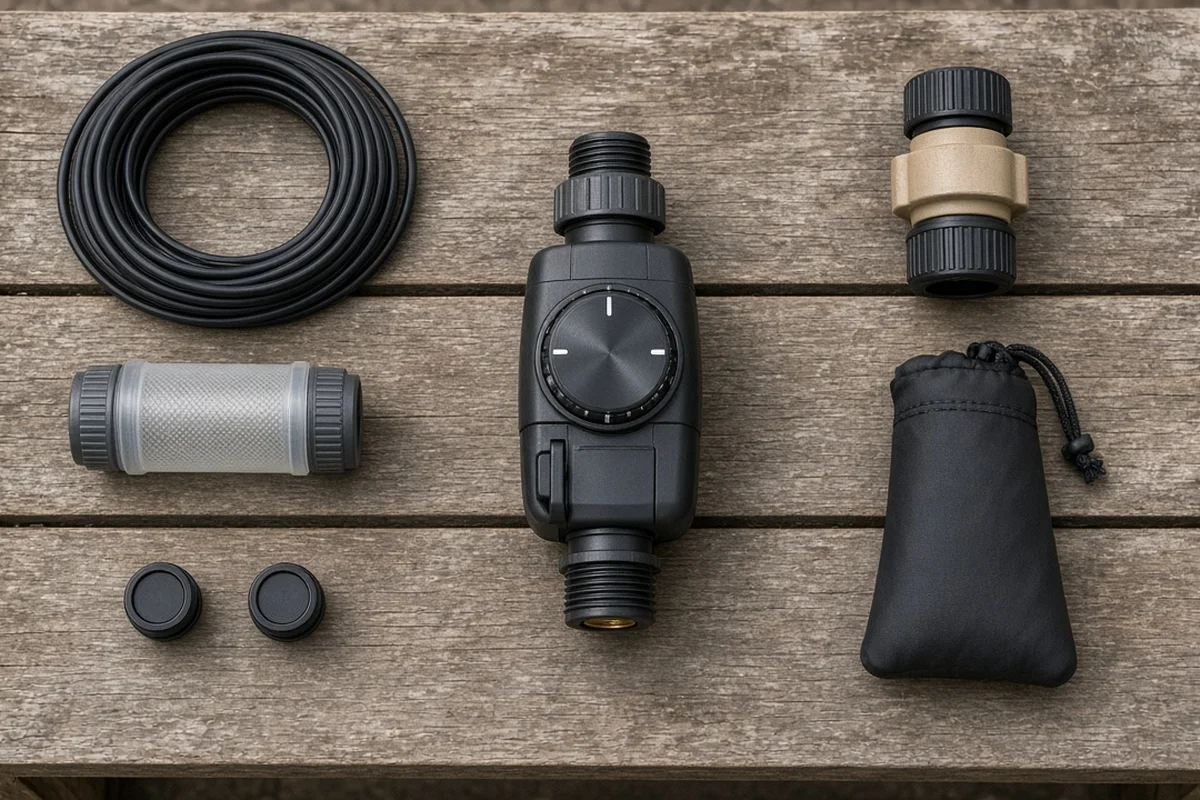
Iowa State Extension says to start by disconnecting the system from the water source and removing any complex components. It names these parts:
- Pressure valves and regulating disks, which lower household water pressure to the level a drip system needs.
- Water timers.
- Backflow preventers.
Iowa State says to store these components indoors. Iowa State explains that most homes supply water at 25 to 35 psi, while most drip systems run at around 10 psi, which is why a gate valve or regulating disk is used to bring the pressure down. Illinois Extension adds the rigid plastic fittings to that list, based on its author’s experience with cracked fittings.
Filters belong in the same conversation. Iowa State describes a filter with a 100-mesh screen as a must at the start of a drip line, because unfiltered water easily clogs emitters. It explains that a timer, when used, is installed between the filter and the gate valve.
Choosing and setting timers is explained step by step in hose timers for cannabis gardens.
How to drain drip lines
With the head parts off, the next job is to get the water out of the tubing. Iowa State Extension gives these steps:
- Remove any end caps from the lateral lines.
- Lift hoses and pipes to drain excess water.
- Allow several hours for the system to drain fully.
- Make sure low areas drain completely, because they may trap water.
- Once drained, fit the end caps back on loosely to keep debris out of the system.
Iowa State notes that an air compressor can be used instead to clear all lines of water. It says the manufacturer will often give guidance on the right air pressure, which in many cases is between 20 and 30 psi. Air pressure above 30 psi is likely to damage emitters and other delicate parts.
Illinois Extension uses both methods. Its author drains his lines and blows them out with an air compressor, and still removes the rigid plastic fittings afterward.
If you are new to drip systems, the post on drip irrigation for cannabis explains how the lines, emitters and fittings fit together.
Soaker hoses and small systems
Iowa State Extension describes soaker hoses as some of the easiest drip irrigation systems to set up. Water oozes out along the whole length of the hose and into the soil. Like drip lines, soaker hoses should be drained before winter so freezing water does not break them.
For small home setups, Iowa State offers a simpler option. In some home garden settings, especially with soaker hoses, it may be easiest to pick up the entire system, let it drain and store it indoors.
Garden hoses
Garden hoses need the same care as the drip system. Illinois Extension says to remove and drain all hoses from the spigots around your home, and to store the empty hoses in a sheltered location.
There is a reason not to skip this step. Illinois Extension explains that if a hose is left attached to a spigot, water may stay in the line. As ice forms, it can work back into the spigot and possibly into the house.
Cleaning and storing the rest of your garden tools at the end of the season is explained in Kind Seed Co’s post on cleaning and storing garden tools for winter.
Protect outdoor spigots
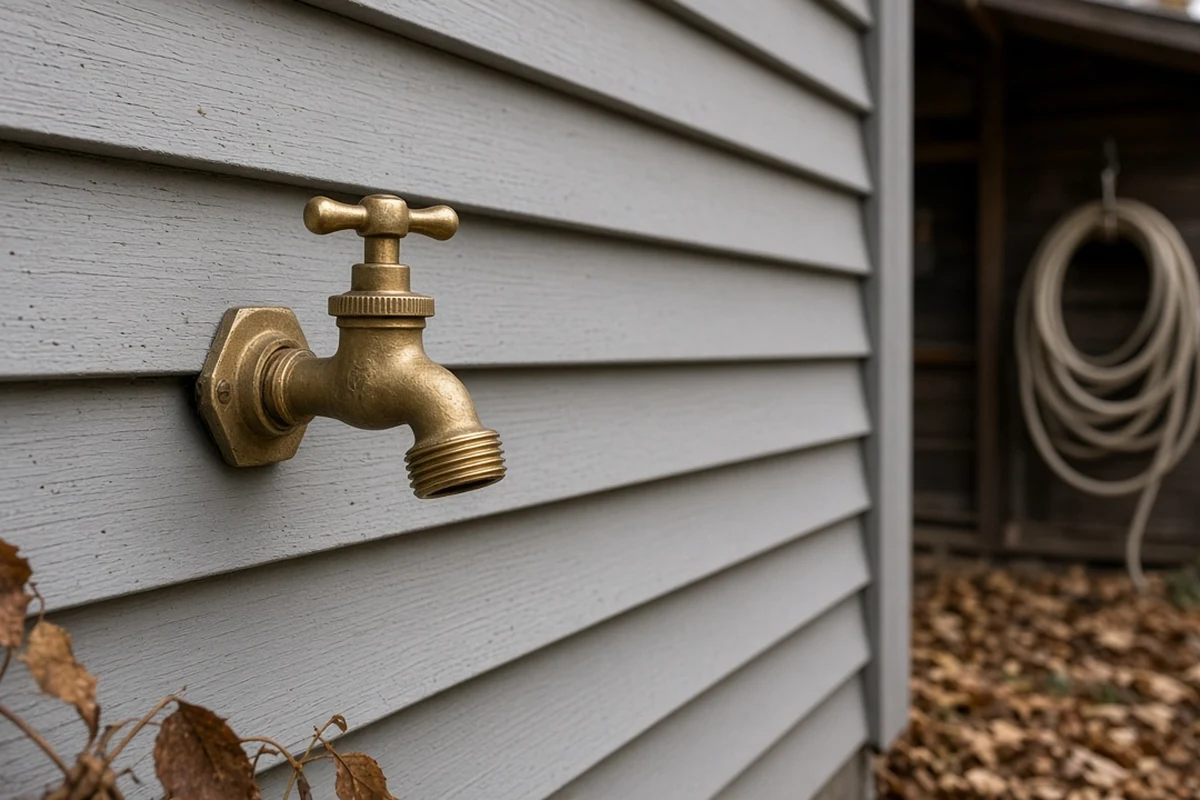
Outdoor spigots are where irrigation meets household plumbing, so a frozen spigot can cause damage indoors. Illinois Extension gives several suggestions:
- Replace a very old spigot. It says swapping an old spigot for a new frost-proof spigot can reduce the risk of a ruptured frozen pipe and of freezing water creeping back into the house, where a burst line can do a lot of damage in a short time.
- Do not assume a frost-proof spigot cannot freeze. Illinois Extension says it depends on how cold it gets and how well insulated the home is, including the wall cavities where the spigot’s water supply is often installed.
- Consider individual shutoffs with bleeder valves. When you close the shutoff, you open the bleeder valve to empty the waterline.
Illinois Extension notes a side benefit of a new spigot. Most come standard with an anti-siphon feature that prevents water from siphoning back up from the hose into the home’s water supply.
Pumps
If your watering setup includes a pump, Illinois Extension cautions that just because a pump is submersible does not mean it should stay in the water over winter. It says most small pumps need to be removed from the water and drained, while larger submersible pumps may need to be stored in water in a place that will not freeze. It advises always following the manufacturer’s directions.
A fall irrigation checklist
Putting all of this advice together, a fall routine for a cannabis garden looks like this:
- Disconnect the drip system from the water source.
- Remove and store indoors the timer, pressure regulator or regulating disk, backflow preventer and rigid plastic fittings.
- Take off the end caps, lift the lines and let them drain for several hours, checking low spots.
- Or clear the lines with an air compressor at no more than 30 psi.
- Refit the end caps loosely.
- Drain soaker hoses, or pick them up and store them indoors.
- Disconnect, drain and store garden hoses in a sheltered place.
- Check outdoor spigots and shutoffs.
- Remove and drain small pumps.
Troubleshooting
Water sprays from fittings when you restart in spring. Fittings may have cracked from frozen water. Illinois Extension describes exactly this after leaving rigid fittings on a drained line. Replace them, and remove them before the next winter.
Lines still hold water after draining. Low areas may be trapping it. Iowa State says to make sure low spots drain fully and to allow several hours.
Emitters stopped working after you used compressed air. The pressure may have been too high. Iowa State warns that air above 30 psi is likely to damage emitters and other delicate parts.
Emitters are clogged at spring startup. Iowa State says clogs can be corrected by cleaning the filter, then removing the end cap from the lateral line and flushing the system at full pressure.
A frost-proof spigot froze. Illinois Extension notes these spigots can still freeze, depending on the cold and on how well the wall is insulated.
Sources
- University of Illinois Extension, Good Growing. How to winterize outdoor plumbing: irrigation, hoses, spigots. https://extension.illinois.edu/blogs/good-growing/2020-11-26-how-winterize-outdoor-plumbing-irrigation-hoses-spigots
- Iowa State University Extension and Outreach, Yard and Garden. Using drip irrigation in the garden. https://yardandgarden.extension.iastate.edu/how-to/using-drip-irrigation-garden
FAQ
Do I need to drain drip irrigation for winter?
Yes. Iowa State University Extension says drip systems and soaker hoses should be drained before winter to prevent water from freezing and breaking hoses, emitters and pipes. Disconnect the system, remove the end caps, lift the lines and allow several hours for them to drain, making sure low areas empty.
What parts should I remove and store indoors?
Iowa State Extension names pressure valves, water timers, regulating disks and backflow preventers. Illinois Extension also removes the rigid plastic fittings from its author's drip system after cracked fittings sprayed water the next spring. Store these parts indoors and refit the end caps loosely on the drained lines.
Can I blow out drip lines with an air compressor?
Yes. Iowa State Extension says an air compressor can clear all lines of water. Follow the manufacturer's guidance on pressure, which Iowa State says is often between 20 and 30 psi. It warns that air pressure above 30 psi is likely to damage emitters and other delicate parts.
Should I disconnect hoses from outdoor spigots?
Yes. Illinois Extension says to remove and drain all hoses from spigots and store them in a sheltered place. If a hose stays attached, water can remain in the line, and as ice forms it can work back into the spigot and possibly into the house.


