
European Corn Borer on Hemp: Signs and Scouting
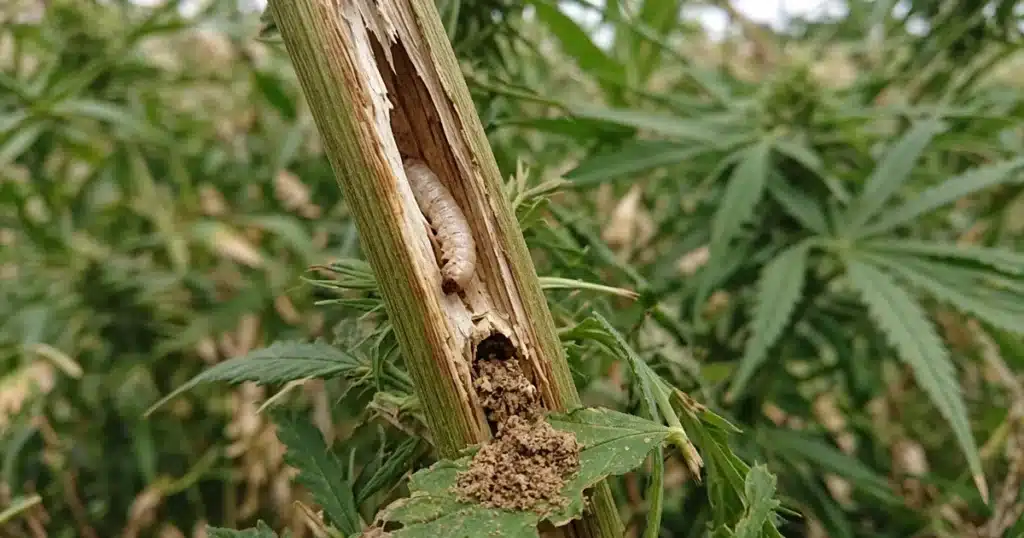
European corn borer is a moth caterpillar that tunnels into hemp stalks, leaving holes, sawdust-like frass and weakened stems that can break. In field hemp, Colorado State and University of Vermont guides say plants near corn fields face higher risk, and they suggest random scouting with a 15% infested-plant threshold for treatment.
What Is the European Corn Borer?
It is the caterpillar of a moth, Ostrinia nubilalis. As the name suggests, it is a major pest of corn, but University of Vermont Extension notes it can damage hundreds of plants, and it has become more of a problem for hemp and hops in the Northeast (UVM Extension). In Colorado, larvae overwinter in the stalks of corn and other hosts, then pupate in early spring (Colorado State). It bores into stalks, unlike the bud-feeding caterpillars our common growing problems page touches on.
What Does Corn Borer Damage Look Like on Hemp and Cannabis?
In field hemp, larvae enter the stalk and feed inside it. Colorado State lists stem wounds, holes in stems, discolored tissue and sometimes frass that looks like sawdust, and says the feeding weakens stalks so plants break more easily (Colorado State). UVM adds that borers inside the plant damage vascular tissue, disrupting the flow of water and nutrients (UVM Extension). For splinting a damaged stalk, see broken stems.
European corn borer season in field hemp
Sources: Colorado State University and University of Vermont Extension, both hemp sources. Timing varies by region.
| Stage | Timing or figure | Source |
|---|---|---|
| Larvae overwinter | In stalks of corn and other host plants | Colorado State |
| Moths emerge | Late May or early June (Colorado) | Colorado State |
| Egg laying begins | Early to mid June (Vermont) | UVM Extension |
| Eggs hatch | About 12 days after laying | UVM Extension |
| Larvae develop | Four to six weeks | Colorado State |
| Generations | Typically two per season (Colorado) | Colorado State |
| Scouting threshold | 15% of sampled plants with caterpillars or fresh damage, re-check in 4 to 7 days | UVM Extension, Colorado State |
When Do Corn Borers Attack Hemp?
In Colorado, moths emerge in late May or early June and females look for hosts such as hemp to lay eggs. After hatching, larvae develop over four to six weeks, and there are typically two generations per season (Colorado State). In Vermont, egg laying starts in early to mid June, eggs hatch about 12 days later, and young caterpillars feed on leaves for about a week before boring into stems (UVM Extension).
How Do Hemp Growers Scout for Corn Borers?
Colorado State suggests inspecting the top and bottom of leaves and along stems on plants chosen at random across the field, and pheromone-baited traps at the field edge to track moth flights (Colorado State). In field hemp, UVM says spraying may be necessary if 15% or more of plants have caterpillars or fresh feeding damage, with a re-check 4 to 7 days later (UVM Extension). Check the product label and local rules. Site choice matters too, so see our notes on outdoor sites.
Sources
Some sources below studied hemp or other crops, or give general garden guidance, rather than studying drug-type cannabis. Their findings are reported as results for those crops or settings.
- Colorado State University Agricultural Biology: European Corn Borer (hemp IPM)
- University of Vermont Extension: The European Corn Borer in Hops and Hemp (PDF)
Kind Seed Co drew these corn borer notes from the Colorado State and UVM hemp sources above, as general growing information.
FAQ
Why do hemp stalks break?
One cause in field hemp is European corn borer. Colorado State says larvae feed inside the stalk, and this feeding weakens stalks and makes plants more prone to breakage. Look for holes in stems, stem wounds, discolored tissue and sawdust-like frass near the break, signs Colorado State links to borer feeding.
Are hemp fields near corn more at risk?
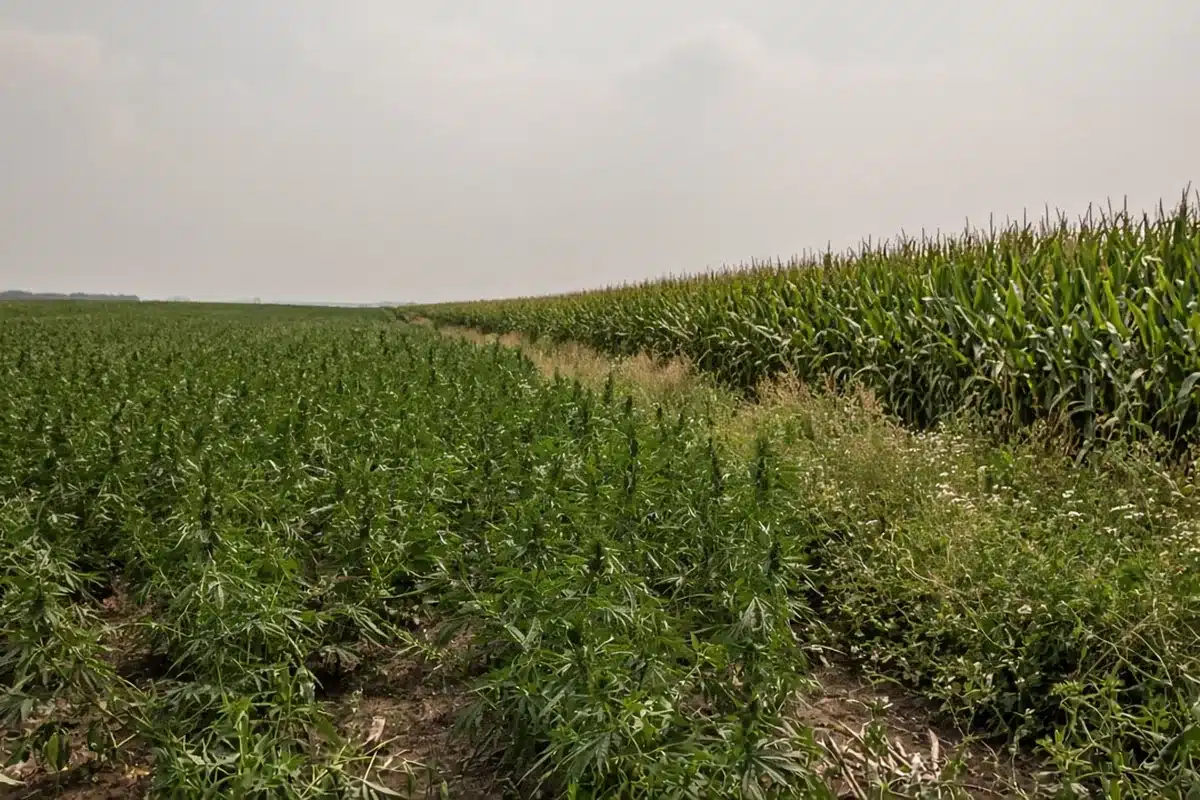
Yes. Colorado State says crops near corn fields are more susceptible to infestation, and University of Vermont Extension says crops located near corn can be at higher risk. UVM also notes that if corn planting is delayed, the borer may shift to other hosts, so nearby hemp can draw egg-laying moths.
How many corn borer generations are there each season?
Colorado State says European corn borers typically have two generations per growing season in Colorado. In Vermont, UVM Extension says a second generation is possible in warmer parts of the Northeast where enough growing degree days build up. Local timing varies, so scout through the season rather than once.
Can sprays reach borers inside hemp stems?
Less well. University of Vermont Extension says that once the borer has burrowed inside hemp stalks, pesticides will be less effective, which is why it stresses scouting for young caterpillars before they enter the stem. UVM also notes very few EPA-registered products are labeled for hemp. Check the product label and local rules.


