
Budworms in Cannabis: How to Find and Stop Corn Earworm
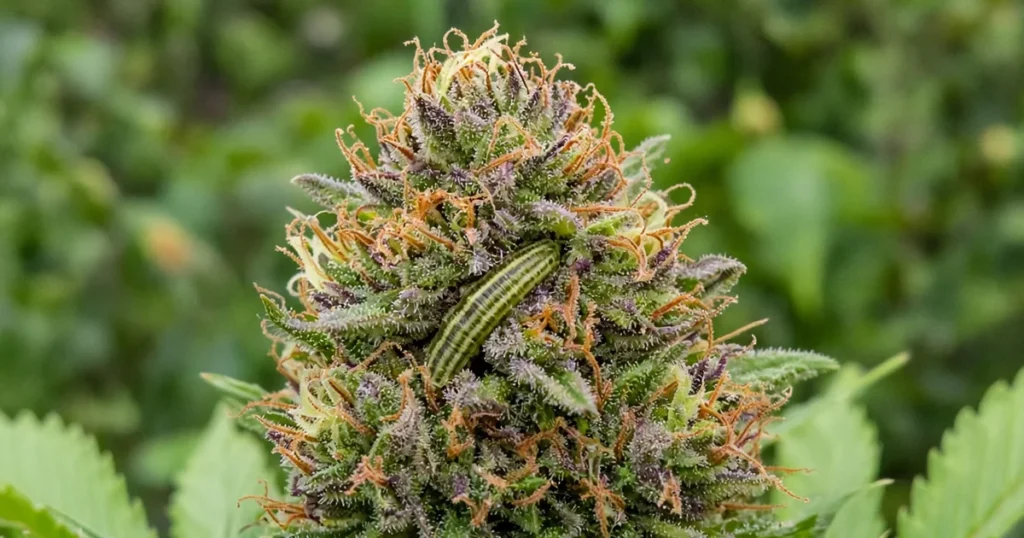
Quick answer: The caterpillar most growers call a budworm on outdoor cannabis is usually the corn earworm, Helicoverpa zea. Oregon State University Extension calls it a serious pest of outdoor hemp because larvae tunnel into flower buds and can lead to bud rot. Scout buds every week from early flowering, look for frass and holes, pull caterpillars by hand, and use labeled biological sprays such as Bt on leaves only while larvae are small and before buds form.
What Is a Budworm on Cannabis?
Budworm is a loose name for any caterpillar that feeds inside cannabis flowers. In most of the United States, the main culprit is the corn earworm. Oregon State notes the same insect goes by cotton bollworm and soybean podworm depending on the crop, and that it occurs across North America except Alaska and northern Canada. On tomatoes it is called the tomato fruitworm, which is how Utah State University lists it.
It is different from the armyworms that strip leaves earlier in the season. If caterpillars are feeding in groups on foliage in summer, see our guide to armyworms on cannabis.
What Does Corn Earworm Look Like?
- Eggs: Tiny domes about 0.02 inch across, pale green at first, then yellow and gray. Oregon State says they are laid one at a time on buds and on leaves close to buds.
- Caterpillars: About 0.08 inch at hatch and roughly 1 inch when full grown after two to three weeks. On hemp they are mainly green, though they can be pink, brown or nearly black. They have a brown to black head and rows of dark bumps with bristles.
- Moths: Tan brown, active at night. Utah State notes a dark spot in the center of each front wing.
One female can lay about 1,500 eggs over her life, according to Oregon State. That is why a handful of moths in August can turn into a serious problem by harvest.
What Damage Do Budworms Cause?
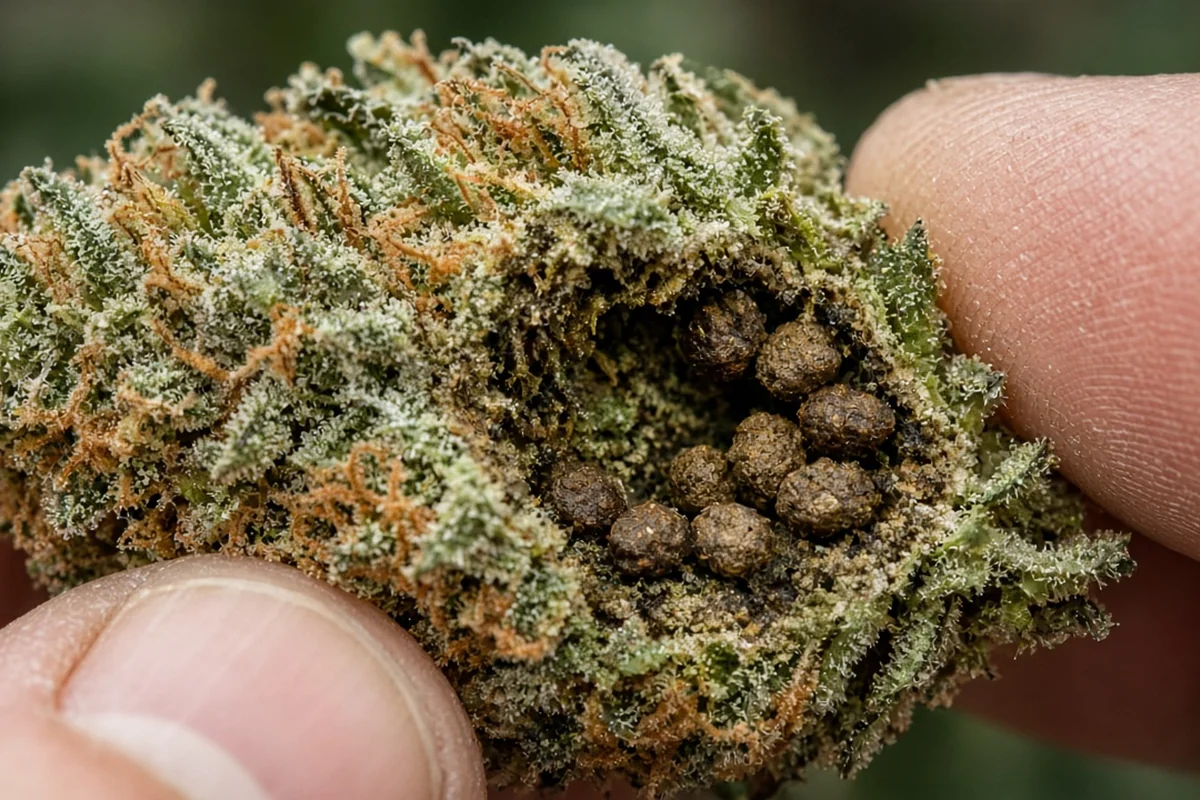
Utah State says the larvae bore into buds and seeds as they develop and destroy them. Signs to look for:
- Small holes in the side of a cola
- Brown, crumbly frass, which is caterpillar droppings, stuck in the flowers
- A single bud that browns and dies back while the rest of the plant looks fine
- Gray fuzz inside a bud, which signals rot has followed the feeding
Oregon State notes that feeding wounds can lead to bud rot. Once rot sets in, it spreads to nearby tissue fast in humid weather. Our page on identifying pathogenic mold helps you tell rot from other problems.
When Do Corn Earworms Attack Cannabis?
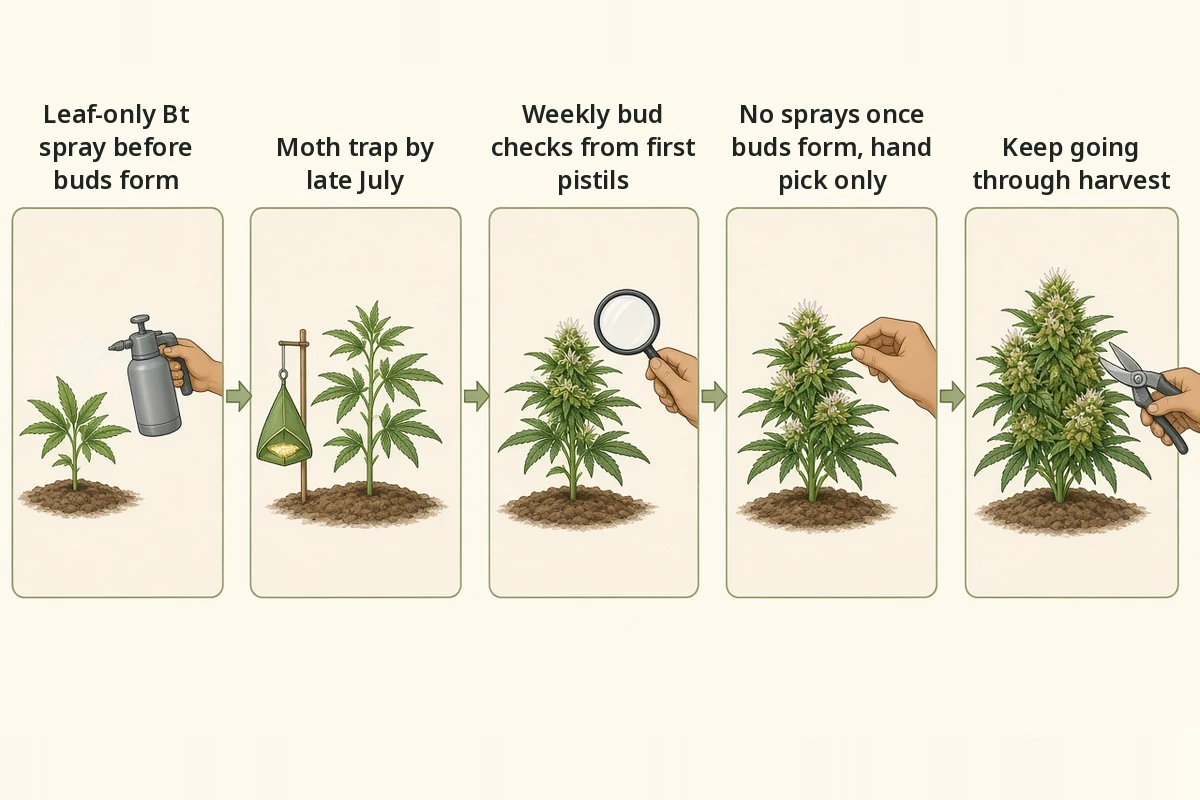
Utah State lists the time of concern as flower bud formation through harvest. Oregon State advises scouting from the early flowering period. In practice, that means the first week you see pistils on outdoor plants is the week you start checking. Late season moths keep laying eggs, so the risk lasts until the plants come down.
How to Scout Cannabis for Budworms
- Start when buds first form. Put a reminder on your calendar for the same day each week, as Utah State advises weekly checks during flowering.
- Walk every plant in early morning or at dusk, when caterpillars are more active.
- Look at the tops of colas and the leaves right next to them for single eggs.
- Gently spread larger buds with your fingers and look for frass and holes.
- Bend a cola and watch for brown spots or wilting tips.
- Remove any caterpillar you find and drop it in soapy water.
- Cut out any bud with rot and bag it right away so spores do not spread.
- Write down what you found so you can see when pressure rises.
How to Use a Moth Trap
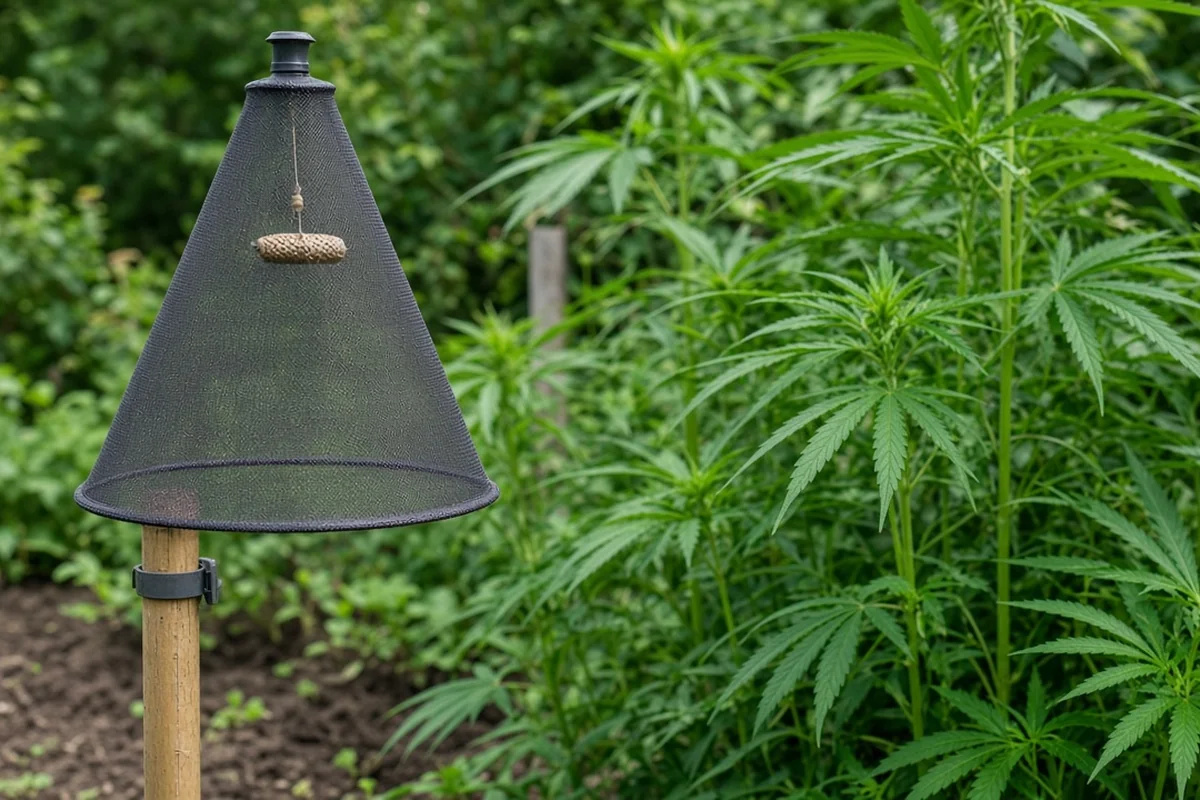
A pheromone trap tells you when moths are flying. Oregon State recommends a Heliothis style trap with a corn earworm lure set along the edge of the field no later than late July or early August and left in place through harvest. Check it about twice a week and change the lure every two weeks. Utah State suggests putting traps out starting in July and checking every three to five days.
Two notes from Oregon State help you read the trap. The lure only catches males, and it can also catch the false corn earworm, which no one has recorded as a pest of hemp. Neither source gives a firm trap count that calls for action, so pair trap results with bud checks.
How to Control Corn Earworm on Cannabis
- Hand pick. For a few plants, careful weekly scouting and picking is often enough.
- Spray leaves while larvae are small, before buds form. Utah State says Bt (Bacillus thuringiensis) should only be used when caterpillars are under 1/2 inch. Small larvae must eat the residue, so timing matters.
- Coat leaves and stems, never flowers. Oregon State stresses thorough coverage, since biological sprays must be ingested to work. Keep every spray off buds.
- Repeat on schedule. Oregon State notes biological products break down in sunlight, often in less than seven days, and that two sprays a week may be needed during heavy egg laying.
- Follow the law and the label. Use only products labeled for your crop and allowed where you live, and keep to every label direction and harvest interval. Oregon State lists products permitted on cannabis in Oregon, and rules differ by state.
- Clean up after harvest. Mature larvae drop to the soil to pupate, according to Oregon State. Fall garden cleanup and turning bare beds can expose some of them.
Indoor grows rarely see corn earworm unless moths get in. Screen vents and keep doors closed at night in late summer.
Troubleshooting Budworms
You see holes but no caterpillar. The larva may have left to pupate, or it is deep in the cola. Split the bud gently with clean scissors.
Bt did not seem to work. Larvae may have been too large or already inside buds. Start scouting earlier next season so you can act on leaves before flowers form, and hand pick once buds appear.
Bud rot keeps showing up. Rot may be following caterpillar holes. Scout more often and lower humidity around plants where you can. Our white mold guide covers other molds.
Traps catch many moths but buds look clean. You may be catching false corn earworm. Keep scouting buds, which is the real test.
Damage only on the tallest colas. Moths often lay on the upper canopy. Spend extra time on the tops.
You find eggs but no caterpillars yet. Oregon State says eggs hatch in about a week. Mark that plant and check it again in five to seven days, when tiny larvae are easiest to control.
Sources
- Oregon State University Extension Service, EM 9626, Corn Earworm Management in Hemp: https://extension.oregonstate.edu/catalog/em-9626-corn-earworm-management-hemp
- Utah State University Extension, Corn Earworm, Hemp Pest Notes: https://extension.usu.edu/planthealth/ipm/notes_ag/hemp-corn-earworm
FAQ
What is the white or green worm in my cannabis buds?
On outdoor plants it is most often the corn earworm, which is mainly green on hemp according to Oregon State. Look for a dark head and rows of small bumps.
Can I smoke a bud that had a caterpillar in it?
Cut away and throw out any bud with frass or rot. Those tissues can carry mold, and moldy flower should not be used.
Is Bt safe to use on cannabis?
Bt is a biological product used on many food crops. Only use a product whose label allows your crop and your state, and follow the label exactly.
When should I stop spraying before harvest?
Stop all sprays once buds form, and follow the label harvest interval for anything used earlier. From then on, rely on hand picking and removing damaged buds.
Do budworms come back every year?
Utah State notes pupae can stay dormant in soil through winter in some areas. Moths also migrate north each season, so plan on scouting every year.


