
Slugs and Snails on Cannabis: How to Stop Night Leaf Damage
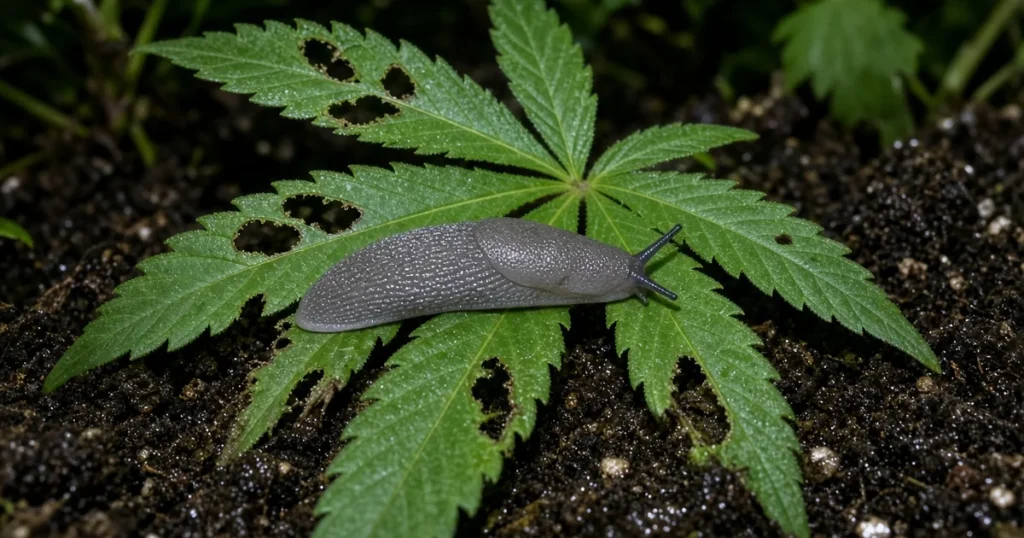
Quick answer: If young cannabis plants show large, ragged holes and shiny slime trails in the morning, slugs or snails are feeding at night. University of California Integrated Pest Management, known as UC IPM, says control takes a mix of steps: remove the damp hiding spots, water in the morning, trap and hand pick, and add copper bands around beds. Iron phosphate baits are the safer bait choice around dogs, children and wildlife.
Do Slugs and Snails Eat Cannabis?
Yes, and seedlings suffer most. Slugs easily clip the soft, succulent parts of young seedlings. Larger plants usually lose only lower leaves, but repeated feeding on fresh transplants can wipe out a whole row.
UC IPM explains that snails and slugs are closely related mollusks with the same biology, except that slugs lack an outer spiral shell. Both hide by day and come out at night. University of Wisconsin Madison Extension adds that slugs cannot survive direct sunlight and lose body moisture fast when they have nowhere to hide, which is the key to managing them.
How Do You Know Slugs Are the Problem?
UW Madison describes slug damage as big, ragged holes in leaves, stems, flowers or fruit, often with a shiny trail of mucus nearby. Look for:
- Large holes with ragged edges, often in the middle of the leaf
- Silvery slime trails on leaves, pots or the soil surface
- Seedlings cut off near the soil after a damp night
- Feeding that gets worse after rain
Other pests also chew holes. Cutworms cut stems at the soil line, and caterpillars leave droppings. UC IPM suggests going out at night or very early in the morning with a flashlight to see the culprits in action.
When Are Slugs Worst?
UW Madison notes slugs get moving once spring brings its first warm days, and they do best when it is cool and damp. Numbers jump during and after rainy spells and almost disappear during dry periods. Many slugs live more than one year and overwinter as adults or eggs. Gardens where sod or plant residue was tilled under the year before often have higher numbers.
That timing overlaps with the outdoor transplant window, so get your controls in place before seedlings go out. Our guide on hardening off cannabis seedlings covers that move.
Slug Control Steps for Cannabis Beds
- Clear hiding spots. UC IPM and UW Madison both recommend removing boards, stones, weeds, debris and stacked pots where slugs rest by day.
- Water in the morning. UC IPM suggests drip irrigation or running sprinklers in the morning so the surface dries before evening. See drip irrigation for cannabis for setup ideas.
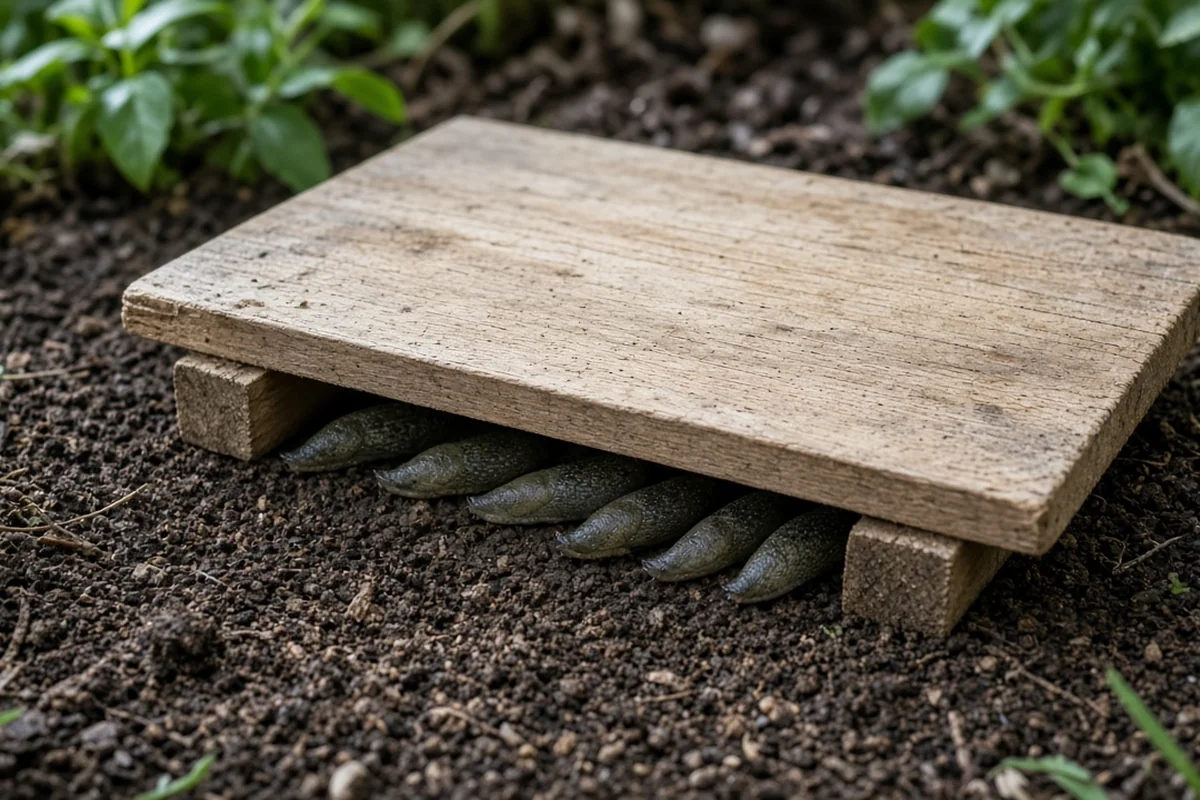
- Set board traps. UC IPM describes a board raised about 1 inch off the ground on runners. Slugs collect under it overnight. Scrape them off and destroy them every day.
- Hand pick at night. Use a flashlight after dark and drop slugs into soapy water.
- Bury beer traps. Sink a shallow container so the rim sits level with the soil and fill it with beer. UW Madison notes heavy, yeasty beer works best. Empty and refill daily.
- Add a copper band. UC IPM recommends a copper strip 4 to 6 inches wide, buried about an inch into the soil or fixed around the edge of a raised bed.
- Save bait for when the other steps fall short. UC IPM notes iron phosphate baits are safer around pets, children and wildlife. Scatter pellets thinly rather than piling them, and follow the label.
UC IPM stresses that baits alone will not give lasting control if shelter, food and moisture remain, so combine baiting with the other steps.
Barriers and Traps Compared
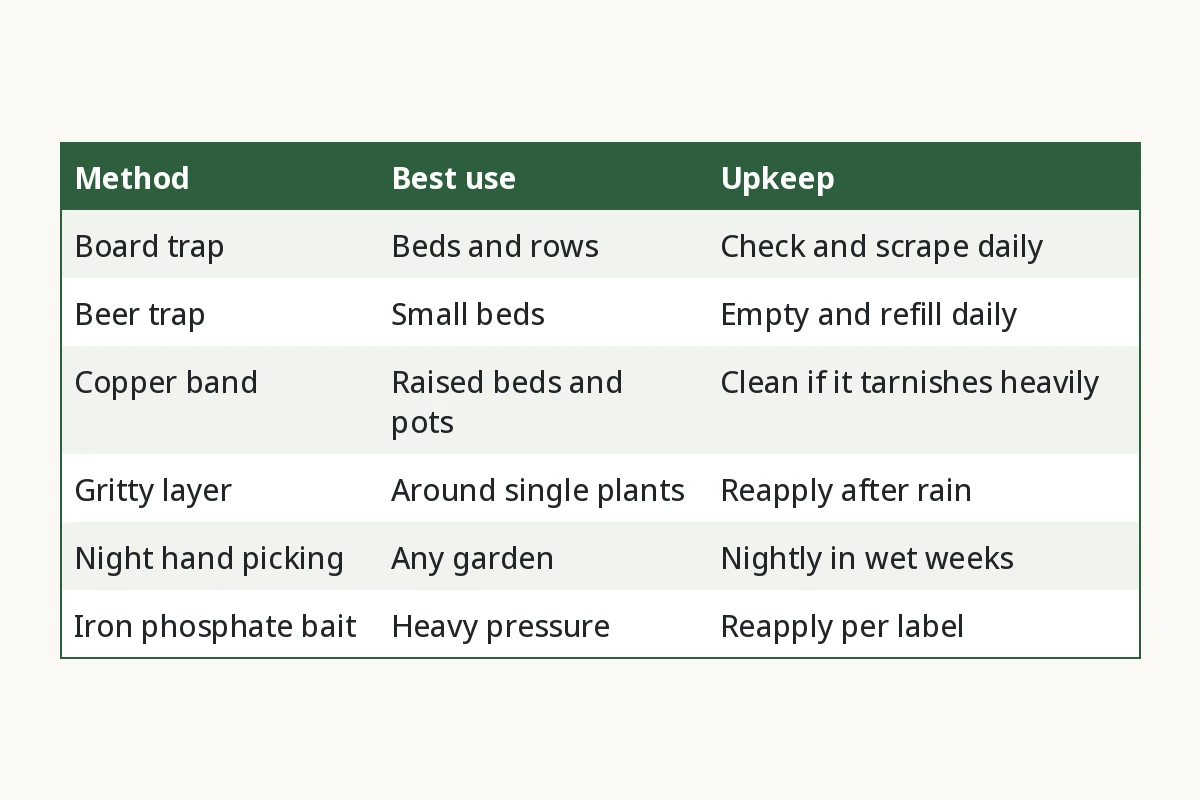
| Method | Best use | Upkeep |
|---|---|---|
| Board trap | Beds and rows | Check and scrape daily |
| Beer trap | Small beds | Empty and refill daily |
| Copper band | Raised beds and pots | Clean if it tarnishes heavily |
| Gritty layer | Around single plants | Reapply after rain |
| Night hand picking | Any garden | Nightly in wet weeks |
| Iron phosphate bait | Heavy pressure | Reapply per label |
UW Madison also lists diatomaceous earth, gravel or sand as abrasive barriers that discourage slug travel, though they need regular reapplication and work poorly once damp.
Does Mulch Attract Slugs?
It can. UW Madison lists heavily mulched gardens and shaded beds among ideal daytime hiding spots. You do not need to skip mulch, which has real benefits for moisture and weeds. Instead, keep it pulled back a few inches from stems, hold off until plants are established, and rake it in winter to expose overwintering slugs, as UW Madison suggests. Our guide to mulch for cannabis explains depth and timing.
Slugs in Pots and Raised Beds
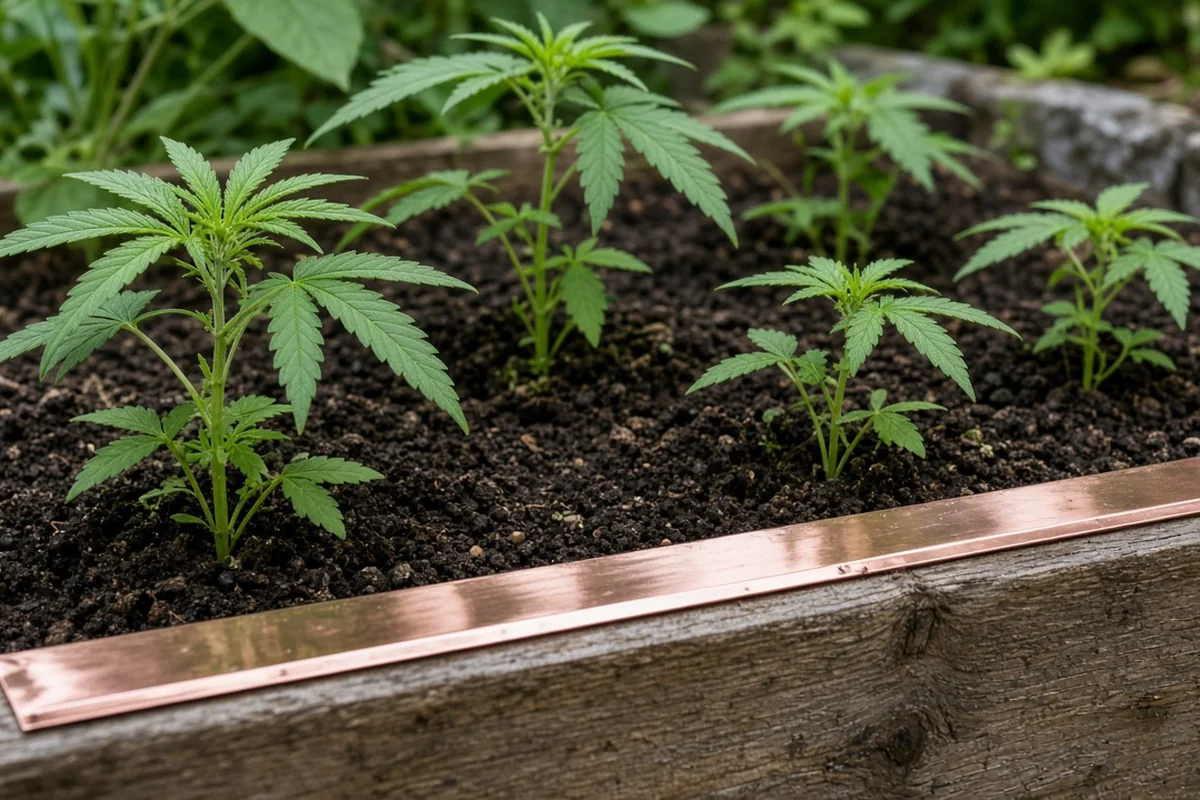
Containers are easier to defend than open ground. Lift pots onto feet or a stand so the base is not sitting on damp soil, and wrap a copper strip around the rim of each one. Check under the pot and inside drainage holes during the day, since that cool, dark space is a favorite resting spot. Raised beds take a copper band along the top edge, as UC IPM suggests, plus a clear strip of bare ground around the outside. If slugs keep showing up in a single bed, empty and refill any saucers and move the bed out of deep shade if you can. UC IPM recommends planting in the sunniest spot possible.
Natural Predators of Slugs
According to UW Madison, slugs are eaten by birds, toads, frogs, ground beetles and firefly larvae. Leaving a little habitat for them at the edge of the yard, and skipping broad spectrum sprays, helps keep those predators around. UW Madison also points out slugs are not insects, so most insecticides do not affect them anyway.
Troubleshooting Slugs and Snails
Damage continues even with traps. Look for a large hiding spot nearby, such as a woodpile, stone wall or ivy bed. UC IPM says reducing shelter is essential.
Beer traps catch few slugs. Set the rim flush with the soil and refresh the beer daily. Old beer loses its pull.
Copper band is not working. Check for leaves or stakes that bridge over it, and make sure the band is wide enough.
Seedlings vanish but no slime is visible. Slime can dry by midmorning. Check at night, or look for birds, rabbits or cutworms instead. Our page on pill bugs on cannabis covers another night feeder.
Snails climb up pots on a patio. Put a copper strip around each pot and lift pots onto feet so they are not touching damp ground.
Bait pellets seem to stop working. UC IPM explains that metaldehyde breaks down quickly in sunlight and after rain or irrigation. Water first, then scatter bait in the evening on a warm night when slugs are moving.
Slugs crowd under a thick straw layer. The UW Madison article lists heavily mulched beds as prime daytime cover. Thin the mulch near young stems and rake it open in winter so cold and dry air reach the slugs hiding there.
Sources
- UC Statewide IPM Program, University of California, Snails and Slugs, Home and Landscape: https://ipm.ucanr.edu/home-and-landscape/snails-and-slugs/
- University of Wisconsin Madison Extension, Wisconsin Horticulture, Slugs: https://hort.extension.wisc.edu/articles/slugs/
FAQ
Will slugs kill cannabis plants?
They can kill small seedlings overnight. Bigger plants usually survive with some leaf loss, especially once stems toughen.
Is iron phosphate safe in a cannabis garden?
UC IPM notes iron phosphate baits are safer around dogs, children and wildlife than metaldehyde. Keep pellets on the soil, not on plants, and follow the label.
Does salt kill slugs?
Salt does kill slugs on contact, but it also builds up in soil and harms roots. Read our page on salt buildup in cannabis soil before trying it.
What time of day do slugs feed?
Mostly at night and on dark, cloudy days, according to UW Madison.
Do slugs bother indoor cannabis?
Rarely. They usually arrive in pots that spent time outdoors. Check pot bottoms and drainage holes before bringing containers inside.
Is metaldehyde slug bait safe for pets?
Metaldehyde can poison dogs and birds, UC IPM cautions. If pets or wild birds visit your garden, choose iron phosphate and keep any bait off the plants themselves.


